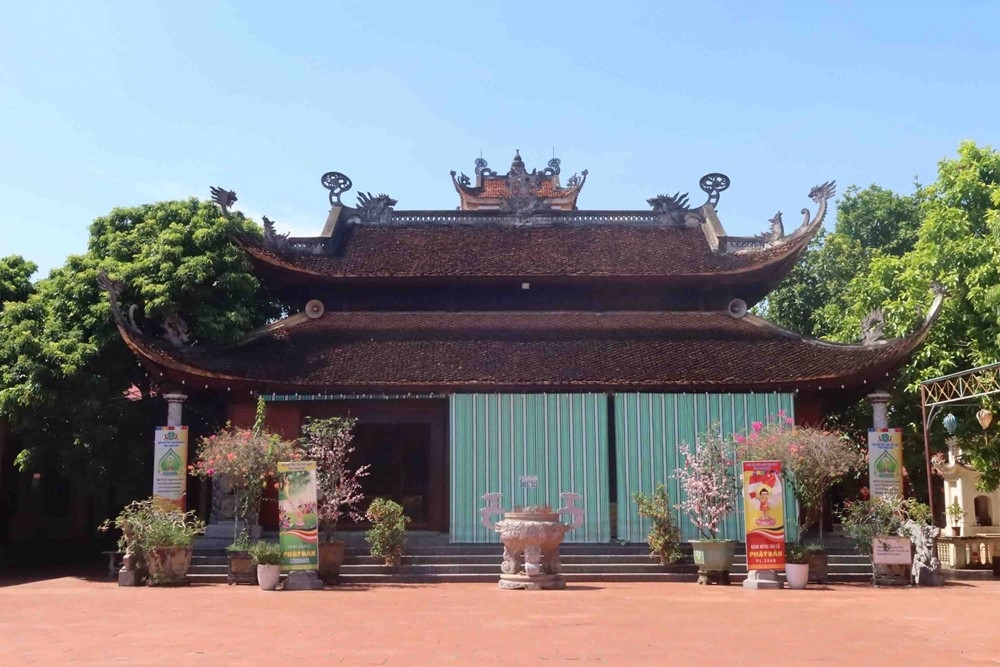
 Sung Nghiem Dien Thanh pagoda - an ancient and sacred pagoda in the Thanh region
Heritage derives its value not merely from its longevity, but from the insights it offers people today into the past. At Sung Nghiem Dien Thanh pagoda, every artifact serves as a piece of evidence; every architectural layer bears the imprint of a specific era; the enduring practice of festivals and beliefs reflects a profound, lasting bond between the historic site and the community. Therefore, approaching this temple should not be limited to merely praising it as a sacred ancient site; rather, it should be viewed as an integrated heritage entity, a place where history, art, and local knowledge converge.
In the past, the Duy Tinh region held a significant position within the region of Chau Ai. According to local records, it once served as an administrative, economic, and cultural hub, integrated into the broader network of transportation, settlement and trade across the land of Thanh. This context helps explain why a temple of such scale and artistic merit as Sung Nghiem Dien Thanh was established, renovated, and sustained. The temple not only fulfilled the spiritual needs of the local inhabitants but also reflected the deep connection between Buddhism, community life and the development of the region during the medieval period.
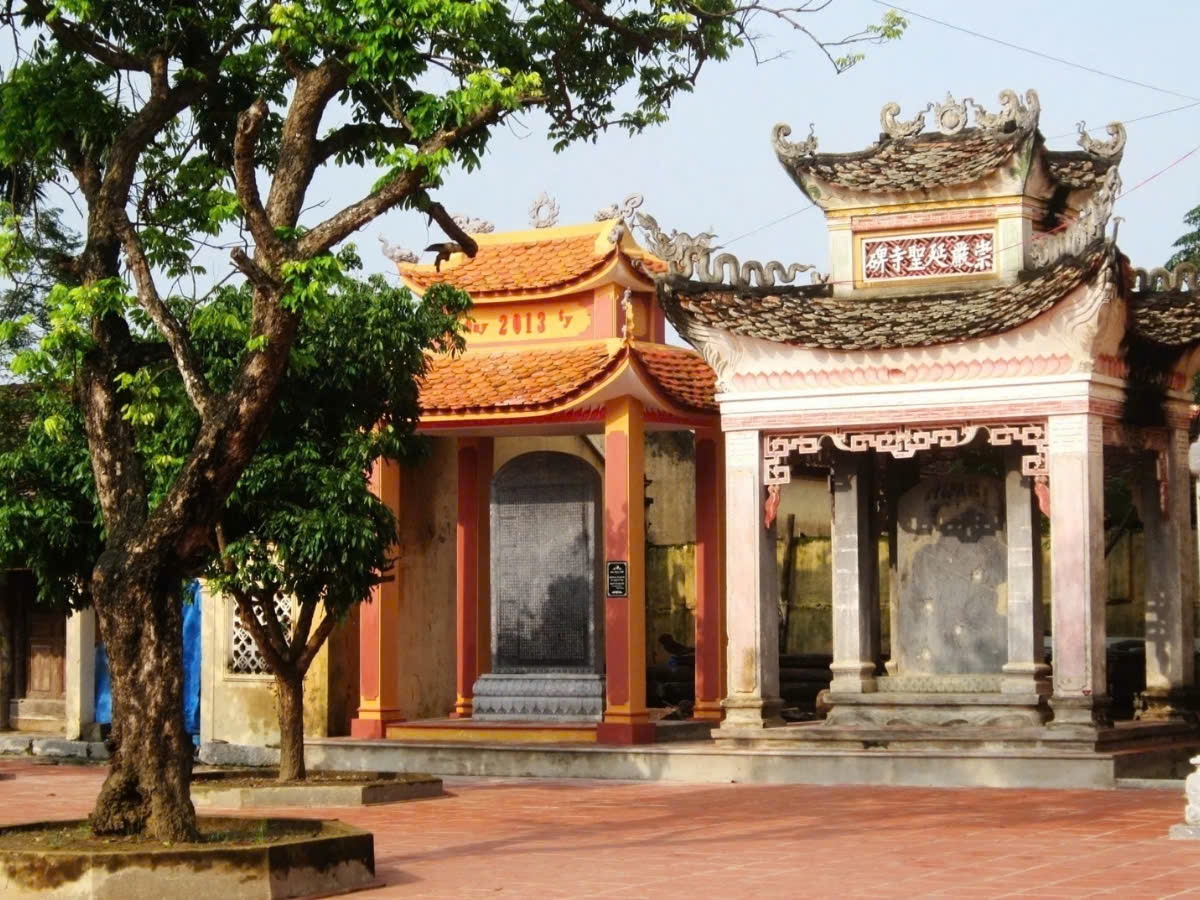 An ancient stone stele dating back to the Ly Dynasty is located at Sung Nghiem Dien Thanh pagoda (Hau Loc commune, Thanh Hoa province)
The most significant documentary landmark is a stele erected in 1118, which records the restoration of the pagoda following King Ly Nhan Tong’s royal tour to the southern regions in 1116. The inscription does more than merely document a religious structure; it reveals how political events were remembered, interpreted and situated within the value system of that era. Its content touches upon Buddhism, the individual who oversaw the restoration, the temple’s landscape and the significance behind the pagoda e’s establishment. Through this, researchers can gain insight into concepts of merit, social order and the role of religious institutions at the local level. The value of these stone inscriptions thus extends beyond the history of an individual temple; they serve as primary historical sources that provide specific, detailed glimpses into the history of Dai Viet during the Ly Dynasty.
The stele holds special significance for the study of language and fine arts. Its inscriptions, the layout of the text, its physical form and its decorative motifs all reflect the skill of the stonemason as well as the aesthetic sensibilities of the era. By examining the stele in relation to contemporary materials from other regions, researchers can gain insight into the spread of Buddhism, stone-carving techniques and artistic styles across various cultural centers. Consequently, protecting the stele is not merely about preserving an artifact; it is about safeguarding a source of data that if lost or altered could never be recovered.
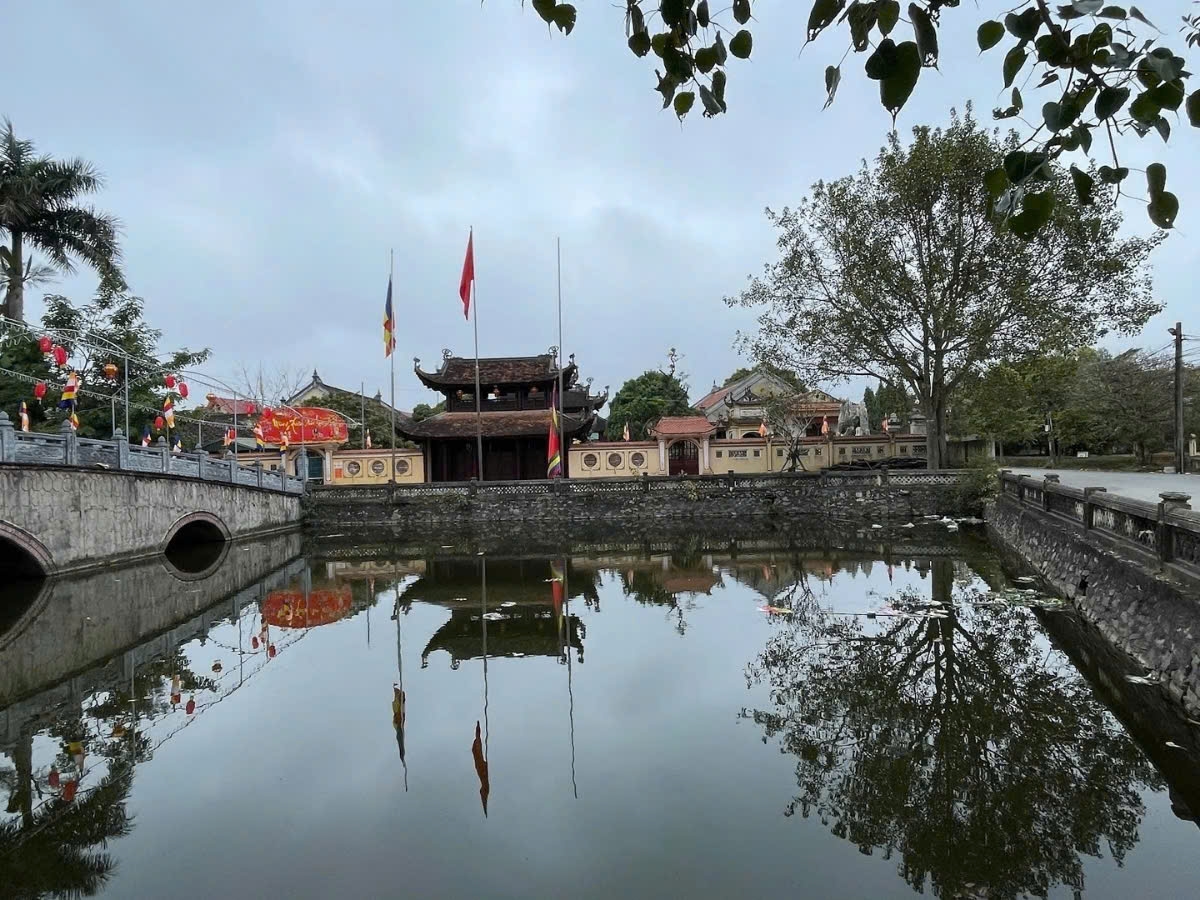 Sung Nghiem Dien Thanh pagoda - an ancient temple (nearly 900 years old) dating back to the Ly Dynasty still stands today in Hau Loc commune, Thanh Hoa province
While stone stelae preserve history through written text, the three lotus-shaped stone pedestals express a worldview and artistic vision through form. Stylized lotus petals, symmetrical composition and the motif of lions acting as supports combine to create a highly symbolic whole. In Buddhism, the lotus is associated with purity, while the lion represents strength and the capacity to uphold. The combination of these two motifs not only serves a decorative purpose but also reveals how the artisan conveyed religious concepts through sculptural structure. Consequently, these stone pedestals serve as significant evidence for the study of Buddhist art during the Ly Dynasty, at the same time facilitating comparisons of stylistic forms between the Sung Nghiem Dien Thanh site and other contemporary monuments in Northern and Central Vietnam.
It should be emphasized that the existing heritage does not mean that all of the current architecture has remained in its original state since the Ly Dynasty. The pagoda has undergone numerous upheavals, instances of damage and restorations; its present appearance is the result of successive historical layers. The distinction between original structures, original artifacts and restored architectural parts is especially important. Without clearly identifying the layers of time, the introduction of the monument easily leads to a simplistic understanding that the entire building is an intact structure from nearly a millennium ago. On the contrary, the pagoda’s history of transformation, repair and adaptation is also a part of cultural heritage that needs to be researched and interpreted honestly.
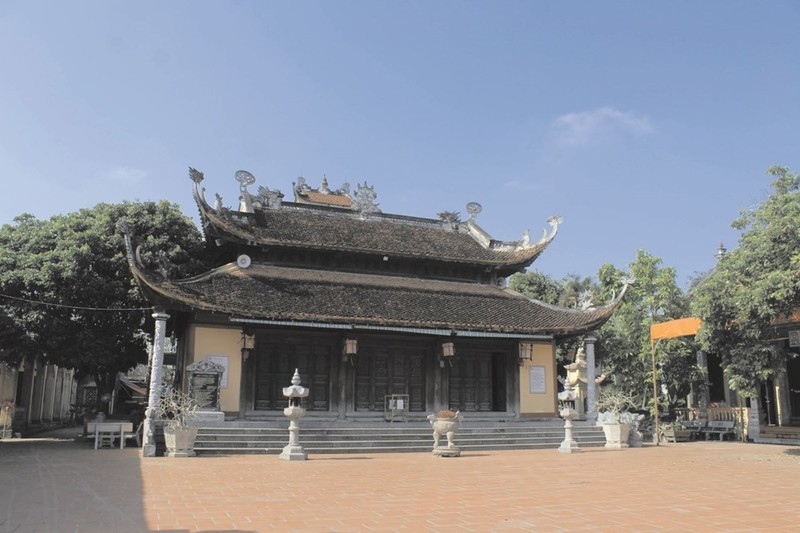 The Three Jewels Hall of Sung Nghiem Dien Thanh pagoda
Artifacts from later periods such as a stele dating to 1604 (Le Dynasty), 17th -century wooden statues, and a bell cast in 1818 reveal that the site remained in use, was cared for and was further enriched by the community across successive dynasties. These layers of artifacts do not diminish the site’s value from the Ly Dynasty; rather, they attest to the enduring vitality of this cultural space. Heritage is not a static object locked in the past, but a continuum linking what has been inherited with the living practices of the community and encompassing the responsibility of each generation to pass this legacy on to the next.
The pagoda was designated a national-level historical and cultural relic in 1990 and recognized as a provincial-level tourist site in 2019. While these designations provide a foundation for the protection and promotion of the site’s value, they also necessitate more rigorous management. Restoration efforts must be based on scientific documentation and established conservation principles; original artifacts must be inventoried and their storage conditions monitored; and festival activities must strike a balance between religious observance and the preservation of the heritage site’s environment. Explanatory efforts should also move beyond a purely sacred-focused approach, helping the public, students and visitors to understand the historical, artistic and cultural value of each artifact.
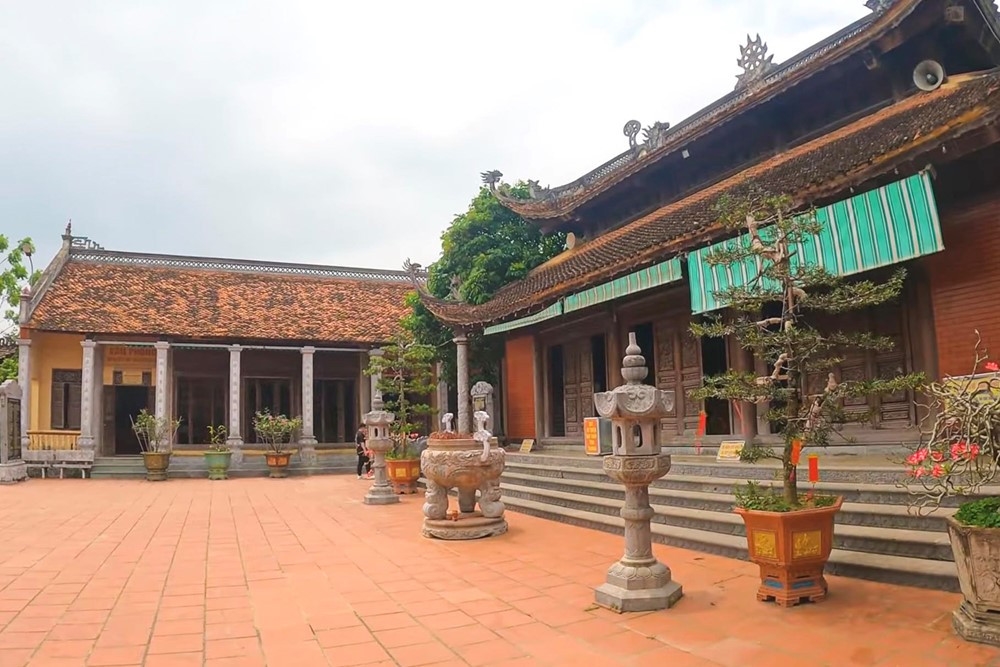 In terms of architecture, Sung Nghiem Dien Thanh pagoda is elaborately constructed, featuring curved roof tiles and a roofline that sweeps upward, reminiscent of a pheasant with its wings spread in flight
The annual temple festival, held in the second lunar month, continues to connect the Duy Tinh community with the heritage site through rituals, folk games and traditional activities. This serves as a valuable resource for heritage education, provided that the organization of such events does not compromise the artifacts, the landscape or the solemnity of the sacred space. When the community is actively involved in safeguarding, interpreting and passing on local values, the site is preserved not merely through administrative regulations, but through an inherent understanding and a deep-seated sense of responsibility.
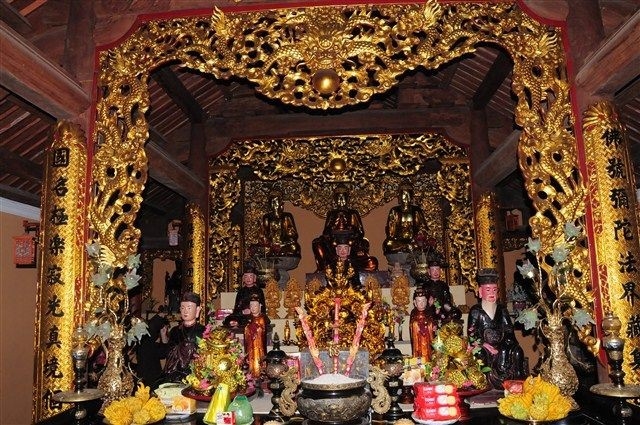 The shrine to the Ly kings is arranged in a solemn manner, featuring statues of court officials and palace attendants
Thus, Sung Nghiem Dien Thanh is more than just an ancient pagoda in the Thanh region. At the same time, this is also the place where inscriptions dating back to the year 1118 can be found, stone forms characteristic of the Ly Dynasty and the cultural practices of the local community all come together to recount history. Preserving a historical site means safeguarding authentic evidence for the study of the past, while ensuring that future generations can engage with this heritage through accurate knowledge rather than mere pride. When conservation is integrated with scientific research, public education, and the responsible promotion of its inherent value, a pagoda can remain a living part of the present without ever losing the historical depth that defines its true significance./.
