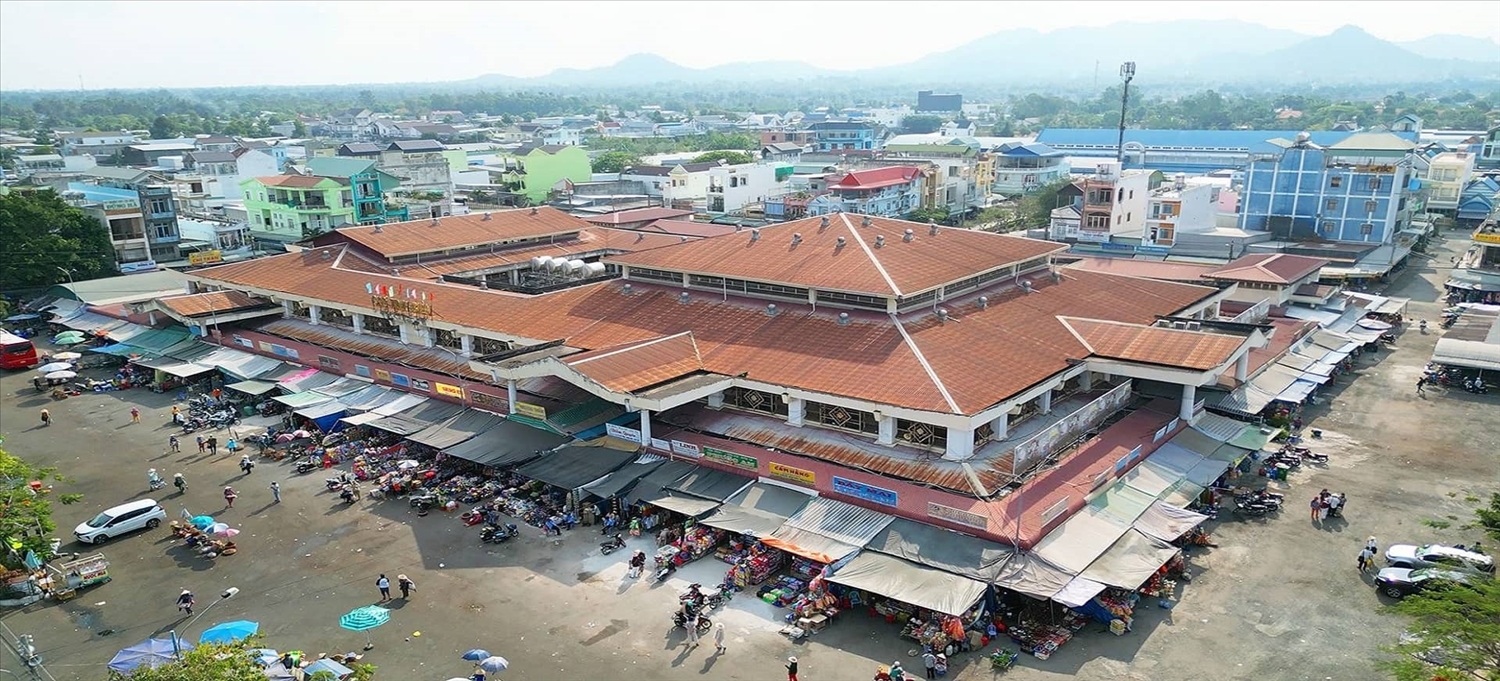
 Located in the border region of An Giang, Tinh Bien Market is a bustling trading hub, well-known for its fermented fish, dried goods and unique, exotic dishes prepared from insects - all of which draw in many visitors
Leaving Chau Doc urban area, following the road towards the southwest border, I began to feel a very different An Giang province. The stretching fields, the rows of palm trees rising high in the sky, the roofs looming under the shade of trees and the simple lifestyle of the people of the Bay Nui area made the journey seem to slow down. That space has both the spaciousness of the plains and the quietness of cultural sediments and trade stories over many generations.
A key stop along the way is Tinh Bien Market, located in Tinh Bien ward (An Giang province), a familiar shopping destination on the Vietnam - Cambodia border tourism route. While famous urban markets often captivate visitors with their modernity, Tinh Bien possesses a unique charm rooted in its local produce, diverse trade goods and the way the local people infuse the essence of their homeland into every stall.
My first impression was the surprising variety of goods on offer. Golden-brown blocks of palm sugar sat beside bottles of rich, viscous syrup; dried fish was arranged in neat layers; jars of dark-hued fermented fish sauce rested near an assortment of spices, fruits and baked goods. Interspersed among these were consumer products, textiles and various items originating from across the border.
Here, a trip to the market can sometimes be an exploration of culture. This is because behind every dish lies a story - a tale of how people have adapted to their natural environment, preserved food, maintained traditional crafts and exchanged local produce among different communities.
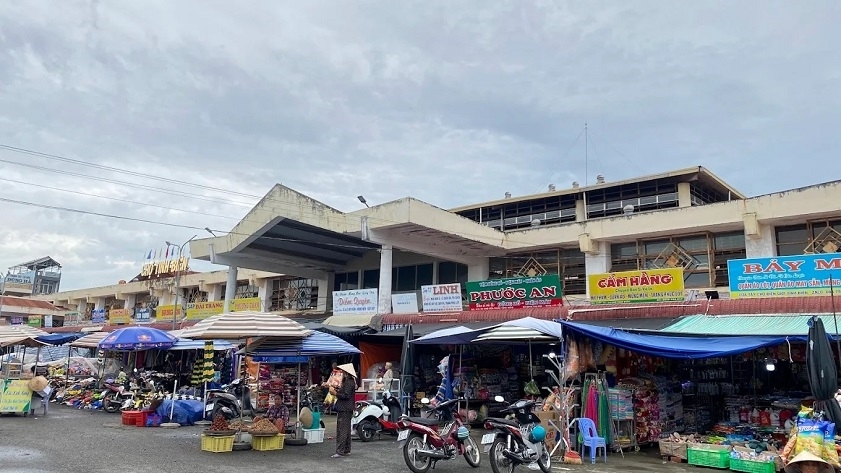 Tinh Bien market (Tinh Bien ward, An Giang province)
The sweetness of palm sugar, a taste of the land and its people
Among the local specialties of Tinh Bien that leave a lasting impression, I have a particular fondness for the sugar palm. This is not only due to its delicate sweetness and gentle fragrance, but also because the tree is so deeply intertwined with the lives of the Khmer people in the Seven Mountains region.
From fresh palmyra sap, locals craft a variety of products including sugar, syrup, steamed rice cakes, sweet soups and many other rustic delicacies. Though all originate from the same raw material, the skillful hands of the artisans imbue each product with its own distinct character.
A good piece of palm sugar is not merely sweet; it possesses a distinctive aroma, a mellow flavor and a pleasant aftertaste. Palm sugar sponge cake is captivating, with its warm golden hue, soft, airy texture and unique fragrance. Meanwhile, a cool, refreshing glass of palm sugar drink is the perfect remedy for the heat of the border region.
What strikes me most is that behind this seemingly simple specialty lies a labor-intensive craft. Producers must collect sap from the flower clusters of the sugar palm, transport it, filter it and then boil it down until it thickens. The quality of the final product depends on the raw materials, the duration of the boiling process and the experience of the craftsperson.
According to the Market Management Sub-department (under the An Giang Department of Industry and Trade), the craft of producing palm sugar practiced by the Khmer community serves as both a vital livelihood and a cultural tradition passed down through generations. Mr. Chau Nhen, a producer from Soc Ta Ngao Quarter in Tinh Bien Ward (An Giang province), shared that approximately 30 liters of palm sap can be collected daily, yielding about 6 kilograms of sugar. These figures reveal that behind this popular souvenir lies the hard work and expertise accumulated by producers over successive generations…
I have come to realize that when domestic and international visitors purchase a package of palm sugar, the value they take home extends far beyond the product itself. It is also a story about the Khmer people, about the sugar palm tree standing amidst the sun and wind and about how a traditional craft continues to endure within modern life.
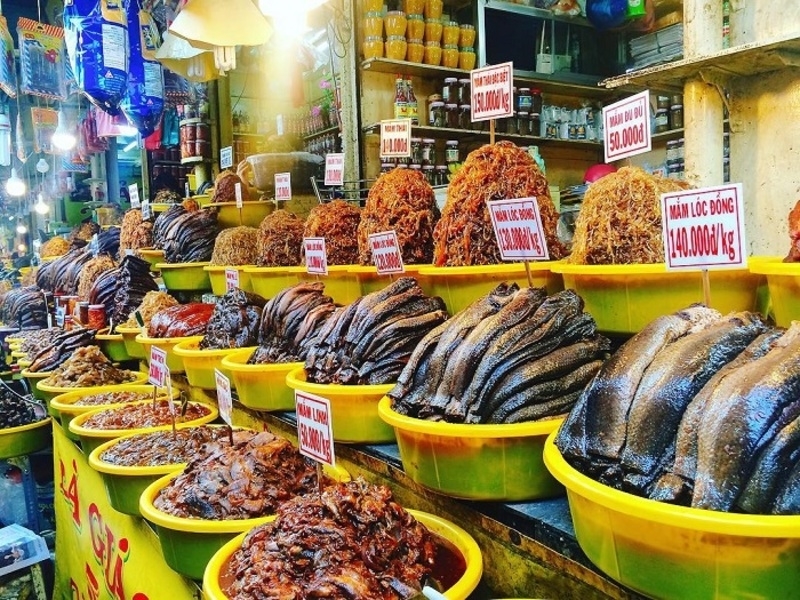 Upon arriving at Tinh Bien market, you will be pleasantly surprised to find a wide array of fermented fish sauces and dried seafood specialties from the Mekong Delta region
Dishes that put diners to the test
While palm products evoke a sense of familiarity, the unique food items found at Tinh Bien Market (An Giang province) tend to pique the curiosity of visitors. In particular, the availability of edible insects such as crickets, grasshoppers, certain types of spiders and scorpions prepared for consumption stands out as a distinctive feature often mentioned when discussing this border-region market.
For those encountering them for the first time, such dishes might give pause. Yet, from the perspective of culinary culture, these differences are precisely what make them worth exploring. The practice of consuming insects exists across many Southeast Asian communities, reflecting how people have harnessed the food sources readily available in nature and developed their own unique methods of preparation.
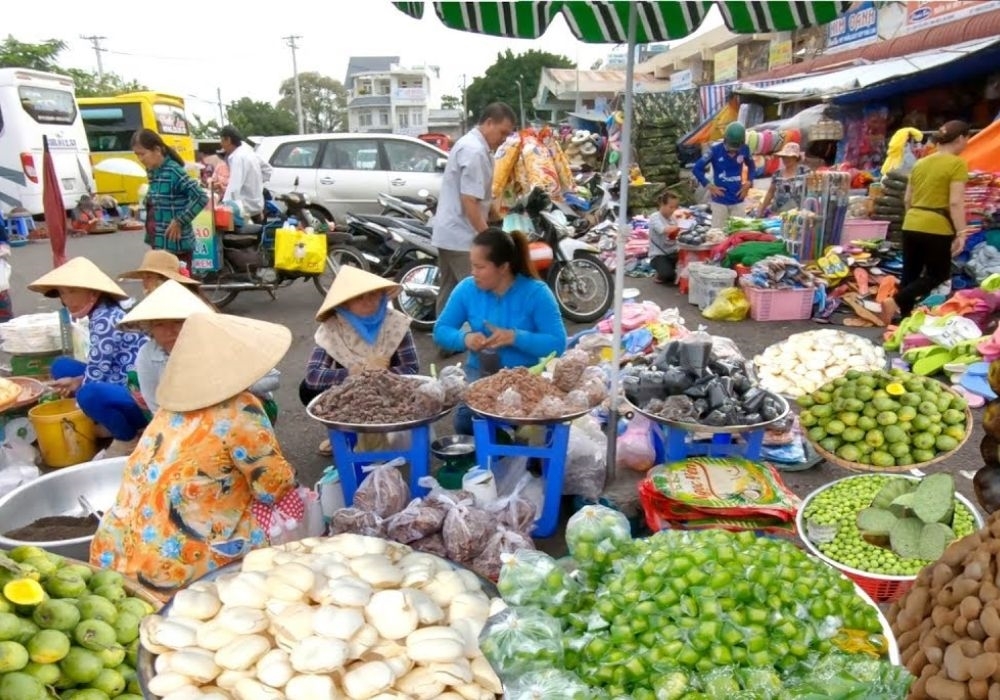 A corner of Tinh Bien market
However, curiosity should not take precedence over safety. Travelers should only choose food from reliable sources that has been prepared and stored hygienically; they should also refrain from sampling wild insects whose safety status is unknown.
Moving past the unique and exotic items, I found myself drawn into the world of fermented fish sauces and dried fish. These are quintessential specialties of the Southwestern river region, a place where the traditions of fishing and preserving aquatic produce have helped shape a rich culinary heritage.
Fermented fishsuch as mud carp fermented fish and fermented snakeskin gourami along with Thai-style fermented fish and various types of sun-dried freshwater fish, evoking the quintessential family meals of the Mekong Delta. A high-quality fermented fish product requires not only the right ingredients but also expertise in the processes of fermentation, blending and preservation. Much like palm sugar, the true value of these fermented fish products lies in the traditional processing techniques passed down through generations.
Amidst these stalls, the unique character of Tinh Bien becomes even more apparent: there are dishes that are quite familiar to the locals, yet entirely novel to visitors from afar. It is precisely this distinctiveness that fuels the appeal of experiential tourism.
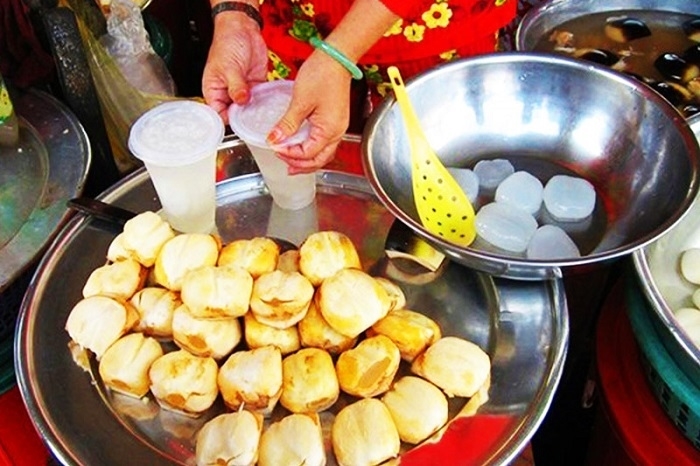 Palm fruit is one of the most famous specialties in An Giang province
From a local market to a journey exploring the Seven Mountains region
What makes Tinh Bien market unique is not merely the diversity of its goods, but also its position as a hub for economic and cultural exchange between Vietnam and Cambodia. Local produce, products brought from across the border and the distinct way in which vendors and buyers interact all combine to create the unique rhythm of life found at this cross-border trading center.
From the market, visitors can continue their journey to explore the landscapes of the Seven Mountains region, gain insight into Khmer cultural life, visit local pagodas, sample regional cuisine and discover traditional palm sugar production facilities. When effectively integrated into a broader itinerary, the market ceases to be merely a place for shopping; instead, it serves as a gateway for visitors to develop a deeper understanding of the An Giang region.
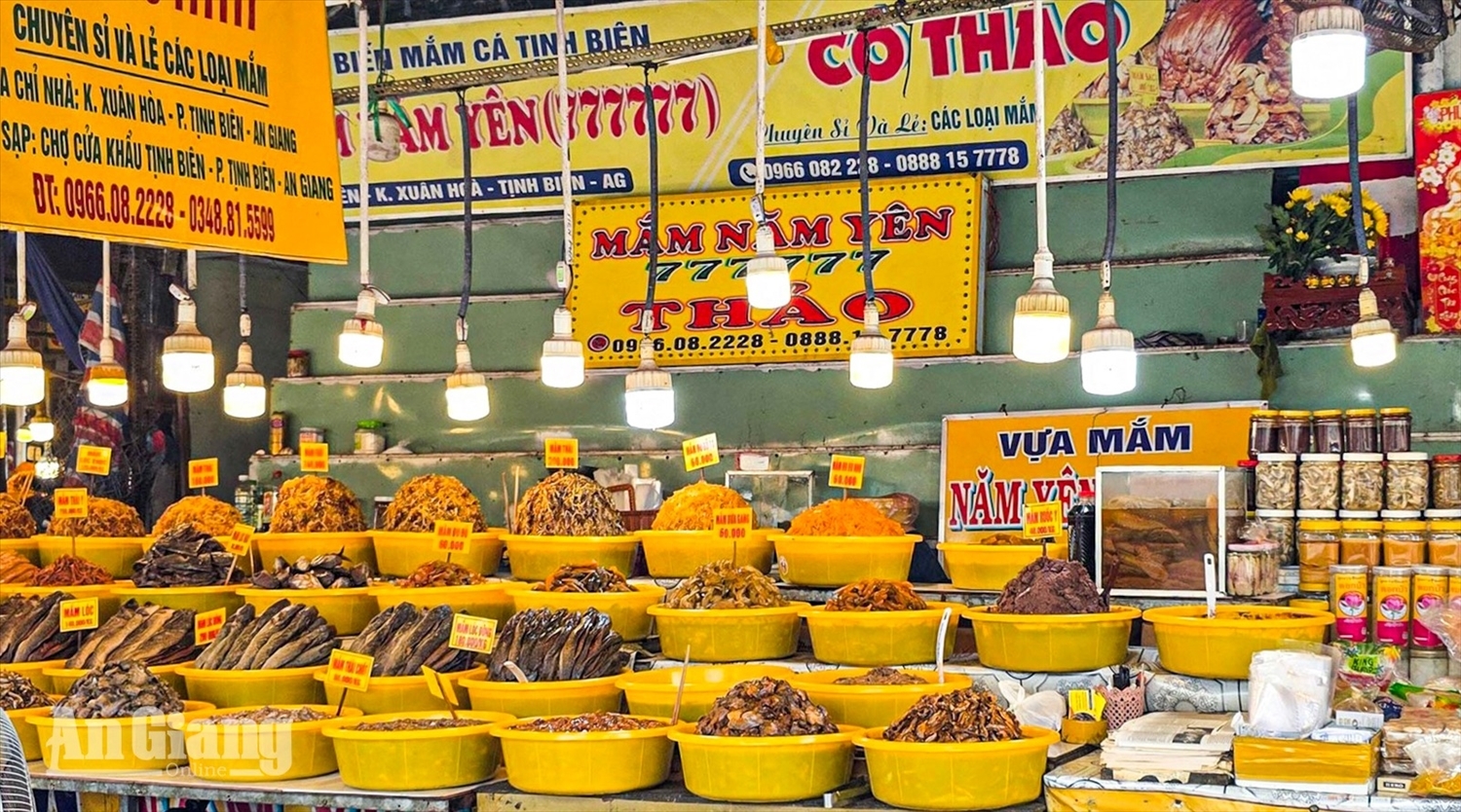 Stalls at Tinh Bien market sell all kinds of fish sauce, fish sauce, dried fish and many local agricultural products at diverse prices
This potential warrants particular attention, especially as cross-border trade continues to be promoted. In June 2026, the Tinh Bien - An Giang International Trade Fair will be held at the Xuan To Industrial Zone in Tinh Bien ward, as part of a national-level trade promotion program. This event serves as an opportunity for local products to reach businesses, expanding into new markets and integrate with tourism-related activities.
However, to transform the market’s appeal into a sustainable source of revenue, Tinh Bien must address a fundamental challenge: how to ensure that visitors do more than just buy a single item and leave encouraging them instead to explore, experience the local offerings, stay longer and eventually return?
Firstly, it is necessary to establish spaces dedicated to showcasing local specialties with clear origins, prioritizing products from individual producers, cooperatives, and traditional craft establishments. For items such as palm sugar, palm syrup, traditional local cakes, fermented fish sauces, and dried fish, particular attention must be paid to packaging, labeling, traceability and food safety and hygiene. Crucially, a clear distinction must be made between products manufactured within An Giang province and goods that are imported or brought in across the border, ensuring that visitors have an accurate understanding of the origin and value of each product.
Furthermore, it is necessary to develop short-duration experiential routes that connect Tinh Bien market with palm sugar production sites, Khmer cultural spaces, craft villages and eco-tourism attractions. Visitors can gain firsthand insight into the processes of collecting palm sap, boiling it into sugar and making traditional cakes, while also enjoying local cuisine. When a product is linked to a story and an immersive experience, its value as a tourism offering far exceeds the price of the product itself.
More importantly, local residents must play a central role in the tourism value chain. It is essential to support craftspeople in enhancing their skills covering areas such as customer service, product presentation, online sales, the use of digital payment systems and brand building. Tourism development should create new employment opportunities for women, youth, small-scale producers and the Khmer community, rather than merely boosting revenue for intermediaries.
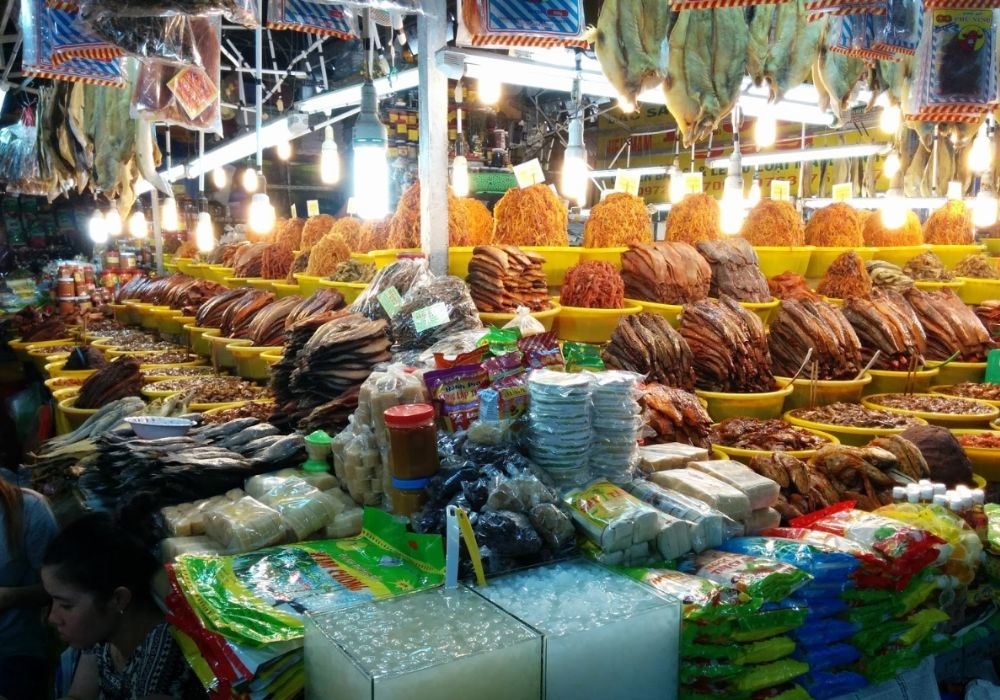 A stall selling dried goods and fermented fish at Tinh Bien market
Furthermore, there is a need to organize markets in a professional and orderly manner ensuring environmental cleanliness, food safety and the clear display of prices while also designating areas to showcase local specialty products and providing convenient access to tourism information. A clean, welcoming and trustworthy market will generate a more lasting appeal than any form of advertising.
Leaving Tinh Bien market (in Tinh Bien ward, An Giang province), what lingers with me is more than just the sweetness of palm sugar or the array of unique local specialties. It is the image of a border region that preserves its distinct identity through the rhythms of everyday life from the bustling market and the fires used to boil palm sugar, to the very way the local people trade their goods.
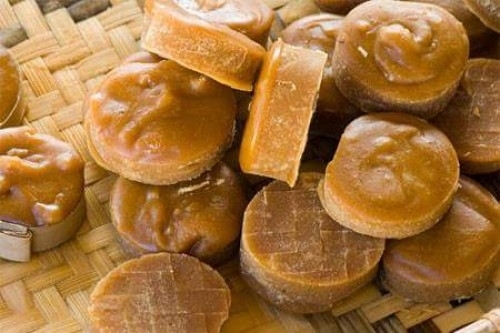 Palm sugar - a specialty of An Giang province
For me, the greatest value of Tinh Bien market perhaps lies in this: every item can become a cultural story, every traditional craft can open up a livelihood opportunity and every encounter at the market can help connect people from both sides of the border./.
