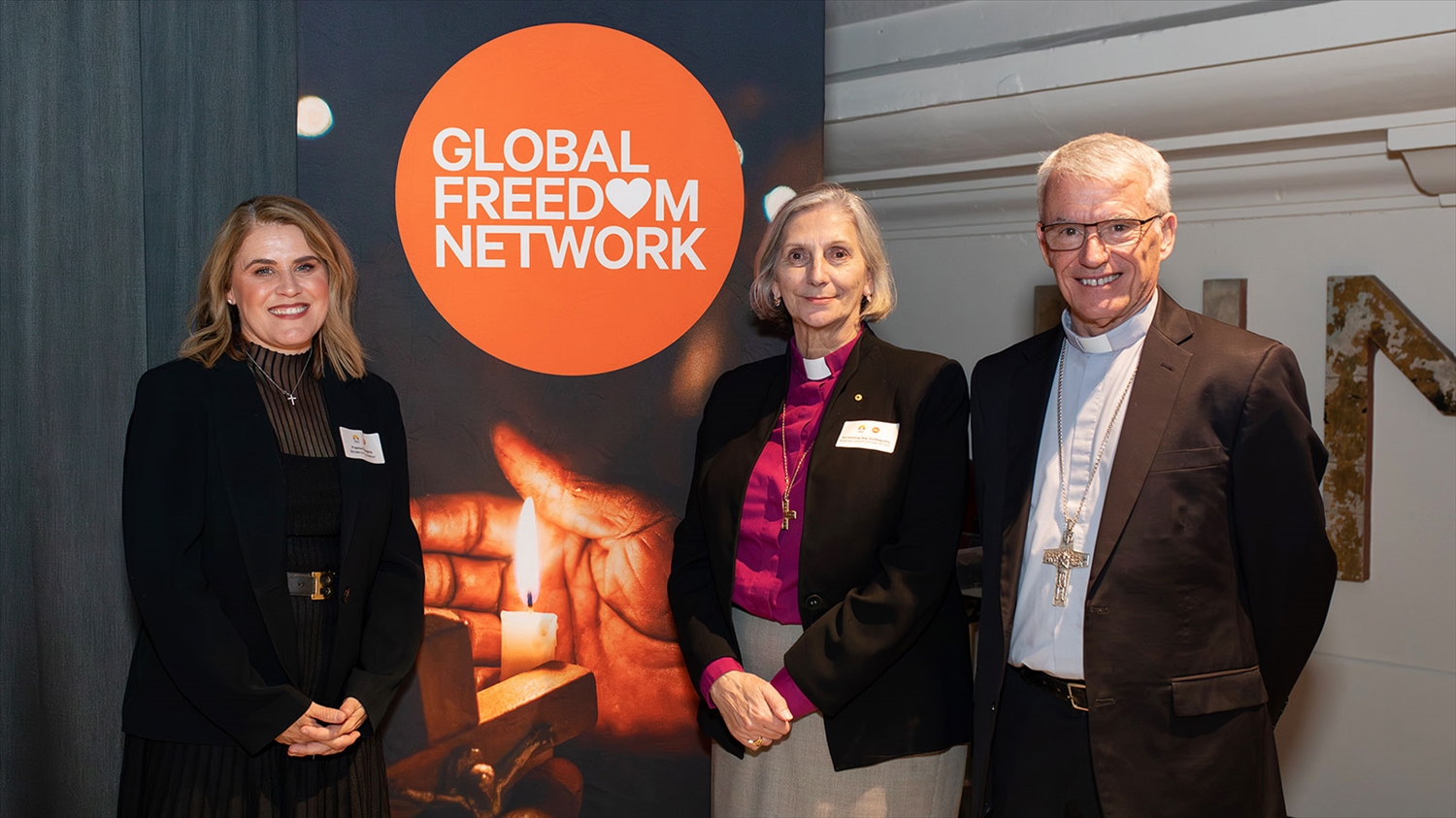
 The Global Freedom Network is an organization dedicated to eradicating modern slavery by engaging high-level religious leaders
Keywords: Policy; Religious resources; National development.
ảnh: The Global Freedom Network is an organization dedicated to eradicating modern slavery by engaging high-level religious leaders - Mạng Tự do Toàn cầu (Global Freedom Network) là một tổ chức chuyên xóa bỏ chế độ nô lệ hiện đại bằng cách thu hút các nhà lãnh đạo cấp cao của tôn giáo tham gia
1. Religious organizations whether possessing legal personality or not, are guaranteed the same rights and obligations as other legal entities when participating in social activities, provided they demonstrate their capacity or strengths and meet statutory requirements; this applies regardless of whether the entity is commercial or non-commercial, or whether it is a religious or civil legal entity
In the United States of America (US), religious organizations can be investors in economic development projects and provide very effective social services in many cities in states such as Chicago (Illinois), Baltimore (Maryland), Harlem (New York), Cleveland (Ohio), Los Angeles (California), Austin (Texas) and Atlanta (Georgia). In developed nations such as the England, Germany, the Netherlands, Belgium, and France, infrastructure projects including roads, ports, bridges, drainage systems, schools, hospitals and utility networks (electricity and water supply), as well as public services like healthcare and education, requiring substantial capital. However, as both the state and private entities often lack the necessary means or funds to execute these projects on their own, they frequently mobilize capital from society at large, including financial resources from religious organizations. Numerous US government agencies and sectors are participating as partners, committing to implement initiatives by the Christian Community Development Association aimed at urban revitalization, urban renewal and wastewater treatment. The Walt Disney Company, Atlantic Richfield and the Ford Foundation funded church projects providing social services, such as helping immigrants integrate into the community, offering free education to underprivileged children and assisting Black youth in finding employment. Drug addicts, the elderly living alone, unemployed women involved in sex work, and women who have suffered sexual abuse or domestic violence can often receive assistance and funding from religious organizations more easily and of better quality than from government sources.
In Islamic countries, an Islamic credit institution can provide funding to businesses investing in infrastructure based on a profit-sharing arrangement. Islamic credit investment firms operate similarly to mutual funds, investing client capital in common stocks or generating returns through financial mechanisms akin to those employed by banks.
Colleges and universities established and operated by religious organizations (such as Catholic and Protestant groups) are found across all continents. The number of students attending church-run schools is increasingly surpassing that of public schools. Prior to World War II (1945), numerous hospitals established by religious organizations were authorized to provide medical care to the public. In 1937, there were 254 hospitals run by religious organizations in China. After 1945, most of these hospitals were partially reorganized or transferred to the government.
Socio-political associations with religious legal status have been operating very effectively in many countries; for instance, the Christian Trade Union Confederation (Germany) is a national trade union organization in Germany with 280,000 members, affiliated with the European Union (EU) and the Free Trade Union.
Social and charitable funds established by religious organizations with legal status are operating very effectively and actively across many countries, such as: the Christian Fund for Children and the Elderly; CMMB (Catholic Medical Mission Board); the Dutch Lenten Campaign Fund; the Missionaries of Charity; the Missionaries of the Poor; the Scottish Catholic International Aid Fund (SCIAF); the Society of St. Vincent de Paul in Pakistan,...
In general, the policies and laws of many countries around the world are based on the sound, fundamental premise that a secular purpose can exist within a religious context and conversely, a religious purpose can exist within a secular context. Religious legal entities and commercial legal entities enjoy equal rights, opportunities, and obligations regarding participation in social, professional and other activities, provided they meet the conditions prescribed by law.
2. Governments of many countries view religion as a vital national resource for addressing social issues
Many governments and private donors support faith-based social activities. The most practical measures taken by governments to promote church-based social services include granting tax exemptions and using tax revenue to support religious organizations. The Supreme Court of the United States has approved the expansion of religious-affiliated educational and social services. The US. Supreme Court also heard a case brought by a group of federal taxpayers and Jewish clergy challenging the constitutionality of federal funding for religious organizations involved in projects addressing premarital sexual relations among minors; the plaintiffs argued that such funding violated the First Amendment, which prohibits government subsidies to religious groups. They sought a judicial ruling regarding the requirement that government-funded organizations provide specific services such as counseling and education on premarital sex for minors, family planning or abortion services. These services do not involve the participation of religious organizations. In the aforementioned case of Bowen v. Kendrick (March 1988), the U.S. Supreme Court ruled in June 1988 that federal grants to religious organizations for services related to premarital adolescent sexual activity did not violate the Constitution. The court outlined the principles for the National Assembly to enact laws allowing religious organizations to receive government or federal funding for a “legitimate secular” purpose, provided they meet the following criteria: (1) Organizations receiving funding are not restricted from associating with any religious organization; (2) Services provided to society and the public must not be religious in nature; (3) There is no risk of aid funds being used to propagate religion; (4) Religious organizations are not the sole beneficiaries; (5) Any manifestation or effect of promoting religion must be “incidental and remote”.
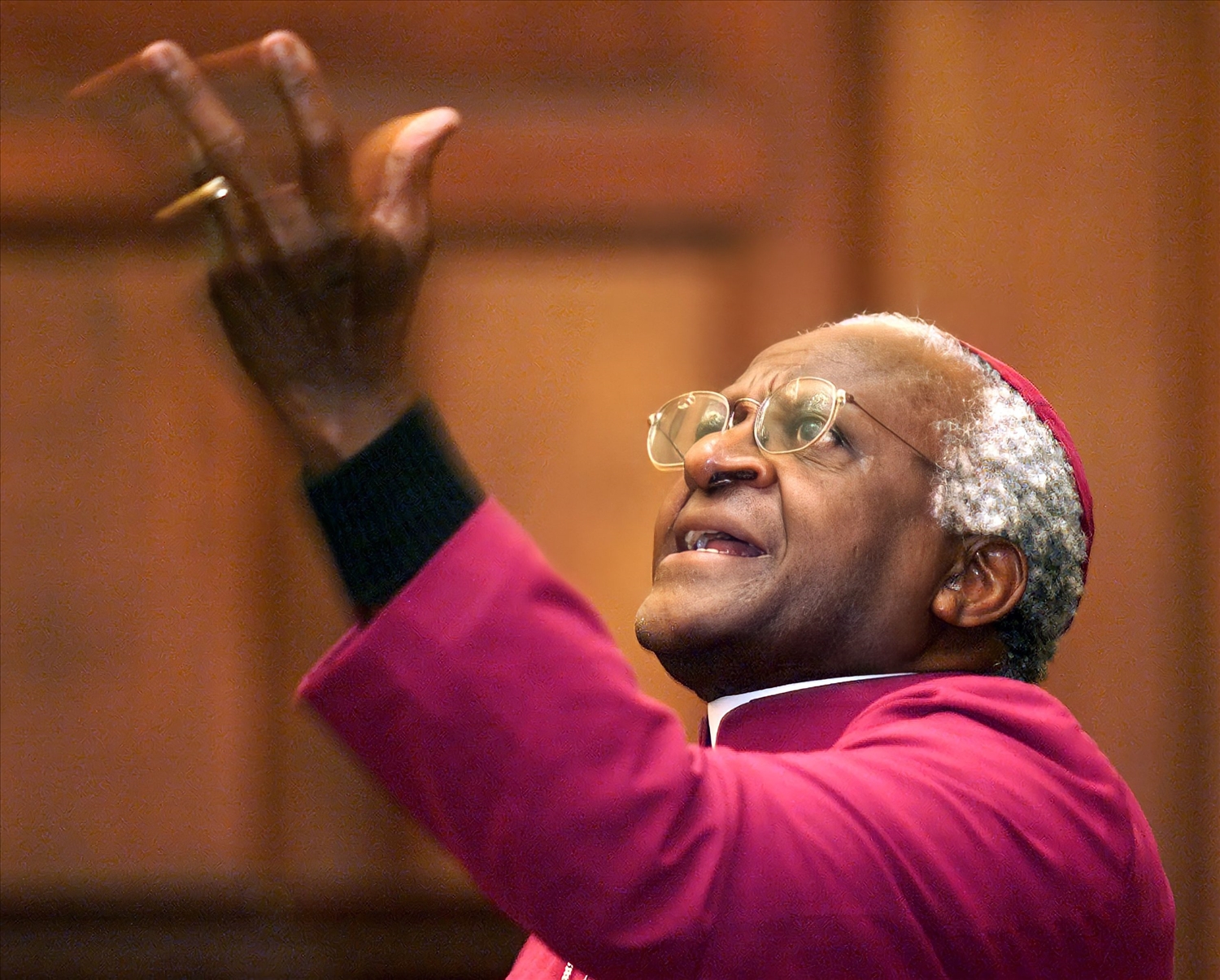
 Archbishop Desmond Tutu became world-renowned in the 1980s as an opponent of the apartheid policy in South Africa
3. Political systems in many countries around the world recognize religions as independent entities or associations possessing full legal personality, akin to other economic organizations, enabling them to raise capital, invest and participate in projects related to the economy, culture, education, healthcare, social welfare, environmental protection and the resolution of social issues (such as human trafficking and early marriage) initiated and planned by the government
In his study of religion in the United States, Liu Peng points out that religious organizations serving as the most vital hubs of social networks are the primary repositories of social capital. By organizing believers to engage in collective activities, these groups have gradually transformed the church into the most accessible and widespread venue for social capital accumulation in American society. According to Liu Peng, the church is fundamentally about people. In the United States, religious organizations boast a larger membership than any other type of social organization, representing a vast source of social capital within the American context. U.S. history demonstrates that for early immigrants, religion was the key to preserving their traditional cultures while simultaneously integrating into society. Ethics and values, social relationships, cooperation and mutual trust, exchanges and mutual assistance among associations, and the preservation of the cultural traditions of migrants, all are facilitated through church networks, with the church serving as the core. While assisting individuals, the church has simultaneously provided the local community with a wealth of volunteers, a workforce for social charity, and individuals with leadership capabilities… Through the church, traditional values and moral standards were cultivated, satisfying various individual and local needs. Over the course of its long-term development, the church, through this entirely natural process, gradually evolved into the primary hub of grassroots social networks, becoming a vital foundation of social capital. American people, whether they belong to different types of religious organizations, regardless of their socioeconomic circumstances, when participating in religious organizations and religious activities, on the one hand, they receive very specific help from the church, especially a sense of security and spiritual comfort. On the other hand, their activities also strengthen the church’s social capital.
Faith-based organizations (FBOs) around the world are currently operating very effectively and actively combating human trafficking; for instance, Talitha Kum is a global network of consecrated Catholic individuals fighting against human trafficking in over 70 countries. Caritas Internationalis is a confederation of local Catholic organizations across every continent dedicated to serving the poor and victims of human trafficking. Coatnet is a network uniting Catholic, Protestant and Orthodox organizations in the fight against human trafficking worldwide. The Global Freedom Network is an organization dedicated to eradicating modern slavery by engaging high-level religious leaders such as Patriarch Bartholomew (Orthodox Christianity), the Grand Imam of Al-Azhar (Islam), Datuk K. Sri Dhammaratana (Buddhism), Rabbi David Rosen (Judaism), and Pope Francis (Roman Catholicism) to sign a joint declaration against modern slavery. Although religious organizations are not responsible for investigating and prosecuting human traffickers, they are well-positioned to assist law enforcement in combating trafficking by rapidly providing information and sharing best practices to facilitate legal proceedings. Protestant organizations in the United States not only educate their members about the reality of human trafficking but also collaborate with state police and prosecutors to prosecute traffickers and protect victims. In the England, the “Churches Together” alliance has established a dedicated center to disseminate information and facilitate the handling of human trafficking issues across all its member organizations. The Refugee Office of the United States Conference of Catholic Bishops has established the Coalition of Organizations and Ministries (Compass) to promote the abolition of “slavery” at sea. This alliance enables a rapid response to the growing issue of human trafficking within the fishing industry. Coastal populations often face isolation and a lack of protection; however, Compass has swiftly established collaborative partnerships and a global response capability to address maritime trafficking, particularly at sea and in ports, while maximizing the effectiveness and consistency of Catholic and non-Catholic stakeholders in identifying, screening and assisting human trafficking victims worldwide. Similarly, Chab Dai, a Christian anti-trafficking organization that originated in Cambodia has expanded into an entity operating through alliances in over 20 countries. Globally, faith-based organizations (FBOs) are currently playing a highly effective and active role in preventing child marriage and addressing its consequences. It is a common fact that the countries with the highest rates of child marriage in the world are often deeply religious nations such as Afghanistan, India, Bangladesh, Bhutan, the Maldives, Nepal, Pakistan, Sri Lanka, and Niger (with India being a notable example). Desmond Tutu was the first Black South African to serve as Archbishop of Cape Town and Primate of the Anglican Church in Southern Africa (now known as the Anglican Church of Southern Africa). He gained worldwide renown in the 1980s as an opponent of apartheid in South Africa and as a co-founder of the “Girls Not Brides” organization, a partnership involving over 1,300 civil society organizations from more than 100 countries across Africa, Asia, the Middle East, Europe and the Americas dedicated to ending child marriage and enabling girls to reach their full potential. Members of Girls Not Brides raise global awareness about child marriage, build understanding of the actions needed to end the practice, and advocate for laws, policies, and programs that make a difference in the lives of millions of girls worldwide. Desmond Tutu was also a champion of the movement to end child marriage across multiple continents.
4. The most practical institutions and policies adopted by governments to foster religious social activities and services are tax exemptions or the use of tax revenue to support religious organizations
The Supreme Court of the United States has authorized the expansion of religious-based educational and social services. In its grant programs, the U.S. Agency for International Development (USAID) upholds the principle of equal treatment for religious organizations participating in social work, prohibiting discrimination regarding competition for federal funding to implement social service programs or regarding access to the benefits of such services. Faith-based organizations may not use direct USAID funding for religious activities such as worship, prayer, proselytization, or religious conversion but may continue to engage in such activities provided they are separated in time or location from programs or services directly funded by USAID.
5. Conclusion
An examination of the institutions and policies of various nations regarding the promotion and utilization of religious resources reveals that many governments worldwide view religion as a significant national asset in addressing the aforementioned social issues.
*Former Director of the Institute of Religion and Belief, Ho Chi Minh National Academy of Politics
References
1. Liu Peng, Social capital of American religious organizations, Journal of Religious Research, No. 2/2010.
2. Desmond Mpilo Tutu was born on October 7th, 1931, and was a South African activist and Anglican Archbishop. He was actively involved in defending human rights and used his personal influence to advocate for the oppressed. He campaigned against AIDS, tuberculosis, homophobia, transphobia, poverty and racism. Tutu was awarded the Nobel Peace Prize in 1984, the Albert Schweitzer Prize for Humanitarianism in 1986, the Pacem in Terris Award in 1987, the Sydney Peace Prize in 1999 and the Gandhi Peace Prize in 2005.
