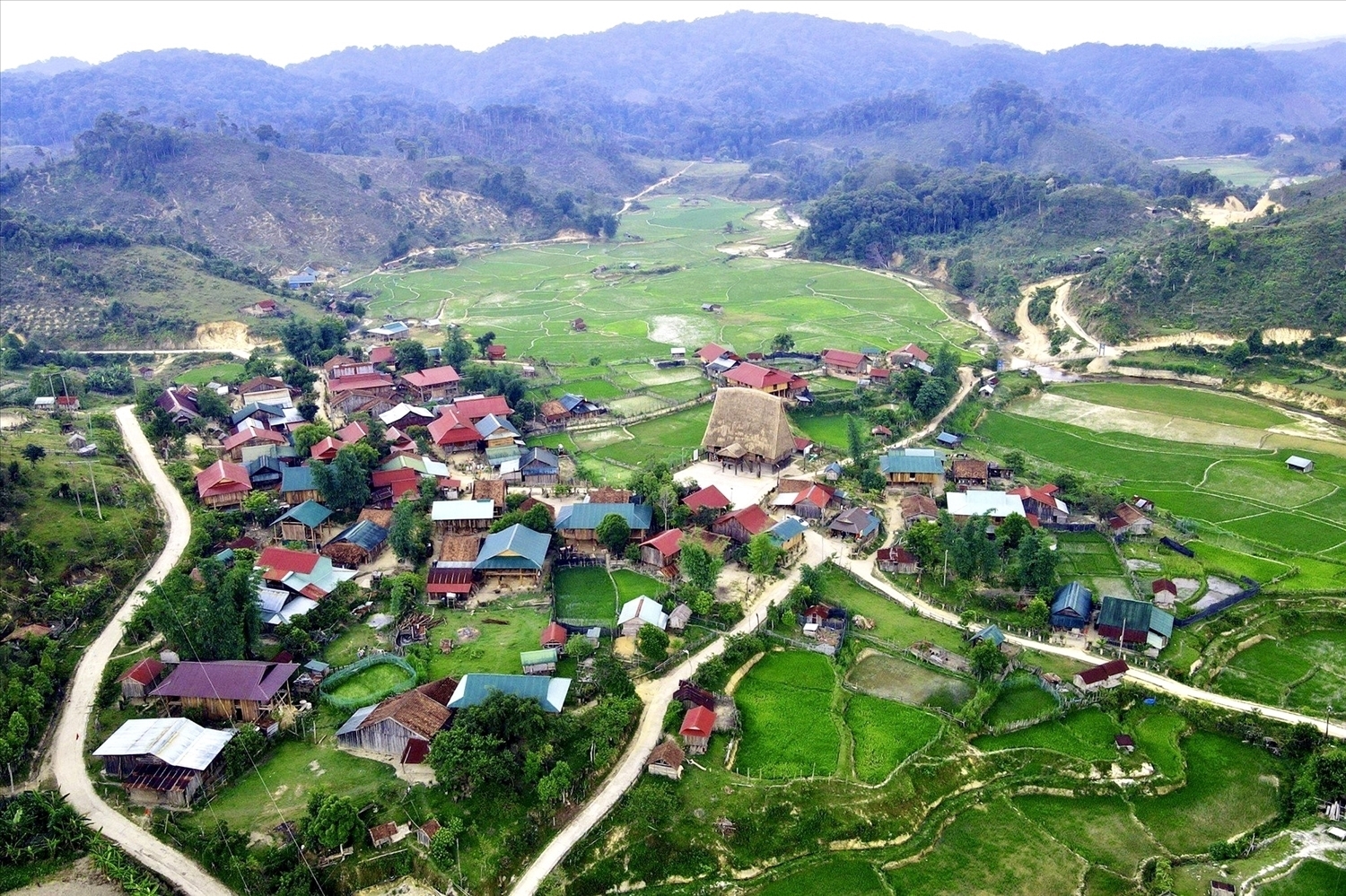
 The ethnic minority and mountainous areas have made significant progress, becoming one of the important driving forces promoting economic restructuring, creating jobs and improving livelihoods for local people
Keywords: Role; Ethnic minority communities; Tourism development.
1. Introduction
Sustainable tourism development has become a key direction in the socio-economic development strategies of many countries, in there, emphasizing the harmony between economic growth, cultural preservation and environmental protection. In Vietnam, ethnic minority and mountainous regions possess rich and unique tourism resources, including ecological landscapes, local knowledge, festivals, beliefs, traditional crafts and distinctive community lifestyles. These are the core elements that make cultural tourism, ecotourism and community-based tourism attractive.
However, the practical experience of tourism development in many localities shows that when ethnic minority communities are not placed at the center, tourism activities easily fall into the trend of short-term exploitation, commercialization of culture and putting pressure on the ecological environment. When communities only participate in the role of providing individual services, lacking decision-making power and equitable benefit sharing, it not only reduces socio-economic efficiency but also poses the risk of conflicts of interest and erosion of cultural identity.
In this context, studying the role of ethnic minority communities in sustainable tourism development has profound theoretical and practical significance. The community is not only a beneficiary but also an active participant in preserving, managing and promoting cultural and ecological values associated with tourism. larifying this role will contribute to shaping a community-centered approach to tourism development, thereby ensuring harmony between cultural preservation, environmental protection and livelihood enhancement, towards sustainable development in ethnic minority and mountainous areas in the current period.
2. Research results
2.1. The current situation of tourism development in ethnic minority and mountainous areas
n recent years, tourism in ethnic minority areas has made significant progress, becoming one of the important driving forces promoting economic restructuring, creating jobs and improving livelihoods for local people. Many localities have effectively exploited unique forms of tourism such as ecotourism, cultural tourism, and community tourism associated with the natural landscape, cultural heritage and local knowledge of ethnic minority communities. Destinations in ethnic minority and mountainous regions are increasingly attracting domestic and international tourists, contributing to enhancing the image and position of the region on the national tourism map.
n terms of potential, the ethnic minority and mountainous areas possess a rich and diverse range of tourism resources. The relatively pristine natural landscape, unique ecosystem and rich tangible and intangible cultural heritage provide a crucial foundation for sustainable tourism development. Many traditional festivals, crafts, local cuisine, architecture and community customs have been incorporated into tourism development, initially generating income and raising people’s awareness of the value of cultural heritage.
However, the current state of tourism development in ethnic minority and mountainous areas still faces many limitations.
Firstly, local community participation remains passive and uneven. In many places, the community is primarily involved in providing simple services such as accommodation, food, and cultural performances, while the decision-making power regarding planning, product design and benefit distribution remains in the hands of external entities. This diminishes the community’s role as an active participant and affects the motivation for long-term involvement.
Secondly, the commercialization of culture poses a major challenge to the sustainability of tourism. Some traditional cultural values are being simplified and theatricalized to cater to the tastes of tourists, leading to the risk of losing their authenticity and inherent social significance. In addition, the increasing pressure from tourist numbers at some destinations has had a significant impact on the ecological environment, such as: Waste pollution, landscape degradation and overloaded infrastructure.
Thirdly, the community’s capacity for tourism management and organization is limited. Many ethnic minority communities have limited professional expertise, tourism skills, market access and digital technology skills, while transportation infrastructure, accommodation, and support services in many mountainous areas do not yet meet the requirements for sustainable tourism development.
Overall, the current state of tourism development in ethnic minority and mountainous regions reveals a parallel existence of great potential and significant challenges. This necessitates a reorientation of tourism development towards a community-centered approach, strengthening the role of ethnic minority communities as key stakeholders to ensure harmony between economic development, cultural preservation and environmental protection.
2.2. The role of ethnic minority communities in sustainable tourism development
In sustainable tourism development, ethnic minority communities play a central role as cultural, economic and social actors of the destination. Beyond being merely beneficiaries, communities directly determine the sustainability of tourism through resource conservation, cultural practices and participation in local development governance.
Firstly, ethnic minority communities play a key role in preserving and regenerating cultural and ecological values. Local knowledge, farming practices, festivals, rituals, traditional crafts and living spaces form the foundation for unique cultural and ecological tourism products. The proactive efforts of ethnic minority communities in maintaining, transmitting and practicing these values not only contribute to preserving cultural identity but also ensure the authenticity and lasting appeal of the destination. When communities are empowered and directly benefit from tourism, the motivation to preserve heritage and protect the ecological environment will be strengthened, thereby limiting the tendency towards short-term exploitation and excessive commercialization.
Secondly, ethnic minority communities are the main providers of tourism products and services, contributing to the creation of sustainable livelihoods in their localities. Through community-based tourism models, local people directly participate in activities such as accommodation, food, cultural experience guidance and the production and consumption of traditional handicrafts. This participation not only generates income and diversifies livelihoods but also helps distribute tourism benefits more equitably within the community, reducing dependence on external stakeholders. In this case, tourism becomes a tool to support local economic development while enhancing the self-reliance of the community.
Thirdly, ethnic minority communities play a key role in managing and supervising tourism activities at the local level. With a deep understanding of the ecological space and social life, the community is able to effectively participate in monitoring the impact of tourism on the environment and culture, promptly adjust inappropriate activities. This role is particularly important in ensuring a balance between tourism development and resource protection, as well as in resolving conflicts of interest arising among stakeholders.
Fourthly, ethnic minority communities contribute to strengthening social cohesion and enhancing the inclusiveness of tourism development. The process of jointly participating in and benefiting from tourism fosters a spirit of cooperation, enhances the social status of disadvantaged groups and building trust within the community. Thus, tourism is not only an economic activity but also becomes a driving force for sustainable social development.
Thus, the role of ethnic minority communities in sustainable tourism development is comprehensive, ranging from resource conservation and livelihood development to governance and social cohesion. Placing the community at the center is a prerequisite for ensuring tourism development that is harmonious, sustainable and appropriate to the specific characteristics of ethnic minority and mountainous areas.
2.3. Problems posed in promoting the role of ethnic minority communities in tourism development
Although ethnic minority communities play a central role in sustainable tourism development, effectively leveraging this role in practice still faces many issues that need to be indentified and addressed comprehensively.
Firstly, there are limitations on the participation and decision-making power of the community. In many localities, communities are primarily involved in providing individual services, while the power to plan, develop tourism products, and distribute tourism benefits remains held by external entities. This diminishes the community’s role as an active participant and affects the motivation for long-term involvement.
Secondly, the community’s capacity for tourism development is limited. Many ethnic minority communities still have low levels of management skills, tourism expertise, market access and digital technology proficiency, while training and development opportunities do not meet practical requirements. The shortage of highly qualified local human resources makes it difficult for these communities to proactively organize, manage and improve the quality of tourism products in a sustainable manner.
Thirdly, the risk of commercialization and distortion of cultural values is a significant challenge. In the process of tourism development, some traditional cultural values are simplified, theatricalized or detached from their community context, diminishing their authenticity and inherent social significance. This not only affects cultural identity but also diminishes the long-term appeal of the destination.
Fourthly, the issues of benefit sharing and social justice have not been adequately addressed. In many places, the benefits from tourism are not distributed fairly among ethnic minority communities, easily leading to internal conflicts and clashes of interest between the community and businesses. In addition, the increasing pressure from tourists also poses challenges to the ecological environment and community life. These issues highlight the need for comprehensive solutions to ensure that ethnic minority communities truly become the central actors in sustainable tourism development.
2.4. Orientation and solutions regarding the role of ethnic minority communities in sustainable tourism development
The tourism development should be guided by a community-centered approach, considering communities as both cultural subjects and economic actors, as well as direct beneficiaries of tourism. The overarching principle is to ensure a harmonious balance between exploiting tourism potential and preserving cultural and ecological values and improving the quality of life for local people.
In terms of institutions and policies, it is necessary to improve the legal framework and tourism governance mechanisms in a way that strengthens the participation, decision-making and oversight rights of ethnic minority communities in the planning, organization and management of tourism activities. Policies supporting tourism development need to clearly integrate the goal of empowering communities and ensuring a fair benefit-sharing mechanism between communities, businesses and the State.
Regarding community capacity building, it is necessary to promote training and education in sustainable tourism, community management, service business, digital skills and communication for local people. Developing a core team of local leaders, including village elders, community leaders, artisans and youth, will contribute to strengthening the self-governance capacity and sustainability of community-based tourism models.
In terms of implementation, it is necessary to promote community-based tourism models linked to cultural preservation and environmental protection, limiting the trend of excessive commercialization. At the same time, it is necessary to strengthen multi-stakeholder linkages among communities, governments, businesses and social organizations to mobilize resources, providing technical support and expanding markets. Only when ethnic minority communities are truly placed at the center can tourism develop sustainably and bring long-term benefits to ethnic minority and mountainous areas.
3. Discussion
It can be said that ethnic minority communities play a crucial role in ensuring the sustainability of tourism development, especially in areas with unique cultural and ecological values. However, this role cannot be automatically fulfilled without the right institutional conditions, resources and participation mechanisms. In practice, many tourism models in ethnic minority areas still lean towards a “resource exploitation” approach, while the community only participates in a supporting role, leading to the risk of commercialization of culture and a decline in sustainability. The discussion also highlighted the need to shift from a mindset that views communities as “participants” to one that views communities as active agents in tourism development. When communities are empowered to make decisions and participate from planning and organization to monitoring and benefiting, tourism has the potential to be more closely linked to cultural preservation and environmental protection. On the other hand, if communities are excluded from the decision-making process, conflicts of interest and social inequalities can increase, hindering sustainable development.
Furthermore, the role of the community needs to be considered in relation to its interactions with other stakeholders, especially the government and businesses. Sustainable tourism development requires a multi-stakeholder cooperation mechanism, in which ethnic minority communities are not only service providers but also equal partners in governance and benefit sharing. Only with this approach can tourism truly become a driving force for economic development, cultural preservation and strengthening social cohesion in ethnic minority and mountainous areas.
4. Conclusion
Ethnic minority communities play a central role in sustainable tourism development because they are both the owners of cultural and ecological resources and the direct participants in organizing and benefiting from tourism activities. Research shows that promoting the role of the community not only contributes to preserving cultural identity, protecting the environment, and maintaining the authenticity of the destination, but also creating sustainable livelihoods, enhances self-reliance and strengthens social cohesion at the local level. However, for this role to be effectively fulfilled, it is necessary to shift from a resource-exploitation approach to a community-centered tourism development approach, ensuring the right to participation, decision-making and equitable sharing of benefits for ethnic minority communities. In the current context of integration and development, placing ethnic minority communities in a central position is a prerequisite for harmonious, long-term and truly sustainable tourism development.
* Journal of Ethnic and Religious Research
References
1. Government (2020). Vietnam’s tourism development strategy to 2030, Hanoi.
2. Nguyen Duy Dung (2020), Some factors of community torism types affecting the traditional culture of ethnic monorities in the central Highlands, Journal of Ethnic Minority Research, Volume 9, Issue 1, March.
3. Nguyen Thi Ung (2025), Sustainable tourism development in Vietnam from a social perspective: Current situation, issues and solutions., https://www.tapchicongsan.org.vn/web/guest/quoc-phong-an-ninh-oi-ngoai1/-/2018/1145502/phat-trien-du-lich-ben-vung-o-viet-nam-tu-phuong-dien-xa-hoi---thuc-trang%2C-van-de-dat-ra-va-giai-phap.aspx
4. Decision No. 147/QD-TTg, dated January 22th, 2020, of the Prime Minister, approving the tourism development strategy until 2030.
