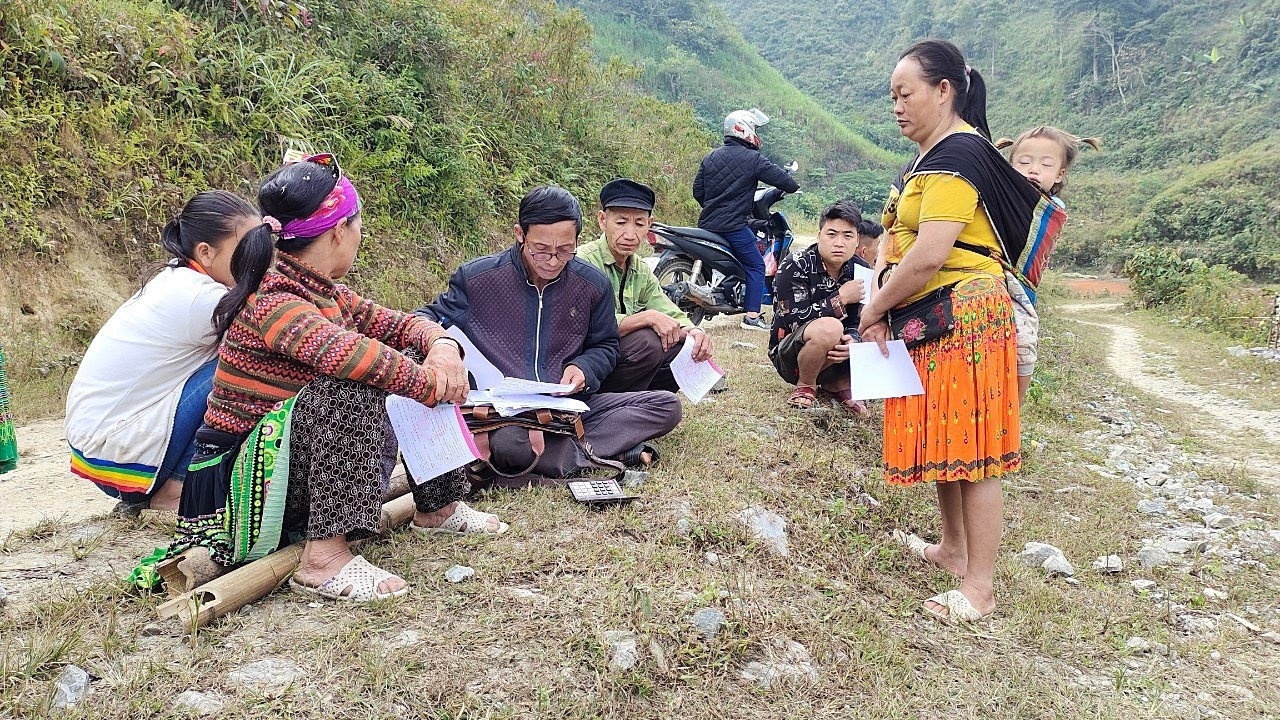
 Leveraging the role of influential individuals to raise awareness and mobilize the community against child marriage and consanguineous marriage
: Respected people; Child marriage; Consanguineous marriage; Ethnic minority; Ethnic minority and mountainous areas.
1. Introduction
Child marriage and consanguineous marriage are social practices that persist in some ethnic minority and mountainous regions, leading to numerous adverse consequences for reproductive health, population quality, human resources and the sustainable development of ethnic minority communities. According to the 2024 survey on the socio-economic status of 53 ethnic minority groups, the practice of child marriage remains concentrated within certain ethnic groups and in mountainous areas facing particularly difficult socio-economic conditions. This reality indicates that reducing the incidence of child marriage and consanguineous marriage is not merely a matter of legal enforcement, it is also a process of changing perceptions, cultural norms and social behaviors within the community.
Over the years, the Party and the State have issued numerous guidelines and policies aimed at mitigating this issue, most notably Decision No. 498/QD-TTg, dated April 14th, 2015, in which the Prime Minister approved the project on “Reducing Child Marriage and Consanguineous Marriage among Ethnic Minority Groups for the period of 2015-2025”. Furthermore, this effort is supported by the National Target Program for Socio-Economic Development in Ethnic Minority and Mountainous Areas for the period of 2021-2030 (Phase I: 2021-2025), commonly referred to as National Target Program 1719. However, the effectiveness of implementation at the local level depends significantly on the involvement of influential figures within the community, especially those who are highly respected.
By virtue of their social standing, deep understanding of local customs and the ethnic language, and their ability to persuade the community, respected people serve as a core force in advocacy, mobilization, counseling, and mediation. They play a pivotal role in shifting the perceptions of families and youth regarding marriage, reproductive health, and gender equality. Consequently, examining the role of these influential figures in preventing child marriage and consanguineous marriage holds significant theoretical and practical importance, contributing to more effective ethnic minority affairs and the sustainable development of ethnic minority and mountainous areas.
2. Research results
2.1. The role of respected people in preventing child marriage and consanguineous marriage
In efforts to prevent child marriage and consanguineous marriage among ethnic minority and mountainous areas, respected people play a uniquely vital role. They serve as leaders within their communities and act as a bridge connecting the policies and guidelines of the Party and the State with the daily lives of the people at the grassroots level. Their influence stems not only from their social standing but also from their profound understanding of the customs, traditions, languages and cultural values specific to each ethnic group. For this reason, the voices of respected people often carry greater persuasive power than conventional administrative forms of outreach, helping to foster shifts in people’s perceptions and behaviors.
Firstly, respected people serve as a core force in disseminating and promoting the provisions of the 2014 Law on Marriage and Family, policies regarding population and gender equality and the initiative to reduce the incidence of child marriage and consanguineous marriage. Through village meetings, clan gatherings, traditional festivals or other community activities, they explain the harmful effects of early marriage and consanguineous marriage, on maternal and child health, population quality and the community’s future development using the local ethnic language and incorporating real-life stories, which makes the information easier for the people to accept.
In addition, respected people play a key role in encouraging families to abandon outdated customs and in preventing instances of potential child marriage or marriage between close blood relatives. In many localities such as Tuyen Quang, Lao Cai, Son La, Dien Bien, Gia Lai and Quang Ngai, village elders, village heads and heads of clans have engaged directly with families. Working in coordination with local authorities, schools and various social organizations, they provide counseling and mediation, while encouraging young people to continue their education, avoiding early marriage and adhere to legal regulations. Numerous community outreach initiatives, led by these respected people, have contributed to a reduction in cases of child marriage, while simultaneously raising awareness about reproductive health and children’s rights.
From the perspective of community governance, respected people serve as key agents in fostering social trust and strengthening consensus during the implementation of intervention programs. Leveraging the social and symbolic capital recognized by their communities, they are uniquely positioned to bridge local knowledge with modern policy, contributing to the gradual elimination of outdated customs, the promotion of a civilized lifestyle, and the enhancement of human resource quality. Consequently, harnessing the role of these respected people are not merely a strategy for advocacy and outreach; it is an effective method of social governance, establishing a sustainable foundation for efforts to prevent child marriage and consanguineous marriage among ethnic minority and mountainous areas today.
2.2. The current situation of leveraging the role of respected people in preventing child marriage and consanguineous marriage
Currently, there are 29,626 respected people across the country, people who maintain close ties with the local population and have been selected by their respective villages, hamlets, or ethnic communities in accordance with established regulations. For the period of 2021-2025, local authorities have allocated approximately 500 billion VND to implement policies and support programs for these respected people within ethnic minority communities. This includes organizing 1,423 conferences to disseminate information, reaching 89,900 participants; conducting 984 training sessions to enhance knowledge for 58,496 participants; facilitating 54 study visits and exchange programs within districts for 1,659 participants; organizing 298 study visits and exchange programs within provinces for 12,811 participants; and arranging 348 trips to the capital, Hanoi and other provinces for 12,069 participants (Minh Nguyet, 2026). In recent years, leveraging the role of respected people has emerged as a key strategy for the effective implementation of the Prime Minister’s Decision No. 498/QĐ-TTg (dated April 14th, 2015), which approved the project on "Minimizing Child Marriage and Consanguineous Marriage among Ethnic Minority and Mountainous Populations (2015-2025)”, as well as the objectives of the National Target Program for Socio-Economic Development in Ethnic Minority and Mountainous Areas. With support from Party committees, local authorities and socio-political organizations, these influential individuals have increasingly played an active role in community outreach, advocacy, counseling, and monitoring, thereby helping to shift public awareness regarding marriage, family life and reproductive health.
Practice in many localities shows that village elders, village heads, clan heads, religious dignitaries and prominent individuals in the community have actively integrated the content of preventing and combating child marriage and consanguineous marriage into village meetings, clan activities, traditional festivals and community cultural activities. Leveraging their deep understanding of the local language, customs, and social mindset, they explain legal regulations by highlighting the tangible consequences of child marriage and consanguineous marriage, specifically their impact on maternal and child health, population quality, and family development. According to the 2024 survey on the socio-economic status of 53 ethnic minority groups, child marriage remains concentrated within certain ethnic communities and regions facing particularly difficult socio-economic conditions; this underscores the vital role of community-based communication in driving changes in social behavior.
Many models promoting the role of respected people have brought positive results. In provinces such as: Tuyen Quang, Lao Cai, Son La, Dien Bien, Lai Chau, Cao Bang, Lang Son,... Respected community figures collaborate with local authorities, schools, the Youth Union, and the Women’s Union to organize dialogues with adolescents and their parents. They urge families to prevent early marriage among their children, while encouraging them to pursue vocational training or further education. In provinces such as Gia Lai, Quảng Ngai, Dak Lak and Lam Dong, many village elders have personally intervened, mediating, providing counsel and preventing instances of potential child marriage or consanguineous marriage (marriage between close relatives). Furthermore, they actively mobilize the community to abandon outdated customs that are no longer appropriate. These efforts help strengthen public trust in the policies of the Party and the State, while fostering consensus for the implementation of various intervention programs.
Despite the achievements, there remain certain limitations in leveraging the role of respected people within the community. In some localities, coordination between these respected people, local authorities and relevant functional agencies is not sufficiently consistent; furthermore, training in areas such as legal knowledge, communication skills, psychological counseling and reproductive healthcare remains limited. A segment of these respected people is elderly, making it difficult for them to engage with digital technology and modern communication methods, while a successor generation has yet to be adequately prepared. Moreover, the combined impact of low educational attainment, deeply ingrained traditional customs and challenging geographical conditions has resulted in slow and less-than-sustainable changes in social behavior.
In general, practical experience demonstrates that respected people exert a profound impact on efforts to prevent child marriage and consanguineous marriage. However, to fully leverage this role, it is essential to further refine coordination mechanisms, enhancing capacity, providing better support in terms of information and skills, cultivating a new generation of such respected people. These are critical prerequisites for increasing the effectiveness of intervention programs, improving population quality, fostering sustainable development in ethnic minority and mountainous areas during this new phase.
2.3. Solutions to enhance the effectiveness of the role played by influential individuals in preventing child marriage and consanguineous marriage among ethnic minority and mountainous areas
In order to enhance the effectiveness of the role played by respected people in preventing child marriage and consanguineous marriage, it is necessary to implement a comprehensive set of solutions, combining the refinement of institutional frameworks, the strengthening of the capacities of these respected people and the innovation of communication methods within the community.
Firstly, it is necessary to continue refining mechanisms and policies to leverage the role of respected people in the implementation of the National Target Program for ethnic minority and mountainous areas. Simultaneously, tasks related to the prevention of child marriage and consanguineous marriage should be integrated into broader programs concerning education, healthcare, gender equality, reproductive health, and human resource development. These influential individuals should be recognized as key stakeholders in community governance and the local-level execution of policies.
Secondly, it is essential to strengthen training and professional development for respected people in areas such as legal knowledge, communication skills for behavioral change, psychological counseling, adolescent reproductive health and the application of digital technology. Cultivating a new generation of such figures, younger individuals who are well-educated, knowledgeable about traditional culture and proficient in technology will help ensure continuity and enhance the effectiveness of outreach and advocacy efforts in the context of digital transformation.
Thirdly, it is necessary to innovate communication methods by adopting a community-centered approach that harmoniously integrates local knowledge with modern media. Outreach content should be delivered in both the national language and the respective ethnic minority languages, and incorporated into village or hamlet meetings, clan gatherings, school activities, traditional festivals and digital platforms. This approach enables respected people to convey messages directly in a manner that aligns with the specific cultural characteristics of each ethnic minority community.
Fourthly, strengthen coordination mechanisms between influential community figures and local authorities, the education and healthcare sectors, population-related personnel, the Women’s Union, the Youth Union and other social organizations to facilitate the early detection of, as well as the provision of counseling, intervention and support for, cases at risk of child marriage or consanguineous marriage. At the same time, it is necessary to establish a mechanism for the timely evaluation, recognition, and rewarding of exemplary models and outstanding individuals. This will help disseminate best practices, enhance the social responsibility of influential community figures, and gradually foster a progressive cultural environment, ultimately contributing to improved population quality and sustainable development in ethnic minority and mountainous areas.
3. Discussion
Research findings indicate that influential individuals, those held in high regard within a community serve not only as a force supporting policy implementation but also as social agents capable of fostering sustainable shifts in community perceptions and behaviors regarding the prevention of child marriage and consanguineous marriage. This aligns with the social capital theories of sociologists Pierre Bourdieu and Robert Putnam, which posit that prestige, trust and social relationships constitute vital resources for influencing collective behavior. In a context where many traditional customs still deeply affect the lives of some ethnic minorities, propaganda methods based on personal reputation and community consensus are often more effective than simple administrative measures.
Practical implementation in provinces such as Tuyen Quang, Lao Cai, Son La, Dien Bien, Lai Chau, Gia Lai, Quang Ngai, Dak Lak and Lam Dong shows that in areas where influential community figures are given the opportunity to regularly participate in outreach, mediation and community oversight, there has been a positive shift in public awareness regarding lawful marriage, reproductive healthcare and children’s rights. However, this effectiveness varies across localities due to differences in socio-economic conditions, educational levels, cultural characteristics and the coordination mechanisms among the entities involved in implementation.
From the perspective of public governance, research suggests a shift in approach: rather than viewing respected people merely as a force for advocacy and support, they should be recognized as partners who work alongside authorities in the development, implementation and monitoring of policies. At the same time, it is essential to establish a mechanism for the training, support and performance evaluation of respected people in a professional manner, one that integrates digital transformation and leverages local knowledge. This is a crucial prerequisite for enhancing the effectiveness of efforts to prevent child marriage and consanguineous marriage, thereby contributing to improved population quality and the promotion of sustainable development in ethnic minority and mountainous areas.
4. Conclusion
It can be said that influential community figures serve as a core force in preventing child marriage and consanguineous marriage among ethnic minority and mountainous populations. Leveraging their social standing, deep understanding of traditional culture and ability to mobilize the community, they play a vital role in shifting perceptions, eliminating harmful customs, and fostering greater compliance with laws on marriage and the family, all while improving population quality and safeguarding children’s rights. Experience has shown that effectively leveraging the role of respected people requires refining mechanisms and policies, enhancing capacity and strengthening coordination across various levels and sectors. This is a strategically significant approach for the sustainable reduction of child marriage and consanguineous marriage, as well as for fostering sustainable development in ethnic minority and mountainous areas.
* Journal of Ethnic and Religious Research
References
1. Politburo (2003), Resolution No. 24-NQ/TW dated March 12th, 2003, on ethnic affairs, Hanoi.
2. Politburo (2019), Conclusion No. 65-KL/TW dated October 30th, 2019, on the continued implementation of Resolution No. 24-NQ/TW about ethnic affairs in the new situation, Hanoi.
3. Ministry of Ethnic and Religious Affairs (2025), Summary Report on Ethnic and Religious Affairs and Results of the Implementation of the National Target Programs in 2025, Hanoi.
4. Ministry of Ethnic and Religious Affairs (2025), Thematic Report on promoting the role of respected people in ethnic minority areas, Hanoi.
5. Ministry of Health (2022), Report on Reproductive health care and maternal, child health in ethnic minority areas, Hanoi.
7. National Assembly (2014), Law on Marriage and Family, Hanoi.
8. National Assembly (2016), Law on Children, Hanoi.
9. National Assembly (2019), Resolution No. 88/2019/QH14 dated November 18th, 2019, approving the Master Plan for socio-economic development in ethnic minority and mountainous areas for the period of 2021-2030, Hanoi.
