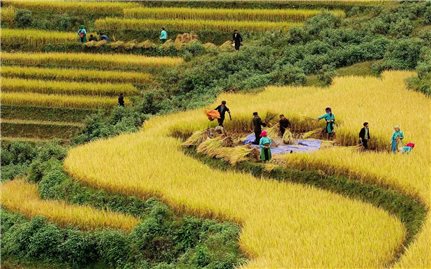
Abstract: This article focuses on clarifying some outstanding achievements after 5 years of implementing the Resolution of the 13th National Congress of the Party, specifically the section on ethnic policies; This study delves into the fundamental changes in thinking, methods, and development models for ethnic minority and mountainous regions, as demonstrated by the concrete results of implementing the National Target Program for socio-economic development of ethnic minority and mountainous regions, Phase I, from 2021-2025.
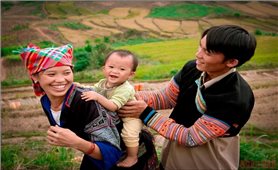
(DTTG) - Abstract: Based on the results of the 2019 and 2024 surveys on the socio-economic status of 53 ethnic minority groups (to be released in late November 2025), this article analyzes fertility levels, changing trends, and disparities among these ethnic minority groups within the context of population aging in Vietnam. The results indicate a downward trend in fertility rates across ethnic groups, though with significant variation. A pattern of early childbearing remains prevalent, particularly among those aged 20-24, which contributes to maintaining a young population structure in ethnic minority and mountainous regions. However, high fertility rates and a large young population do not equate to high-quality human resources, as early childbearing is often linked to limited access to education, employment and social services. Based on this, the article proposes a policy approach centered on targeted interventions and the adjustment of reproductive behaviors. It emphasizes the role of education, livelihood development and reproductive health services tailored to the specific cultural characteristics of different ethnic groups with the dual aim of adapting to population aging and ensuring sustainable development.

English review |
Dr. Phung Quang Thien* ; MA. Nguyen Thi Diep** -
12:35, 11/10/2026 (DTTG) - Abstract: Organic farming is emerging as an inevitable development trend aimed at achieving a green, safe, and sustainable agricultural sector. The Northern mountainous region holds significant potential for organic agriculture development, thanks to its favorable natural ecological conditions, abundant land resources, high biodiversity and the local knowledge systems of ethnic minority communities. This article primarily analyzes the current situation, opportunities and challenges regarding organic agriculture development in this region. By synthesizing research, policies and practical models, the article argues that organic agriculture not only enhances the value of agricultural products and boosts farmers’ incomes but also protects the environment, facilitates climate change adaptation and promotes sustainable development in the Northern mountainous region. Based on this, the author proposes several solutions to enhance the effectiveness of organic agricultural development in the coming period.

Abstract: This article examines the culinary culture of ethnic minority groups in the mountainous areas of Da Nang city from the perspective of symbolic anthropology, aiming to elucidate the role and significance of culinary symbols in the community’s social and spiritual life. Based on an analysis of traditional dishes, culinary implements, ritual practices, and dining-related decorative arts among ethnic groups such as the Co-tu, Ta Oi, Bru-Van Kieu, Pa Co, Ca Dong and Cor,… research indicates that cuisine serves not only to meet survival needs but also functions as a multi-layered system of cultural symbols, reflecting worldviews and conceptions regarding humanity, nature and society. In the contemporary context, these culinary icons continue to be reimagined and creatively expressed through festivals, community-based tourism and cultural exchanges, thereby contributing to the preservation of cultural identity, the strengthening of ethnic cultural resilience and the promotion of sustainable development in mountainous regions.
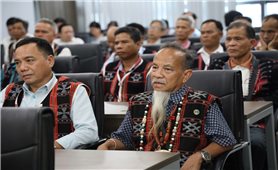
(DTTG) - Abstract: Respected people within ethnic minority communities constitute a distinct social force playing a vital role in community life. They serve as a bridge between the Party and the State on the one hand, and the people on the other; they contribute to preserving traditional culture, strengthening the great national unity bloc, ensuring national defense and security, fostering socio-economic development at the grassroots level. Drawing on the theories of social capital and community governance, this article analyzes the role of respected people within ethnic minority communities. It aims to affirm that, in the process of building a modern, effective and efficient system of national governance and fostering the strength of great national unity, the role of these respected people is becoming increasingly important.
English review |
Senior Lieutenant Colonel, MA. Hoang Duc Thanh* -
15:28, 22/09/2026 (DTTG) - Abstract: Developing ethnic minority and mountainous regions by leveraging human resources and local knowledge is a key approach to harnessing internal strengths and fostering sustainable development amidst current trends of integration and digital transformation. Human resources encompass not only educational attainment, vocational skills and innovative capacity but also the ability to inherit, preserve, and promote local knowledge values accumulated over generations. This research analyzes the role and current state of leveraging human resources and local knowledge in the socio-economic development of ethnic minority and mountainous areas. Based on an assessment of the opportunities and challenges involved, the author proposes solutions to enhance human resource quality, preserve and digitize local knowledge, and effectively integrate traditional knowledge with modern science and technology. These measures serve as a crucial foundation for leveraging endogenous resources, preserving cultural identity and fostering sustainable development in ethnic minority and mountainous areas during this new phase.
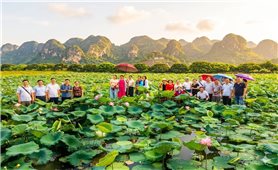
(DTTG) - Abstract: The ethnic minority areas of Hanoi possess a distinctive system of cultural resources belonging to the Muong and Dao communities including festivals, local knowledge, handicrafts, cuisine, traditional housing and folk arts creating significant potential for the development of community-based tourism. Based on the research findings, the author assesses the current state of cultural resource utilization in community-based tourism development across communes such as My Duc, Yen Xuan, Suoi Hai, Ba Vi and Yen Bai, at the same time proposing solutions aimed at sustainable development. Research findings indicate that fostering the community’s role as the primary actor by linking cultural preservation with livelihood development and implementing the goals of the National Target Program for socio-economic development in ethnic minority and mountainous areas (2021-2025) is a decisive factor in enhancing the competitiveness of community-based tourism, thereby contributing to the preservation of cultural identity and local economic development.
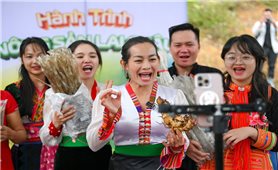
Abstract: Rural digital transformation is a key component of the national digital transformation strategy. However, in rural areas inhabited by ethnic minorities and in mountainous areas, this process is proceeding slowly and has yet to yield significant impact. The article analyzes the current situation, identifies bottlenecks, and proposes solutions to accelerate digital transformation, thereby contributing to the effective implementation of the Politburo’s Resolution No. 57-NQ/TW on breakthroughs in the development of science, technology, innovation and national digital transformation.

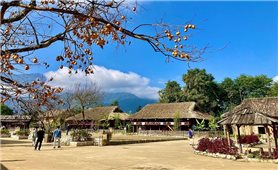
Abstract: Ethnic minority culture is an important endogenous resource in Vietnam’s sustainable development strategy. Based on an analysis of policies and statistical data from the period of 2021-2025, this article clarifies the extent to which cultural values are transformed into economic values through the OCOP Program and rural tourism in ethnic minority and mountainous areas. The results demonstrate a significant expansion in product scale and revenue, as well as increased participation by ethnic minority communities in product and service value chains; this contributes to creating additional livelihoods for these communities and affirms the role of culture as an endogenous resource for sustainable development.
English review |
Dr. Ly Thi Thu*; Hoang Thi Phuong Lien** -
11:25, 28/08/2026 Abstract: This article identifies various types of resources: human, cultural and local knowledge, natural and environmental, material and socio-political to highlight the significant existing and potential resources possessed by ethnic minority communities, it argues that these resources must continue to be harnessed rationally to achieve dual benefits: fostering rapid and sustainable socio-economic growth in ethnic minority and mountainous areas while aligning with the nation’s overall development goals.

Abstract: Digital transformation is profoundly reshaping the livelihood structures of ethnic minority communities. While livelihoods previously relied primarily on subsistence agriculture, the exploitation of natural resources or low-skill labor, new forms of livelihood such as those based on digital content creation and e-commerce are now emerging. This article analyzes the impact of digital transformation on the livelihood structures of ethnic minority communities by examining the “Digital Content Creation Village” model in Lam Binh Commune, Tuyen Quang Province. The findings indicate that digital transformation not only generates additional income but also alters livelihood structures, labor patterns, social roles and market participation methods among ethnic minority populations.

English review |
Dr. Le Phe Thang*; MA. Nguyen Thi Diep** -
14:25, 15/08/2026 Abstract: In the context of national digital transformation and the development of the digital economy, connecting OCOP products from ethnic minority and mountainous areas to e-commerce platforms is emerging as a crucial solution for expanding markets, enhancing product value and fostering local economic development. Leveraging local knowledge, cultural identity and distinctive raw materials, many OCOP products from ethnic minority communities have gradually gained access to e-commerce platforms, thereby boosting revenue, building brand recognition and creating sustainable livelihoods for local residents. This article analyzes the role and current state of connecting OCOP products via digital platforms, evaluates associated opportunities and challenges, and proposes key solutions to enhance the effectiveness of e-commerce adoption. In doing so, it contributes to fostering digital transformation, developing community-based economies and achieving sustainable poverty reduction in ethnic minority and mountainous areas.
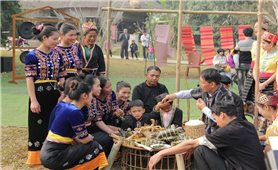
Abstract: The article focuses on analyzing the current state of developing and refining institutions and policies for the cultural development of ethnic minorities during the period of 2021-2025. Based on the direction set forth in the Resolution of the 14th National Party Congress and Resolution No. 80-NQ/TW dated January 7th, 2026, of the Politburo regarding the development of Vietnamese culture, this article proposes several solutions to further refine the legal framework for the period of 2026-2031. The focus is on prioritizing resources for the preservation of ethnic minority cultures in conjunction with sustainable livelihoods, decentralizing management and maximizing the role of the community and artisans as key agents.

Abstract: This article examines the process and consequences of the interaction between local beliefs (animism) and engaged religions (primarily Catholicism and Protestantism) in the Central Highlands. Through the analysis of social structure, ethnic psychology and cultural changes, we clarify the mechanism of "acculturation" and the formation of mixed religious forms. The article emphasizes that this interference is not just a process of belief replacement but a strategic adaptation, helping ethnic minorities maintain their identity in the context of modernization and integration.
