In Muong Khuong (Lao Cai province), while the mist still blankets the stilt houses, the locals’ phones are already ringing. A Hmong girl named Sui (La Thi Sui) is livestreaming to sell agricultural products, men men (corn porridge), honey, brocade fabrics... On the other side of the mountain, old Pao was video calling his son working in Binh Duong, talking and laughing brightly. At the Sin Chai A branch school, part of the Lo Su Thang Ethnic Boarding Primary and Secondary School, a young teacher was guiding students in researching lessons on the internet… Those images, once seemingly unfamiliar, have now become commonplace, as the village enters the digital age.
In recent years, along with the national digital transformation program, telecommunications infrastructure has reached every village and hamlet. Mobile phone towers have sprung up in the mountains and forests. Smartphones and tablets are reaching the people through support projects. And then, from being “residents of the mountains and forests”, ethnic minorities are becoming “digital citizens”, people who know how to use the Internet to learn, do business, connect and preserving their culture.
The internet has helped people in the highlands change their lives. Previously, brocade fabrics, honey, or Shan Tuyet tea, etc., were only sold at local markets. Now, thanks to social media, these products have found their way throughout the country. Some people sell their goods through Facebook, while others set up stalls on e-commerce platforms. Ms. Lo Thi Thuy from Son La shared: “Before, I only earned a few hundred thousand dong a week, but now I earn several million dong selling online. I am both preserving my traditional craft and supporting my children’s education”.
Digital transformation is not just about economics; it also opens the door to knowledge. At Muong Nhe High School (Dien Bien province), students learn computer science and are guided on how to look up lessons online. Digital skills training courses for ethnic minorities are organized right in the village cultural center. People are gradually learning to read news, look up policies, and update agricultural product prices. Technology - once considered a luxury - has now become a “new friend” of the mountains and highlands.
The internet has also helped revive traditional culture. Many artisans use their phones to record the melodies of the flute, the songs of Then, the Gau Tao festival, or the wedding customs of the Dao people... These videos went viral online, attracting hundreds of thousands of views. Many young people from ethnic minority groups became “KOLs” (Key Opinion Leaders) in their communities, promoting tourism while preserving their traditions. A Tay girl can tell stories in her mother tongue on TikTok; an Ede boy can record videos teaching how to play the gong… These are vivid images of the digital culture of ethnic minority areas today.
Digital transformation in ethnic minority areas is not just about bringing the internet to the mountains, but also about integrating digital knowledge into every way of thinking and doing things. More programs are needed to teach online skills, provide guidance on information security, and above all, to spread the mindset of “using technology to do good”.
These changes are gradually creating a new face for Vietnam's mountainous rural areas. Villages are now not only brightly lit but also have internet access; not only are there the sounds of traditional flutes calling out to friends, but also the echoes of video calls; not only are there traditional markets, but also bustling “online marketplaces” every day.
In this technological revolution, ethnic minority communities are no longer “following behind” but are now joining the rest of the country on the path of digital development. Every internet-connected phone, every online store, every video telling the story of the villages, all are contributing to writing a new story: the story of a fully digitized Vietnam, where mountains and forests are no longer remote, where knowledge and opportunity reach every stilt house.
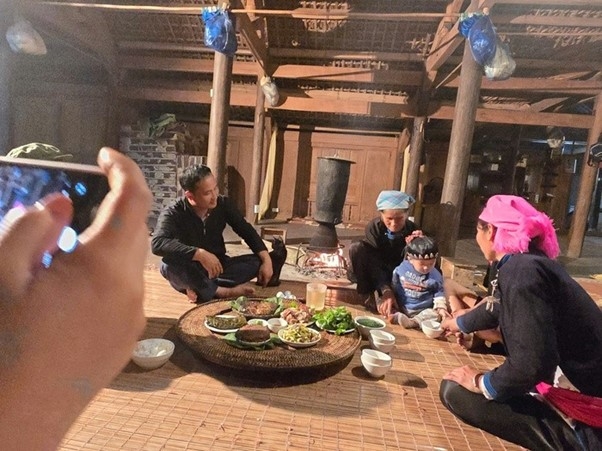 Traditional cultural values are being shared by local people through smartphones on social media to introduce them to tourists
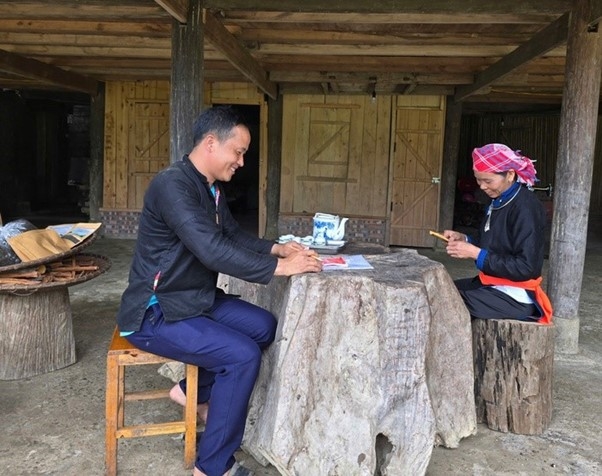 The digital transformation journey through ethnic communities’ smartphones
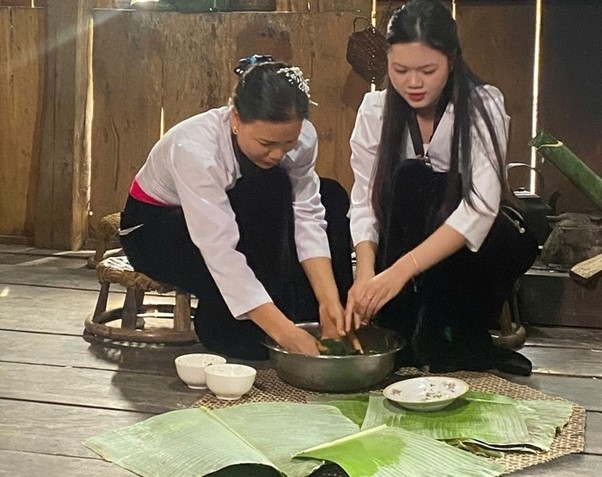 Bon Village is thriving thanks to its promotion and spread across digital technology platforms
 Thanks to smartphones, Hmong women can livestream and sell local specialties from their homeland very effectively
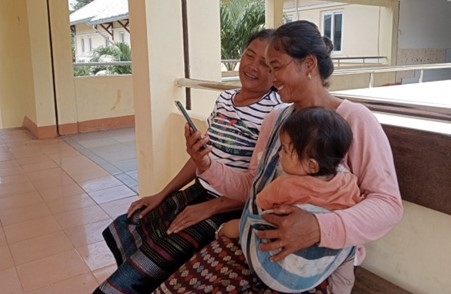 Thanks to smartphones, ethnic people can conveniently register for medical appointment queue numbers