Keywords: Ethnic minority; Resources; Identification; National development.
1. Introduction
Identifying ethnic minority resources goes beyond simple population statistics or cultural descriptions; more importantly, it involves pinpointing factors that can be leveraged to contribute to the economic growth of ethnic minority and mountainous areas specifically and the country as a whole. This article analyzes the resources of ethnic minority groups, avoiding a one-sided approach that views them merely as beneficiaries rather than as development partners who possess or whose regions possess distinctive resources.
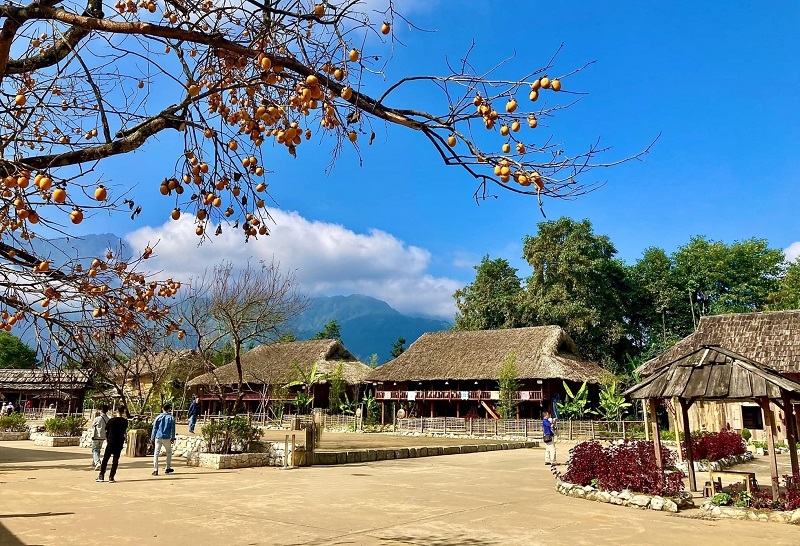 Ethnic minority areas hold immense potential for tourism development
 2. Ethnic minority resources
The concept of resources in socio-economic development encompasses both tangible and intangible elements: human resources; material resources; natural resources; cultural resources and local knowledge; socio-political resources. Accordingly, ethnic minority resources are understood as the set of distinctive factors associated with ethnic minority communities.
2.1. Human resources
Ethnic minority human resources constitute a central factor, encompassing population size, age structure, educational attainment, vocational skills and social attributes.
As of July 1st, 2024, the total ethnic minority population nationwide stood at 14,443,086, an increase of 323,830 compared to 2019 representing 14.3% of the national population structure. Of this total, males numbered over 7.2 million (50.3%) and females over 7.1 million (49.7%). Broken down by occupational sector, the employment figures for ethnic minority individuals aged 15 and older are as follows:
According to the table above, the ethnic minority workforce in the 25-54 age group accounts for a high proportion (83.3%). Within this age group, other indicators such as male, female, urban and rural ethnic minority workers also reach their highest levels. The 25-54 age group is considered the “core workforce” due to their work experience, high level of professional expertise and good health; they make the most effective contributions to production and business activities, labor productivity and economic growth both in ethnic minority and mountainous areas specifically and across the country as a whole. Workers in this age group are also capable of generating stable income, ensuring their families’ livelihoods and contributing to social stability. With an abundant workforce, ethnic minority and mountainous areas will possess a solid foundation for sustainable development, enabling them to effectively face and adapt to potential socio-economic changes.
2.2. Cultural resources and local knowledge
The local culture and knowledge of ethnic minority groups constitute a form of intangible capital representing soft power, endogenous strength and a vital resource that serves as a powerful driving force for the sustainable socio-economic development and international integration of each ethnic minority group in particular and the Vietnamese nation as a whole.
As one of the four key pillars of development (alongside the economic, social and environmental pillarsm), the cultural resources of ethnic minority groups encompass both tangible and intangible cultural values. In recent years, many cultural values and heritage assets of these groups have been studied and recognized as national and global cultural heritage. A total of 134 intangible cultural heritage elements belonging to ethnic minority groups out of 288 nationwide have been inscribed on the National Intangible Cultural Heritage List; investment support has been provided for the preservation of 85 ethnic minority festivals and 32 villages or hamlets across 25 ethnic groups (Report by the Central Commission for Propaganda and Education at the 2021 National Cultural Conference). Notably, among the 15 intangible cultural heritages in Vietnam recognized by UNESCO, four belong to ethnic minority cultures: the Then rituals of the Tay, Nung and Thai peoples; the Xoe art of the Thai people; the Space of Gong Culture in the Central Highlands; and the pottery-making craft of the Cham people. The system of cultural heritage belonging to ethnic minority groups has created an advantage for cultural tourism to become a key driver of economic development and to establish a brand identity for local tourism products.
Within socio-economic policies, the culture of ethnic minority groups continues to be recognized and valued by policymakers, who are transforming it into a resource within development strategies. Especially in the National Target Program for socio-economic development in ethnic minority areas for the period of 2021-2030, many goals, contents and resources of the Program have been identified and integrated to strengthen traditional cultural identities, at the same time creating jobs and increasing income for local people through tourism services, contributing to economic development and solving social problems in ethnic minority areas.
2.3. Natural resources and assets
Ethnic minority communities primarily inhabit regions boasting magnificent, beautiful natural landscapes and numerous landmarks renowned on both domestic and international tourism maps, making them particularly attractive to visitors.
The primary settlement areas of ethnic minority communities contain over 14.4 million hectares of forest; these serve as vital watersheds for major national hydropower projects that supply both electricity and water for production to downstream areas and the plains. This region possesses abundant, valuable mineral resources such as gold, aluminum, tin, coal and antimony and a rich flora and fauna ecosystem. Its land resources (particularly hilly and agricultural land), combined with indigenous agricultural genetic resources and diverse ecosystems, form the foundation for value chains involving specialty agricultural, forestry, and medicinal products. They also support the commercial cultivation of high-value industrial crops including coffee, rubber, tea, cashews, pepper, timber and non-timber forest products and fruit trees as well as large-livestock husbandry.
2.4. Material resources
Material resources comprise two components. The first is the financial resources allocated for the implementation of ethnic minority policies. “During the period of 2011-2021, the state budget allocated VND 246,654.5 billion to invest in socio-economic and cultural development programs and projects in ethnic minority areas; additionally, USD 2.6 billion in ODA funds and approximately USD 5.5 million from non-governmental organizations (NGOs) were mobilized, while the Government of Ireland provided a non-refundable grant of EUR 10 million”.
For the period of 2021-2030, the National Assembly issued Resolution No. 88/QH14 approving the scheme and Resolution No. 120/QH15 approving the investment policy; the Prime Minister issued Decision No. 1719/QĐ-TTg dated October 14th, 2021, approving the National Target Program on socio-economic development in ethnic minority and mountainous areas for the period of 2021-2030. This marks the first time Vietnam has implemented a National Target Program specifically dedicated to ethnic minority and mountainous areas, with a projected total budget of over VND 137 trillion for the period of 2021-2025; indeed, Program 1719 is the world's first program dedicated exclusively to ethnic minority communities (Ramla Khalidi, 2025).
For the period of 2022-2025, the total central budget capital allocated for the Program's implementation up to August 2025 amounted to nearly VND 90 trillion (representing 85.5% of the total); of this, development investment capital exceeded VND 49 trillion (98.3% of the approved plan), while recurrent expenditure capital reached nearly VND 41 trillion (75% of the approved plan) (Report summarizing the implementation of the National Target Program on socio-economic development in ethnic minority and mountainous areas for the period of 2021-2030, Phase I: 2021-2025). This substantial allocation of material resources embodies the major policy of the Party and the State pairing policy with funding to invest in the comprehensive development of ethnic minority and mountainous areas, with the aim of gradually reducing and ultimately eliminating communes and villages facing extreme socio-economic hardship by 2030.
For the period of 2026-2030, the State will “balance and prioritize the allocation of resources for the Program, increasing them by approximately 10-15% compared to the period of 2021-2025 and mobilize central and local funds as well as other lawful sources of capital to implement the Program” (Notice No. 441/TB-VPCP dated August 22nd, 2025, conveying the conclusion of Prime Minister Pham Minh Chinh at the national conference reviewing the National Target Program on socio-economic development in ethnic minority and mountainous areas for the period of 2021-2025 and outlining the direction for the period of 2026-2030).
The second aspect concerns the physical infrastructure resources in ethnic minority and mountainous areas. By the end of 2024, 98.4% of communes in these regions had road access to their administrative centers; 96.7% of households had access to the national power grid; 100% of communes had preschools, primary schools, and lower secondary schools; 99.3% of communes had health stations, with 83.5% meeting established standards; over 90% of communes had radio and television coverage; and 100% of communes possessed telecommunications infrastructure and mobile network coverage sufficient to meet residents' communication needs (Report presented at the 2024 national conference reviewing ethnic affairs). Specifically, regarding communes facing extreme hardship, by August 2025, essential infrastructure was fully in place: 100% of communes had vehicle-accessible roads leading to their centers; 99% of commune centers and 80% of villages had electricity; 65% of communes possessed small-scale irrigation systems meeting production and daily living needs; 88% of villages had roads accessible to motorized vehicles, while 42% had roads meeting established standards; and over 50% of communes had health stations meeting required standards (Report on the 5-year review of government mass mobilization affairs by the Committee for Ethnic and Religious Affairs for the period of 2021-2025, outlining tasks and solutions for the subsequent phase, 2025).
Furthermore, material resources encompass production equipment such as machinery, tools, factories and industrial facilities, that are difficult to fully quantify. These material resources constitute a crucial, fundamental factor in fostering production and improving the livelihoods of ethnic minority communities; they drive significant economic growth in ethnic minority and mountainous regions with average annual growth rates of 8% in the Northwest, 7.5% in the Central Highlands and 7% in the Southwest, thereby “surpassing the targets set in the Action Program implementing the Strategy on Ethnic Affairs through 2030, with a vision toward 2045” (as reported at the 2024 national conference reviewing ethnic affairs).
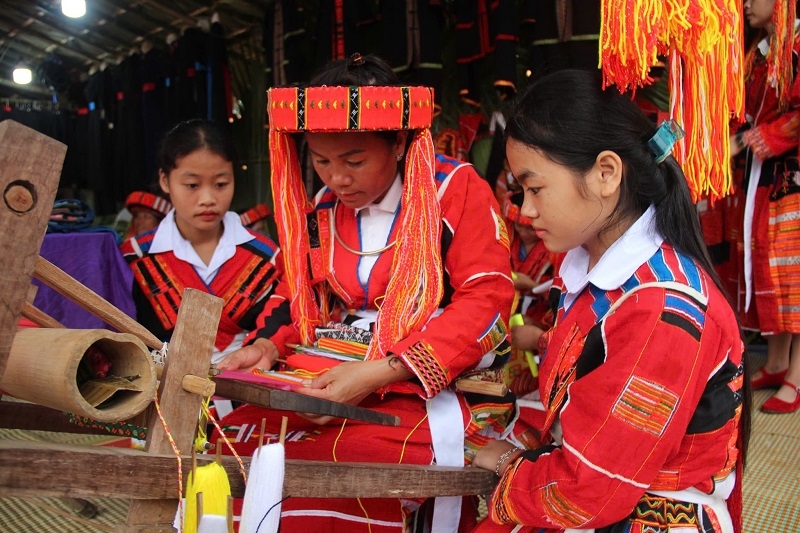 Traditional cultural values of ethnic minorities are a resource for socio-economic development
2.5. Political and social resources
Political representation is demonstrated by the presence of ethnic minority representatives in elected bodies. The participation rate of ethnic minorities in the National Assembly and People’s Councils at all levels not only acknowledges and reflects their right to equality under the law regarding voting and standing for election, but also provides an opportunity to amplify their voices in policy-making processes concerning ethnic minority issues within state power structures at both central and local levels.
The results of National Assembly elections, particularly those of recent terms, clearly demonstrating the increased representation of ethnic minorities in elected bodies. Specifically, the number of ethnic minority National Assembly deputies has consistently accounted for a high proportion relative to their share of the total population over the last three terms. During the 13th tenure (2011-2016), the proportion of ethnic minority deputies stood at 15.6%; it reached 17.3% in the 14th tenure (2016-2021) and 17.8% in the 15th tenure (2021-2026), with 89 deputies from 32 ethnic groups elected, the highest figure across all National Assembly tenures and close to the new statutory target for ethnic minority candidates (18%). The proportion of ethnic minority representatives in People's Councils for the term of 2021-2026 stands at 17.09% at the provincial level, 18.23% at the district level, and 20.55% at the commune level. Furthermore, the participation of ethnic minorities in the political apparatus is steadily increasing. According to Report No. 855/BC-UBDT dated June 3, 2022, by the Committee for Ethnic Minority Affairs regarding the “Review of 10 years of implementing the Government’s Decree No. 05/2011/NĐ-CP dated January 14, 2011, on ethnic minority affairs,” as of 2021, the total number of ethnic minority officials, civil servants, and public employees across ministries, ministerial-level agencies, and government-attached agencies stood at 3,952,225; the proportion of ethnic minority members serving on party committees and standing committees, as well as Party secretaries for the term of 2020-2025, was higher than in the previous term; specifically, ethnic minority officials, civil servants, and public employees currently account for approximately 14.5% of the total, with 17.2% holding leadership or management positions at various levels. “At the congresses of Party committees directly under the Central Committee for the term of 2020-2025: ethnic minority members accounted for 11.7% of committee members (an increase of 0.8 percentage points compared to the previous term); ethnic minority members made up 11.8% of Standing Committee members (up 0.5 percentage points); and there were six ethnic minority Party secretaries, representing 9.2% of the total (up 1.5 percentage points)” (Trang A Duong, 2024).
The growth in both the number and quality of ethnic minority officials in recent years has helped transform social resources into development resources, thereby fostering socio-economic development and maintaining political security and social order in ethnic minority areas across the country.
In addition, ethnic minority social resources are also reflected in production models and other economic activities of each ethnic minority community, contributing to the overall development of the locality and country. Besides, the spirit of solidarity, attachment and mutual assistance in the community is a precious tradition and the spiritual strength that helps ethnic minorities overcome all difficulties and rise to development.
3. Conclusion
As the country develops, it is essential to reach a consensus that the resources of ethnic minority groups constitute an integral part of the nation’s resources. Identifying these types of resources and adopting policies to harness and leverage them effectively will yield dual benefits: driving rapid and sustainable socio-economic growth in ethnic minority and mountainous areas, while simultaneously aligning with and effectively contributing to the nation’s development goals in the new era.
References
1. General Statistics Office (2019). Results of the 2019 Population and Housing Census, https://www.gso.gov.vn.
2. National Assembly (2019), Resolution No. 88/2019/QH14 approving the Master Scheme for socio-economic development in ethnic minority and mountainous areas for the period of 2021-2030.
3. Prime Minister (2021), Decision No. 1719/QĐ-TTg approving the National Target Program on socio-economic development in ethnic minority and mountainous areas for the period of 2021-2030, https://vanban.chinhphu.vn.
4. Report summarizing the implementation of the National Target Program on socio-economic development in ethnic minority and mountainous areas for the period of 2021-2030 (Phase I: 2021-2025).
5. Report presented at the 2024 National Conference summarizing ethnic affairs and the activities of the Committee for Ethnic Minority Affairs.
6. Report reviewing the five-year implementation of government mass mobilization affairs by the Ministry of Ethnic and Religious Affairs (2021-2025), along with tasks and solutions for the next period.
