Keywords: Ethnic education; Ethnic minority pupils; Policy.
1. Preferential policies for learners (children, pupils)
Firstly, the policy prioritizes children and pupils from ethnic minority and mountainous areas.
This policy is stipulated in Government Decree No. 66/2025/ND-CP dated March 12th, 2025. Decree No. 66/ND-CP expands the scope of children and pupils eligible for the policy and with payments made annually. Specifically: Children in daycare receive a subsidy of 360,000 VND/child/month; the amount for purchasing supplies, learning materials and personal items for children in daycare is 1,350,000 VND/children/school year. Boarding students and trainees receive a food allowance of 936,000 VND/month; 15 kilogram of rice/student/month; and a housing allowance (if accommodation cannot be arranged for pupils) of 360,000 VND/pupil/month. Ethnic minority boarding pupils and pre-university pupils, in addition to being provided with meals and accommodation at the school, also receive a reward of 800,000 VND per pupil if they achieve the title of “Outstanding pupil”; Outstanding pupils receive 600,000 VND/pupil; they are also provided with personal supplies and school materials worth 1,080,000 VND/pupil.
The policy on tuition fee exemption and reduction is stipulated in Government Decree No.81/2021/ND-CP, dated August 27th, 2021. Recently, in a meeting on February 28th, 2025, the Politburo decided to completely exempt tuition fees for students from preschool to high school in public schools nationwide, starting from the 2025-2026 school year. Waiving tuition fees is a strategic step towards realizing social equity, narrowing regional disparities and developing sustainable human resources. This is a very timely and highly humane policy.
The government has also issued Decree No. 188/2025/ND-CP dated February 18th, 2025, stipulating that the State will support at least 50% of the health insurance premium for pupils, instead of 30% as before, helping to reduce the financial burden on families, especially those in ethnic minority and mountainous areas, at the same time, it ensures that students from ethnic minority groups have better access to healthcare services.
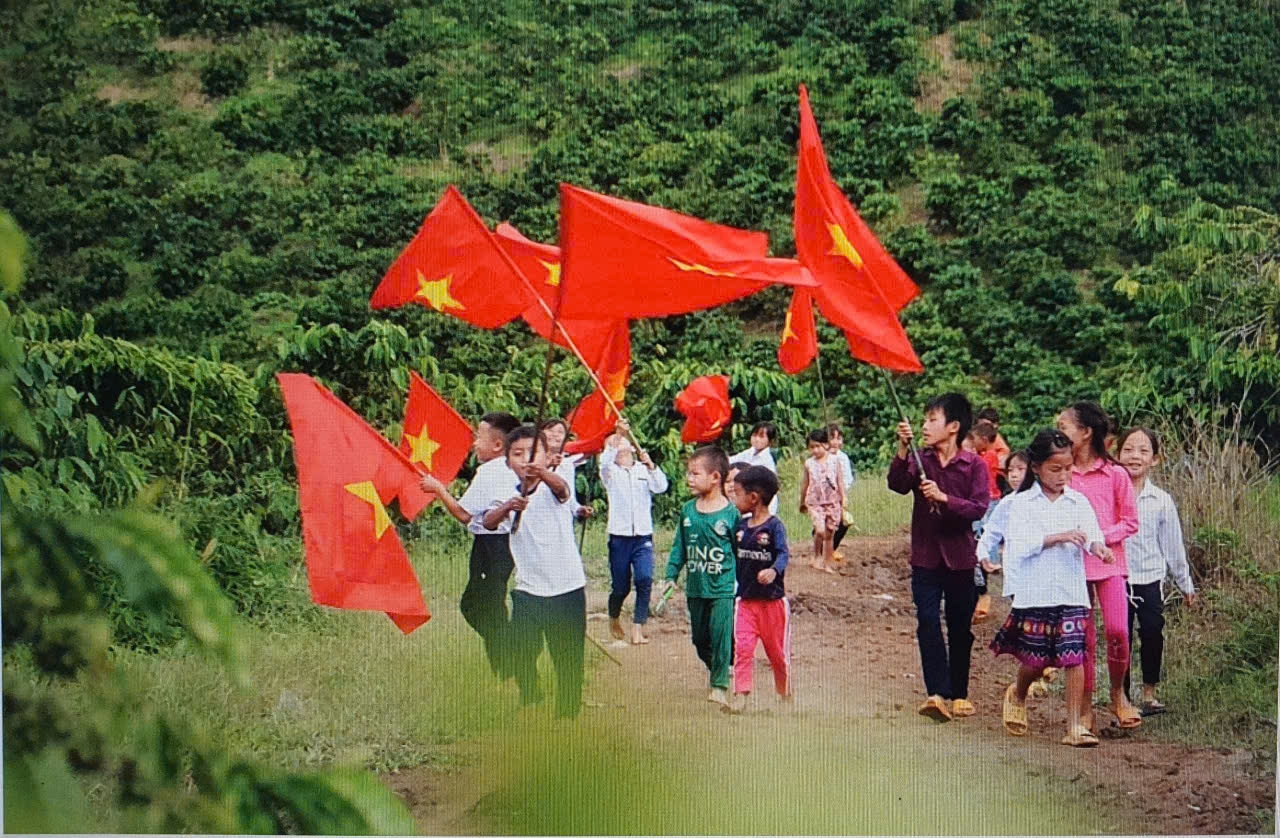 Our country’s education policy ensures opportunities and equality for ethnic minority children and pupils
Secondly, policies regarding specialized schools.
Specialized schools in ethnic minority and mountainous areas include: Ethnic boarding schools, ethnic semi-boarding schools and schools with semi-boarding pupils. The Ministry of Education and Training (MOET) has issued circulars on the regulations for the organization and operation of ethnic minority boarding schools and ethnic minority boarding schools, creating a clear and specific legal framework to enable schools to operate effectively. Some schools, especially boarding schools for ethnic minorities, have good, modern facilities with synchronized teaching and learning equipment, functional rooms, teacher’s quarters, pupil housing and other auxiliary facilities. Thanks to specific policies, the quality of education in ethnic minority boarding schools and ethnic minority boarding schools has seen many positive changes.
In addition to the above policies, the State also has policies for teaching and learning the spoken and written languages of ethnic minorities. Currently, eight ethnic minority languages: Ba Na, Cham, E-de, Gia-rai, Khmer, Mong, Mnong and Thai are being taught in educational institutions, helping ethnic minority pupils acquire knowledge more easily through their mother tongue. According to statistics from the Ministry of Education and Training, in the 2022-2023 school year, there were 535 schools teaching ethnic minority languages nationwide, with 4,176 classes and 117,699 pupils. Cham, Gia-rai, Ba Na and Thai languages are taught at the primary school level; E-de and Mong languages are taught at the primary and lower secondary levels; and Khmer language is taught at all three levels: primary, lower secondary and upper secondary.
In 2016, the Prime Minister issued Decision No. 1008/QD-TTg dated June 2nd, 2016, promulgating the Project “Strengthening Vietnamese language skills for preschool children and primary school pupils in ethnic minority areas in the period of 2016-2020, with orientation to 2025”. Enhancing Vietnamese language instruction for preschool and primary school children from ethnic minority groups plays a crucial role in improving their Vietnamese language skills, enabling them to communicate better, be more confident, learning other subjects more easily, understanding lessons better, absorb knowledge faster and laying the foundation for subsequent levels of education; contributing to the sustainable improvement of educational quality in ethnic minority and mountainous areas.
2. The impact of ethnic education policies
Policies prioritizing the development of education in ethnic minority and mountainous areas have yielded many important results. In terms of numbers, by May 2024, the total number of ethnic minority children attending preschool was 820,156 children, accounting for 16% of the total number of children attending school nationwide[1]. The number of primary, lower secondary, and upper secondary school pupils from ethnic minority groups as of the 2023-2024 school year is 3,108,396. Specifically, the percentage of children attending school at the appropriate age reached 96.3% at the primary level; 86.6% at the lower secondary level; and 51.1% at the upper secondary level (Results of the 3rd Survey of 53 Ethnic Minorities in 2024, Ministry of Ethnic Minorities and Religions), an increase of 5% at the lower secondary level and 4.1% at the upper secondary level compared to the previous survey.
The overall quality of education has been significantly improved, the number of students dropping out has decreased, the results of universal primary and lower secondary education have been consolidated and maintained, and the intellectual level of the population and human resource development in ethnic minority and mountainous areas have been enhanced (National Assembly’s Committee on Culture and Society, 2025).
The policy of ethnic minority education also has many impacts, from a theoretical perspective:
Firstly, contributing to the improvement of the national education policy system
Policies prioritizing the development of education in ethnic minority and mountainous regions are an integral part of the national education policy, issued at various levels: (National Assembly, Government, Ministry of Education and Training, People's Committees/Departments of Education and Training of localities…); in many types of documents: aws, resolutions, decrees, circulars, decisions, directives/guidelines, plans,…; intended for various subjects: children, pupils, administrators, teachers, staff…; various levels of education: preschool, primary school, lower secondary school, upper secondary school (junior high school, upper secondary school)…; many areas inside and outside the school: teaching and learning, facilities, teaching equipment, boarding schools for ethnic minorities, semi-boarding schools for ethnic minorities...; various educational contents: preschool education program, general education program, cultural preservation education, career guidance, life skills… and many other details: health insurance, meals, boarding school accommodation,… The diversity in policies and the timeliness in their issuance and implementation demonstrate the Party and State’s concern and priority for the development of education in ethnic minority and mountainous areas.
In addition to general education policies, ethnic minority and mountainous regions also benefit from preferential treatment, contributing to alleviating difficulties for these educationally disadvantaged areas, creating conditions for pupils to attend school regularly, reduce dropout rates, improve retention and promotion rates and narrow the gap in access to education for more affluent regions.
Secondly, to promote socio-economic development in ethnic minority and mountainous areas
Driven by the need to ensure the right to education for ethnic minority pupils, the State has developed many specific policies prioritizing the development of education in ethnic minority and mountainous areas. These policies require the State and the Ministry of Education and Trainin, contribute to promoting socio-economic development in ethnic minority and mountainous areas. Thanks to these policies, more and more ethnic minority pupils are able to pursue higher education, providing a skilled workforce and a high-quality human resource for the local area. Introducing ethnic languages and cultures into schools not only fosters national pride but also creating a workforce capable of utilizing cultural heritage to serve development goals. The program to enhance Vietnamese language skills for ethnic minority children and students helps them study better, communicate confidently and increase their chances of finding employment after graduation.
Thirdly, improving the quality of education in ethnic minority and mountainous areas
Policies such as tuition fee waivers and reductions, textbook support, accommodation cost subsidies, and the development of specialized schools help increase school attendance rates, maintain pupil numbers and improve the quality of education. Integrating ethnic languages and local cultural content into the curriculum, along with enhanced Vietnamese language programs at the primary school level has helped students overcome barriers, improving their language skills and enhancing their learning abilities in other subjects and educational activities. The policy of investing in infrastructure has helped ethnic boarding schools and ethnic semi-boarding schools become more spacious and well-equipped, ensuring adequate conditions for teaching, learning and daily life. As a result, education in ethnic minority and mountainous regions not only ensures universal access but also gradually improves in quality, narrowing the gap with the national average.
Fourthly, expanding access to education for children and pupils in ethnic minority and mountainous areas
Ethnic education policies have significantly expanded access to education for children and pupils in ethnic minority and mountainous areas by removing economic, geographical and linguistic barriers. Policies on teaching and learning the spoken and written languages of ethnic minorities, tuition fee exemptions and reductions; support for food, accommodation and transportation costs; provision of rice and clean water; development of boarding schools for ethnic minorities, and health check-ups... have eased the financial burden, creating conditions to help many children in ethnic minority and mountainous areas attend school, maintaining their education, increasing enrollment rates and program completion in these localities. The education sector is also expanding integrated lower secondary and upper secondary education at boarding and semi-boarding schools for ethnic minorities in localities where there is a need. Investing in transportation infrastructure, building schools, raising awareness among parents, and assigning teachers to remote areas have shortened the distance to school and expanded access to education for children and students in ethnic minority and mountainous areas, to be an important step in implementing the principle of equal educational opportunities - a core principle of national education policy.
Fifthly, creating equality in education
Policies prioritizing the development of education in ethnic minority and mountainous areas play a crucial role in establishing equality in education, ensuring that all children, regardless of ethnicity or place of residence, have equal opportunities for learning. Through policies such as tuition fee exemptions and reductions; support for learning costs; scholarships; and investment in facilities and information technology infrastructure, pupils in ethnic minority and mountainous areas enjoy learning conditions similar to those of pupils in urban and more developed areas. Integrating ethnic minority languages and local cultures into the curriculum, implementing Vietnamese language enhancement programs, helping pupils overcome language barriers - a key factor in ensuring equal educational opportunities. Practical experience shows that the gap in enrollment rates at the appropriate age and school completion rates between ethnic minority and mountainous areas and the national average is gradually narrowing, affirming the role of ethnic education policies in realizing the goal of equity in education.
3. Some recommendations
Transforming the structure and quality of human resources to meet the requirements of accelerating industrialization and modernization is posing new and urgent tasks for education in ethnic minority and mountainous areas. In order to enhance the role of ethnic education policies in building human resources to meet the country’s reform requirements, the following issues need to be considered:
Firstly, conducting a review to avoid overlapping education policies in ethnic minority and mountainous areas. Adjusting, amending, supplementing, or promulgating policies for ethnic minority pupils in ethnic minority boarding schools and ethnic minority boarding schools in a timely manner in accordance with new conditions and circumstances.
Secondly, focusing resources and increasing investment in building schools and classrooms in ethnic minority and mountainous areas. Expedite the implementation of Notice No. 81-TB/TW dated July 18th, 2025, of the Politburo on the policy of investing in the construction of schools for border communes. Completing the relevant regulations to ensure that pupils in land border communes benefit from boarding and semi-boarding policies appropriate to local realities; and to ensure the budget for maintaining the operation of schools…
Thirdly, strengthening the dissemination of the Party’s guidelines and policies, and the State's laws and regulations on the development of education in ethnic minority and mountainous areas, so that the people understand the importance of education in the overall socio-economic development; mobilizing greater community participation and contributions to local education.
Fourthly, strengthening the application of information technology and promote digital transformation in the implementation of education policies for ethnic minority and mountainous areas. Digital transformation helps overcome barriers related to transportation infrastructure, facilities and human resources, expanding learning opportunities that are appropriate to pupils’ abilities, languages and cultural identities. Digitizing content related to local knowledge contributes to both improving the quality of education and preserving and promoting national cultural values. Successfully implementing digital transformation will create a solid foundation for narrowing the gap, ensuring equity and promoting sustainable educational development in ethnic minority and mountainous areas.
4. Conclusion
Education and training in ethnic minority areas have been identified by the Party and the State as a key task for human development; to be a strategic solution to promote socio-economic development, maintaining national defense and security, preserving and promoting ethnic cultural identity. Education policies are contributing to ensuring equity, building and developing human resources, especially high-quality human resources, to meet the needs of comprehensive socio-economic development, strengthening national defense and security in ethnic minority and mountainous areas - an important area of the country.
References
1. The Government, Decree No. 66/2025/ND-CP dated March 12th, 2025, stipulates policies for children in nurseries, pupils, learners in ethnic minority and mountainous areas, coastal and island areas and educational institutions with children in nurseries and pupils who benefit from these policies.
2. Center for Research on Equity and Inclusion in Education, Vietnam Academy of Educational Sciences, Current situation and solutions for implementing priority policies for educational development in ethnic minority and mountainous araes to meet the requirements of national reform, 2025.
