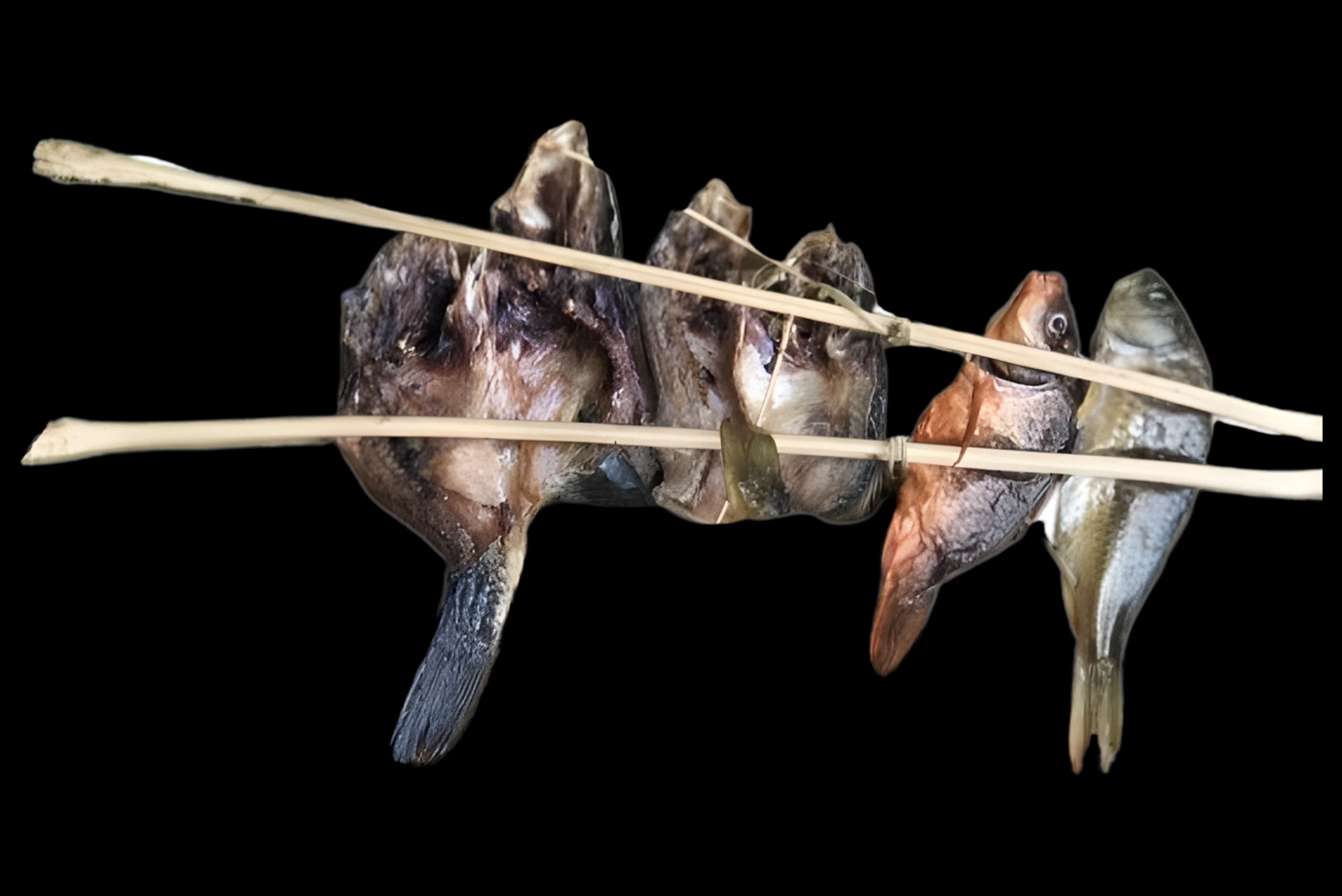
 Grilled fish is a common dish at festivals of the Lo Lo people
During traditional festivals, from the Lunar New Year and housewarming celebrations to community gatherings, the Lolo people always prepare their feasts with great care. Familiar ingredients from the mountains and forests, such as corn, upland rice, black pork, free-range chicken, men men (a type of corn porridge), smoked buffalo meat, thang co (a traditional stew), wild vegetables, grilled fish,… are transformed by the skillful hands of Lo Lo women into dishes with unique flavors. Among them, the highlight is corn cake, a traditional dish made from finely ground corn, steamed in forest leaves, carrying the sweet and nutty flavor of the rocky fields. Besides that, there’s smoked pork, bone broth with wild vegetables and corn wine fermented with leaves, simple dishes but rich in cultural identity.
What makes the Lolo festival cuisine special is not only its flavor, but also its profound cultural significance. Before the main meal is served, the family usually sets aside an offering to their ancestors and deities. This is how the Lolo people express their gratitude to the heavens and earth for the bountiful harvests and to their ancestors for clearing the land for farming. Therefore, each dish carries a story about hard work and frugality in this harsh, rocky land.
Festival cuisine also serves as a bond that connects the community. During the festival, families prepare and share food and corn wine together. The elderly sit by the fire telling old stories, the young help each other grill meat and the children eagerly await the freshly baked cakes. That atmosphere transforms meals into occasions for reunion and strengthens community bonds. Therefore, for the Lolo people, food is not just about satisfying hunger, but also about remembering, remembering their homeland, their traditions and the warmth of human connection…
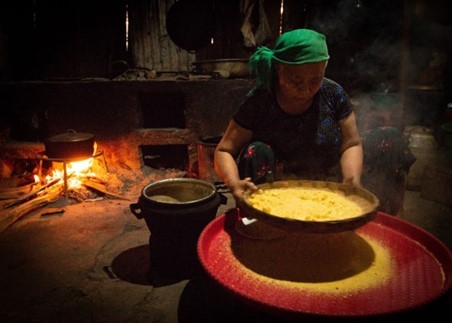 Processing men men (a type of Vietnamese steamed corn)
According to Dr. Lo Giang Pao, Vice President of the Vietnam Mountainous Region Economic Development Support Association stated: “The cuisine of the Lo Lo people is a form of living cultural heritage. Each dish embodies the essence of local knowledge, from the selection of ingredients and preparation to the rituals of offering. Preserving and promoting the value of traditional cuisine is also about preserving the identity of the community”.
This opinion shows that seemingly simple dishes can hold profound cultural and historical significance.
In the current context, the festival cuisine of the Lo Lo people is becoming a highlight attracting tourists to Ha Giang province (now Tuyen Quang province). Many villages have developed community-based tourism models, where visitors can experience preparing traditional dishes, enjoy corn wine and learn about local culture. These activities not only promote traditional cultural identity but also generate additional income for the people.
When cuisine becomes a tourism product, local products such as corn, honey and local pork are also consumed more. As a result, the material living standards of the people have gradually improved. Therefore, traditional culture not only exists in memory but also becomes a driving force for sustainable economic development.
Between the sun-drenched, windswept rocky plateau, the Lo Lo people’s celebratory bonfires burn brightly through every season. The aroma of corn cakes, the taste of smoked meat and the warm, intoxicating aroma of corn wine not only nourish the body but also foster a spirit of community solidarity. It is the taste of memory, of identity and of national pride.
Therefore, the festival cuisine of the Lo Lo people is not just food, but a cultural story. When these values are preserved and promoted in conjunction with cultural tourism and community tourism, they will continue to spread, contributing to a prosperous and happy life for the people in the rocky region of Tuyen Quang province. And each dish at the festival will forever remind us that, for the Lo Lo people, eating is not just about satisfying hunger, but also about remembering their origins and the future of their village.
