Keywords: Promoting; Cultural value system; Ethnic minority people; Eco-cultural tourism.
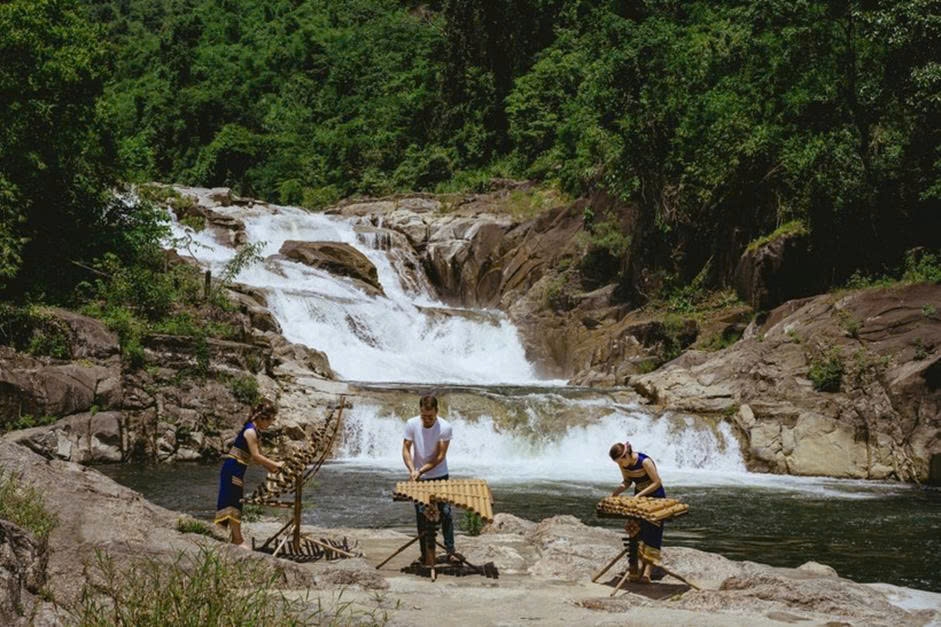 Yang Bay Tourist Park (Khanh Hoa province) has become a destination for tourists who enjoy ecotourism experiences
1. Introduction
In the context of globalization and the current trend of sustainable tourism development, ecotourism is increasingly seen as an important direction for harmonizing economic growth, cultural preservation and environmental protection. Vietnam is a unified nation with 54 ethnic groups, including 53 ethnic minorities, possessing a rich cultural value system of ethnic minority communities closely linked to their natural ecological space and local knowledge. This is a valuable endogenous resource for the development of eco-cultural tourism, especially in ethnic minority and mountainous areas.
However, the practical experience of tourism development in many localities shows that the exploitation of ethnic minority cultural values is still spontaneous, lacking long-term direction, leading to the risk of commercialization, distortion of cultural identity and negative impacts on the ecological environment. In many cases, ethnic minority communities have not been placed in a central position in the tourism development process, leading to a disconnect between economic benefits and cultural preservation and sustainable livelihood improvement.
Given the need to innovate tourism development models towards sustainability and inclusiveness, research into promoting the cultural values of ethnic minority communities in conjunction with the development of eco-cultural tourism is essential in the current context. This article not only contributes to clarifying the theoretical and practical basis of the relationship between culture, community and tourism, but also provides scientific arguments for policy planning and the development of appropriate tourism models, contributing to the preservation of cultural identity and promoting sustainable development in ethnic minority and mountainous areas.
2. Research result
2.1. An overview of some policies and guidelines of the Party and State on preserving and promoting the cultural values of ethnic minorities
Over the years, the Party and State of Vietnam have implemented many policies and guidelines aimed at developing culture, including policies to preserve and promote the cultural values of ethnic minorities, contributing to building an advanced Vietnamese culture rich in national identity (Nguyen Thi Song Ha, 2023). This is reflected in a number of policies and guidelines, such as: Decision No. 1270/QD-TTg dated July 27th, 2011, of the Prime Minister approving the Project “Preservation and development of the culture of ethnic minorities in Vietnam until 2020”; Decision No. 936/QD-TTg dated June 30th, 2017, approving the Target Program for cultural development for the period of 2016-2020; Conclusion No. 65-KL/TW dated October 30th, 2019, of the Politburo on continuing to implement Resolution No. 24-NQ/TW dated March 12th, 2003, of the 9th Central Committee of the Communist Party of Vietnam on ethnic affairs in the new situation; Decision No. 1909/QD-TTg, dated November 12th, 2021, of the Prime Minister approving the Strategy for cultural development until 2030; Decision No. 1719/QD-TTg dated October 14th, 2021, of the Prime Minister approving the National Target Program for socio-economic development of ethnic minority and mountainous areas for the period of 2021-2030, Phase I: from 2021 to 2025…
Therefore, the effective preservation and promotion of cultural values has contributed to achievements in socio-economic development, enriched and diversified the spiritual life of ethnic minorities and contributed to the overall development of the locality and the country. Self-governance, a sense of heritage, and community solidarity among villages, hamlets, settlements and communities... of ethnic minority groups in Vietnam are maintained and promoted.
2.2. The current situation of cultural values of ethnic minorities in tourism development
Ethnic minority and mountainous regions possess a rich cultural value system, including festivals, beliefs, performing arts, traditional crafts, local architecture, language and local ecological knowledge. These elements, closely linked to natural spaces, forests, traditional farmland, rural landscapes, create clear potential for the development of eco-cultural tourism. In many localities, exploiting this potential has begun to yield economic benefits and contribute to raising awareness about cultural preservation: Festivals are being organized on a larger scale, handicrafts are being commercialized, traditional craft villages and community homestays are developing, and some community tourism models are beginning to link with domestic and international tours. However, along with the opportunities come challenges, such as:
Firstly, there’s the issue of commercializing culture. When culture becomes a tourism product, there’s a tendency to simplify, dramatize or modify rituals, costumes and music to suit tourist tastes. This process can reduce the authenticity and social significance of cultural practices, affecting the role of culture in community life.
Secondly, the role of the community as an active participant is not yet fully guaranteed. In many places, tourism projects are initiated by businesses outside the locality or management agencies, while the community only participates in providing labor and services, little involvement in product design, pricing and benefit sharing. As a result, economic benefits often fall into the hands of intermediaries, while communities face pressure to change their lifestyles and living environments.
Thirdly, in terms of endogenous capacity and infrastructure, many rural and mountainous communities lack tourism management skills, marketing capabilities and the ability to provide quality services; The infrastructure for transportation, accommodation, healthcare, and sanitation is still inadequate, limiting the capacity to accommodate large-scale and long-term guests.
Fourthly, the issue of preserving the ecological environment alongside tourism has not been adequately addressed. Pressure from tourists can lead to landscape degradation, waste, changes in local ecosystems if there are no strict regulations, monitoring mechanisms and community participation in resource management.
Fifthly, social changes such as migration, shifts in labor structure, and a decline in the number of people practicing traditional crafts reduce the ability to maintain cultural values. In many places, the younger generation lacks opportunities to embrace and promote traditions due to economic pressures and the influence of mainstream culture.
 Thai Hai ethnic village ecological stilt house conservation area
2.3. Promoting the cultural values of ethnic minorities contributes to the development of eco-cultural tourism
Promoting the cultural values of ethnic minority communities is the core foundation for developing sustainable, inclusive and identity-respecting eco-cultural tourism. In this approach, culture is not only a “resource” to be exploited but also a system of living values that governs the way community life is organized and the harmonious relationship with the natural environment, key elements of ecotourism.
Firstly, the cultural value system of ethnic minorities provides unique experiential content for eco-cultural tourism. Cultural practices, such as: Local festivals, beliefs, performing arts, cuisine, architecture, and ecological knowledge can be transformed into tourism products that are rich in experiences, education and interaction, helping visitors gain a deeper understanding of the community’s lifestyle, worldview and relationship with nature. Promoting these values requires respect for authenticity, avoiding extreme theatricalization and encouraging controlled creativity within the community.
Secondly, promoting cultural values associated with the role of the community as the main actors is a decisive condition for the sustainability of eco-cultural tourism. Ethnic minority communities need to be fully involved in all stages, from identifying values and designing products to organizing services, managing, monitoring and distributing benefits. When the community takes ownership, tourism becomes a driving force for cultural preservation: Local crafts, rituals, and knowledge are preserved and passed down; the younger generation is motivated to connect with their cultural heritage through stable livelihoods.
Thirdly, local cultural values contribute to shaping ecotourism management models based on traditional knowledge and norms. Many communities have customary laws and conventions regarding the use of resources, the protection of forests, water sources and landscapes. Integrating these standards into destination management helps control and reduce negative environmental impacts and maintain ecological balance, a core element of ecotourism.
Fourthly, promoting cultural values needs to be placed within a supportive institutional framework to connect communities with the tourism market in a fair manner. The state plays a facilitating role through conservation and development policies, training support, quality standards and market promotion; businesses play a connecting and co-creation role in products; The community plays a central role. This harmonious combination will transform the cultural values of ethnic minority communities into a solid foundation for sustainable eco-tourism development.
2.4. Issues arising in promoting cultural values associated with ecotourism
Promoting the cultural values of ethnic minority communities in conjunction with the development of eco-cultural tourism, in spite of offering numerous economic and conservation opportunities, also raising many issues that need to be identified and addressed, such as:
Firstly, there is a conflict between preservation and exploitation. In the context of increasing tourism market demand, traditional cultural values are at risk of being overexploited, leading to commercialization and the simplification of cultural content to cater to tourists’ tastes. This can diminish the authenticity, sacredness and social significance of cultural practices, thereby negatively impacting the cultural life of the community.
Secondly, the role of the community as the main actors in tourism development has not been fully ensured. In many localities, ethnic minority communities still mainly participate in providing individual services, with little voice in product design, tourism management and benefit distribution. This imbalance not only reduces the community’s motivation to preserve its culture but also poses a potential risk of conflicts of interest among stakeholders.
Third, endogenous capacity and tourism human resources are limited. Most ethnic minority communities have not been properly trained in management, communication, marketing and tourism service provision skills. This affects the quality of the tourist experience and reduces the competitiveness of eco-cultural tourism products in the market.
Fourthly, the issue of protecting the ecological environment poses a major challenge. Pressure from tourism activities, if left uncontrolled, can lead to landscape degradation, environmental pollution and disruption of the ecological balance. The integration of local knowledge into resource management is limited, while monitoring and regulatory mechanisms have not been effectively implemented.
Fifthly, the institutional framework and coordination mechanisms between the state, businesses and communities are still not synchronized. Policies for developing eco-cultural tourism are inconsistent, lacking criteria for sustainable evaluation and clear benefit-sharing mechanisms. These issues highlight the need for a holistic, community-centered approach to ensure harmony between promoting cultural values and developing sustainable eco-tourism.
2.5. Orientation and solutions to promote the cultural values of ethnic minority communities, contributing to the development of cultural and ecological tourism
Promoting the cultural values of ethnic minority communities in conjunction with the development of eco-cultural tourism needs to be oriented towards a sustainable development approach, in which culture plays a fundamental role, the community is the main subject and tourism is a tool to promote livelihoods and conservation. The overarching principle is to ensure a harmonious balance between preserving cultural values, protecting the ecological environment, and developing the local economy, avoiding short-term exploitation and commercialization.
Regarding institutional solutions, it is necessary to improve the policy system for developing cultural and ecological tourism in an interdisciplinary manner, closely linking culture, tourism, environment and ethnic affairs. Policies should emphasize co-management mechanisms, in which ethnic minority communities genuinely participate in planning, organizing tourism activities and monitoring the exploitation of cultural and ecological resources. At the same time, it is necessary to build a fair and transparent benefit-sharing mechanism to create long-term motivation for the community in cultural preservation.
Regarding human resource development, emphasis should be placed on enhancing the endogenous capacity of the community through training in tourism management skills, cultural experience guiding, communication and product marketing. Combining local knowledge with modern tourism knowledge will help communities proactively create tourism products that suit their local identity and ecological conditions. In particular, policies are needed to encourage the participation of the younger generation in order to ensure cultural continuity.
Regarding product and market development, it is necessary to build distinctive eco-cultural tourism models based on the unique cultural values of each ethnic minority group and specific ecological space, such as community tourism, experiential tourism and eco-agricultural tourism. At the same time, strengthening the links between the state, businesses, and the community will contribute to expanding the market, improving service quality and ensuring the sustainability of eco-cultural tourism.
3. Discussion
The issues mentioned above demonstrate that promoting the cultural values of ethnic minority communities is a core condition for developing sustainable and inclusive eco-cultural tourism. However, the effectiveness of this process largely depends on the approach and the level of genuine community participation. If culture is viewed solely as a resource to be exploited for tourism, it will face the risk of commercialization and the erosion of cultural identity.
Accordingly, there is a need to shift from a mindset of “tourism development based on culture” to “tourism development based on community and living culture”. This requires an adjustment in tourism governance, shifting from an imposed model to a co-management model, in which local knowledge and traditional cultural norms are respected and integrated into destination management. At the same time, the harmony between economic goals, cultural preservation, and ecological protection should be considered a central evaluation criterion for all eco-cultural tourism models in ethnic minority and mountainous areas.
4. Conclusion
Promoting the cultural values of ethnic minority communities is a crucial foundation for developing sustainable and inclusive eco-cultural tourism. Research shows that tangible and intangible cultural values and local knowledge not only contribute to the unique identity of a destination but also serve as endogenous resources that help communities improve their livelihoods and strengthen social cohesion.
However, exploiting these values for tourism is only truly effective when placed within a suitable governance framework, ensuring the leading role of the community and harmony with the ecological environment. Therefore, the development of eco-cultural tourism needs to be closely linked to cultural preservation, respecting cultural authenticity and diversity, at the same time promoting the active participation of ethnic minority communities. This is a crucial condition for tourism to become not only a driving force for economic growth, but also a means of preserving culture and promoting sustainable development in ethnic minority and mountainous areas.
* Journal of Ethnic and Religious Research
References
1. Central Committee of the Communist Party (2014), Resolution No. 33-NQ/TW on building and developing Vietnamese culture and people to meet the requirements of sustainable national development, Hanoi.
2. Government (2021), Vietnam Tourism Development Strategy to 2030, Hanoi.
3. Nguyen Thi Song Ha (2023), Policies for preserving and promoting the cultural values of ethnic minorities in Vietnam, https://www.tapchicongsan.org.vn/web/guest/van_hoa_xa_hoi/-/2018/828114/chinh-sach-bao-ton-va-phat-huy-gia-tri-van-hoa-cac-dan-toc-thieu-so-o-viet-nam.aspx
4. Nguyen Trung Khanh (2023), Tourism development associated with conservation and promotion of cultural values, environmental protection and sustainable development in the new context, https://www.tapchicongsan.org.vn/web/guest/kinh-te/-/2018/828175/phat-trien-du-lich-gan-voi-bao-ton%2C-phat-huy-cac-gia-tri-van-hoa%2C-bao-ve-moi-truong%2C-thuc-day-su-phat-trien-ben-vung-trong-boi-canh-moi.aspx
