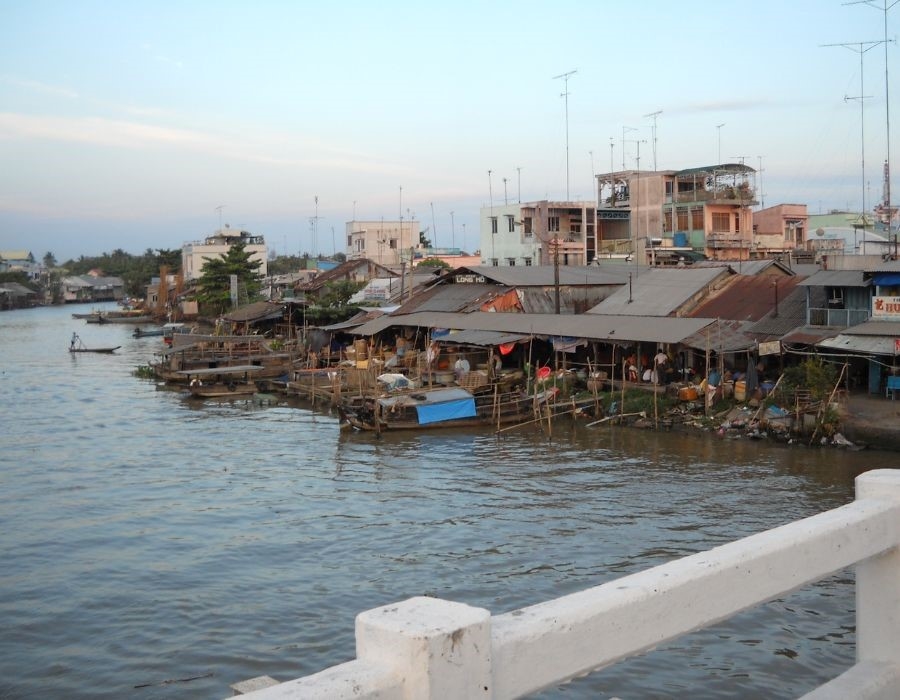
 There are many houses and people living along both banks of the Long Ho River in Vinh Long province
Keywords: Religious relics; Long Ho River; Landscape architecture; Vinh Long province; Heritage preservation.
1. Hồ Characteristics of the religious and belief-related relics along the Long Ho River
Firstly, diversity and cultural assimilation
The system of religious and belief-related relics along both banks of the Long Ho River possesses distinct characteristics, reflecting the process of land reclamation, settlement and profound cultural fusion, as well as the religious diversity of the local communities. The first prominent characteristic is the coexistence and intermingling of religious sites belonging to the Kinh, Hoa and Khmer people, encompassing a full range of forms. About folk beliefs, specifically the worship of the tutelary deity, these are among the earliest rooted cultural entities. Temples such as Long Thanh temple (a national monument) or Khao temple not only worship the local tutelary deity but also preserve royal decrees from feudal dynasties, affirming the sovereignty and stability of the local community in this new land. For the residents here, the communal house is a symbol of the spirit of remembering one’s roots, a place that preserves royal decrees and community traditions. In terms of religion, Buddhism, with its temples featuring soaring curved roofs or the distinctive pointed spire architecture of the Khmer people, creates an interesting contrast in architectural forms, such as the serene Tien Chau pagoda facing the vibrant Khmer pagodas in the vicinity. In addition, the beliefs of the Chinese people include temples dedicated to goddesses and gods, such as the That Phu temple, with its distinctive red color and exquisite mother-of-pearl carvings and ceramic reliefs, reflecting the aspirations for peace and prosperity of the merchant community closely associated with the riverine economy. This diversity does not lead to conflict but creates a state of cultural fusion. People living along the Long Ho River can go to Buddhist temples, then to communal houses to light incense and pray for peace, demonstrating the openness and tolerance characteristic of the people of Southern Vietnam.
Secondly, the spatial structure of water in front and mountains behind
Most of the religious structures along the Long Ho River have been creatively adapted, with the water in front and the mountains behind, to suit the riverine terrain. The facades of all important historical sites face the river, which is considered a source of vitality, a bright spot, a place where water and blessings gather. The triple-arched gate of a communal house or pagoda is often placed right at the water’s edge, creating a direct connection between the sacred space and the flow of everyday life. The triple-arched gate and the riverbank are a perfect pair in the landscape structure. Each historical site has its own dock where boats can be moored and where the most important rituals take place: Processions carrying the sacred statue from the river to the temple, the launching of the Ngo boat, or the release of animals and floating lanterns. The riverbank becomes an inseparable architectural element, a link between man-made architecture and the natural landscape.
Thirdly, the ancient tree ecosystem surrounding the monument
One notable feature is the system of ancient trees surrounding the historical sites. These trees act as ecological barriers, protecting the sites from the effects of weather and urbanization. Viewed from the riverbank, the typical structure is: the riverbank to the triple-arched gate to the courtyard of the temple/pagoda with ancient trees, finally to the main hall. This route helps pilgrims shed the dust of the world before entering the sacred space. This path helps pilgrims shed the dust of the world before entering the sacred space. The historical site is often surrounded by ancient trees such as oil trees, star trees and bodhi trees, creating an ecological buffer that separates the sacred space inside from the hustle and bustle of the outside world. Oil trees, star trees and bodhi trees, some hundreds of years old, hold symbolic meaning and are considered dwelling places of deities in folk beliefs or symbols of enlightenment in Buddhism. The green foliage of ancient trees casts a continuous green strip across the Long Ho River, creating a striking contrast with the red tiled roofs and yellow walls of the historical buildings, highlighting the aesthetic appeal of the area.
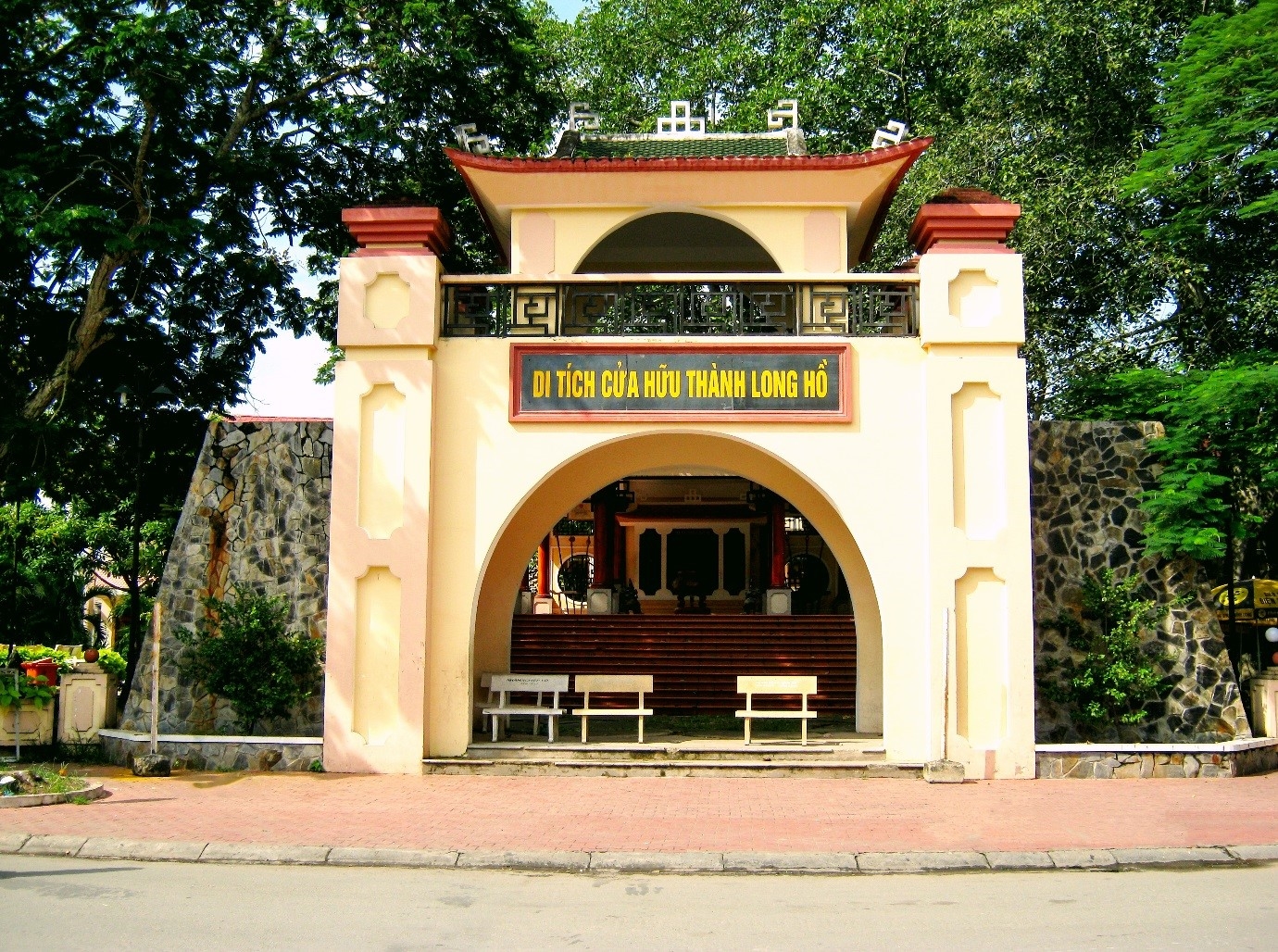 The relic of the right gate of Long Ho citadel
2. The value of historical sites in modern landscape architecture
For the Long Ho River area, religious and spiritual relics play a core role, creating the identity and cultural depth of this landscape. Along the winding course of the Long Ho River, structures such as the Long Thanh communal house, the Tien Chau pagoda and the Chinese shrines serve as focal points in the urban structure, helping people to orient themselves within a vast space. Breaking the monotony of the riverside landscape, the religious monuments attract the attention of both boaters on the river and passersby on the road. The sunlight reflecting off the yin-yang tiled roof and the shadow of the pagoda tower onto Long Ho Lake creates a picturesque landscape.
Existing as a continuous open space system, with the formation of a dock-courtyard-main hall structure, the site plays a central role in shaping cultural boat docks and festival spaces. The spacious courtyard in front of the temple allows people to access the water in the most natural way. This is the key factor in creating a balance between built-up area and open space in riverside landscape planning. The ancient trees create a green system along the riverbank, helping to regulate the climate, reducing noise from the river and nearby roads and providing a tranquil space and a sense of peace for anyone approaching this riverside area. The surrounding auxiliary structures, sidewalks, stone benches, and streetlights contribute to creating a harmonious and synchronized overall landscape that reflects the distinctive character of the religious and spiritual heritage sites along the Long Ho River in Vinh Long.
Landscape architecture is a repository of memories, and so are the religious relics along the Long Ho River, serving as warehouses preserving the history of land reclamation and the story of the cultural exchange between Kinh, Hoa and Khmer people in Vinh Long province. Therefore, promoting the value of historical sites within the landscape helps prevent cultural disruption and bringing educational value and pride to the local community. From a development perspective, historical sites are the core of waterway tourism tours. At night, the riverside sites are artistically illuminated, creating attractive sights and extending the length of stay for tourists.
3. Current situation and challenges in conservation and promotion
In the urban development process of Vinh Long province, the Long Ho River plays a crucial role as a heritage axis connecting the past with the present. However, promoting the value of religious and belief-related relics in this area is facing complex realities and internal conflicts between the need to preserve traditional values intact and the pressures of economic growth and environmental change.
The most striking current situation is the widespread concrete paving of the embankment along the Long Ho River. Technically, the construction of a solid embankment is necessary to prevent erosion and improve urban aesthetics. However, from a heritage landscape architecture perspective, these embankments are creating a physical and psychological disconnect. Previously, riverside temples and pagodas always had a natural connection with the water through earthen docks or stone steps. Currently, the high retaining walls and iron railings inadvertently create barriers, detracting from the original structure of the riverside dock and temple gate. Locals and devotees are no longer allowed to directly touch the water during traditional festivals, significantly diminishing the intangible value of the site. Another concerning issue lies in the restoration and upgrading of the monument. Due to a lack of funding and reliance on social contributions, some religious relics have been renovated in a modernized way, creating conflicts with the landscape and disrupting the feng shui structure.
Vinh Long province is orienting the Long Ho River towards becoming a key tourism axis, but in reality, a conflict is arising between economic goals and maintaining the sanctity of the religious space. During major festivals, the large number of visitors exceeds the capacity of the landscape infrastructure. The problem of litter on the river and noise pollution from tourist boats directly affects the environment for religious practice and daily life of religious leaders and followers. The presence of shops and advertising signs around the historical site detracts from the aesthetic appeal of the landscape architecture, blurring the boundary between sacred and public spaces. The Long Ho River is facing double pressure from climate change and domestic wastewater pollution. High humidity, rising water levels and saltwater intrusion are accelerating the weathering process of wooden and brick historical structures. Along with the dense growth of water hyacinths, floating garbage, and severely polluted water, the overall landscape architecture loses its visual appeal, diminishing the value of these spiritual destinations.
Furthermore, the management of historical sites along the Long Ho River still suffers from overlapping responsibilities and a lack of coordination between relevant authorities and the management boards of religious establishments. Road construction projects or riverside park projects have not considered religious relics as the central focus of their design, resulting in many relics being overshadowed by new infrastructure. Funding for landscaping around the monument is not a priority, resulting in the promotion of the monument’s value being limited to within the fenced area and not extending to the entire riverside space.
It can be said that the current state of promoting the value of religious relics along the Long Ho River presents a contradictory picture between the need for preservation and the pressure for development. Spatial disruption, architectural distortions during restoration and environmental degradation are major obstacles. Resolving these conflicts requires a planning mindset that respects natural and historical laws, as it is impossible to develop tourism on a polluted river and temples that have lost their architectural essence. Balancing the interests of the local people with the preservation of waterways, ancient trees, ancient temple roof is one of the issues that needs to be addressed so that the Long Ho River truly becomes a sustainable heritage corridor for Vinh Long province.
4. Solutions for enhancing the value of historical relics in the riverside landscape
In the context of current urbanization and integration, promoting the value of religious and spiritual relics along the Long Ho River requires a multi-faceted approach, not just focusing on preserving individual structures, but placing them within a dynamic architectural and landscape ecosystem. The first solution to aim for is to re-establish the connection between gods - people - water to create a cultural corridor that has both spiritual value and promotes sustainable socio-economic development.
Secondly, the most central and comprehensive solution is to establish the Long Ho River as an integrated heritage axis. Instead of allowing historical sites to exist as isolated oases amidst residential areas, a unified landscape buffer zone should be planned, ensuring that key landmarks such as the curved roofs of Long Thanh communal house or the Khmer pagoda towers maintain their dominant position in the space, not being obscured by modern tube-shaped buildings. Constructing a system of cultural pedestrian walkways connecting places of worship along both banks of the river, along with using locally sourced paving materials, will create visual harmony and honor cultural identity.
Thirdly, in order to overcome the spatial disruption caused by the harsh concrete embankments, landscape architecture needs to be softened in historical areas and specialized boat docks in a traditional style should be designed. These docks serve as gateways for visitors from the waterways, and also as spaces for rituals such as releasing lanterns or processions honoring deities. Using stepped stone terraces instead of vertical retaining walls will allow people direct access to the water's surface, re-establishing a sacred connection with the river; Transform the space between the historical site and the riverbank into open plazas for hosting community cultural activities. Landscape architecture around the monument should utilize ceramics, natural stone, and wood to construct benches, signposts, artistic trash cans and design miniature scenes that mimic the distinctive cultural symbols of local religions. Using artistic lighting as a key solution to develop night tourism, focusing on the exquisite details of temple roofs, triple-arched gates and ancient trees. The warm golden light creates a magical contrast with the dark water, transforming the Long Ho River into a nighttime spectacle, attracting tourists to experience the waterway tour.
Fourthly, preserve the green heritage ecosystem. The system of ancient trees surrounding the religious relics along the Long Ho River is an invaluable landscape asset. A program for evaluating and preserving century-old Dipterocarpus, Shorea and Bodhi trees is needed as an integral part of the heritage site’s documentation. Adding green belts in the empty areas between the monuments are characteristic riverine trees such as mangrove and nipa palm, which help prevent natural erosion and highlight the interspersed religious architectural structures.
Fifthly, solutions for promoting the value of historical sites need to be linked with technology to reach young people and international tourists. Developing a mobile application that provides sightseeing routes along the Long Ho River, integrating augmented reality technology. When tourists point their phones towards an ancient temple, information about its history, architecture and related festivals will appear vividly. In addition, organize tours using traditional boats such as the “bau boat” and “ba la boat” to connect the historical sites. Combining visiting monuments with experiences at riverside pottery kilns creates a closed tourism service supply chain, bringing direct economic benefits to the local community.
Sixthly, the final and decisive solution is the coordination among stakeholders to establish an inter-sectoral mechanism to ensure that all infrastructure projects do not encroach upon the historical site space and to promote the role of religious institutions in supporting temple and pagoda management boards in training on landscape preservation and tourism guidance, helping religious leaders and followers become cultural ambassadors of the river.
5. Conclusion
The system of religious and belief relics along Long Ho River are architectural works that shape the identity of Vinh Long province’s urban landscape. Through research, it can be affirmed that promoting the value of these historical sites in modern landscape architecture is not opposed to development, but rather forms the foundation for sustainability. When green planning solutions, riverside architecture, and technology are implemented synchronously, the Long Ho River will truly become a typical heritage corridor of the Mekong Delta, contributing to positioning Vinh Long province’s tourism and cultural brand on the international map.
References
1. Central Committee of the Communist Party (2014). Resolution No. 33-NQ/TW on building and developing Vietnamese culture and people to meet the requirements of sustainable national development, Hanoi.
2. Government (2021). Strategy for the development of science, technology and innovation until 2030, Hanoi.
3. Dr. Trinh Quang Canh, MA. Nguyen Duy Dung (2022), Conservation and development of some very small ethnic groups in Vietnam (Si La, Pu Peo, Ro Mam, Brau, O Du…), People’s Police Publishing House, Hanoi.
4. Pham Quang Hoan (2005), “Local knowledge (traditional knowledge) of Vietnamese ethnic minorities in contemporary social life”, Ethnographic Notice, Publishing House. Social Sciences, Hanoi.
5. Le Trong Cuc (1998), Local knowledge of highland people in agriculture and natural resource management, Agricultural Publishing House, Hanoi.
6. World Bank (2019). Indigenous Knowledge for Development Programs. Washington, D.C.
