Keywords: Protestantism; Minority communities; The of northern mountainous region (Vietnam); Social life.
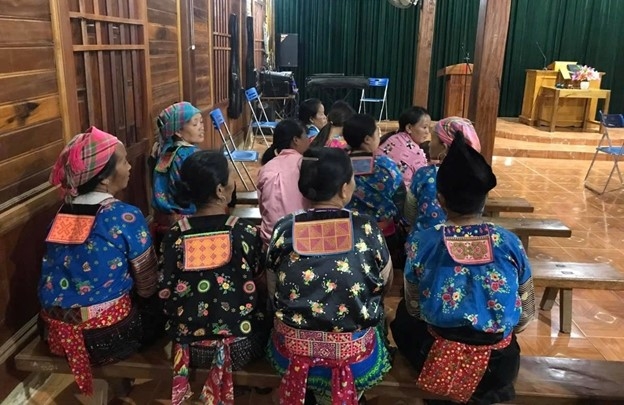 Protestant community center in Sima 2 village, Muong Nhe commune, Dien Bien province
1. Introduction
The of northern mountainous region (Vietnam), encompassing provinces in the Northwest and Northeast regions (Son La, Dien Bien, Lai Chau, Phu Tho, Tuyen Quang, Cao Bang, Lang Son, Quang Ninh, Bac Ninh, Thai Nguyen, Lao Cai) is a strategically important area for its economy, national defense and security. This is home to nearly 40 ethnic minority groups with diverse cultural identities and rich religious traditions, where folk beliefs and religions such as Buddhism, Catholicism and Protestantism coexist. In the context of significant socio-economic changes, cultural exchange and integration, the spiritual lives of ethnic minority communities have also undergone many transformations. One notable phenomenon is the rapid introduction and development of Protestantism within the community, especially among ethnic groups such as the Mong, Dao and several others. The development of Protestantism is not merely a religious phenomenon but is also closely linked to profound changes in the social, cultural and economic lives of ethnic minority communities. Therefore, studying the impact of Protestantism is crucial for correctly identifying the role of religion in social life and for serving the purpose of appropriate management and policy planning.
2. The process of importing and development of Protestantism in the northern mountainous region
Protestantism was imported to Vietnam in the late 19th century, but it wasn't until 1911 that the first official establishment was made in Da Nang city. Over the past 100 years, Protestantism has developed and become a powerful religion. In the northern mountainous region, Protestantism emerged around the mid-1980s among the Mong people, through radio broadcasts and religious texts. From 1993 to 2004, Protestantism flourished. In 1996, approximately 79,000 Mong people in the northern mountainous region were Protestants. By 2004, there were approximately 105,000 Mong followers (accounting for 13% of the total Mong population in our country). With guidance and assistance from the Evangelical Church of Vietnam in the North, Protestants in the northern mountainous region distribute Bibles within their communities, gathering at a family home or a specific location to listen to Bible sermons from radios or recording devices once or twice a week. As of April 2019, the total number of Protestants in the northern mountainous region was approximately 235,650 (95% are Mong, followed by the Dao ethnic group and a small number of other ethnic groups), with 389 clergy, 525 church officials, 9 congregations and 1,631 group meetings; They account for 21.01% of Protestant believers, 17.3% of clergy and 7.7% of church officials nationwide.
3. The impact of Protestantism on the lives of ethnic minorities in the northern mountainous region
3.1. Impact on economic life and work ethic
Protestantism is increasingly influential in social life, especially among ethnic minorities in the northern mountainous region (Vietnam). On the positive side, ethnic minority communities in the northern mountainous provinces who follow Protestantism have embraced and implemented the progressive religious values of Protestantism into their lives. In many places, ethnic minority communities who follow Protestantism work diligently in production, seeking ways to develop their family economies, at the same time helping others of the same religion to do the same. Because Protestant doctrine encourages believers to work diligently to develop the economy, viewing labor as a daily responsibility and duty to realize their faith before God.
3.2. Impact on morality and lifestyle
Protestant moral values have brought progress to the ethnic minority communities in the northern mountainous regions. People believe that the moral values of Protestantism are formed on the basis of faith, guiding people towards honesty and compassion. Driven by their faith, Protestant believers in the northern mountainous region find a spiritual connection, from which they follow God’s teachings on morality and lifestyle, or participate in social and charitable organizations voluntarily. The conscience of each devout believer prompts them to apply the commandments to their lives without the need for any legal sanctions. Protestants believe in the Ten Commandments given by God to preserve and ensure a safe living environment for people within the community. Based on the ethical principles established in the Bible, believers hold that Protestant morality is built on the foundation of love. This is the core value of the Gospel. When Jesus summarized the commandments of God’s law, he put it into just two: “You shall love the Lord your God with all your heart, with all your soul and with all your mind”. This is the greatest and first commandment. And the second is like it: You shall love your neighbor as yourself.
The love and compassion inherent in Protestant ethics have reached the ethnic minority communities in the northern mountainous regions through concrete, relatable actions that align with Vietnamese traditions, such as “loving others as you love yourself”. Protestant ethics emphasizes morality and the personal responsibility of believers to express their faith through a spirit of service and their interactions with one another in practical life, following the commandments in the Bible, stemming from each person’s understanding of their faith. The fifth through the tenth commandments are rules governing personal behavior in interpersonal relationships: Honor your father and your mother, so that they may live long in the land that the Lord your God is giving you. You shall not murder. You shall not commit adultery. You shall not steal. You shall not bear false witness against your neighbor. You shall not covet your neighbor’s house. You shall not covet your neighbor’s wife, or his male servant, or his female servant, his ox, his donkey or anything else that belongs to your neighbor. These are ethical standards, consistent with today's ethical standards, which Protestant believers follow and live by.
The ethnic minorities in the northern mountainous regions who follow Protestantism are fulfilling their social responsibilities in accordance with the mission entrusted to them by God. With the understanding that the only way to live a life pleasing to God is not to transcend the moral foundations of worldly life through asceticism in a monastery, but rather to fulfill in the world the duties corresponding to the role that life has assigned to each person in society, believers practice their duties. With a sense of personal responsibility, Protestant believers enthusiastically demonstrate dynamism in their lives with the aim of benefiting society through a lifestyle of diligent work, integrity and frugality. The personal conduct of Protestant believers, characterized by responsibility, enthusiasm in work, and a simple lifestyle, is in line with modern society and the views of the Party and State in building and developing the country.
3.3. Impact on family life
For families, Protestantism has norms that bind family life. The Bible contains many commandments related to family moral standards, such as the relationship between parents and children and between husband and wife. The Bible teaches that children have a duty to honor their parents, obey their teachings and not mistreat or despise their elderly parents... In the Ten Commandments, the fifth commandment teaches children to honor their parents. In Protestant families, filial piety plays a crucial role as a measure of culture and family values, manifested in the respect and reverence children show towards their grandparents and parents. This is also the Vietnamese principle of “drinking water and remembering the source”.
Within the family, Protestant marriages share similarities with Vietnamese marriages and align with the Vietnamese government’s policy of accepting monogamous marriage. The seventh and tenth commandments of the Ten Commandments forbid actions that harm family happiness. Article 69 of the Charter of the Evangelical Church of Vietnam (Southern Region) stipulates that everyone must respect marriage and be faithful to one’s spouse. The Word of God condemns forms of sexual relations such as homosexuality, premarital sex, extramarital sex, polygamy, incest, immorality,... Husbands and wives, parents and children, and everyone in the family must show filial piety, obedience, love, loyalty, faithfulness and respect for one another. This is consistent with Vietnamese law, which stipulates that marriage is voluntary, progressive, monogamous and based on equality between husband and wife, it prohibits a person who is already married from marrying or cohabiting with another person, or a person who is not married from marrying or cohabiting with someone who is already married. Protestants are advised to have fewer children so they can raise them well, treating daughters and sons equally. According to Protestant doctrine, a person has two parts: when they die, the physical body remains in the grave and returns to dust, while the soul, if good, goes to heaven with God, and if bad, goes to hell. Therefore, there is no need for three-day mourning rituals or offerings to spirits of the dead, whether fresh, dried or cow-like… When a person dies, their soul returns to God, so the desire to have a son at all costs is no longer as important to the mindset of Protestants. Protestants have abandoned the old custom where sons were responsible for their parents’ funerals; without sons, there would be no one to bury or worship their ancestors, and their souls would wander, suffer and be unable to return to their forefathers.
3.4. Impact on socio-cultural life
Protestant ethics have had a profound impact and influence on the lives of ethnic minority communities in the northern mountainous regions. The Protestant faith arrived at a time when ethnic minority communities were gradually changing their perceptions, gaining access to material resources and the conveniences of modern society, external cultural sources had partially met their current spiritual needs and therefore the Protestant faith was accepted by these communities. In areas inhabited by Protestant ethnic minorities, the positive influence on their lives is undeniable, having changed their way of thinking and living. The moral values of Protestantism all offer guidance that is in line with civilized life and strives for a better life, such as: eliminating outdated customs; Ebolishing elaborate and costly rituals and offerings; Practicing a progressive lifestyle, maintaining hygiene, seeking medical attention and medication when ill, avoid addiction, alcoholism, gambling, theft, abuse and violence in marital and parent-child relationships and live a monogamous life...
The arrival of Protestantism among the people encouraged them to abandon burdensome customs and outdated traditions regarding worship, funerals, and marriage, and promoted progressive ideas in line with the movement to build a cultured life in residential areas, such as: When someone dies, funeral rites are simplified. The elaborate procedures of the past, such as guiding the way, playing trumpets, driving away evil spirits, and carrying the coffin out of the house, are replaced by religious rituals, funerals are held within 24 hours, and burials can take place at any time except Sunday, when burying someone, only a cross needs to be placed on the grave; Similarly, weddings are simpler and more convenient for the lives of believers. Or consider the participation of Protestants in community religious activities, which is appealing to the community, especially young people and women. In Protestant communities, women become more active and involved in social and religious activities, having more opportunities to participate in community work and express themselves. Every Sunday morning, they would meet and share their life’s problems with each other. They also get to enjoy and participate in singing hymns, or other cultural and artistic activities. These things made their lives more joyful and relaxed, and they actively participated in movements such as “building a cultured lifestyle” and “building new rural areas”. In addition, ethnic minority communities who follow Protestantism are taught how to organize their lives, manage their work, practice thrift and foster a spirit of mutual support and compassion. From a socio-economic perspective, religious faith encourages people to engage in economic activities, help and support each other in labor and production, and encourage each other to save and work to become wealthy, because Protestantism considers labor a daily responsibility, a duty before God and emphasizes the importance of saving and avoiding excessive drinking… For Protestants, “laziness, unwillingness to earn more money, poverty, vagrancy and begging are considered sinful, a failure to fulfill God’s commandments. Protestants must maintain hygienic living conditions to prevent disease, so the living environment in the villages is cleaner and tidier, domestic violence has decreased. Protestants have also done quite well in implementing the policies, laws and regulations of the Party and the State, as well as the regulations of local authorities.
With the ethical spirit of Protestantism emphasizing progress, ethnic minority communities have been able to abandon many outdated customs, encourage their children to go to school, learn to use traditional medicine and modern medicine to treat illnesses, effectively implement family planning and eliminate social vices. Protestant men drink little or no alcohol and women no longer stay confined to the kitchen or the house. People of ethnic minority faiths who follow Protestantism know how to sing hymns, play electronic music and play the piano. It can be said that the moral teachings of Protestantism are in line with national traditions and the aspirations of the ethnic minority people in the northern mountainous regions. Protestantism has successfully persuaded people to follow it and helped ethnic minorities in the northern mountainous regions to adopt a new way of life that is more compassionate, responsible, hygienic, civilized and progressive.
4. Conclusion
Protestantism has had and continues to have a profound impact on the lives of ethnic minority communities in the northern mountainous regions. The moral values and lifestyles offered by Protestantism have contributed to changing the perceptions, behaviors and ways of life of these communities in a positive direction, in line with the development of modern society. Beyond fulfilling religious needs, Protestantism also contributes to economic development, building a new cultural life, reinforcing values and strengthening community spirit. This provides an important foundation for further research, evaluation and promotion of the role of religion in the sustainable development of ethnic minority communities in the northern mountainous region.
* Ho Chi Minh National Academy of Politics
References
1. Government Religious Affairs Committee, Religion and Religious Policy in Vietnam (White Paper 2022), Religious Publishing House, Hanoi, 2022.
2. Government Committee for Religious Affairs, Report on the situation of Protestantism in Vietnam (as of April 2019), Hanoi, 2019.
3. Nguyen Thanh Xuan, Some Religions in Vietnam, Religious Publishing House, Hanoi, 2019.
4. Nguyen Thanh Xuan, Protestantism in the World and in Vietnam, Religious Publishing House, Hanoi, 2019.
5. Evangelical Church of Vietnam, Charter and Internal Documents.
6. Some research studies on religion and ethnic minorities in Vietnam.
