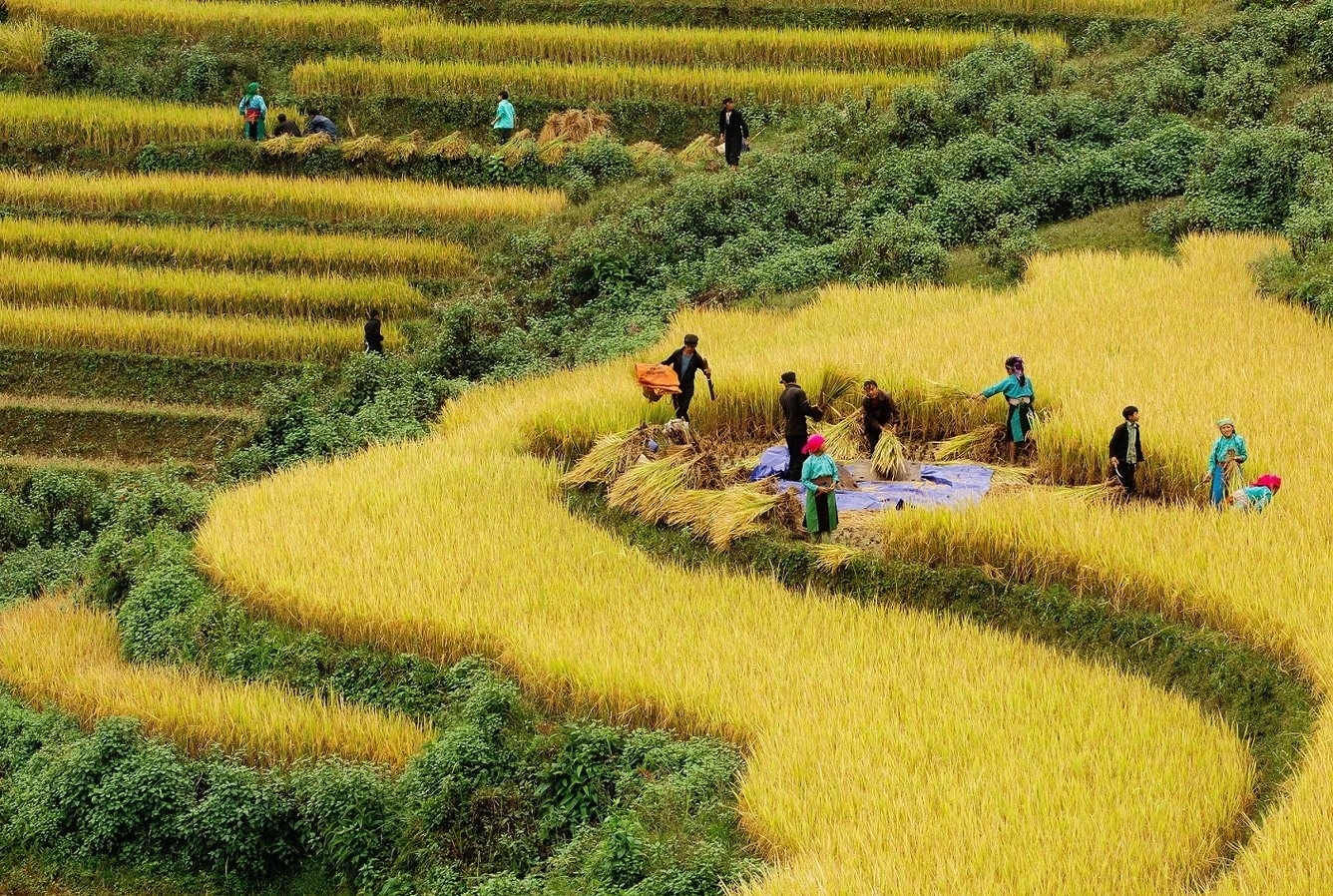
 The golden harvest season brings abundance to the Bac Son valley, Lang Son province
Keywords: Ethnic policy; Ethnic minority; Ethnic minority and mountainous araes; Result.
1. Fundamental changes in thinking, methods and development models for ethnic minority and mountainous areas
Conclusion No. 65-Kl/TW dated October 30th, 2019, of the Politburo (12th term) on continuing to implement Resolution No. 24-NQ/TW of the Central Committee of the Party (9th term) on ethnic affairs in the new situation requires: “Improve the system of policies and laws related to ethnic minorities. Socio-economic development, national defense and security policies for mountainous ethnic minority areas must be comprehensive, aiming for sustainable development and leveraging the advantages and potential of the region and the self-reliance of ethnic minorities”.
Continuing this viewpoint of the Politburo (12th term), the Document of the 13th National Congress of the Party (January 2021) affirms the principle: “Focus on perfecting and effectively implementing ethnic policies in all fields, especially specific policies to address the difficulties of ethnic minority people. Creating livelihoods, jobs, stable settlements for ethnic minorities, especially in remote areas, border areas. Focusing on effectively implementing the National Target Program for socio-economic development of ethnic minority and mountainous areas in the period of 2021-2030. Protecting and developing the population of ethnic minorities with less than 10,000 people, especially those at risk of declining in numbers” [2].
From the perspective and policy of the Party, the National Assembly has exercised its authority as stipulated in Clause 5, Article 70 of the 2013 Constitution, which is “to decide on ethnic policies”, by adopting Resolution No. 120/QH14 dated June 19th, 2020, approving the investment policy for the National Target Program for socio-economic development in ethnic minority and mountainous areas for the period of 2021-2030. Based on the National Assembly's resolution, the Prime Minister issued Decision No. 1719/QD-TTg dated October 14th, 2021, approving the National Target Program for Socio-Economic Development of Ethnic Minority and Mountainous Regions for the period of 2021-2030, Phase I from 2021-2025 (Program 1719). This is a special milestone of the 2021-2025 term, marking the first time a national target program has been specifically designed for ethnic minority and mountainous regions on a large scale, comprehensively and synchronously, comprising 10 projects and 14 sub-projects, covering the fields of infrastructure, livelihoods, education, health, culture, national defense and security.
The Program 1719 reflects the Party and State's renewed thinking on the perspective, methods, and development models for ethnic minority and mountainous regions. Firstly, the Party and State have a new perspective: “Investing in socio-economic development in ethnic minority and mountainous regions is an investment in the sustainable development of the country, improving the material and spiritual lives of the people; gradually narrowing the gap in living standards and income between ethnic minorities and the national average”.
This change led to a clear shift in the National Assembly and the Government's approach to developing mechanisms and policies for ethnic minority and mountainous areas, as reflected in Program 1719 in the following aspects:
Firstly, there is a need for changes in the methods and approaches to addressing development issues in ethnic minority areas. In previous terms, the approach to development in ethnic minority areas placed too much emphasis on infrastructure development, leading to implementation often being at the administrative level, at the lowest level being the commune, the role of the community and villages not being fully represented; ethnic policies were primarily supportive in nature… However, during the period of 2021-2025, ethnic policies are designed to aim for sustainable development, leveraging the advantages and potential of the region and the self-reliance of ethnic minority communities; Focusing on effectively addressing pressing issues, ensuring and enhancing the efficiency of investment resources; prioritize targeted and focused investment in particularly difficult areas and ethnic minority groups facing specific challenges in mountainous and ethnic minority areas.
Secondly, Program 1719 was developed based on reviewing, amending, supplementing, and integrating many contents, programs, projects, and policies, and has basically covered all aspects of life, economy, education, health, culture, society, national defense and security in ethnic minority and mountainous areas. Many policies have specific targets for the period of 2021-2025, up to 2030, and a vision to 2045. The policy system is designed to be multi-objective, focusing on comprehensive and sustainable development of ethnic minority and mountainous areas in conjunction with building new rural areas, contributing to reducing the number of policies, avoiding fragmentation and limiting overlapping content and implementation areas. The policy mechanism has undergone many innovations towards focused and targeted investment, prioritizing investment and support for the most disadvantaged areas, addressing the most pressing and urgent issues, focusing on the development of ethnic minorities who still face many difficulties or have specific challenges.
The management structure has been streamlined, responsibilities have been clearly assigned, and the role and functions of the ethnic affairs agency have been enhanced, overcoming the situation of multiple agencies advising, guiding, managing and implementing ethnic policies in previous terms; This clearly demonstrates the role of the focal agency in directing, coordinating, monitoring, and evaluating ethnic policies based on coordination among relevant ministries and agencies under the unified coordination of the Government.
Thirdly, state resources are identified as crucial and decisive, with the total projected capital for the period of 2021-2025 reaching over 137 trillion VND, not including other resources. This is a very important and decisive change for the implementation and effectiveness of policies. Previously, most policies in ethnic minority areas were only supportive and aimed at resolving immediate situations, not as investments for development; Some policies are approved but lack the necessary resources, funding is slow, and implementation periods are extended; other policies require waiting for contingency funds or a budget surplus before additional funding can be provided. Essentially, the central government budget only allocates sufficient funds for operational expenses, with low investment capital and therefore often fails to achieve the stated policy objectives.
Fourthly, Program 1719 has a long implementation period of 10 years, from 2021-2030, with Phase I from 2021-2025, which has addressed the issue of ethnic policies often being issued in terms of office, leading to policy gaps between terms as in the past.
2. Outstanding achievements in implementing ethnic policies during the term of 2021-2025
With almost all ethnic policies integrated into Program 1719, the results of implementing ethnic policies during the 13th Party Congress term can be seen as primarily the results of implementing Program 1719.
Program 1719 has 9 basic target groups. At the end of Phase I from 2021-2025, 6 out of 9 target groups had achieved or exceeded the set plan: The poverty reduction rate in ethnic minority and mountainous areas for the entire period reached 3.2% (the assigned plan target was over 3%); The average income of ethnic minorities reached 45.9 million VND, a 3.3-fold increase compared to 2020 (the target was to increase by more than 2 times); Education target group; The target group of working-age people receiving vocational training suitable to the needs and conditions of ethnic minorities and the specific characteristics of ethnic minority and mountainous regions reached an average of 54.8% and is expected to reach 57.8% for the whole period (target >50%); The target groups include preserving and developing the valuable traditional cultural values and identities of ethnic groups; Strengthening healthcare services to ensure ethnic minority communities have access to modern healthcare services, and continuing to control and eventually eliminate diseases in ethnic minority and mountainous areas.
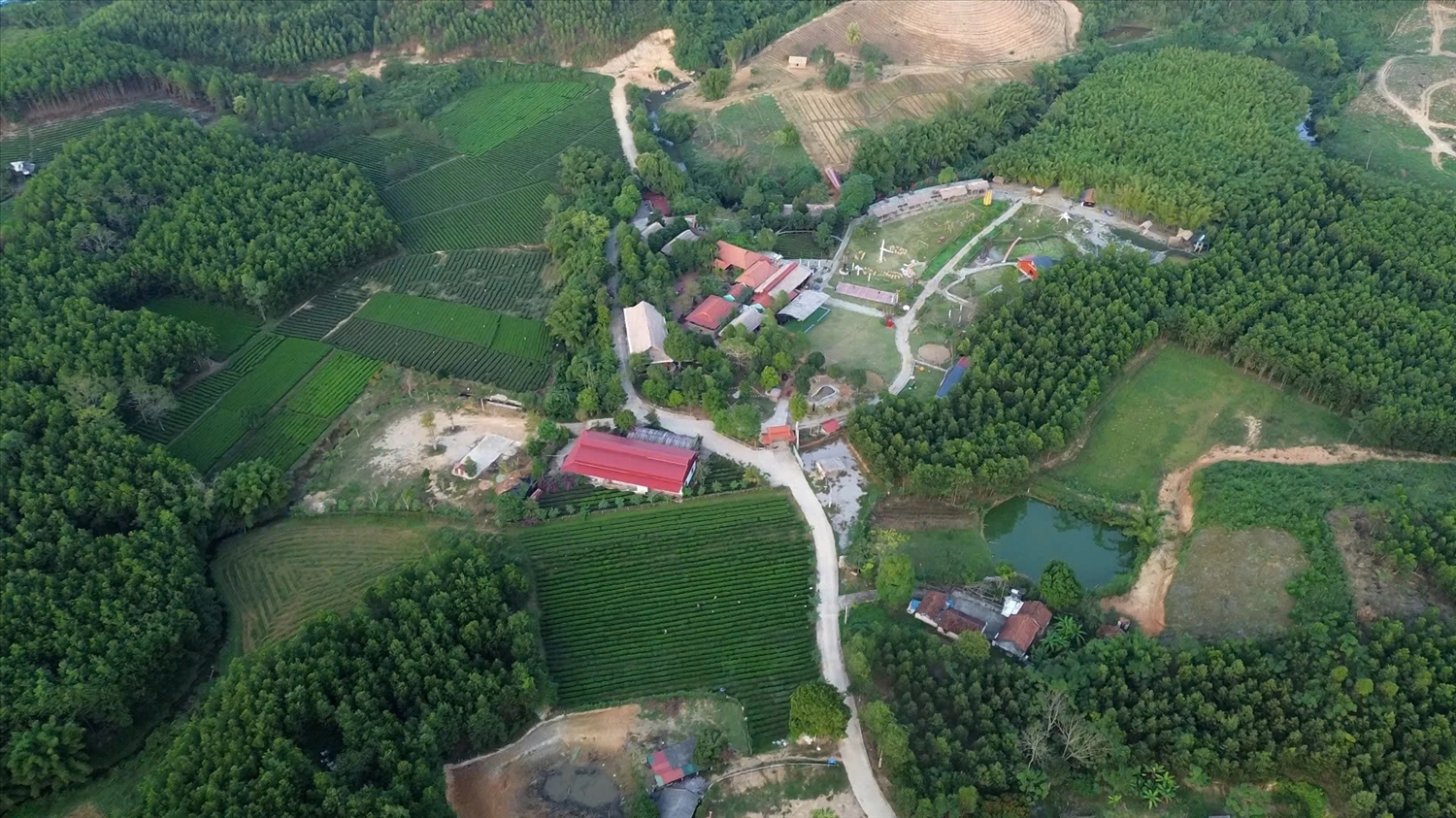 Ban Ven, Xuan Luong commune is known as the first typical OCOP community tourism destination of the former Bac Giang province, now Bac Ninh province
The results for specific indicators by target group are as follows:
The target group for improving technical and social infrastructure in communes and villages in ethnic minority and mountainous areas, with indicators achieved and exceeded, includes: The percentage of communes with paved or concrete roads leading to the commune center reached 100%; the percentage of villages with hardened roads leading to the center reached 93.9% (target: 70%); The rate of health stations built with solid structures reached 100%; the rate of households using the national power grid and other suitable power sources reached 99%; the rate of ethnic minority people using clean drinking water reached 93.8% (target: 90%).
Regarding the education sector, all targets were met or exceeded: The percentage of 5-year-old kindergarten students attending school reached 99% (the assigned target was over 98%); the percentage of primary school-aged children attending school reached 99.2% (the assigned target was over 97%); The school attendance rate for lower secondary school-aged children reached 97.5% (target over 95%); the school attendance rate for upper secondary school-aged children reached 76.3% (target over 60%); the literacy rate of people aged 15 and over in the common language reached 94.4% (target over 90%).
The target group for public health and healthcare achieved and exceeded 3 targets: The rate of pregnant women receiving regular check-ups (at least 4 times during pregnancy) reached 90.4% (the assigned plan was over 80%); The rate of women giving birth at medical facilities or with the assistance of medical staff reached 99.7% (target over 80%); the rate of underweight malnutrition among children under 5 years old was 11.1% (target under 15%). One target was nearly met: the rate of ethnic minority people participating in health insurance reached 97.1% (target 98%).
The target group for preserving and developing the nation's fine traditional cultural values and identity has achieved both of its objectives: The percentage of villages with community centers reached 93.8% (target: 80%); the percentage of villages with traditional cultural and artistic clubs that operate regularly and with quality reached 66.1% (target: 50%).
The target group of fixed farming and settlement work, basically solving the shortage of residential land and production land for the people, has 3/8 targets achieved: Housing settlement reached 271%; Distributed domestic water support reached 124%; Support for construction of centralized domestic water works reached 131%.
The achievements have contributed to effectively and thoroughly addressing some fundamental issues in the socio-economic development of ethnic minority and mountainous regions, including poverty eradication, income increase, job creation, improvement of education and healthcare quality and preservation and promotion of cultural values; Resolving urgent issues of housing, land, planning and population stabilization in areas with high risk of landslides; Laying the foundation and awaken the potential and strengths of localities through gradually investing in building technical and social infrastructure in ethnic minority and mountainous areas.
In line with the view that state resources are important and decisive, the total capital allocated for the Program in the period of 2021-2025 is nearly 90 trillion VND, reaching 86.3% of the total capital approved by the National Assembly and the Standing Committee of the National Assembly. According to the Ministry of Finance's summary, the cumulative disbursement of central government budget funds for the Program in the 2021-2025 period up to the end of October 2025 was VND 58,092 billion (reaching 64.7%), including VND 35,926.3 billion in public investment capital (reaching 73.1%) and VND 22,165.7 billion in recurrent expenditure (reaching 54.6%).
As a result of the loan program under Government Decree No. 28/2022/ND-CP dated April 26th, 2022, by October 31st, 2025, outstanding loans reached VND 2,780 billion, with nearly 59,000 customers still having outstanding loans supporting land for housing, production land, vocational retraining and production development along the value chain, which has encouraged the spirit of self-reliance and self-improvement among ethnic minority communities.
3. Outstanding results of ethnic policy
Firstly, the ethnic policy system has focused on supporting livelihoods, creating opportunities to alleviate poverty, and improving the living standards of ethnic minority communities. The economy of ethnic minority and mountainous areas has developed strongly. The economic growth rate is quite high, with provinces in the Northwest region averaging 8% per year; the Central Highlands 7.5% per year; the Southwest region 7% per year. Significant investment in technical and social infrastructure has led to noticeable changes in the rural landscape, creating important prerequisites for the region’s comprehensive and sustainable development.
Secondly, production has developed in most areas, especially in agriculture. People have changed traditional farming methods, applying scientific and technological advancements and new high-yield, high-quality varieties. Gradually, a commodity-producing agricultural and forestry area has been formed with key products such as coffee, tea, rubber, pepper, medicinal plants, timber trees and non-timber products. Employment and income for the people have increased. The lives of ethnic minorities have improved significantly and the poverty rate has decreased rapidly.
Thirdly, the education and training sector has received increased investment in schools, classrooms, and modern teaching equipment, ensuring effective teaching and learning, contributing to raising the intellectual level and developing human resources in ethnic minority and mountainous areas. Universal education and literacy programs are maintained and gradually improved annually. Attention is paid to building and developing the workforce of ethnic minority cadres, contributing to ensuring both quantity and quality to meet the socio-economic development requirements of ethnic minority and mountainous areas in the new era.
Fourthly, regarding culture. Efforts to restore, preserve and promote the traditional cultural values and identity of ethnic minority communities are receiving attention. Cultural preservation activities linked to tourism development have seen many positive, practical, and effective changes, helping to strengthen traditional cultural identity, create jobs and increase income for local people through tourism services.
Fifthly, regarding healthcare: Ethnic minority communities have seen improvements in physical and mental health, stature and life expectancy. Infrastructure and equipment are being gradually invested in for health centers and commune health stations; and the healthcare workforce serving the people’s health needs is receiving increasing attention. Ethnic minorities have access to medical services and primary health care right in the locality. The grassroots level is developed with high-level, specialized techniques to manage and treat a number of non-communicable diseases, helping to reduce travel time, treatment costs and referral pressure for higher-level medical facilities.
Sixthly, the political system in ethnic minority and mountainous regions is constantly being built and strengthened, better meeting the requirements of leading the people in carrying out political tasks and socio-economic development. The number and quality of ethnic minority cadres in the political system have been gradually improved, especially at the grassroots level.
4. Conclusion
The process of implementing the socio-economic development goals for ethnic minority and mountainous areas in the period of 2021-2030 has reached its halfway point. The achievements in implementing Program 1719 affirm the correctness of the guidelines and policies on ethnic minorities as outlined in the Resolution of the 13th National Congress of the Party and have initially laid the foundation for the sustainable development of ethnic minority and mountainous areas. Thanks to investment and support in infrastructure, livelihoods, and market access, the economic growth rate has gradually improved compared to the previous period, contributing to narrowing the development gap between ethnic minority and mountainous areas and other regions; Strengthening the stability of people's lives, maintaining national defense, security and social order in key areas. The results achieved during the period of 2021-2025 are crucial factors in ensuring the absolute trust of ethnic minority communities in the Party and State’s policies and guidelines. They also provide fundamental advantages for ethnic minority and mountainous regions to embark on implementing the Resolution of the 14th National Congress of the Party, contributing to the successful achievement of the goal of Vietnam becoming a developing country with a modern industry and high middle income by 2030.
References
1. Government (2025), Report No. 901/BC-CP dated October 10th, 2025 summarizing the National Target Program for socio-economic development of ethnic minority and mountainous areas in the period of 2021-2030, phase I from 2021-2025, Hanoi.
2. Communist Party of Vietnam (2021), Documents of the 13th National Congress. National Political Publishing House. Hanoi. 2021. P.140-141.
3. Conclusion No. 65-KL/TW dated October 30th, 2019, of the Politburo on continuing to implement Resolution No. 24-NQ/TW of the Central Committee of the IX Party Congress on ethnic affairs in the new situation.
4. National Assembly (2019), Resolution No. 88/2019/QH14 dated November 18th, 2019 approving the overall plan for socio-economic development of ethnic minority and mountainous areas for the period of 2021-2030.
5. National Assembly (2020), Resolution No. 120/2020/QH14 dated June 19th, 2020 approving the investment policy for the National Target Program for socio-economic development in ethnic minority and mountainous areas for the period of 2021-2030.
