English review |
Dr. Phung Quang Thien*; MA. Nguyen Duy Dung** -
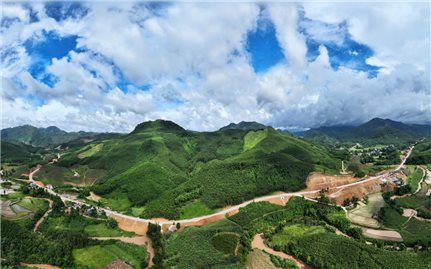
14:28, 15/08/2026 (DTTG) - Abstract: In the context of digital transformation, international integration and increasingly extensive demands for sustainable development, innovating the mindset and implementation methods regarding ethnic minority policies has become essential to enhancing governance effectiveness and leveraging the internal strengths of ethnic minority and mountainous areas. The article analyzes the necessity of shifting from a mindset of passive assistance to one of sustainable development, specifically one that places people at the center and communities as the primary agents of the development process. It also emphasizes the need to innovate policy implementation methods by ensuring synchronization, digitalization and transparency, at the same time strengthening decentralization linked to local accountability. This affirms that innovating the mindset and implementation methods regarding ethnic minority policies not only enhances practical effectiveness but also establishes a sustainable foundation for strengthening the great national unity bloc in the new period.

Abstract: The right to access information is one of the basic rights of citizens, recognized by the Constitution and laws of Vietnam and to be an important condition for people to exercise other rights and participate in the country’s political and social life. For ethnic minorities, this right is especially significant given the unequal socio-economic conditions, information infrastructure and access to information. This article analyzes the policy and legal framework for ensuring the right of ethnic minorities to access information; it assesses the practical results of implementation over the past period to clearly see Vietnam's efforts, especially those of the Ministry of Ethnic and Religious Affairs, in ensuring the right of ethnic minorities to access information in a substantive and effective manner.
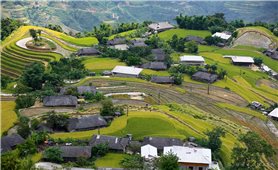
Abstract: The 53 ethnic minority groups in Vietnam mainly reside in the midland, mountainous and border regions - areas of strategic importance in terms of economics, national defense, security and ecological environment. Recognizing this characteristic, since 2003, Resolution No. 24-NQ/TW of the 9th Central Committee of the Communist Party of Vietnam has affirmed: “Our Party has always determined that the issue of ethnicity, ethnic affairs and the unity of ethnic groups have a strategically important position in our country’s revolution”. Based on an analysis of the system of ethnic policies and guidelines during the reform period and the achievements in the economic, social and cultural fields, this article clarifies the consistency of the principle of equality among ethnic groups, the efforts to narrow the development gap and the guarantee of human rights for ethnic minorities. Based on practical evidence, this article contributes to refuting the distorted claims that “racial discrimination” exists in Vietnam, affirming that Vietnam’s ethnic policy aims at genuine equality, strengthening national unity and promoting sustainable national developmen.
English review |
Dr. Phu Van Han; MA. Nguyen Duy Dung; Lieutenant Colonel, MA. Hoang Duc Thanh -
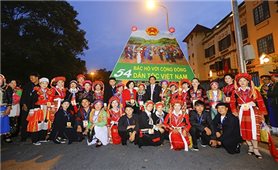
14:50, 22/07/2026 Abstract: Throughout the long history of nation-building and national defense of the Vietnamese people, the close ties and companionship between ethnic groups and religions with the destiny of the nation have always been a distinctive feature, vividly demonstrating the strength of the great national unity. In the current context, when the country is entering a new stage of development, with high requirements for international integration, sustainable development and maintaining socio-political stability, the accompanying role of ethnic groups and religions has become more important than ever.
English review |
Assoc. Prof. Dr. Nguyen Thanh Xuan -
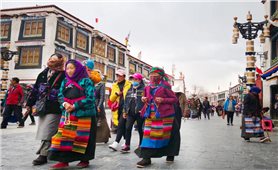
09:38, 09/07/2026 Abstract: China (officially the People’s Republic of China) is the most ethnically diverse country in Asia in terms of ethnic minorities (collectively referred to as ethnic groups). The Chinese state, under different political systems, has policies regarding ethnic groups. In particular, the current Chinese state has specific policies aimed at contributing to national stability and development in this new era.
English review |
Dr. Phung Quang Thien* MA. Nguyen Duy Dung** -
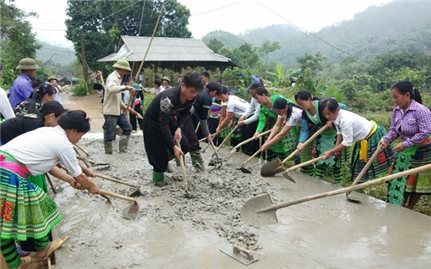
16:54, 20/06/2026 (DTTG) - Abstract: In the context of implementing ethnic policies towards integration and sustainable development, reforming the socio-economic governance methods of ethnic minority and mountainous areas has become an urgent requirement. This research focuses on clarifying the theoretical and practical basis of the transition from an administrative management model to a dynamic, modern, people-centered and community-based development management model. Based on an analysis of the limitations of traditional governance methods, this article emphasizes the significance of governance innovation in improving policy effectiveness, enhancing integration, coherence and uniformity, promoting inclusive development and narrowing regional disparities. At the same time, the research affirms that innovation in governance methods is not only a technical requirement but also a shift in development thinking, contributing to strengthening national unity and ensuring sustainable development in ethnic minority and mountainous areas in the current period.
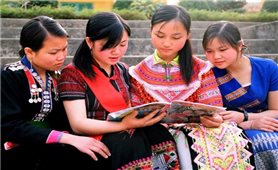
(DTTG) - Abstract: Conclusion No. 65-KL/TW dated October 30th, 2019, of the Politburo on continuing to implement Resolution No. 24-NQ/TW of the IXth Central Committee of the Party on ethnic affairs in the new situation requires: “Innovate the admission process by prioritizing the selection of ethnic minority students”. This is because the scholarship program is an important tool for ensuring fairness in access to higher education, at the same time creating a local workforce for ethnic minority and mountainous areas. This article analyzes the achievements, identifies the main “bottlenecks”, clarifies the causes from the perspective of public policy implementation, and then proposes directions for adjustment towards improving quality, linking training with human resource needs and the responsibility of utilization, contributing to the sustainable development of human resources in ethnic minority and mountainous areas today.
English review |
Assoc. Prof. Dr. Nguyen Thanh Xuan * -
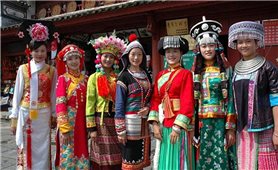
15:44, 08/06/2026 (DTTG) - Abstract: China (officially the People’s Republic of China) is the most ethnically diverse country in Asia in terms of ethnic minorities (collectively referred to as ethnic groups). The Chinese state, under different political systems has policies regarding ethnic groups. In particular, the current Chinese state has specific policies aimed at contributing to national stability and development in this new era.
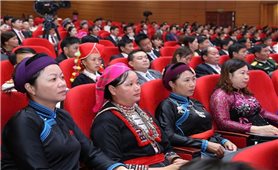
(DTTG) - Abstract: Building a team of ethnic minority cadres is an important aspect of the Party and State’s personnel and ethnic affairs. This article analyzes the Party’s consistent stance on this issue; assessing the achievements made so far; pointing out the limitations and shortcomings from practice. Based on that, several solutions are proposed to improve the effectiveness of building a team of ethnic minority cadres in the coming period, contributing to strengthening national unity, promoting sustainable development in ethnic minority and mountainous areas.

(DTTG) - Abstract: This article focuses on analyzing the outstanding achievements of Vietnam’s ethnic policy in recent decades, especially from the renovation period to the present. Through this, the author clarifies the positive changes in the socio-economic, cultural and educational lives of ethnic minority communities. However, in the context of a new era with many challenges, such as digital transformation, climate change, international integration and sustainable development,… ethnic policies are facing many issues that need further improvement. This article outlines the challenges and proposing several directions to improve the effectiveness of ethnic policies in the coming period.
English review |
Dr. Le Phu Thang* - MA. Nguyen Thi Diep** - MA. Vo Thao Nguyen*** -
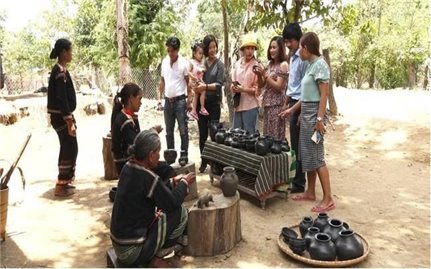
15:57, 10/03/2026 (DTTG) - Abstract: Preserving the cultural identity of indigenous ethnic minorities in the Central Highlands region in the context of poverty reduction is both an urgent and a long-term strategic issue. This article analyzes the relationship between cultural identity preservation and poverty reduction in the local ethnic minority communities of the Central Highlands. Based on the theory of sustainable development and the role of culture as an endogenous resource, this article shows that integrating cultural elements into poverty reduction programs not only helps improve economic efficiency but also strengthens self-reliance, identity and community cohesion. Based on a research of several local models, this article proposes policy solutions to promote an integrated approach between culture and development, centered on the community, aiming for sustainable development in the ethnic minority areas of the Central Highlands.
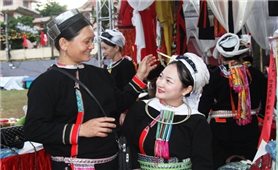
(DTTG) - This article focuses on analyzing the achievements, challenges and directions for improving ethnic policies in the new era, a period where the spirit of national self-reliance combined with deep international integration demands both respect for cultural identity and the promotion of comprehensive development in ethnic minority and mountainous areas.
