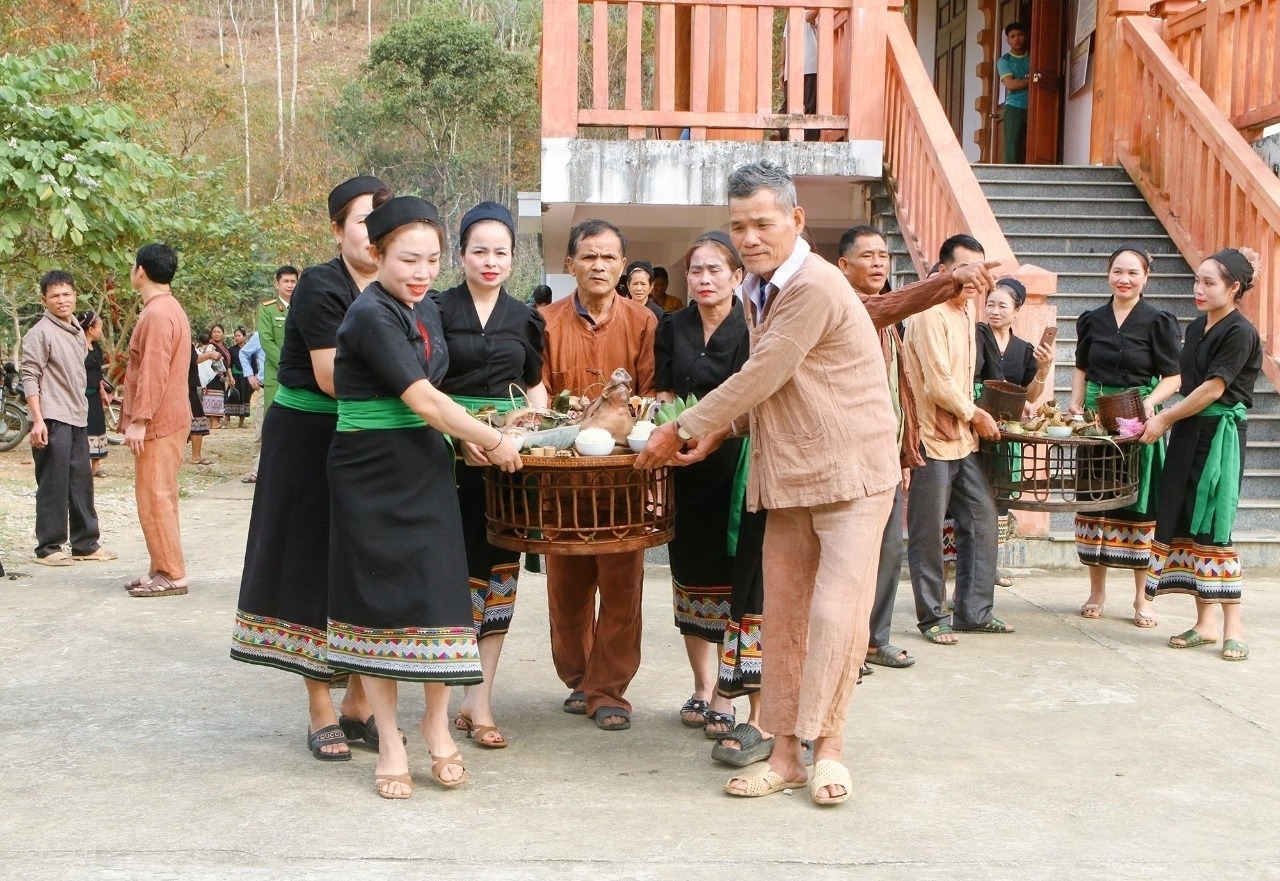
 The O Du people move the offering tray to the Thunder God to the outdoor location where the ceremony is performed
According to the village elder and shaman Lo Van Cuong of Van Mon village stated: Since ancient times, before the advent of calendars, the ancestors of the O Du people used the sound of thunder as a marker to begin the new year. This concept originates from the slash-and-burn agricultural lifestyle, which is heavily dependent on nature. When thunder rumbles, rain will come, the earth and sky will flourish and all things will begin a new cycle. Therefore, the New Year's thunder festival not only has religious significance but is also closely linked to the rhythm of life and livelihood of the community.
After the first thunderclap of the year, early the next morning, while the mountain mist still lingered over the village, the O Du people woke up. People bring everyday items like pots, pans, knives, baskets, trays and bowls to the sacred stream to wash and clean them. The clear blue Nam Ngan stream flowing behind the village has become a sacred space, where the ritual of “washing away the old year” takes place. For the O Du people, washing household items with spring water at the beginning of the year signifies washing away the bad luck and misfortune of the old year, praying for good fortune and smooth sailing in the new year.
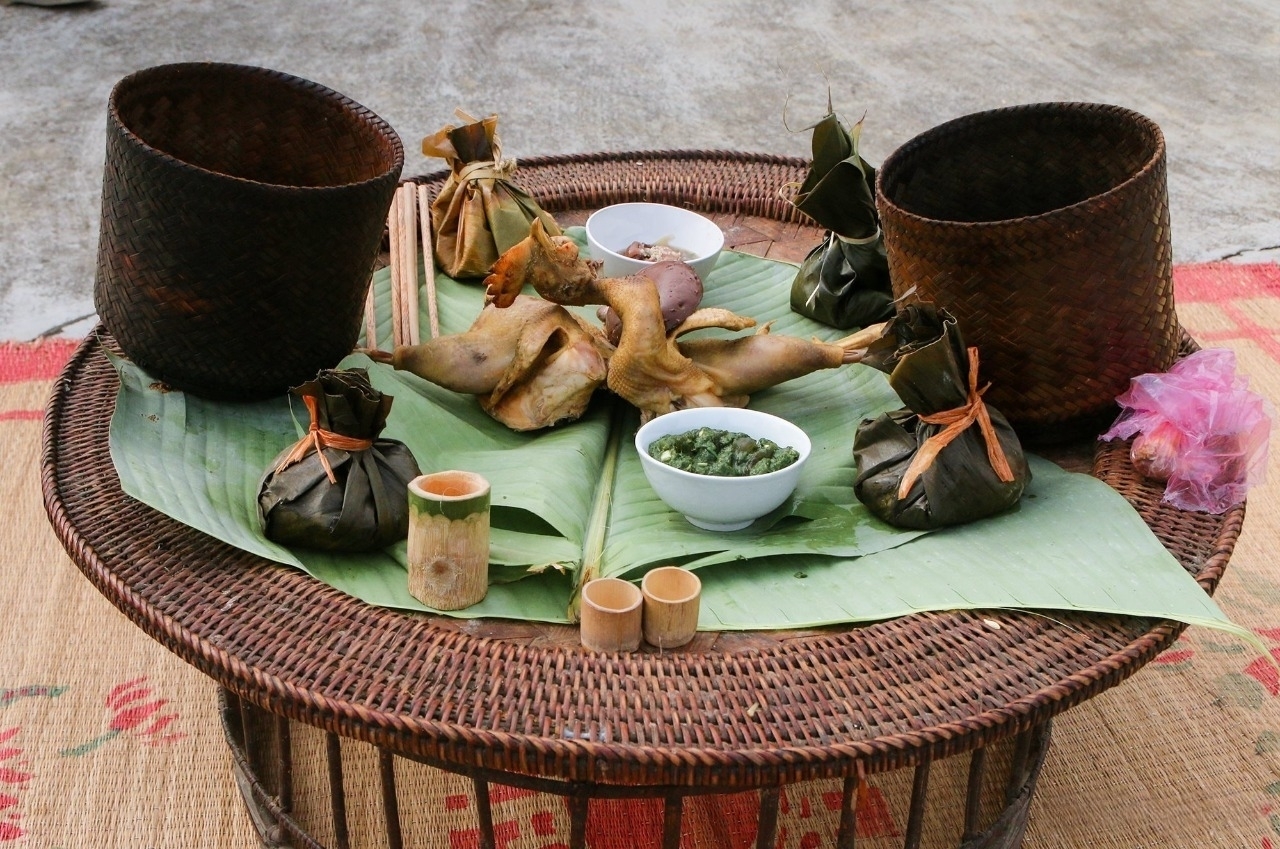 Offering tray for worshipping the Thunder God
Not only objects, but also people immerse themselves in the cool, refreshing waters of the sacred stream. Parents wash their children’s faces with the stream water, hoping they will grow up healthy, intelligent and quick-witted. Adults wash their hands and feet, and run water over their hair, believing it will invigorate them and give them the strength and stamina to work in the fields and forests in the new year. In this lively atmosphere, people meet, greet each other and exchange good wishes for the new year.
According to Ms. Vi Thi Dung, an elderly resident of Van Mon village, every year during the New Year’s Thunder Festival, children, siblings and relatives who work far from home try to arrange their schedules to return and celebrate together. This is an opportunity for people to remember their roots, reunite with family and strengthen community bonds. In the ritual sequence, the offering to the village is the first and most important ceremony. The offering tray includes simple but solemn offerings such as boiled chicken, sticky rice and white wine. The shaman is the master of ceremonies, reading prayers on behalf of the villagers to announce and ask permission from the local deities to allow the village to celebrate the New Year, in order to pray for their protection and guidance for the community throughout the year.
Following that are rituals to worship the Thunder God, the Ancestors, and to bless the villagers. Two elaborately prepared offerings feature traditional O Du dishes, mainly made from mountain and forest produce such as: Boiled pig’s head, grilled stream fish, various boiled meats, bamboo-cooked rice, rice wine in bamboo tubes, moss, fish sausage, rat meat, taro leaves... The offerings are displayed on trays woven from rattan and lined with banana leaves, symbolizing the harmony between humans and nature.
In this sacred space, the shaman prays to the Thunder God and the ancestors to accept the offerings, blessing the village with peace, favorable weather, abundant nature, unity among the people, good health, success in work, business and studies.
After the rituals conclude, the shaman and village elders raise their glasses of wine to celebrate the new year, wishing for good fortune for the village. The villagers then tie black threads around each other’s wrists, symbolizing a wish for health and peace.
During the festival days, Van Mon village is bustling with the cheerful sounds of musical instruments made from bamboo. O Du people dance together, open their arms wide, sing and have fun, creating a vivid picture of a rich community cultural life.
In recent years, thanks to the attention of the local government, the cultural and spiritual life of the O Du people has been increasingly improved. Maintaining the New Year’s Thunder Festival, along with cultural activities such as folk song and folk dance clubs has contributed to preserving and promoting the unique traditional values of the O Du ethnic group. This not only serves as a foundation for the continued transmission of heritage to future generations, but also affirms the enduring vitality of an ethnic minority group between the relentless flow of modern life./.
