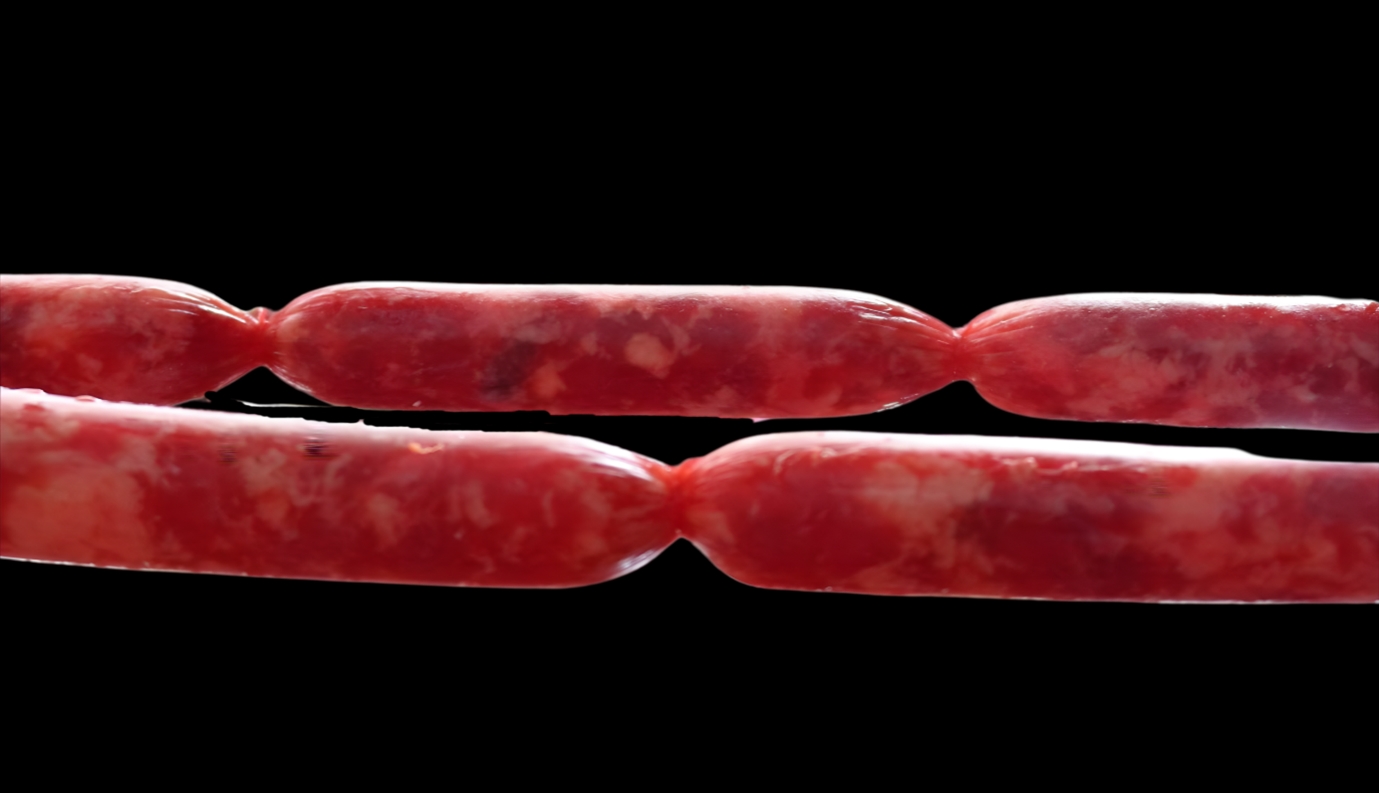
 The Cham people in An Giang province, who follow Islam, do not eat pork because it is a forbidden food, therefore, in order to enjoy sausage, they prepare tung lo mo from beef, which is distinctly different from sausages made from pork in many other regions.
The Cham people make beef sausage on important occasions, such as festivals, holidays and weddings. Beef thigh, shank or lean meat is carefully selected, prioritizing cuts with just the right amount of lean meat and tendons so that when fermented and dried, it retains its natural chewiness and tenderness. The seasonings aren't numerous, but they must include salt, pepper, garlic, ginger, chili, and sometimes a touch of palm sugar - a characteristic spice of the sunny region to create a subtly sweet aftertaste, combined with leftover rice and rice wine, the resulting fermented sausage has a distinctive sour flavor and a taste very different from the sausages of the Kinh, Chinese and Khmer people living in the same area. The beef intestines are turned inside out, cleaned thoroughly, then tightly stuffed with marinated beef and tied into sections about three finger lengths long. Then, dry them in the natural sun and wind until they become plump and round. Walking around the Cham village, every few houses you will see a rack of attractive red sausages drying in the sun.
Beef sausage is either fried or grilled over charcoal. Keeping the heat moderate so the sausage cooks evenly, the fat sizzling pleasantly, the surface slightly browned, the aroma spreading, and with one bite you can clearly feel the tender, sweet and rich flavor of the beef, a slight spiciness on the tip of the tongue and a lingering sweetness. When braising beef sausage add just enough water to cover it and simmer over low heat until the water evaporates and the sausage turns golden brown and tender. This dish can be served with fresh vegetables and unripe bananas, and dipped in a mixture of salt, pepper and lemon juice or chili sauce for an even more delicious taste, it’s appealing whether eaten with white rice or as a snack. Each way of eating encapsulates the harmony between meat and vegetables, between rich and delicate flavors, between the sunshine and wind of the riverine region and the rich, resilient spirit of the local community. Not only the Cham people, but also the Vietnamese and Chinese people are very fond of beef sausage.
In recent years, beef sausage from the Cham people in An Giang province has gradually moved beyond the confines of villages, becoming a popular gift choice for many consumers. It’s not just because of the unique flavor, but also because of the cultural story behind each string of sausages. In a context where consumers are increasingly interested in origin, preparation methods and traditional values, Cham beef sausage is a novel yet reliable choice.
From a culinary perspective, this dish is well-suited to modern lifestyles: Easy to prepare, easy to preserve and suitable for many small spring gatherings. From a cultural perspective, food is a gentle invitation for people to open their hearts to the culinary cultures of other nations, instead of being confined to the familiar dishes of their own people. During the spring days, try refreshing your family meals with flavors infused with the sunshine, wind, and cultural and religious stories of the Cham people in An Giang province, in order to understand more about cultural exchange and how each region and ethnic group contributes unique flavors to the culinary feast of Vietnam./.
