 Shan Tuyet tea raw material area in Dong Phuc commune, Thai Nguyen province
Unlike many of her peers who choose to leave their hometowns in search of opportunities in cities or industrial zones, Dat has decided to remain in Phieng Phung village, dedicating herself to the Shan Tuyet tea hills. This decision by the young woman born in 2000 stems not only from a desire to improve her family’s economic situation but also from an aspiration to elevate the value of a local product that has long remained underutilized. For generations, ancient Shan Tuyet tea trees have been deeply intertwined with the lives of the local people in Dong Phuc commune. These ancient tea groves yield buds covered in fine white down, producing a tea with a brilliant golden liquor, a gentle astringency and a profound, lingering sweetness. However, this valuable resource is primarily harvested and sold as a raw material or in a minimally processed form. This low added value means that the tea plant has yet to truly become a driver of economic development for the local people.
Recognizing this paradox, Ms Dang Thi Dat chose a challenging path: investing in deep processing and brand building to create products deeply rooted in local identity.
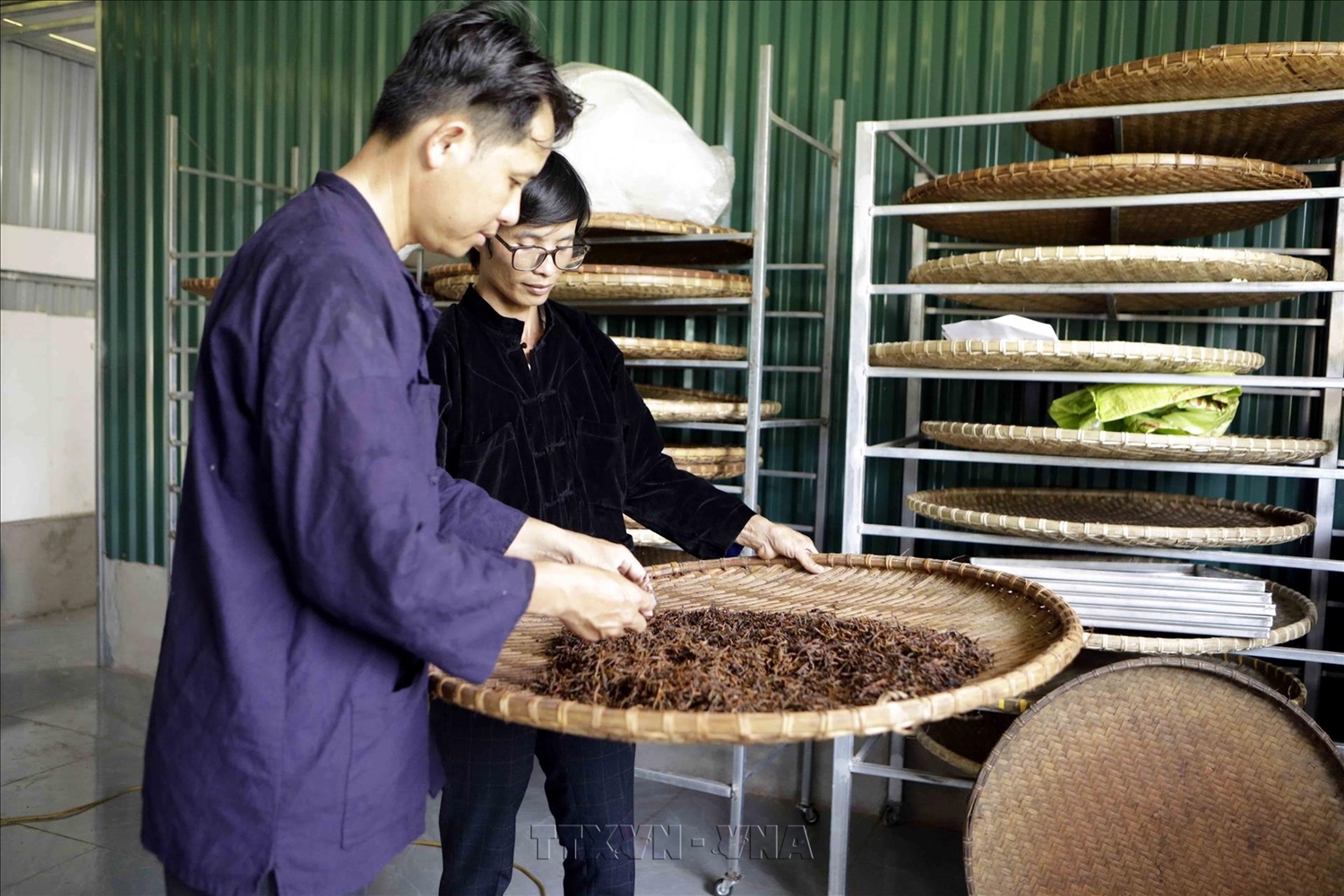 Processing Shan Tuyet tea in Dong Phuc commune
Starting with approximately 3 hectares of ancient Shan Tuyet tea trees and 5 hectares of semi-ancient tea trees, the young woman secured a bank loan, established a cooperative and focused on researching new processing methods to diversify her product offerings. Most notable is the “bamboo-tube tea” cured over a kitchen hearth, a product that combines Shan Tuyet tea leaves with the traditional processing techniques of the Dao ethnic people, creating a unique identity in the marketplace. Shan Tuyet tea is packed into fresh bamboo tubes and placed above a kitchen hearth to undergo natural fermentation. This process intensifies the tea’s flavor, imparts a lingering sweetness and ensures long-term preservation, with the quality actually improving over time.
The entrepreneurial journey for young people in highland regions is never a smooth path. A lack of capital, limited management experience, a shortage of branding skills, and restricted access to markets are common hurdles faced by many ethnic minority youth. Ms Dang Thi Dat’s experience is no exception to this reality. At one point, the products lacked a stable market outlet, and the constant need to cycle through capital placed significant pressure on production operations. Yet, refusing to give up, the young woman proactively sought out experienced individuals and actively participated in training workshops organized by the Youth Union and relevant professional agencies covering processing techniques, packaging design, and product promotion. The spirit of inquiry, the will to overcome difficulties and the ability to absorb new knowledge helped that after just over two years, Ms Dat's facility reached a processing capacity of about one ton of dry tea/year, a revenue of nearly 300 million VND and created seasonal jobs for 7 local workers.
In her capacity as Director of the Binh An Green Agricultural Cooperative, this young woman from the Dao ethnic group has been recognized by the Central Youth Union in 2025 as an exemplary, respected youth leader who has successfully launched a business within an ethnic minority and mountainous region. The story of Ms Dang Thi Dat illustrates that entrepreneurship in ethnic minority communities does not necessarily require large-scale projects or substantial capital. Often, opportunities lie within familiar assets such as an ancient tea variety, a traditional craft, a signature local dish, or a unique cultural feature… The question is simply whether young people possess enough creativity and courage to harness that potential in their own unique way.
At a time when many localities are grappling with issues such as youth unemployment, the migration of young people from rural areas to cities, and the potential erosion of ethnic cultural identity due to this labor shift, initiatives like the one led by Ms Dang Thi Dat carry a significance that transcends mere economic value. This serves as proof that, when provided with access to knowledge, science, and technology along with appropriate supportive policies, ethnic minority youth are fully capable of successfully launching their own ventures right in their home communities./.
