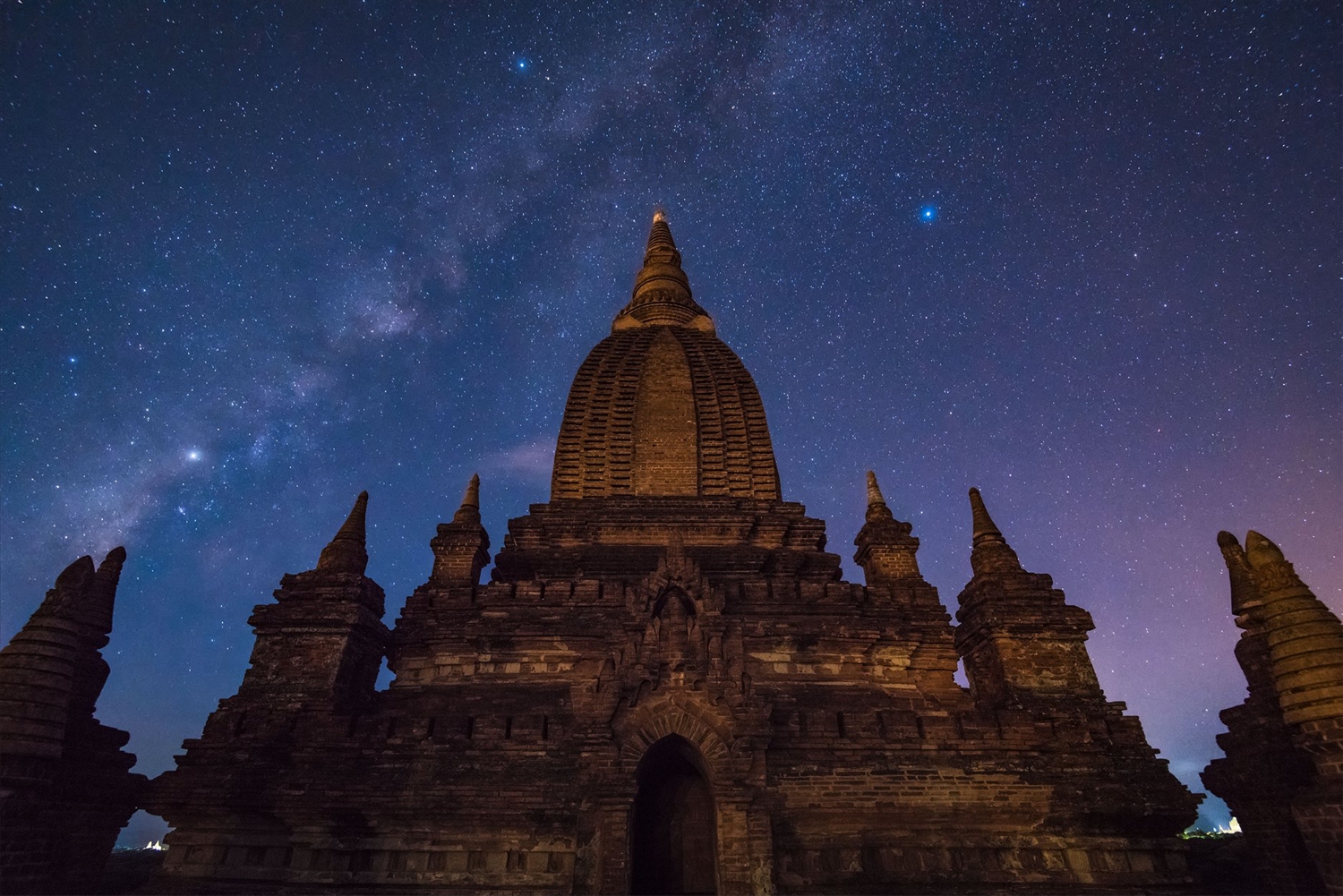
 A temple in the ancient city of Bagan
Keywords: Myanmar; Theravada Buddhism; The worship beliefs of Nat spirits; Religion in Myanmar; Spiritual culture; Religious diversity.
1. Introduction
Myanmar is not only a significant geopolitical entity in Southeast Asia but also a living museum of faith. For the people of Myanmar, religion is not a realm separate from secular life; rather, it is the very breath of existence, a code of conduct, and the lens through which they view the world. Exploring the beliefs and religions of Myanmar is a process of deciphering layers of culture that have accumulated over millennia.
2. Theravada Buddhism, a pillar of national identity
In Myanmar, Theravada Buddhism does not merely exist as a standalone religion but is inextricably intertwined with the concept of national identity. For the majority of the population, particularly the Bamar, the dominant ethnic group, being Myanmar is synonymous with being a Buddhist. This connection dates back to the 11th century, when King Anawrahta unified the Pagan Kingdom and established Theravada Buddhism as the state religion. Since then, the history of Myanmar’s feudal dynasties has been defined by religious patronage. Kings served as both secular rulers and protectors of the faith, charged with safeguarding and upholding the purity of the monastic code (Vinaya). This role fostered a governance model in which the legitimacy of power was inextricably linked to the support of the monastic community (Sangha).
Socially, Theravada Buddhism provides an ethical framework that helps maintain community stability and cohesion. The concept of Kutho (merit) is a primary driver of individual behavior. The people of Myanmar dedicate a significant portion of their income and time to merit-making ranging from offering food to monks each morning to constructing and gilding stupas. This act serves not only as preparation for the afterlife but also as a means for individuals to affirm their status and responsibilities within the community during their current lives. Pagodas and monasteries became the hubs of village life. Before the advent of modern education systems, monasteries were centers for the dissemination of knowledge, where boys were taught literacy and moral principles. This fostered a remarkably high literacy rate in Myanmar’s history compared to neighboring countries and cultivated a shared ideological foundation.
Deeply rooted in national identity, Theravada Buddhism also served as a spiritual weapon in the struggle against foreign powers. During the period of British colonial rule, as Western values and Christianity made inroads, the people of Myanmar rallied around Buddhism to safeguard their national identity. The slogan “To be a true Burmese, one must be a Buddhist” became a rallying cry for the nationalist movement. Monks no longer confined themselves to monasteries but stepped out onto the streets, emerging as spiritual leaders in the struggle for independence. This steadfastness demonstrates that Buddhism embodies not only compassion and equanimity but also an enduring inner strength capable of safeguarding traditional values against the tide of globalization.
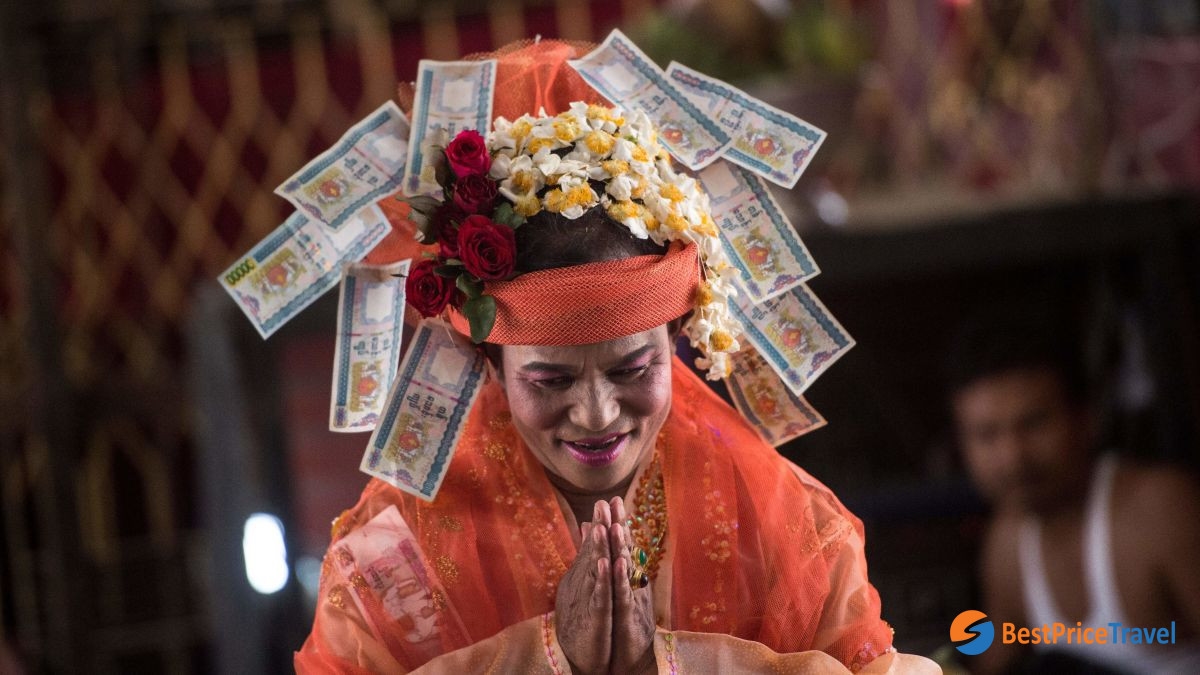 Nat Festival in Taungbyone, Myanmar
In the modern context, although Myanmar is a multi-ethnic and multi-religious nation, Theravada Buddhism continues to serve as a unifying force for the majority of the population. However, this role also presents complex challenges; the close intertwining of religion and national identity can sometimes create barriers to integration with other religious minority groups. However, it is undeniable that without Theravada Buddhism, the face of Myanmar would be hollow; the sound of temple bells, the saffron robes and the philosophy of impermanence are deeply ingrained in the very lifeblood of its people, shaping a gentle yet resilient Myanmar identity on the global cultural map. Therefore, Theravada Buddhism in Myanmar stands as the most steadfast pillar upholding the cultural and spiritual edifice of the entire nation throughout the ups and downs of history.
1. Nat worship, a unique spiritual confluence
The worship of Nats is one of the most distinctive features of Myanmar culture, creating a fascinating dual spiritual ecosystem alongside mainstream Theravada Buddhism. If Buddhism represents the sky guiding the path to liberation and the cycle of rebirth, then the worship of Nats is the familiar earth, a place where people seek solace and resolutions for their everyday concerns. This interplay is one of harmonious coexistence, reflecting the multi-layered worldview of the people in this region.
In essence, Nat is a broad term encompassing various types of spirits, ranging from nature deities (associated with trees, rivers, and mountains) to historical or legendary figures who met tragic or extraordinary ends. This system was standardized during the reign of King Anawrahta in the 11th century, establishing a list of 37 principal Nats. The unique aspect of this approach was that, while the king sought to elevate Buddhism to a position of supremacy, he recognized that belief in indigenous spirits was deeply ingrained in the people; consequently, he orchestrated a grand religious synthesis. He declared the Nats to be followers of Buddhism and positioned the statue of Thagyamin, the supreme Nat in a posture of prostration before the Buddha. This move transformed folk beliefs into a force that supported and protected Buddhism, at the same time allowing the people to continue their traditional rituals without feeling any conflict with their new faith.
This interference is most clearly shown in the living space of Myanmar people. In every house, people often hang a coconut wrapped in red cloth to worship Eindwin Min Mahagiri, the family protector and right next to it is the most solemn Buddha altar. At large pagodas like Shwedagon, next to the majestic Buddha statues, there are always smaller Nat shrines in the corners. People visit temples to pray to the Buddha for inner peace and a favorable afterlife, while visiting Nat shrines to seek business success, healing from illness, or protection against the risks of daily life. This division of roles is distinct: Buddhism addresses macro-level concerns regarding morality and spiritual liberation, whereas the Nats address micro-level matters concerning livelihood and well-being.
The Nat Pwe ritual (a spirit-possession ceremony) serves as the most vivid testament to this spiritual fusion. These ceremonies are filled with lively traditional music, dance and vibrant costumes. Spirit mediums act as intermediaries, allowing the spirits of the Nats to possess them and communicate with the believers. Within the realm of the Nat Pwe, the boundary between the earthly and the divine blurs. Offerings of alcohol, tobacco and food, items typically restricted in orthodox Buddhist rituals are presented to the Nats. The presence of the Nat Pwe alongside solemn Buddhist chanting creates a vibrant cultural tapestry, where the sacred and the profane coexist to soothe the human spirit in the face of destiny’s vicissitudes.
From a psychosocial perspective, the worship of Nats represents a way for the people of Myanmar to personify their fears and aspirations. Nat spirits often lead lives marked by tragedy, having been murdered or having met an unjust end; this fosters a profound empathy for the human condition. Worshipping them is not merely about seeking personal gain; it is also a way to reconcile with negative energies, transforming fear into protection. This is the humanistic value underlying these seemingly mystical rituals.
The worship of Nats is not a form of backward superstition but a vital cultural stratum that helps shape Myanmar’s spiritual identity. The interplay between Buddhism and Nat worship creates a remarkable adaptive mechanism, allowing the people of Myanmar to aspire to the noble ideals of liberation while remaining firmly grounded in the harsh realities of life. It is precisely this unique fusion that imbues Myanmar with a sense of mystery, woven into deep cultural layers that await discovery.
2. The multi-religious landscape and social challenges
When examining the spiritual life of Myanmar, one finds alongside Theravada Buddhism, a highly complex and colorful religious landscape shaped by historical currents, migration, and a distinctive multi-ethnic structure. While Buddhism is the predominant faith, Christianity stands as the second-largest religion, inextricably linked to the identities of highland ethnic minorities such as the Kachin, Chin and Karen. The presence of Christianity (mainly Protestant and Catholic) in border areas is not simply a matter of faith but also a symbol of cultural and political difference. For many minority communities, Christianity serves as a bastion of language and identity. The churches here are not only places of religious activities but also important social, educational and health safety nets, creating a power structure parallel to the central government in remote areas.
Islam and Hinduism present a different character, linked to waves of migration from South Asia during the era of British colonial rule. In major cities like Yangon and Mandalay, Mughal-style mosques and vibrant Hindu temples stand interspersed among commercial districts, bearing witness to a period of peaceful coexistence and prosperity. However, the presence of Islam in Rakhine State (western Myanmar) presents a completely different context, shaped by conflicts over residency rights and ethnic identity. It is precisely this diversity that has given rise to social challenges, such as achieving ethnic and religious harmony.
Overall, Myanmar’s multi-religious landscape is a precious yet highly sensitive legacy. Addressing these challenges requires not only equitable legal policies but also a shift in societal mindset, viewing religion as a bridge, so that Myanmar can find peace amidst its inherent diversity.
3. Religion in political life and education
In Myanmar, the relationship between religion, politics and education is not one of parallel lines but rather a tightly intertwined structure that has shaped the nation’s character over the centuries. The functioning of Myanmar’s society is such that the role of the monastic community cannot be separated from institutions of power and systems of knowledge transmission.
In political life, Theravada Buddhism serves as a source of legitimacy. From the era of the Pagan dynasties to the present, the ideal leader in the minds of the Myanmar people has often been likened to a Cakkavatti (Universal Monarch), a ruler who governs according to the Dhamma and bears the responsibility of patronizing the Sangha. When a government shows reverence for monks and contributes to pagodas, it is not merely performing religious rituals but also sending a powerful political message regarding stability and virtue. Conversely, Myanmar’s history has witnessed numerous instances of monks taking to the streets to participate in political upheavals, most notably the struggle against British colonial rule and the 2007 Saffron Revolution. The involvement of the monastic community in politics is often driven by moral imperatives: when society faces instability or the people suffer, monks view speaking out as part of their vow to protect sentient beings. The voice of a senior monk can sometimes carry more weight than any administrative resolution, compelling political circles to take notice or seek to garner their support.
Along with politics, education in Myanmar has deep roots in monasteries. Before the Western-style education system was imposed during the colonial period, the monastery was the only place that provided knowledge to the community. This is not only a place to teach scriptures but also a school to teach writing, mathematics and human ethics. This educational model has created a unique intellectual foundation: literacy goes hand in hand with understanding of cause and effect and faith. Even in modern society, the system of monastic schools continues to exist alongside public schools, playing a vital role in providing education to children from impoverished backgrounds and remote areas. Here, education is not merely about cramming knowledge for future employment; it is a process of character cultivation grounded in Buddhist philosophy. Students learn not only knowledge but also how to show respect, share with others, and restrain their egos, qualities that shape the gentle yet steadfast character of the Myanmar people.
However, this intersection also presents significant challenges in the modern context. The use of Buddhism as a tool to define patriotism has inadvertently created distance and at times even confrontation with religious minority communities. In education, the dominance of Buddhist ideology within the curriculum has sparked debate regarding inclusivity in a multi-ethnic and multi-faith nation. Preserving traditional moral values presents a complex challenge for policymakers in Myanmar.
Furthermore, the role of monks in shaping public opinion and educating the community sometimes gives rise to certain issues. On one hand, they serve as conflict mediators and a source of spiritual support for the people during times of crisis. On the other hand, politicized monastic organizations can foster conservative ideologies that hinder progressive reforms. This demonstrates that religion in Myanmar is a dynamic force, directly influencing the trajectory of democracy and human rights.
4. Conclusion
The system of beliefs and religions in Myanmar constitutes a distinctive “spiritual ecosystem”, representing a harmonious symbiosis between Theravada Buddhism and the worship of Nats. While Buddhism shapes the nation’s morality, eschatology and national identity, the Nat cult serves as an “undercurrent” addressing the immediate existential anxieties people face regarding nature and social upheaval. This fusion reveals a key characteristic of Myanmar culture - its adaptability and inclusiveness where new beliefs do not eradicate old ones but instead overlay them with a new layer of meaning. Thus, studying religion in Myanmar involves more than just examining scriptures or rituals; it entails deciphering a living entity navigating the tension between steadfast traditional values and the powerful upheavals of the modern era. It is a journey in search of identity at the intersection of the divine, humanity, and the aspirations for peace held by a deeply faithful people.
* Faculty of Public Relations and Media, Van Lang University, Ho Chi Minh City
References
1. Le Van Anh (2018), Cultural History of Myanmar: From Tradition to Modernity, Social Sciences Publishing House, Hanoi.
2. Le Van Anh (2018), Cultural History of Myanmar: From Tradition to Modernity, Social Sciences Publishing House, Hanoi.
3. Tran Thi Thuan (2020), Nat Worship and Religious Syncretism in the Golden Land of Myanmar, Vietnam National University Ho Chi Minh City Press.
4. Pham Hong Thai (Editor-in-Chief, 2012), Myanmar: Land, People and History, Encyclopedia Publishing House, Hanoi.
5. Institute of Southeast Asian Studies (2019), Religious diversity and ethnic conflict in Myanmar today, Documents for internal circulation, Hanoi.
