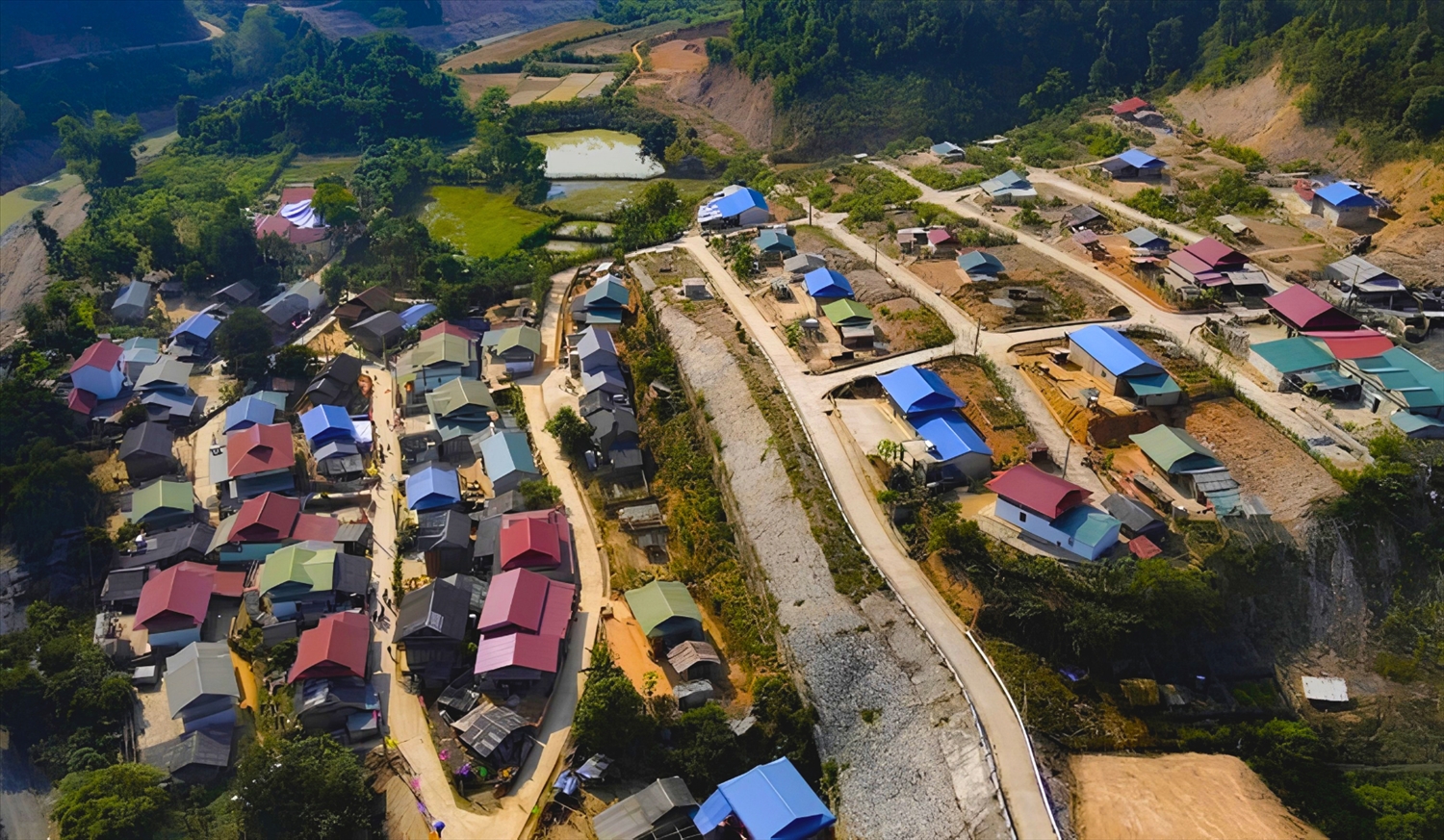
 Pung Bon village currently has 59 households and 276 residents, with the population consisting entirely of the Cong ethnic group
From production support to sustainable livelihoods
In the past, agricultural production among the Cong ethnic group in Pung Bon relied primarily on traditional experience. Residents lacked the know-how to utilize their land effectively; livestock farming was conducted on a small, fragmented scale with animals left to roam freely; and during years of harsh weather, low crop yields further exacerbated the hardships of daily life. Compounding these issues, poor transportation infrastructure hindered travel and the exchange of goods, leaving the community facing significant material shortages.
In recent years, policies supporting ethnic minority communities including the project for the socio-economic development of the Cong ethnic group in Dien Bien province have been implemented; the project received approved state budget funding totaling over VND 187 billion, comprising more than VND 159 billion for infrastructure development and nearly VND 28 billion for operational activities. Pung Bon Village is one of the communities benefiting from the scheme. Here, the scheme’s funding has contributed to infrastructure development including a concrete bridge that facilitates travel and trade for local residents; at the same time providing support in the form of production tools, seedlings and livestock, alongside training in production techniques, education, healthcare and cultural preservation activities.
 Not only have their material living conditions improved, but the cultural and spiritual life of the Cong ethnic group is also being preserved and promoted (Pictured: Cong ethnic group decorating in preparation for the Cockscomb Flower festival)
According to Lo Van Lien, Secretary of the Pung Bon village Party Cell, many families previously struggled despite receiving support because they lacked suitable farming methods. However, once residents changed their mindset, adopted new techniques, and took the initiative to invest, production outcomes improved significantly. Pung Bon now boasts households with stable incomes, the poverty rate is gradually declining and the issue of seasonal food shortages is being steadily resolved.
As infrastructure changes, so too does life
The transformation in Pung Bon is clearly evident in its infrastructure. A sturdy bridge has been built over the Nam Nua river, village roads have been paved with concrete to facilitate travel and essential amenities such as electricity, domestic water supplies, schools and community facilities have been progressively improved. These changes enable residents to access services, bring their products to market and expand opportunities for economic development. Alongside improvements in material living standards, there have been significant shifts in people’s awareness regarding education, healthcare and family life. Children are attending school more consistently and residents proactively seek medical care when ill. In Pung Bon, the practices of early marriage and consanguineous marriage have disappeared in recent years.
The story of Ms. Lo Thi On serves as an example. She married at the age of 13, too young to fully grasp the realities of life and found her already difficult existence becoming even harder. Having deeply experienced these hardships, she always encourages her children to pursue their education, secure good jobs and marry at the appropriate age. One of her children studied in Laos and has since become a commune official. Drawing on her family's experience, she continues to encourage other families in the village to prioritize their children’s education and ensure that outdated customs do not hinder the future of the younger generation.
According to Mr. Nguyen Thanh Son, Director of the Department of Ethnic and Religious Affairs of Dien Bien province, numerous programs, schemes and projects have been implemented in the areas inhabited by the Cong ethnic group over the past few years. These investments have helped local residents stabilize their lives and boost production to some extent. Moving forward, the province will continue to implement projects and national target programs in the area while also developing a dedicated scheme for ethnic groups with very small populations, including the Cong ethnic group.
Once a village facing numerous hardships, Pung Bon today boasts accessible roads, improved housing and gradually stabilizing agricultural production; children have access to education and cultural values are being actively preserved. Underpinning these changes is a policy framework implemented at the grassroots level, supported by local authorities and driven by the initiative of the residents themselves. When support aligns with actual needs and guidance is provided effectively coupled with the people’s determination to improve their livelihoods, these policies have translated into tangible results for individual families, across the fields and within the households of this border region./.
