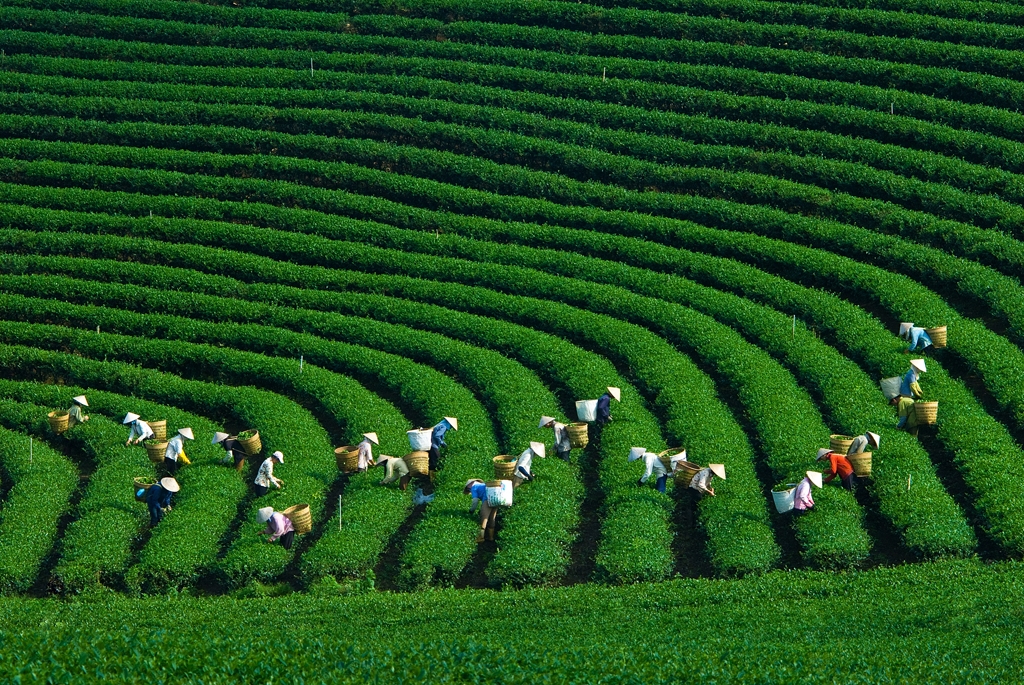
 The Northern Midlands and mountainous region is home to numerous organic agricultural development models that yield high economic returns
Keywords: Organic agriculture; Sustainable development; Northern mountainous region; Green agriculture; Ethnic minority.
1. Introduction
Amidst climate change, the depletion of natural resources and the need to ensure food security sustainably, the development of organic agriculture is becoming an inevitable trend in modern farming. According to the International Federation of Organic Agriculture Movements (IFOAM), organic agriculture aims not only to produce safe food but also to protect ecosystems, maintain soil fertility, and conserve biodiversity. In Vietnam, the development of organic agriculture is identified as a key solution for implementing the Strategy for Sustainable Agriculture and Rural Development for the period of 2021-2030, with a vision to 2050.
The Northern mountainous region comprising provinces such as Phu Tho, Son La, Dien Bien, Lai Chau, Lao Cai, Tuyen Quang, Cao Bang, Lang Son and Thai Nguyen cover a natural area of over 95,000 km² (accounting for nearly 29% of the country’s total area) and is home to more than 30 ethnic minority groups. This region possesses significant advantages for organic agriculture development, thanks to its diverse ecosystem, arable land relatively free from chemical contamination, vast forest cover and a wealth of local agricultural knowledge. Organic tea models in Tuyen Quang and Lao Cai provinces, Van Yen organic cinnamon (Lao Cai province), organic star anise (Lang Son province) and organic medicinal herbs in Lai Chau and Son La provinces have demonstrated the potential for developing high-quality agricultural products linked to environmental protection.
However, the process of developing organic agriculture in this area still has many limitations, such as: small scale production, high certification costs, lack of market linkages and limited application of science and technology. Therefore, research on developing sustainable organic agriculture in the Northern mountainous region not only has scientific significance in perfecting the theoretical basis for green agricultural development, but also has practical significance in raising income, reducing poverty sustainably and promoting socio-economic development in ethnic minority and mountainous areas in the current period.
2. Research results
2.1. The role of organic agriculture in the sustainable development of the Northern mountainous region
Organic agriculture is regarded as a key solution for realizing the goals of green agriculture, a circular economy, and sustainable development in the Northern mountainous region. With mountainous terrain accounting for over 80% of its total land area, a diverse ecosystem, high forest cover and the presence of numerous ethnic minority communities that preserve environmentally friendly traditional farming practices, the region possesses significant advantages for the development of organic agriculture.
First of all, organic agriculture contributes to improving economic efficiency and increasing the value of agricultural products. Organic products such as: Shan Tuyet tea (Tuyen Quang province), Van Yen cinnamon (Lao Cai province), anise (Lang Son province), medicinal herbs (provinces including Son La, Lai Chau),... have gradually built their brands in the domestic and international markets. Thanks to meeting safety and environmental protection standards, the commercial value of organic products is often significantly higher than products produced by traditional methods. This contributes to increasing income and improving the lives of people, especially ethnic minorities.
Beyond economic benefits, organic agriculture plays a vital role in environmental protection and the conservation of natural resources. Limiting the use of chemical fertilizers and synthetic pesticides helps reduce soil, water and air pollution while improving soil fertility. In the northern mountainous region, home to numerous headwater basins and special-use forest ecosystems, the development of organic agriculture contributes to protecting water sources, mitigating soil erosion and maintaining biodiversity.
Organic agriculture holds profound social significance by creating stable employment, fostering sustainable poverty reduction, and leveraging the indigenous knowledge of ethnic minority communities. Traditional practices such as the use of organic fertilizers, intercropping, forest conservation and water resource management are combined with scientific and technical advancements to create production models tailored to local conditions. This plays a crucial role in enhancing resilience against climate change and natural disasters.
Thus, organic agriculture is not only an environmentally friendly method of agricultural production but also a driving force for economic development, social welfare, and ecosystem protection. For the Northern mountainous region, developing organic agriculture represents a suitable approach to effectively harness natural potential, leverage local knowledge and advance the goal of sustainable development in the current period.
2.2. The current situation of sustainable organic agriculture development in the Northern mountainous region
In recent years, along with the implementation of Decree No. 109/2018/ND-CP on organic agriculture and the Organic Agriculture Development Project for the period of 2020-2030, many localities in the region have formed concentrated organic production areas. Tuyen Quang province is developing organic Shan Tuyet tea in the communes of Hoang Su Phi, Xin Man and Vi Xuyen; Lao Cai province is establishing an organic cinnamon zone in Van Yen commune, with tens of thousands of hectares managed according to international standards; Lang Son province is developing organic star anise areas for export; and the provinces of Son La, Lai Chau, and Lao Cai are expanding the cultivation area for organic medicinal plants such as Angelica sinensis (Dang Quy), Codonopsis pilosula (Dang Sam), artichoke, and Amomum (Sa Nhan) under the forest canopy.
In addition, numerous cooperatives and enterprises have engaged in value-chain production partnerships. Several organic products from the region have obtained certification against international standards such as USDA Organic (USA), EU Organic (European Union) and JAS (Japan) as well as Vietnamese organic standards. Developing organic production not only enhances product value but also creates jobs and boosts incomes for local residents, particularly ethnic minority communities.
However, the development of organic agriculture in the Northern mountainous region still faces significant limitations. Production remains generally small-scale and fragmented, lacking regional integration. Most farming households cultivate small plots and have limited investment capacity, while the costs of transitioning to organic production and obtaining certification are relatively high. Furthermore, the infrastructure for deep processing, preservation and distribution of organic products has not developed in line with production potential.
Furthermore, capabilities regarding the application of science and technology, digital transformation, and traceability remain limited. Efforts to train the workforce and transfer organic production techniques to farmers have not yet met practical needs. Some localities still lack planning for organic production zones linked to stable consumer markets.
Overall, organic agricultural production in the Northern mountainous region has achieved significant initial results, contributing to green economic development, environmental protection, and improved livelihoods for local residents. However, to ensure sustainable development, it is essential to further refine policies, scale up production, strengthen value chain linkages and effectively leverage the local knowledge of ethnic minority communities in organic farming.
2.3. Raised issues
Although organic agriculture in the Northern mountainous region has achieved positive results, its development still faces numerous difficulties and challenges that must be addressed to ensure long-term sustainability.
Firstly, organic production remains small-scale and fragmented. Most producers are small-scale farming households, lacking close linkages among farmers, cooperatives and enterprises. This drives up production costs, hinders the consistent application of organic standards and limits market competitiveness. Many organic production areas have yet to establish a complete value chain spanning production, processing, and consumption.
Secondly, the costs associated with transitioning to organic production and obtaining certification remain high. The conversion of farmland from traditional to organic methods typically takes two to three years, during which initial yields may decline, causing apprehension among producers. This poses a significant barrier for farmers in remote and isolated areas facing economic hardship.
Thirdly, the market for organic products is not yet truly stable. A lack of market information, along with the absence of branding and traceability systems, prevents many organic products from realizing their full added value. Certain specialty products from the Northern mountainous regions are still primarily sold as raw materials, resulting in limited economic value.
Fourthly, climate change, extreme weather events, and the depletion of natural resources are exerting an increasingly strong impact on agricultural production. Meanwhile, there is a shortage of skilled human resources in organic agriculture, and the transfer of science and technology as well as digital transformation in the sector has yet to meet practical requirements. The aforementioned issues demonstrate that the sustainable development of organic agriculture in the Northern mountainous region requires not only support regarding policy, capital and science and technology, but also strengthened market linkages, an enhanced role for the community and the effective utilization of the local knowledge possessed by ethnic minority groups. These are strategic imperatives for realizing the goal of green and sustainable agricultural development in the current period.
2.4. Solutions for sustainable organic agriculture development in the Northern mountainous region
As Vietnam pursues strategies for green agricultural development and a circular economy alongside its commitment to achieving net-zero emissions by 2050, the development of organic agriculture in the Northern mountainous region should be identified as a strategic direction to effectively leverage natural advantages, protect the environment, and improve the livelihoods of ethnic minority communities.
Firstly, it is necessary to continue refining the system of mechanisms and policies supporting organic agricultural development in a manner that is comprehensive and tailored to the specific conditions of the Northern mountainous region. The State should implement preferential policies regarding credit, land use and agricultural insurance, as well as providing support for organic certification costs, in order to encourage local residents, cooperatives and enterprises to engage in production.
Secondly, accelerate the planning and development of concentrated organic production zones for products with competitive advantages such as Shan Tuyet tea (Tuyen Quang province), Van Yen cinnamon (Lao Cai province), star anise (Lang Son province), medicinal plants (Lai Chau and Son La provinces) and specialty fruit crops. Developing concentrated raw material zones will facilitate quality control, traceability and product branding.
Thirdly, enhance the application of science and technology, digital transformation, and innovation in the production, processing, and consumption of organic products. Technologies for environmental monitoring, electronic traceability, e-commerce, and smart agriculture need to be promoted to improve management efficiency and expand consumer markets.
Fourthly, leverage the role of local knowledge in organic agricultural production. Traditional practices of ethnic minority communities regarding the use of organic fertilizers, crop rotation, water source protection, and forest management should be studied, preserved and integrated with scientific and technical advancements to create production models suited to local conditions.
Fifthly, it is essential to strengthen value chain linkages among farmers, cooperatives, enterprises and scientific organizations to enhance the competitiveness of organic products. At the same time, the development of organic agriculture should be integrated with eco-tourism, community-based tourism and the OCOP program, thereby creating jobs, increasing incomes and fostering sustainable development in the Northern mountainous region in the new phase.
3. Discussion
Research findings indicate that the Northern mountainous region possesses significant advantages for the sustainable development of organic agriculture. The region boasts extensive forestry and agricultural land, a diverse ecosystem, and levels of soil and water pollution that are far lower than those found in the intensive farming areas of the lowlands. Notably, many ethnic minority communities continue to employ traditional farming practices that align closely with organic agriculture principles such as the use of animal manure and green manure, crop rotation and the protection of watershed forests. These are advantages not shared by every locality.
However, research indicates that the development of organic agriculture in the Northern mountainous region has not yet matched its potential. Many production models remain small-scale and lack value chain linkages, facing challenges regarding certification, processing and product consumption. Meanwhile, rising market demands for organic products necessitate comprehensive investment in science and technology, traceability and brand development.
In particular, organic agriculture should be viewed not merely as a production method but as an integrated development model linked to the green economy, the circular economy, and sustainable development. Experiences with organic tea (Tuyen Quang province), Van Yen organic cinnamon (Lao Cai province), and organic medicinal herbs (Lai Chau province) demonstrate that by effectively combining local knowledge, science and technology, market linkages, organic agriculture can generate high economic value while contributing to environmental protection and improving local livelihoods.
Therefore, achieving sustainable development requires a holistic, people- and community-centered approach that harmoniously combines natural resource conservation, the leveraging of local knowledge and the expansion of consumer markets. This is a crucial prerequisite for organic agriculture to serve as a driving force for sustainable socio-economic development in the Northern mountainous region in the coming time.
4. Conclusion
Developing sustainable organic agriculture is an inevitable trend toward a green, efficient and environmentally friendly agricultural sector. Research findings indicate that the Northern mountainous region possesses significant advantages including favorable ecological conditions, rich biodiversity, and the indigenous knowledge of ethnic minority communities for the development of high-value organic agricultural products. Practical experience with organic tea (Tuyen Quang province), Van Yen organic cinnamon (Lao Cai province), organic star anise (Lang Son province) and organic medicinal plants (Lai Chau and Son La provinces) has demonstrated the feasibility of harmoniously combining economic development, environmental protection and the improvement of local livelihoods. However, to achieve sustainable development, it is essential to continue refining policies, expanding value chain linkages, applying science and technology and effectively leveraging local knowledge, thereby contributing to sustainable socio-economic development in the Northern mountainous region.
* Ministry of Ethnic and Religious Affairs
** Institute of Socio-Economics for Ethnic Minority Regions
References
1. Politburo (2022), Resolution No. 19-NQ/TW/2022 on agriculture, farmers, and rural areas to 2030, with a vision to 2045.
2. Ministry of Agriculture and Rural Development (2010-2021). Reports presented at annual review conferences, from 2010 to 2021.
3. Government (2018), Decree No. 109/2018/ND-CP dated August 29th, 2018 on organic agriculture, Hanoi.
4. Thanh Dat (2024), Vietnam steps up organic agriculture development, https://nongnghiephuuco.vn/viet-nam-daymanh-phat-trien-nong-nghiep-huu-co-3042.html.
5. Thai Ha (2026), Current Status of Organic Agriculture Development in Vietnam, https://nongnghiephuuco.vn/hien-trangphat-trien-nong-nghiep-huu-co-tai-viet-nam-14069.html
6. Song Ha (2022). Sustainable agricultural and rural development, http://quocphongthudo.vn/kinh-te/xaydung-nongthon-moi/phat-trien-nong-nghiep-nong-thon-ben-vung.htm
7. Phi Van Manh (2016), Sustainable agricultural development in the era of international integration, https://www.qdnd.vn/ chinh-tri/cac-van-de/phat-trien-nong-nghiep-ben-vungtrong-thoi-ky-hoi-nhap-quoc-te-469278
8. FAO (2018), Organic Agriculture and Sustainable Development, Food and Agriculture Organization of the United Nations, Rome.
9. IFOAM (2014), The Principles of Organic Agriculture, Bonn, Germany.
10. IFOAM (2022), Global Organic Agriculture Statistics and Emerging Trends, Bonn.
11. Thao Xuan Sung (2022). Developing agriculture, farmers, and rural areas in accordance with the direction of the 13th Party Congress, https://tapchicongsan. org. vn/web/guest/ kinh-te/-/2018/825096/phat-trien-nong-nghiep%2Cnongdan%2C-nong-thon-theo-dinh-huong-dai-hoi-xiiicua-dang.aspx
12. Phung Quang Thien, Nguyen Duy Dung (2026), Innovating Socio-Economic Governance Methods in Ethnic Minority and Mountainous Regions in the New Context, Journal of Ethnic and Religious Researchs, No. 4 (7) - 2026.
13. Prime Minister (2020), Decision No. 885/QĐ-TTg dated June 23rd, 2020, approving the Scheme on Organic Agriculture Development for the period of 2020-2030, Hanoi.
14. Prime Minister (2022). Decision No. 150/QĐ-TTg dated January 28th, 2022, approving the Strategy for Sustainable Agriculture and Rural Development for the period of 2021-2030, with a vision to 2050.
