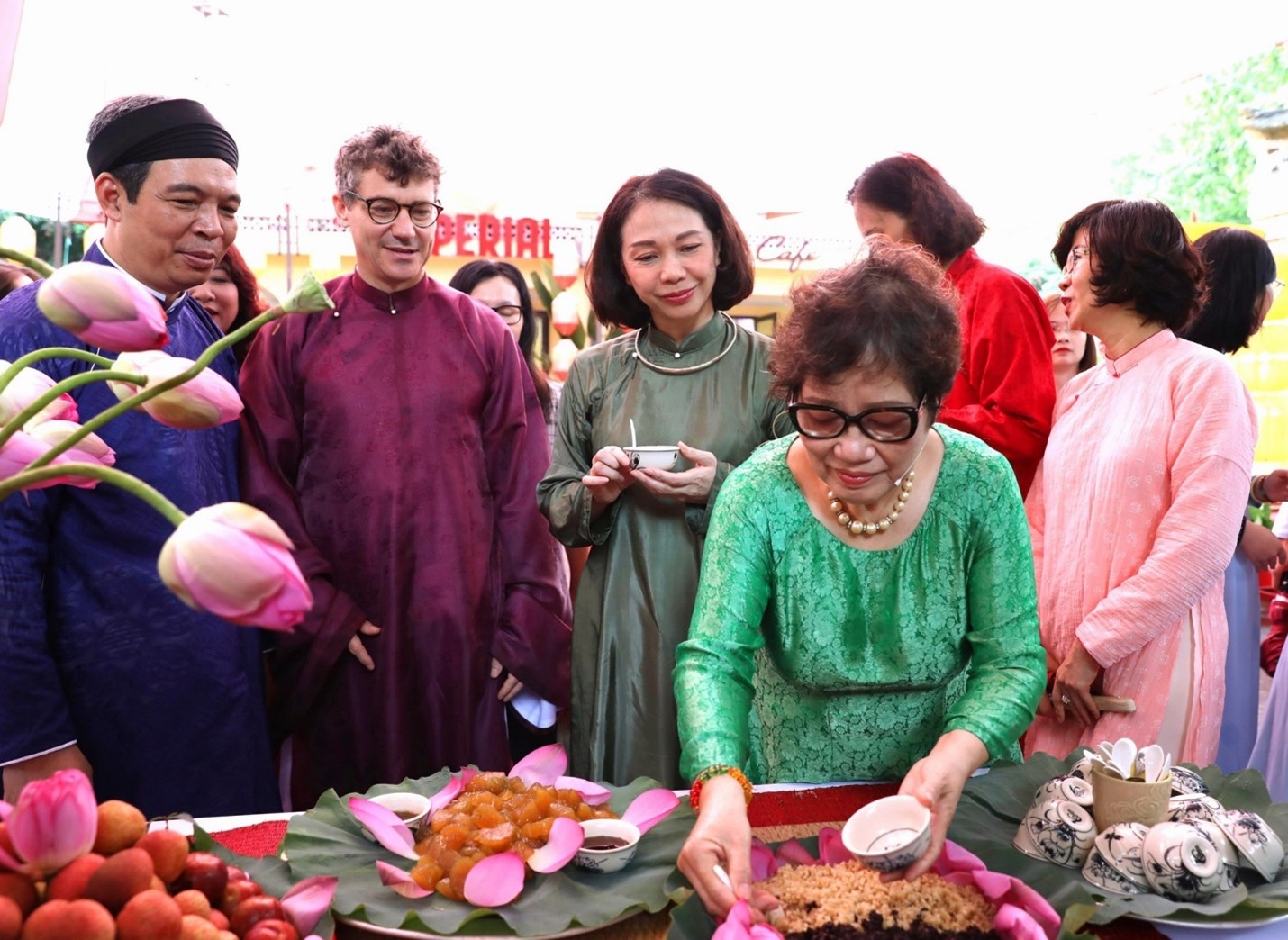
 Experiencing the culinary custom of killing insects on Doan Ngo holiday (the Dragon Boat Festival)
In order to understand the essence of Doan Ngo festival (the Dragon Boat festival) in Vietnamese life, one must go back in time to the early days of rice-based agriculture. “Doan” means beginning; “Ngo” refers to the period from 11 a.m. to 1 p.m., the time when the sun is at its highest point, carrying extreme positive energy. In folk beliefs, this is the time when heaven and earth are most intensely in harmony, all things burst with life, but it is also the time when diseases and pests are most likely to spread.
The Vietnamese call this day by the very simple name “Insect Extermination Festival”. The transformation from an astronomical seasonal event to a festival to ward off evil spirits and eradicate diseases is a unique creation of our ancestors. Walking through the villages of Northern Vietnam or venturing into the orchards of Southern Vietnam on this day, one can truly feel the joyful and bustling atmosphere. From early morning, while dew still clings to the leaves, people remind each other to wake up and kill insects. The insects here are not only parasites that harm crops, but according to spiritual beliefs, they are also parasites within the human body itself. The combination of the external natural world and the internal living being reflects a profound philosophy of the unity of heaven and humanity. Ancient Vietnamese people believed that by eating sour, astringent, and pungent foods early in the morning on an empty stomach, they could eliminate pathogens, cleanse the body and receive a new, purer source of energy.
Speaking of Doan Ngo festival (the Dragon Boat festival) is speaking of a feast for the senses, where each dish is considered a sacred offering to the ancestors. Firstly, fermented rice wine (rice wine). Whether it’s the dark purple glutinous rice of the North, the round, plump glutinous rice balls of the Central region, or the square blocks of fermented rice soaked in sugar syrup of the South, they all share a spicy, pungent flavor with a sweet aftertaste. This yeast was believed to be the ultimate weapon for intoxicating and destroying parasites residing in the body.
Furthermore, tro cake (or gio cake) - a pinnacle of folk culinary art - is a prime example of the philosophy of the five elements. The cake is made from glutinous rice soaked in ash water from simple herbs, wrapped in chit leaves, boiled until cooked and then eaten with molasses. The cool, slightly dry taste of ash blended with the sweet taste of molasses is not only the perfect cooling treat for a hot summer day, but also expresses reverence for plants and the land.
In each region, the offering tray for Doan Ngo festival (the Dragon Boat festival) is modified to closely follow the local produce. While the North is incomplete without lychees and bright red plums that seem to gather all the sunshine of May, the Central region celebrates the refreshing taste of duck meat and the South is bustling with glutinous rice balls in sweet soup and bamboo leaf-wrapped rice cakes. This diversity is a testament to the high degree of inclusiveness and adaptability of Vietnamese culture.
A unique and deeply spiritual aspect of Doan Ngo festival (the Dragon Boat festival) is the custom of picking medicinal leaves at noon. According to folk beliefs passed down through generations, at exactly 12 noon on the 5th day of the 5th lunar month, the sun radiates its strongest energy, causing the medicinal properties of plants and herbs to reach their peak and most potent state. At this time of day, the women and mothers would gather in the gardens and on the hills to pick various leaves such as mugwort, Centella asiatica, Syzygium jambos, dandelion and mint... Those handfuls of leaves, imbued with the scent of the countryside, are dried and stored at home to be used as daily tea or as a remedy for common colds.
From a cultural perspective, this ritual is not purely about stockpiling medicinal herbs, but rather an act of gratitude from humans to nature. The Vietnamese people rely on nature, seeking healing from the very branches and blades of grass around their homes. Doan Ngo festival (the Dragon Boat festival) thus serves as a gentle reminder of the green, natural lifestyle that previous generations have cultivated for millennia.
Through many changes in history, when modern cities arose to replace village bamboo ramparts, Doan Ngo festival (the Dragon Boat Festival) still has a solemn and unchanging place in the spiritual life of Vietnamese people. In today’s fast-paced life, the custom of examining trees and dyeing fingernails and toenails with henna leaves may have faded, but the tradition of offering incense and paying respects to ancestors and the family reunion meal on Doan Ngo festival (the Dragon Boat Festival) has endured through countless seasons.
