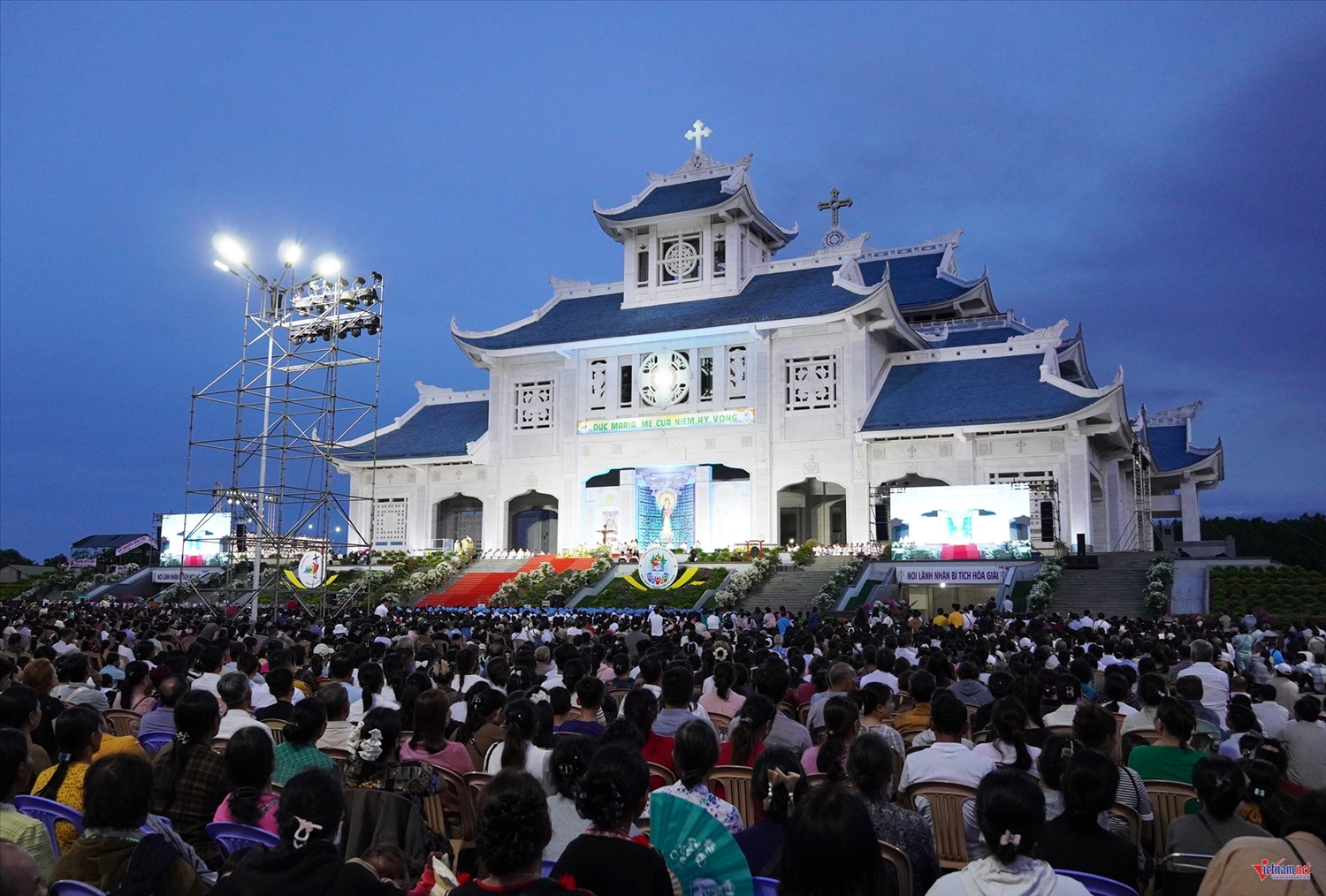
 Ensuring freedom of belief and religion is a consistent policy of our Party and State
Mr. Vu Hoai Bac, Head of the Government Committee for Religious Affairs: Facing significant schedule pressure, there is a firm determination to finalize the dossier for submission to the Government within September 2026. The Law on Belief and Religion (amended) takes effect on January 1st, 2027, meaning the decree guiding its implementation must also come into force at the same time to avoid a legal vacuum. The agency responsible for drafting the decree has less than six months to complete a massive workload.
Under regulations, a legal normative document requires a minimum of 45 days following its promulgation to officially take effect; consequently, October 15th, 2026, serves as the deadline for submission to the Government. However, fully recognizing the document’s importance, the drafting committee is determined to accelerate progress, aiming to finalize the complete dossier for submission by the end of September 2026. The requirement is to ensure adherence to the schedule while simultaneously enhancing the quality of the document and standardizing the legal writing style, ensuring precision and clarity so that it can be implemented immediately upon promulgation.
Mr. Phan Vu, Deputy Director of the Hanoi Department of Ethnic and Religious Affairs: One of the standout features of this draft Decree is its thorough commitment to the policy of cutting and simplifying administrative procedures, promoting decentralization and digital transformation. Compared to many other sectors, the set of administrative procedures in the fields of belief and religion has been designed to be highly streamlined and clear.
However, based on local management practices, the draft Decree requires further research and the addition of specific qualitative and quantitative criteria. This is particularly important regarding the procedures and methods for gathering population data, as well as the process for determining the results of public consultation on the establishment or dissolution of places of worship. Clearly defining these criteria within the Decree itself will facilitate smooth implementation by local authorities, preventing confusion or inconsistent interpretations across different localities.
Ms. Vu Thi Hien, from the Department of Criminal and Administrative Law and Management of Handling Administrative Violations (Ministry of Justice): Throughout the series of consultation seminars, the Drafting Committee demonstrated a highly receptive attitude, seriously incorporating numerous significant contributions to refine the legal framework. A significant improvement in the draft is the detailed stipulation of implementation measures regarding topical issues, most notably, belief and religious activities in cyberspace and belief-related activities conducted outside of designated belief establishments.
The detailed implementing decree needs to further clarify the boundary between the lawful exercise of religious freedom in the digital environment and acts of violation. This legal framework must ensure the public’s right to access religious teachings and conduct rituals online, while also providing competent authorities with robust legal tools to promptly detect, prevent and address actions that exploit cyberspace to undermine national unity or engage in spiritual profiteering.
Mr. Nguyen Viet Cuong, Deputy Director of the Department of Cultural Heritage (Ministry of Culture, Sports and Tourism): Belief and religious activities are often associated with heritage sites, cultural heritage and traditional festivals. Therefore, the decree guiding the implementation of the Law on Belief and Religion (as amended in 2026) needs to ensure consistency with the existing specialized legal framework, particularly the Law on Cultural Heritage and Decree No. 110/2018/ND-CP on the management and organization of festivals.
Regarding detailed regulations on the management of religious festivals held outside religious sites or the restoration and renovation of religious sites classified as historical-cultural relics, responsibilities must be clearly delineated between the ethnic and religious affairs sector and the culture sector. Careful review to avoid overlaps in authority, documents, and procedures will help local authorities easily manage, at the same time creating favorable conditions for residential communities and religious organizations in preserving and promoting traditional spiritual cultural values.
It is evident that drafting the Decree detailing and providing measures for the organization and implementation of the 2026 Law on Belief and Religion (amended) is not merely a matter of finalizing a legal document. The responsible and dedicated contributions from representatives of ministries, agencies, and experts serve as a crucial foundation for the Ministry of Ethnic and Religious Affairs to finalize the draft, aiming to establish a transparent legal framework with strong decentralization that effectively meets state management requirements and the legitimate aspirations of the people in this new phase of development./.
