 Sericulture in Hoa Tien village, Nghe An province
In Hoa Tien village, 100% of the households belong to the Thai ethnic group. The villagers primarily engage in agriculture, spending their days cultivating wet rice, raising livestock and practicing embroidery. In this small village, sericulture, the cultivation of silkworms is an integral part of the traditional brocade-weaving craft that has been preserved by the community for generations. Creating a finished piece of fabric is a long, involved process: it begins with growing mulberry trees and raising silkworms, followed by harvesting cocoons, reeling the silk and spinning the thread, before it finally reaches the loom. Each stage demands both experience and great skill, as the people of Hoa Tien village remain committed to using natural silk rather than industrial, synthetic fibers.
Sericulture offers an advantage not found in every mountain livelihood: it can be practiced right at home, leveraging natural conditions while linking directly to a craft that already has an established market. More importantly, this trade creates local employment opportunities, especially for women. It allows work to be carried out right at home, leveraging natural resources and connecting directly to a craft that already has an established market.
For many years, the people of Hoa Tien village have utilized suitable land to grow mulberry trees as feed for silkworms. Sericulture does not require a vast amount of land, but it does demand hard work, meticulous attention to detail and constant monitoring. From the time the silkworms are young until they spin their cocoons, the breeder must ensure a supply of clean, nutritious mulberry leaves and maintain a hygienic environment to foster the silkworms’ healthy development.
For the villagers, silkworm rearing is an occupation that can be integrated with agricultural production. After the harvest season, when field work becomes less demanding, households can dedicate time to cultivating mulberry trees and raising silkworms. In this way, spare time and labor are utilized effectively, generating additional household income without interfering with wet-rice cultivation.
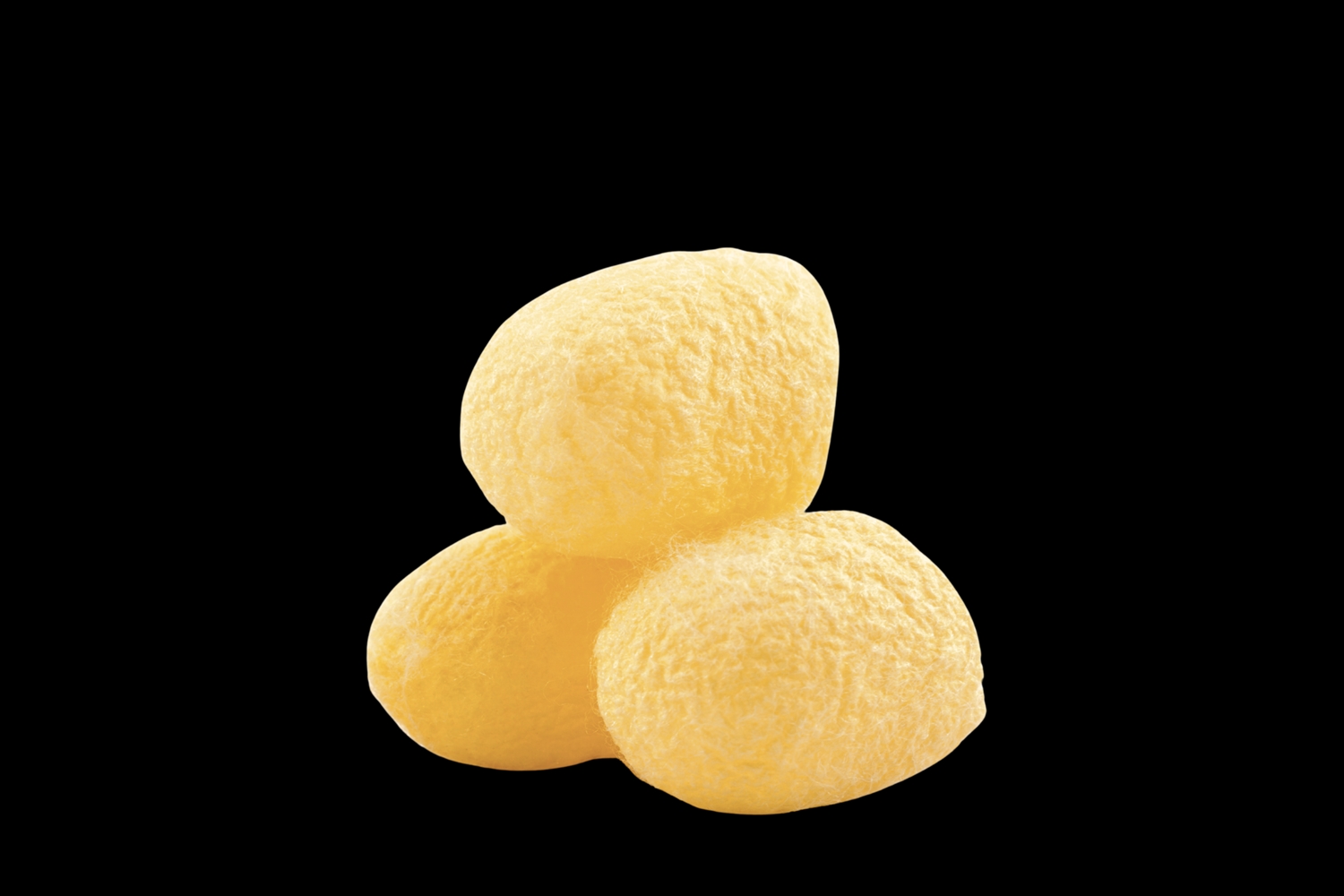
When the silkworms reach maturity, they are placed onto frames, where they spin silk to form cocoons. These cocoons are subsequently used for reeling silk, which serves as the raw material for weaving. This is a distinctive feature of sericulture in Hoa Tien village: agricultural production does not merely yield a commodity, but is also intrinsically linked to local traditional craftsmanship. Through the diligence of the local people, these tiny silkworms are transformed into silk threads and woven products that are deeply imbued with the cultural identity of the Thai ethnic group. Therefore, the development of sericulture is not only economically significant but also contributes to preserving a traditional craft, providing an opportunity for the younger generation to gain a deeper understanding of the cultural values passed down by their ancestors.
Hoa Tien is currently one of the villages that has preserved its traditional Thai cultural landscape remarkably well, featuring stilt houses, brocade weaving, folk songs and dances and numerous long-standing customs. In March 2024, the Nghe An Provincial People’s Committee officially recognized Hoa Tien village as a community-based tourism site. The experiences offered to visitors include mulberry cultivation, silkworm rearing, silk reeling, and brocade weaving. Consequently, the sericulture craft has gained a new avenue: beyond producing goods for sale, it now serves as an engaging experience for visitors to explore and learn about the local heritage.
Visitors to Hoa Tien village can witness the entire process from mulberry patches to silkworm rearing trays, from cocoons to silk threads and from silk threads to finished fabric. By opening this production process to visitors, the traditional craft becomes an integral part of the tourism product.
However, for sericulture to truly become a sustainable livelihood, Hoa Tien still has much work to do. Firstly, it must maintain a consistent supply of raw materials and ensure the quality of the silk. Furthermore, it needs to stabilize market outlets, improving product design and finding ways to bring silk-based products closer to the modern marketplace. The women of Hoa Tien village have been taking steps to achieve exactly that. While preserving traditional silk-making methods, they have also collaborated and supported one another in exploring and creating products tailored to consumer tastes such as modern-style handbags, wallets, footwear, stuffed toys, pillowcases, scarves and tablecloths with the goal of expanding their market. They continue to maintain traditional practices such as silk reeling and the use of handlooms within their households, while bringing their products to both domestic and international markets. Younger generations are also approaching the craft in new ways; while they learn technical skills from their parents and grandparents, they simultaneously place greater emphasis on design, market dynamics and tourism. This is a significant development for a traditional craft that is in urgent need of a succeeding generation.
In Hoa Tien village, sericulture - the cultivation of mulberry trees and the raising of silkworms is emerging as an economic development path well-suited to the local conditions, at the same time helping to preserve the long-standing cultural traditions of the Thai ethnic community living there./.
