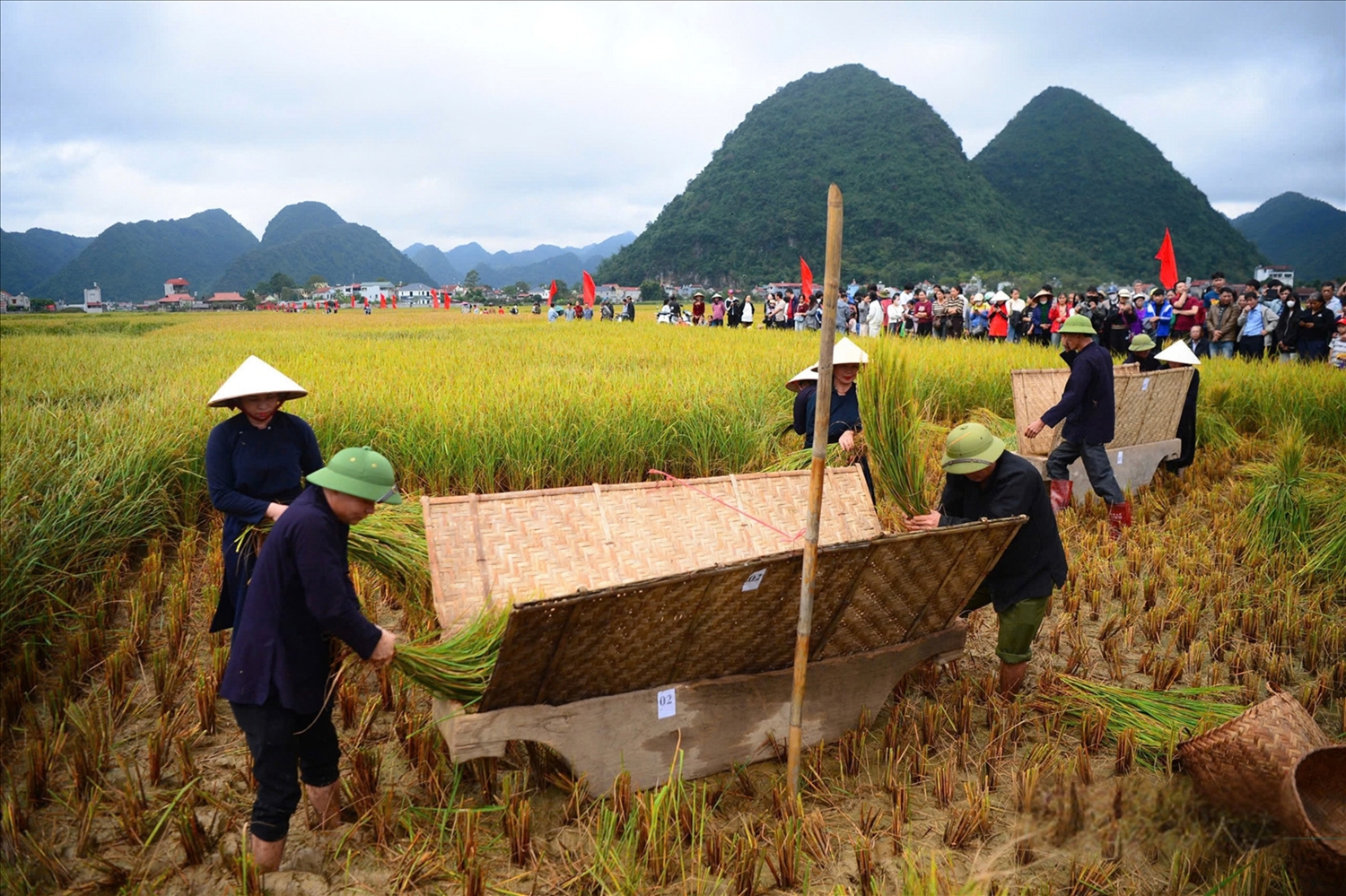
 Thanks to the effective implementation of ethnic minority policies, the economic, cultural, and social life of ethnic minority areas in Lang Son province is increasingly flourishing
During the first six months of 2026, Lang Son province maintained its focus on decisively directing ethnic affairs and implementing policies for ethnic minority and mountainous areas. Notably, infrastructure and living conditions continued to improve. Across the province, 100% of communes and wards are connected to the national power grid, with an electricity usage rate of 99.88%; 85% of households possess hygienic latrines; 65.1% of rural households have access to clean water meeting established standards; 83.8% of agricultural land benefits from active irrigation and drainage systems; and 80.3% of villages and residential groups have standard-compliant community houses.
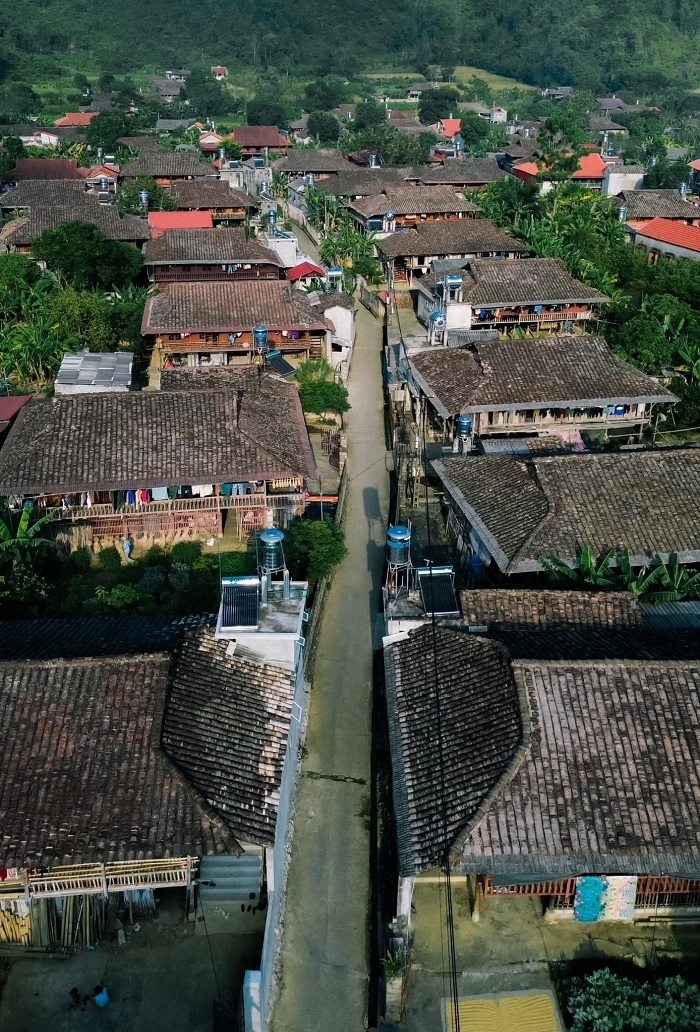 A corner of Quynh Son tourism village
On May 4th, 2026, the Provincial People's Committee issued Plan No. 173/KH-UBND to implement the National Target Programs on New Rural Development, Sustainable Poverty Reduction and Socio-Economic Development in Ethnic Minority and Mountainous Areas of Lang Son province for 2026. Accordingly, the targets include: achieving “new rural area” standards for five communes (Bac Son, Chi Lang, Huu Lung, Loc Binh and Dinh Lap); increasing the number of criteria met by at least 1-2 points for the group of communes scheduled to achieve new rural standards during the period of 2026-2030; increasing the number of indicators met by 3-4 points for the remaining communes; reducing the province's multidimensional poverty rate by 2%; ensuring that 82% of commune-level roads are paved with asphalt or concrete and 92% of villages have hardened roads accessible by automobile to their centers; certifying 20 new OCOP products with a rating of 3 stars or higher; achieving a 67% rate of trained labor; and maintaining the status of 100% of communes and wards in meeting the national health criteria for communes;... Communes in Region III aim to meet one to two of their currently unmet criteria by 2026, in accordance with Clause 2, Article 8 of the Government's Decree No. 272/2025/ND-CP dated October 16th, 2025.
The Steering Committee for the National Target Program for the period of 2026-2030 has been established, plans for 2026 have been issued in a timely manner, and various new mechanisms and policies continue to be refined. Under the infrastructure investment sub-project, 700 projects comprising both carry-over and newly initiated works are being implemented alongside the maintenance of 35 existing facilities; support is being provided to equip 25 village cultural houses; and 19 models aimed at reducing child marriage and consanguineous marriage are being maintained, alongside the organization of eight training conferences for legal dissemination and awareness-raising.
Mr. Lam Van Vien, Deputy Director of the Lang Son Provincial Department of Ethnic and Religious Affairs, emphasized that a key requirement in implementing the Program is ensuring that policies effectively reach the people, while simultaneously strengthening inspection and supervision to promptly address any difficulties encountered during implementation. In practice, the Department has developed a plan to inspect and oversee the Program’s rollout across the province, focusing on progress, the efficient use of resources and the outcomes of the various projects and sub-projects.
From a development perspective, this represents a noteworthy shift: moving from support aimed at escaping poverty to building the capacity for self-reliance. While a household provided with breeding stock might generate income from a single production cycle, a model that integrates support for technical expertise, capital, production linkages, market access and branding is what truly holds the potential to become a sustainable, long-term livelihood.
Therefore, the challenge ahead is not simply a matter of how much additional resource investment is required, but rather how to ensure that every dong of policy-driven capital generates greater value for the people. It is essential to strengthen linkages among households, cooperatives, enterprises and the market; prioritize models with scalability; leverage local knowledge; and integrate production with digital transformation, community-based tourism and e-commerce. Crucially, the people must be recognized as the central agents of the development process, rather than mere beneficiaries.
Therefore, the ultimate value of National Target Program 1719 should be measured by its ability to provide people with a sufficiently effective “fishing rod” to shape their own futures. Once roads are accessible, electricity is available, clean water is secured and support for technical expertise and capital is in place, the next crucial steps are expanding markets and enhancing the capacity of the communities themselves.
And National Target Program 1719 will be truly successful when today’s investment resources help people reduce poverty, and also create new economic subjects, valuable products and communities capable of standing on their own. That is also the foundation for Lang Son province to develop faster, more sustainably, narrow regional gaps and so that no one is left behind in the country’s development journey./.
