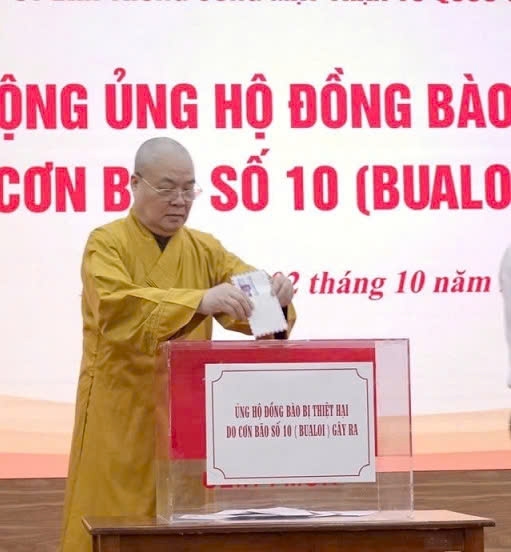
 Monks, nuns and lay Buddhists contribute support to fellow citizens affected by Typhoon Bualoi (Storm No. 10)
In that context, the material and emotional losses suffered by the people were partially alleviated by an immense spiritual force: the concerted efforts of Vietnam’s religious communities. Their actions went beyond mere relief aid; they embodied the spirit of “serving both the nation and the faith”, translating the philosophy of compassion into concrete deeds and forging a robust social safety net. The participation of religious communities has affirmed their role as a valuable social resource, working alongside the State to address the aftermath of natural disasters.
Monks and nuns participate in relief efforts for flood victims
Immediately after the storms passed, leaving behind a scene of devastation, religious organizations stepped in to help a response that was both spontaneous and voluntary. The Buddhist community, leveraging the structure of the Vietnam Buddhist Sangha and its extensive network of monks, nuns and lay followers, rapidly established channels for emergency donations. Many pagodas in Hanoi capital, Ho Chi Minh city and the southern provinces have become depots for relief supplies. Convoys carrying goods such as instant noodles, drinking water, medicine and clothing have urgently set out, braving roads still plagued by flooding and landslides. The dedication of monks and nuns in venturing into the heart of the flood zones brings not only material aid but also spiritual comfort, helping to soothe the suffering of the people.
The Catholic Church, through the Caritas Vietnam network (the Commission for Social Charity), has effectively demonstrated professionalism in its relief efforts. Directly affected dioceses such as those covering areas in Nghe An and Ha Tinh provinces, immediately mobilized local resources alongside support from other dioceses. Priests and religious sisters ventured into isolated areas to assess the needs of individual families, prioritizing the provision of specific supplies for the elderly and children.
The contributions of religious groups extend beyond the distribution of emergency relief supplies. They have also expanded their strategies to encompass reconstruction and the sustainable restoration of livelihoods, efforts of significant importance given the immense economic damage caused by storms and floods.
Buddhist organizations have focused on rebuilding sturdy homes for impoverished families. Flood-resistant housing projects such as “Homes of compassion” and “Great solidarity homes” have been launched to ensure residents have safe shelter during future rainy and storm seasons. Additionally, many Buddhist groups provide capital, livestock and seedlings to help farmers resume agricultural production.
Catholic support programs for flood-affected students are being vigorously implemented through local parishes. Priority is given to providing scholarships and school supplies, as well as repairing schools, to ensure that education remains uninterrupted. Additionally, a key area of expertise for Caritas is the provision of psychological counseling and support for emotional recovery in the aftermath of the disaster. Other religious groups have also mobilized volunteer teams to assist residents with home repairs, environmental cleanup and the provision of free hot meals during the immediate aftermath of the storm.
The total value of relief aid provided by religious communities following the storms and floods is estimated to reach hundreds of billions of dong. Thanks to the practical and timely actions of these communities, the trust and hope of the people affected by the disasters have been bolstered. Religious groups have affirmed their role not only as spiritual sanctuaries but also as active contributors to the cause of national construction and defense, vividly demonstrating the spirit of “living a good secular and religious life”./.
