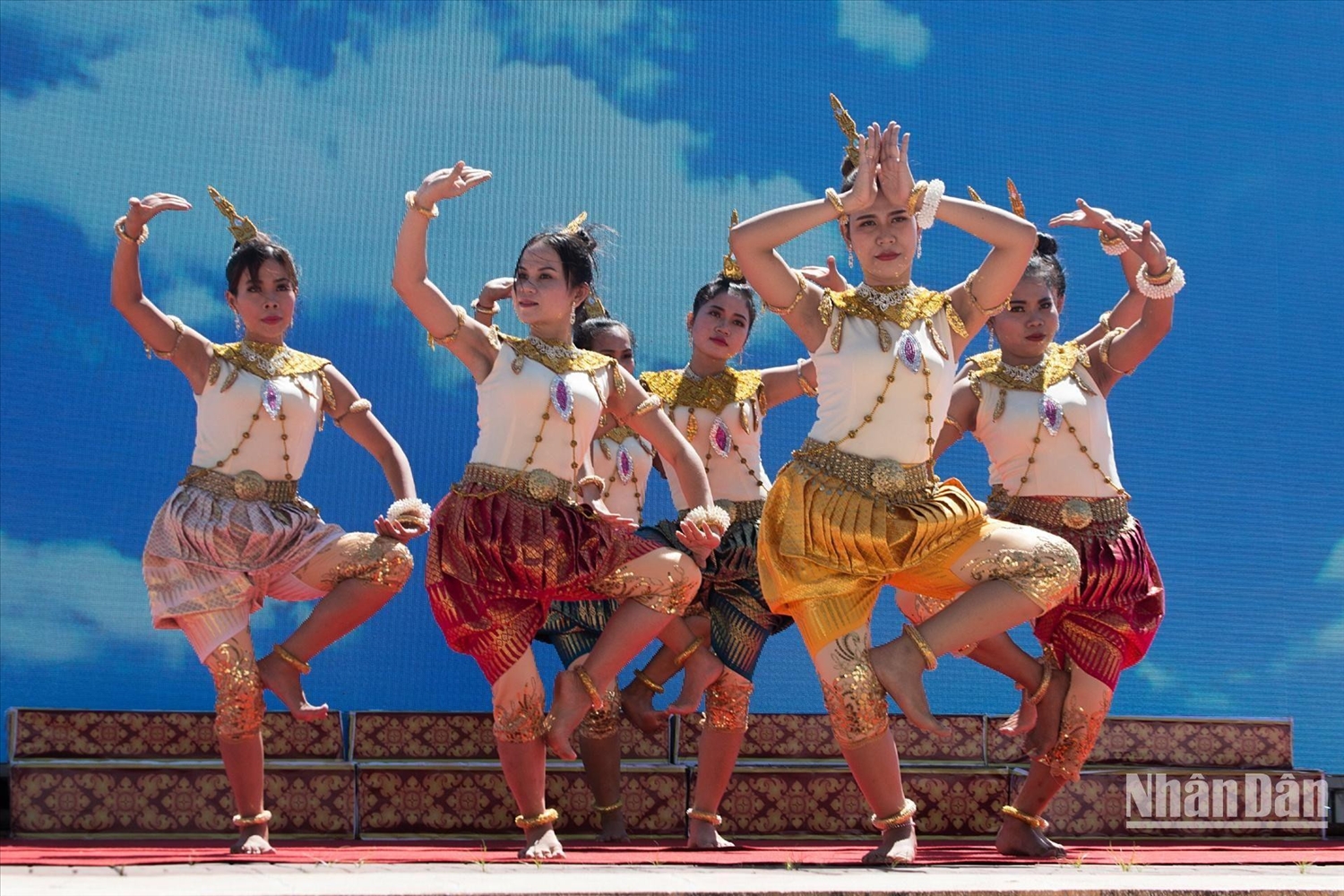
 Graceful Khmer young women performing the Romvong dance
Folk dance is a common form of expression among the ethnic communities of Vietnam and is widely practiced in community cultural activities. Each ethnic group possesses its own distinctive folk dances. For the Khmer people of Southern Vietnam, dance is an indispensable cultural art form during festivals, Tet, housewarming ceremonies and weddings, serving to foster a joyful, communal atmosphere of solidarity. Khmer dance encompasses two main categories: community-based social dance also known as folk dance and court dance. If Khmer court dance is characterized by its scholarly, profound, solemn and ancient nature, folk dance stands in contrast with movements that are relaxed, optimistic, lighthearted and witty. Today, folk dance continues to be preserved and widely practiced within the community life of the Khmer people in the Mekong Delta provinces.
During the festivals and holidays of the Khmer people in Southern Vietnam, everyone joins in joyful singing and dancing. People dance in their homes, in pagoda courtyards, or out in the fields, with no limit on the number of participants. As the drumbeats and spirited vocals of the Rom vong melody ring out, individuals whether young or old, alone or in couples gracefully immerse themselves in the fluid and charming communal dance. Rom vong dance is a circle dance in which couples dance while gazing affectionately and intimately at one another. The women’s movements are gentle and modest, featuring graceful arm undulations in front of the chest, while the men’s movements are vigorous, with arms spread wide as if to shield and protect their partners; these movements are coordinated with the legs, the arm on the side of the leading leg is held low while the other is raised, and the palms alternate between facing up and facing down.
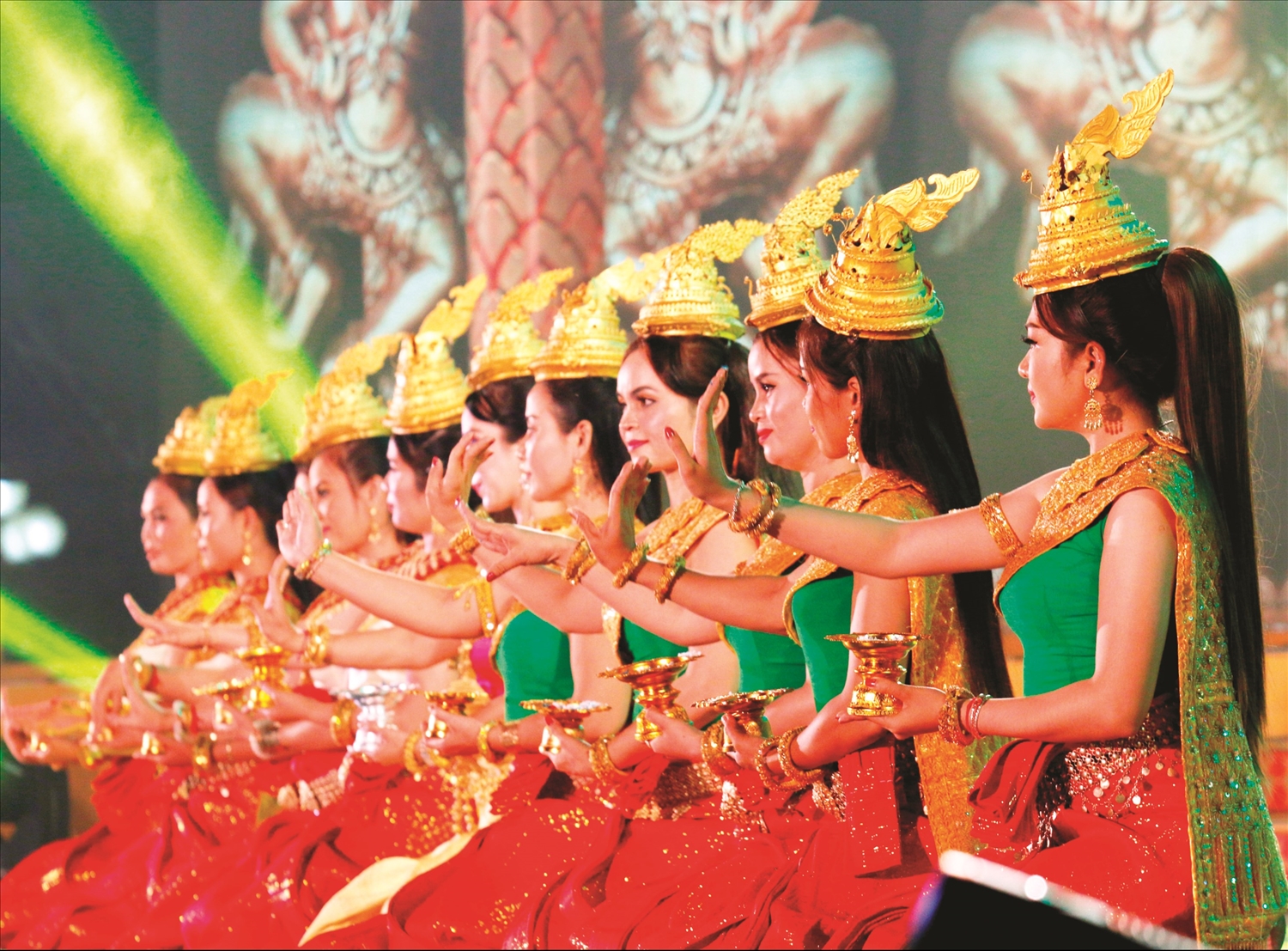 Folk dance is preserved and passed down within the lives of the Khmer people
Next is the Lam Leo dance also known as the Lao dance which is characterized by a lively, spirited pace and energetic movements. The dance movements resemble those of Romvong; one hand performs the Chip (or bat) gesture, with the palm facing upward, the thumb and index finger are pressed together with enough tension to stretch the remaining three fingers outward; the ron (or che) technique involves pressing the fingers closely together, resembling a hand position used to shield one’s eyes from the sun while utilizing the palm; the performer alternates this hand position between the left and right hands while executing footwork, demonstrating a harmonious coordination of movement.
Another lively dance is the Saravan. Its signature movement involves accentuating the wrists in time with the beat, and it is typically performed in circles, lines, or pairs, or by dancers facing one another in horizontal rows, moving back and forth or side to side in a chasing pattern. The arms are positioned variously: sometimes extended wide at shoulder height, sometimes hanging loosely at the sides and at other times crossed in front of the abdomen with the wrists pressing rhythmically, like a swallow flapping its wings.
In addition to the aforementioned signature dances, Khmer folk dance encompasses various other forms, such as the shrimp-scooping dance (using the Chnieng tool), the coconut shell dance (Khos Trolot), the rice-harvesting dance (Caseko), the Sadam drum dance, the Yak (or Giant/Demon) dance and the fence-opening dance performed during wedding ceremonies…
Folk dances have become an integral part of Khmer culture, leaving a deep imprint on the community’s consciousness and daily life./.
