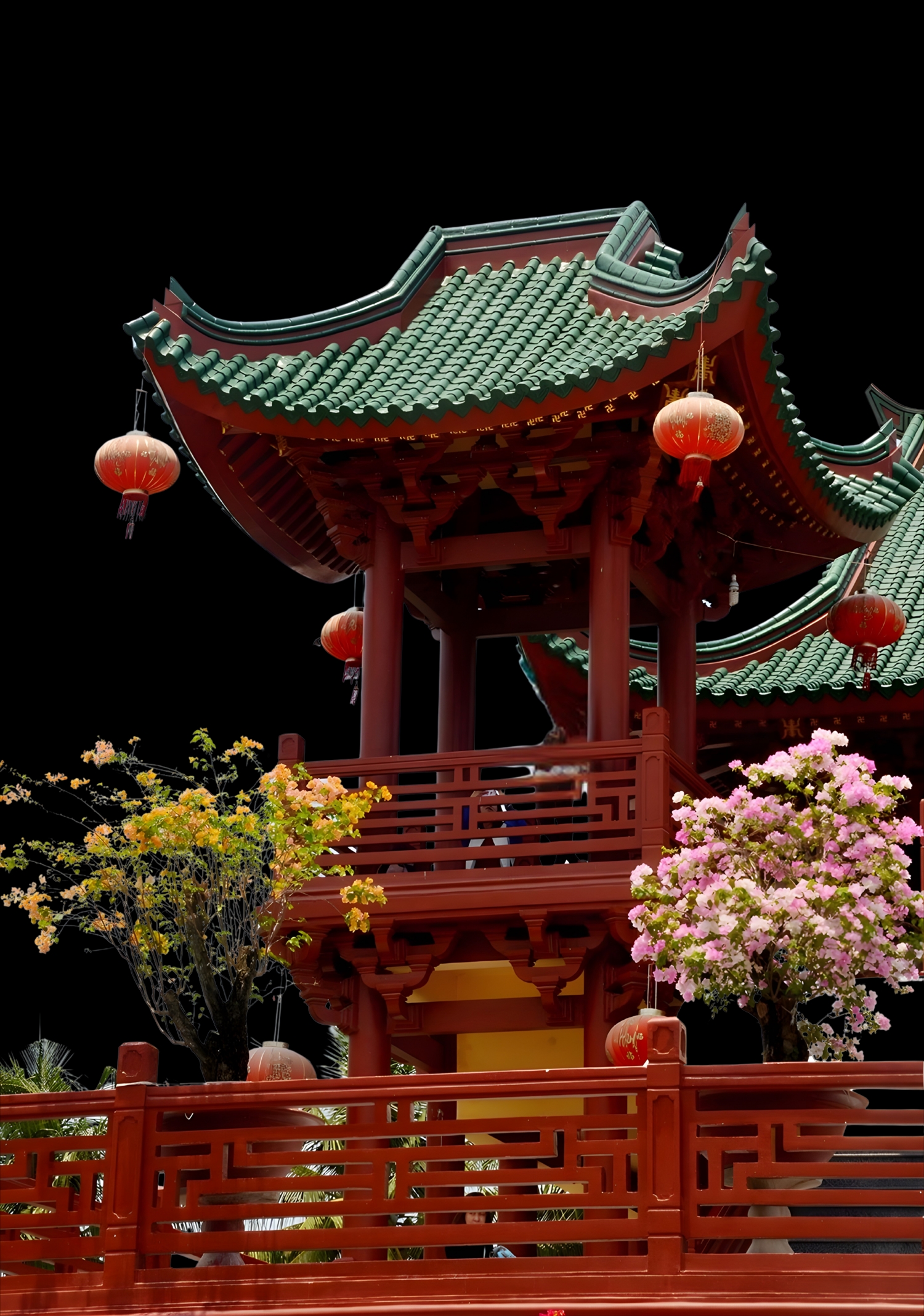
 Nestled at the foot of the majestic That Son mountain range, Chua Lau (officially named Phuoc Lam pagoda) in An Giang province has long been a must-visit destination
Phuoc Lam pagoda is called Lau pagoda because of the difference of the construction. Although it does not have a clear floor like modern architecture, Lau pagoda makes a strong impression with the feeling of many layers and floors (matches) cleverly stacked on top of each other.
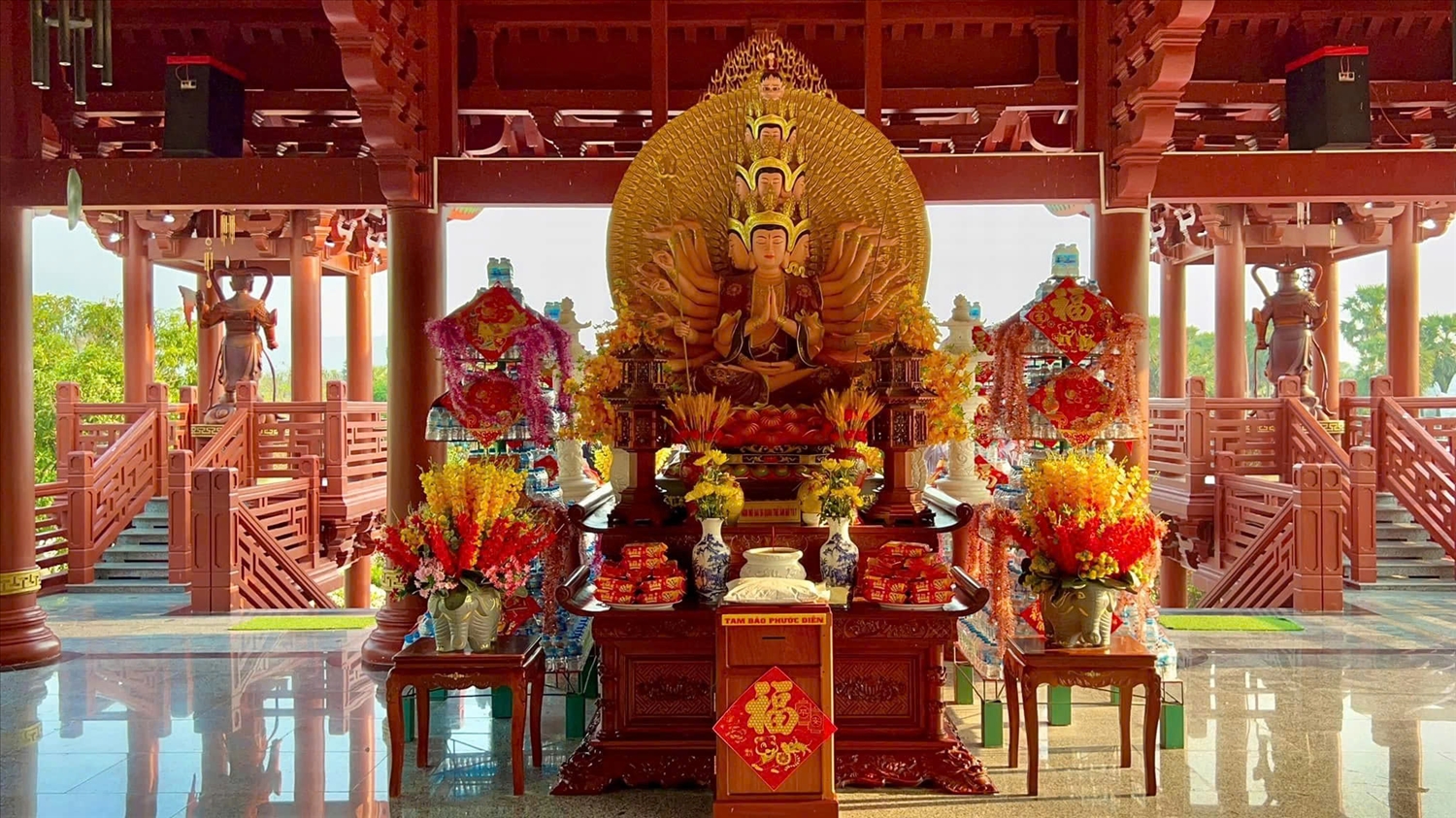 The statue of Guan Yin (Lady Buddha) is located at Lau pagoda
This pagoda, over 130 years old, was repeatedly devastated by wartime bombing and shelling. Originally built between 1937 and 1940 and having undergone numerous renovations and expansions, most notably a restoration project following 2009, Chua pagoda has taken on a fresh and unique appearance. Architects and artisans employed a technique of layering roofs and creating projecting, overlapping balconies and eaves to craft a captivating space.
Lau pagoda is like a massive, complex architectural block, with hundreds of layered red brick roofs with a Phu Tang style (with a bit of Japanese architecture) rarely seen in the South. The main color tones are brick red of the brick color and deep brown of the wood color, creating an ancient and warm feeling. What makes Lau pagoda unique is its interconnected system of corridors and winding staircases that do not follow conventional vertical lines. Pilgrims seem to be lost in an alternately open and closed space, where each step and each corner opens up a new space, a quiet courtyard or leads to a small altar room, making them forget whether they are on the ground floor or have gone upstairs.
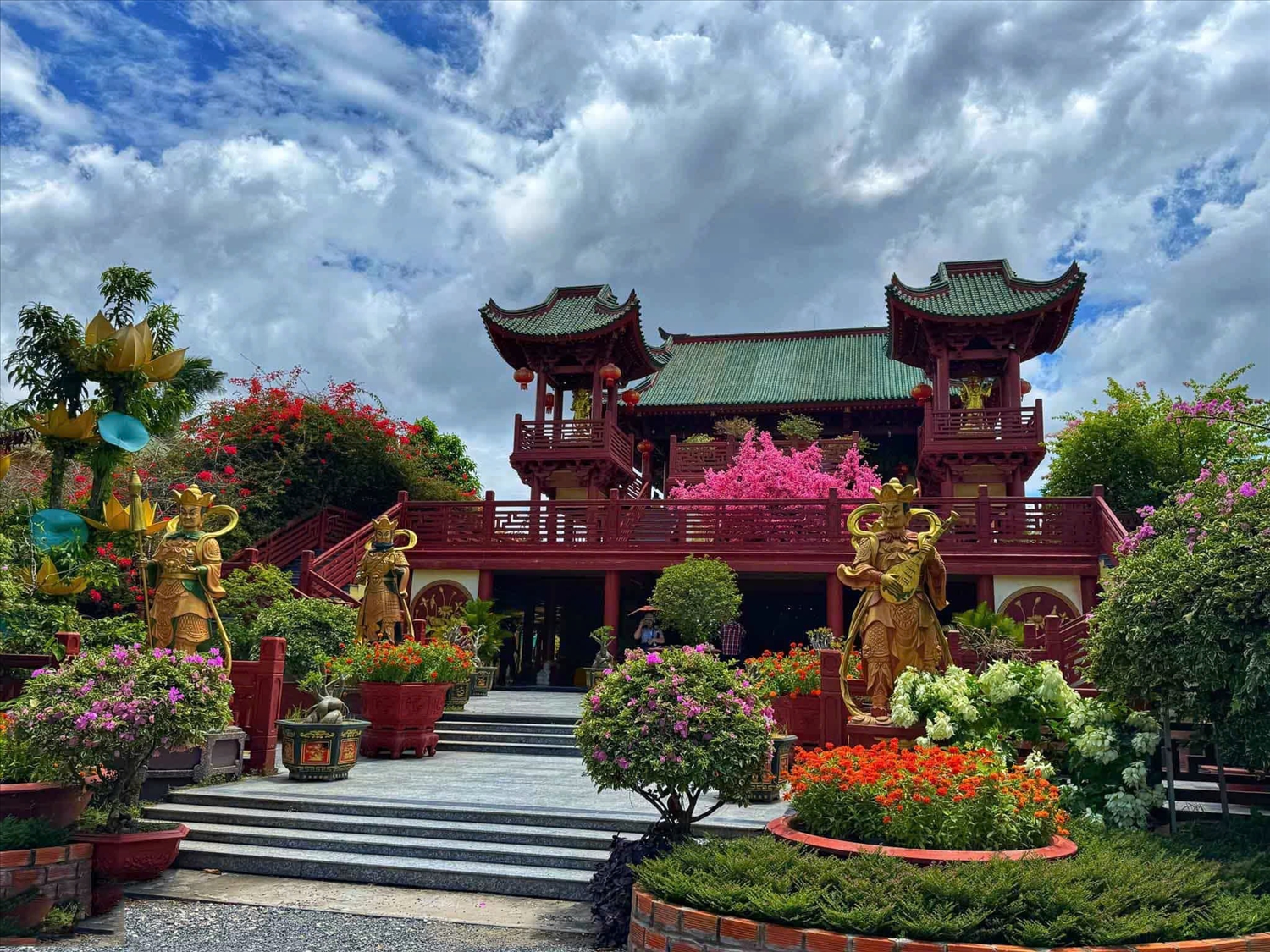 Lau pagoda embodies a harmonious blend of traditional Vietnamese and Japanese architectural styles
The architecture of Lau pagoda is a prime example of the harmonious blend of Eastern architectural styles in the heart of the Seven Mountains region. Although inspired by Japanese design, evident in the broad, curved tiled roofs and small balconies, the pagoda retains the essence of traditional Vietnamese architecture through its yin-yang roof tiles and intricate carvings. Within the temple grounds, architectural beauty blends harmoniously with the spacious natural surroundings, creating the feel of a “miniature park”.
The ornamental plant areas and lotus ponds are meticulously maintained, and a suspension bridge spanning the fish pond creates numerous ideal spots for taking photos. This blend of traditional architecture and nature has made Lau Pagoda a popular destination for young people whether they are keen on photographing long shirt or period costumes or simply seeking a peaceful, serene retreat within a spiritual setting.
Notably, the pagoda grounds feature a traditional ox-cart characteristic of the Khmer people of the Seven Mountains region, alongside a vibrantly painted coconut tree, reflecting the cultural blend among the ethnic groups of the area.
Lau pagoda is not only a unique architectural landmark but also a center of socially engaged Buddhism that is deeply connected to the everyday lives of the people of the Southwestern Vietnam. In addition to pilgrimage activities during major festivals such as the first full moon of the lunar year, Vu Lan and Vesak, Lau pagoda frequently organizes charitable activities and provides free vegetarian meals for Buddhists, visitors and the local poor. This fully embodies the Buddhist spirit of compassion and loving-kindness, transforming the pagoda into a place that cultivates benevolence and contributes to local social welfare efforts./.
