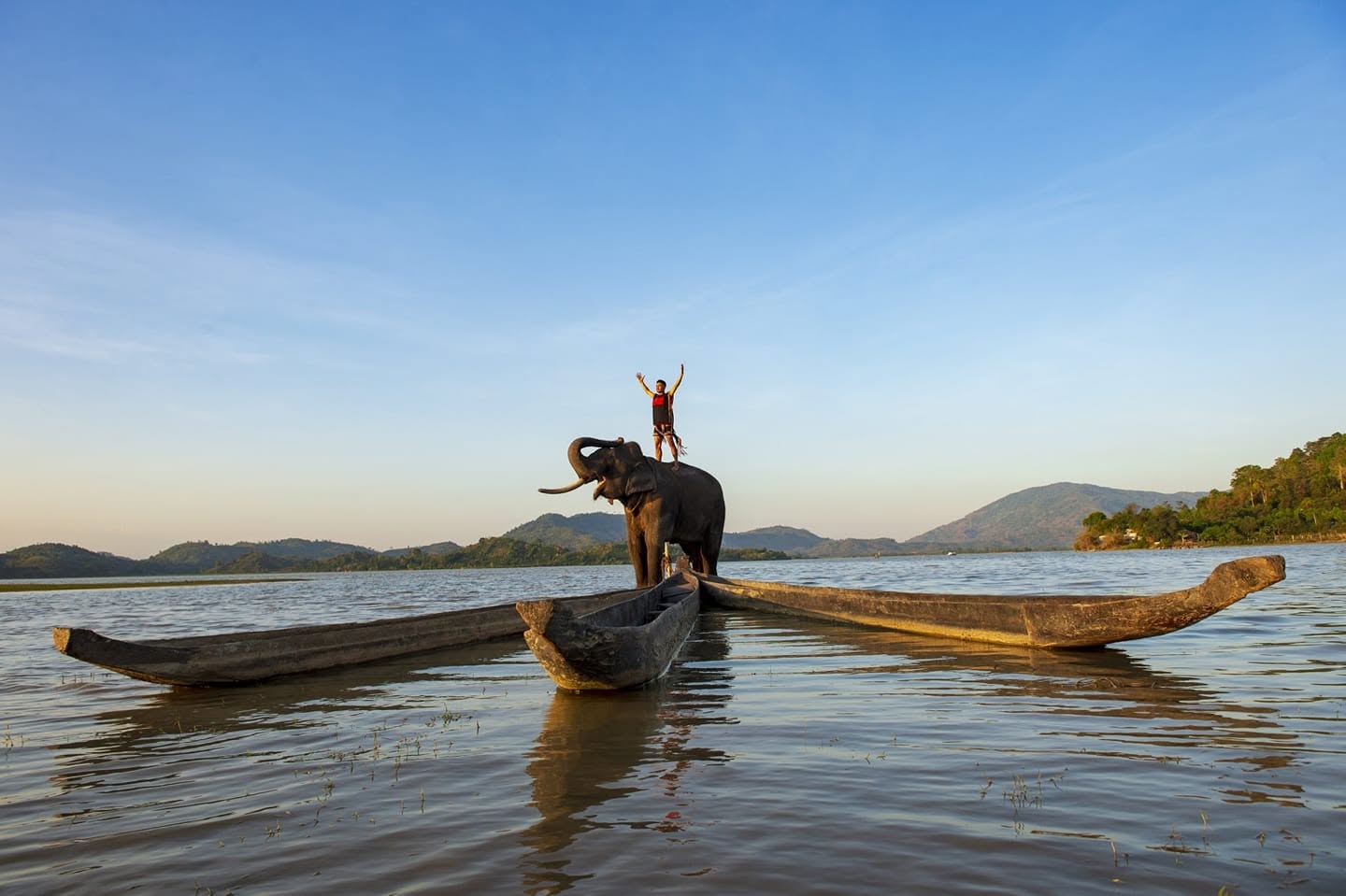
 Y Sol Sruk is using culture to tell the story of the village in the style of the younger generation
Born in 1992, Y Xim Ndu once held a stable job at a government agency. In 2018, he decided to return to his village to pursue community-based tourism. This decision was rooted in childhood memories of the forest, elephants, the sound of gongs and the days spent deeply connected to his village.
After researching and learning from various models both at home and abroad, Y Xim Ndu set out in late 2020 to develop a community-based ecotourism model in the Lak Lake area. He did not want visitors to simply sightsee and leave; instead, he wanted them to fully immerse themselves in the Mnong cultural atmosphere, even if only for a short time.
Driven by this vision, he developed forest trekking tours including an expedition to conquer the summit of Chu Yang Lak (nearly 1,700 meters high) in Chu Yang Sin National Park. Visitors can hike, go cloud-hunting, and admire the forest; try their hand at pottery and brocade weaving; visit the Yang Tao cacao plantation; and savor familiar Mnong dishes such as ash soup and bitter eggplant, while enjoying jar wine, listening to gong music and staying in traditional stilt houses.
 Lien Son Lak at sunset
Visitors are treated to stories about the land, the people, the farming seasons and the festivals. It is Y Xim Ndu’s mother who shares these tales; through her storytelling, aspects of life that are commonplace to the villagers become memorable highlights of the travelers’ journey.
While Y Xim Ndu takes visitors to explore the forest, Y Sôl Sruk chooses a different approach: immersing them in the village’s daily rhythm. At his homestay, guests wake up in a stilt house still carrying the faint scent of kitchen smoke. They accompany their host to the fields, build a fire, cook bamboo-tube rice and pound bitter eggplants, before sharing a simple, communal meal together. Through these everyday activities, the story of the farming season, local customs, and the relationship between people, the forest and the land unfolds allowing visitors to observe, participate and experience it all firsthand.
Y Sôl Sruk does not engage in tourism in isolation; he connects households within the village to create a cohesive series of experiences. Some villagers craft pottery, others weave traditional brocade and some guide visitors to the upland fields. While each person handles a specific task, the stories they share are rooted in their own lives. Consequently, Mnong culture is not merely a performance staged for tourists but is authentically reflected in their meals, daily work and the stories told by the villagers themselves.
Y Sôl Sruk’s approach to interacting with elephants is also distinctive. Instead of riding them, he allows visitors to walk alongside the elephants, feeding them, observing their behavior and learning about the domestication process and the bond between the Mnong people and these animals. It is a humane way of treating a creature regarded as a symbol of the Mnong people. Y Sol Sruk also shares stories from his village on social media. Without the need for elaborate visuals or special effects, videos capturing moments like grilling chicken by the stream or simple daily activities inside a stilt house still attract a large number of viewers. This demonstrates that when a story is truly authentic, it naturally finds its way to the public.
In both of the aforementioned models, the cultural identity of the Mnong people has been effectively leveraged as a resource for development. The Mnong people serve as the storytellers and are the direct beneficiaries of those stories. When culture helps generate livelihoods, the community gains further reason and motivation to preserve the cultural heritage passed down by their ancestors. Consequently, culture is not only preserved but also becomes an integral part of the household and village economy. This approach aligns with the direction outlined in the Politburo’s Resolution No. 80-NQ/TW (dated January 7th, 2026), which emphasizes linking cultural development with ecological environmental protection and promoting community self-governance as well as family and clan traditions.
Between the vast wilderness of the Central Highlands, Y Xim Ndu and Y Sol Sruk are using their culture to share the story of their village through the eyes of the younger generation. They guide visitors on tours, inviting them to step into traditional stilt houses, meet the Mnong people, accompany locals to their upland fields, and share in authentic daily meals. They also share stories about the farming seasons and the elephants that have been an integral part of the village for generations creating experiences that leave a lasting impression on every visitor./.
