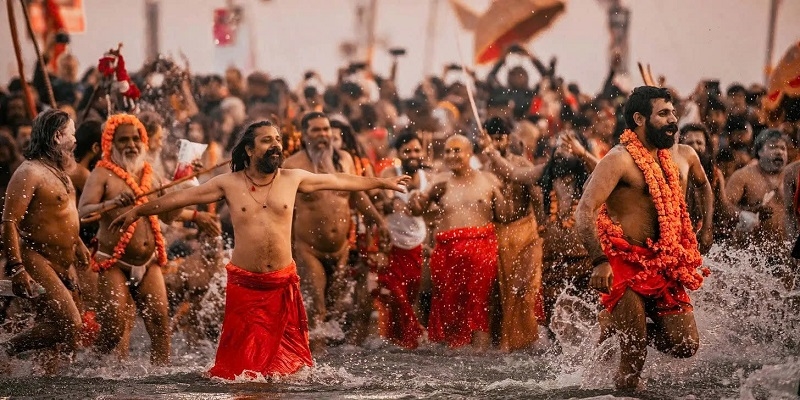
 Hindu devotees participate in the festival
Maha Kumbh Mela is the collective name for one of the most important festivals for Hindus. The festival is held on a rotating basis at four sacred sites: Prayagraj, Haridwar, Nashik, and Ujjain. Maha Kumbh Mela - meaning “The Greatest” is a special edition of the festival that takes place once every 12 years.
The 45-day Maha Kumbh Mela 2025 festival took place from January 13 to February 26th, 2025, in the city of Prayagraj, Uttar Pradesh, India, drawing a record-breaking crowd of over 640 million devotees far exceeding the Uttar Pradesh state government’s initial estimate of 400 million. Hindu devotees from across India and various countries including South Korea, Japan, Russia, and the United States and from diverse Hindu sects gather to participate in grand processions and the Shahi Snan ritual, immersing themselves in the icy, sacred waters of the Ganges River for spiritual cleansing and purification.
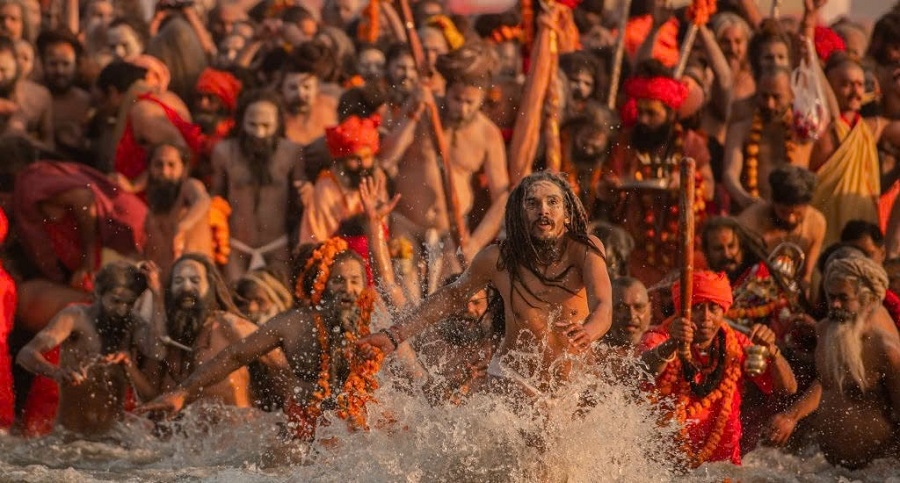 Maha Kumbh Mela is the collective name for one of the most important festivals for Hindus
 The Maha Kumbh Mela festival originates from an ancient Hindu legend recounting a mythical 12-year battle between gods and demons over a golden pot containing the nectar of immortality. Hindus believe that during the battle, a few drops of nectar fell upon the four cities of Prayagraj, Nasik, Ujjain and Haridwar, to be the four locations chosen to host the festival on a rotating basis over the centuries. The year 2025 holds special significance because the current alignment of the planets and stars mirrors the exact moment the legendary nectar spill occurred. According to Hindu seer Mahant Ravindra Puri, such a perfect event occurs only after 12 Kumbh festivals, a span of 144 years.
The central ritual of the festival is the Shahi Snan (Royal Bath). Ascetics and devotees immerse themselves at the confluence of three sacred, legendary rivers, it that the Ganges, Yamuna and Saraswati rivers flow from the Himalayas through the city of Prayagraj. Prayagraj is considered the abode of Hindu deities and the confluence of major rivers.
Hindus believe that immersing themselves in these sacred waters will wash away past transgressions and end the cycle of birth and death (Samsara). On the most sacred days, naked Sadhus, smeared with ash, rush into the holy rivers at dawn. Many pilgrims remain throughout the festival, practicing asceticism, giving alms and bathing at sunrise each day. On the very morning of the festival’s first day, approximately 6 million pilgrims began the bathing ritual.
Beyond its primary religious observances, the festival offers a cultural experience that draws people from all walks of life. Visitors can witness the presence of holy men, ascetics, and hermits often clad in saffron robes braving the freezing, icy river waters and participating in a myriad of cultural and recreational activities, such as: the “Kalagram” cultural space or the “Incredible India Pavilion”. Both events are organized by India’s Ministry of Culture and Ministry of Tourism to celebrate the intersection of the nation's art, culture and heritage.
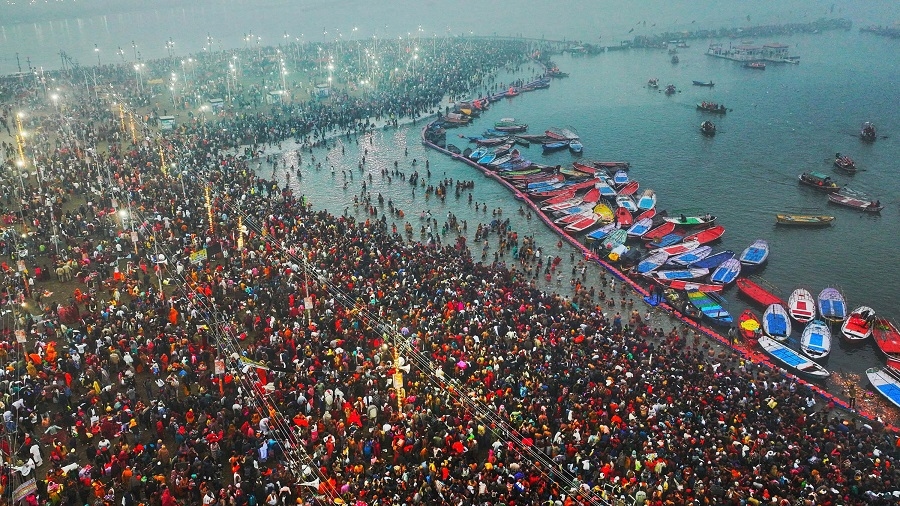 Hindu pilgrims are bathing in the sacred waters in Prayagraj, India
In order to facilitate this event, Indian authorities invested in and implemented logistical arrangements at an estimated cost of over 700 million USD. They erected 150,000 tents across an area of approximately 4,000 hectares, divided into 25 zones featuring various amenities. Indian Railways has dedicated 98 special trains, operating over 3,300 trips, to serve pilgrims and visitors traveling to Prayagraj from across the country. Local authorities have implemented numerous protective measures, including deploying over 300 divers ready to respond to incidents on the Ganges River, alongside a system of “field” hospitals and hundreds of ambulances on standby 24/7.
On this occasion, Indian Prime Minister Narendra Modi extended greetings to the devotees attending the festival and wished all pilgrims and tourists a wonderful time. He expressed his delight at seeing the city of Prayagraj bustling with millions of people bathing in the sacred waters and seeking blessings, affirming that this is a very special day for the millions who cherish Bharatiya values and culture./.
