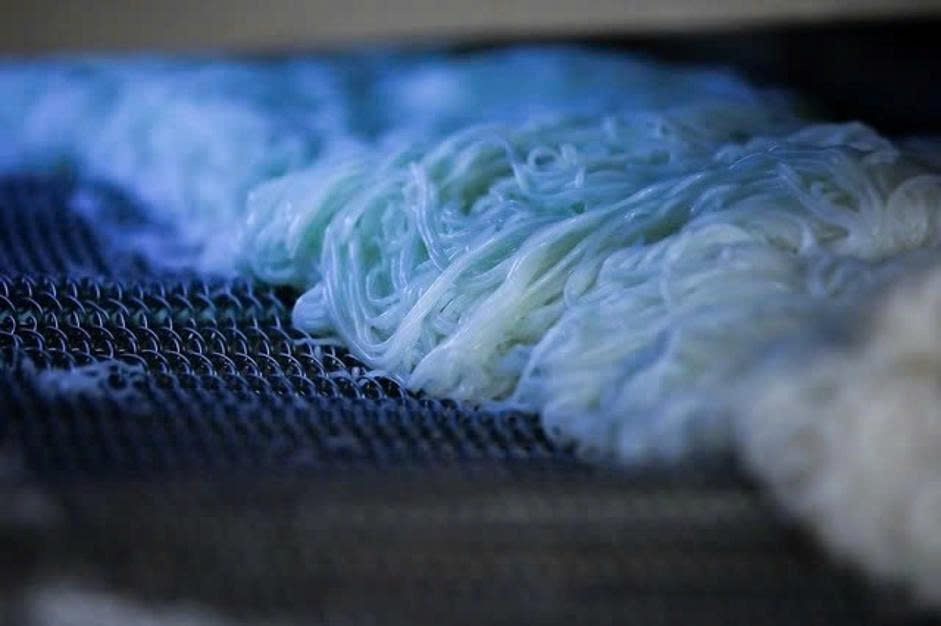
 Before packaging, the rice noodles are passed through a UV light to sterilize them
For Ms. Nguyen Binh, producing rice noodles is not just a business, but a professional identity. “I grew up surrounded by the smell of soaking rice, the sound of rice mills and sleepless nights making rice noodles. This profession has supported my entire family for generations”, Mrs. Binh shared. When she moved to Ho Chi Minh City to start her business, she brought with her not only traditional rice noodle-making techniques, but also the aspiration to create clean, branded products, so that her family’s traditional craft would not be lost in the mass food market.
Unlike the image of cramped, artisanal noodle workshops, Nguyen Binh noodle factory is a well-invested facility focused on clean production. The rice ingredients are carefully selected, the production process is closed-loop and food safety and hygiene are strictly controlled. “If you only make rice noodles to sell in the market, you can do it the old way. But if you want to go further, if you want to export, then you have to change”, Director Nguyen Binh said. This change is not about abandoning tradition, but about elevating tradition to a new standard.
The focus on “clean, high-quality rice noodles” has helped Nguyen Binh rice noodle factory gradually expand its market. From supplying wholesale markets and restaurants in Ho Chi Minh City, the workshop’s products have gradually appeared in modern distribution systems, serving the Vietnamese community abroad. These white, chewy rice noodles, free of preservatives have become silent “culinary ambassadors”, bringing the flavors of Vietnam to the world.
The Nguyen Binh noodle factory currently provides employment for hundreds of local workers, mainly women and people from other areas who have come to Ho Chi Minh City. Although the income is not high compared to some other industries, it is regular and stable. “Working here provides year-round employment, stable hours and no worries about unemployment”, said a worker who has been with the factory for over 5 years. For many families, the Nguyen Binh noodle factory has become a source of livelihood in this expensive city.
Besides creating direct jobs, the clean rice noodle factory also generates a chain of supporting value chains, such as supply, transportation, packaging and distribution. Each stage creates additional income for the local people. In a context where many unskilled workers struggle to find stable employment, Ms. Nguyen Binh’s noodle factory model demonstrates that traditional crafts, if reorganized scientifically and systematically, can absolutely become a sustainable economic sector in large cities. Not content with just profit, Director Nguyen Binh has always been driven by the aspiration to build a truly authentic Vietnamese noodle brand. “Foreigners know pho and banh mi, but few know rice noodles (Vietnamese rice noodles). I want that when people think of vermicelli, they think of a clean, high-quality product with a cultural story behind it”, Ms. Nguyen Binh shared. Therefore, in addition to production, investing in packaging, traceability, and quality standards are essential elements for long-term success.
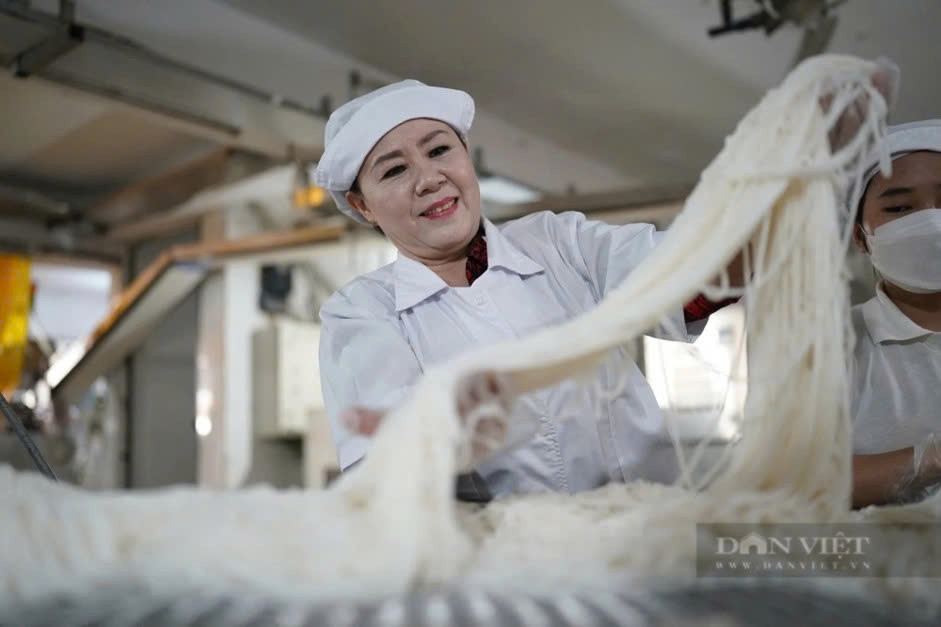 Ms. Nguyen Binh personally inspects her fresh rice noodle products before releasing them to the market
However, building a brand for a family-inherited craft in a fiercely competitive market is not easy. Fluctuating raw material prices, high logistics costs and increasingly stringent standards from international markets are the challenges. “There were times I thought I couldn’t survive, but thinking about the craft of my ancestors, I didn’t allow myself to give up”, Ms. Nguyen Binh shared. It was this perseverance that helped the noodle factory stand firm and gradually establish its position.
The story of Ms. Nguyen Binh, the director of a noodle factory, reflects a noteworthy trend: traditional crafts are not only found in rural areas but are also establishing a new foothold in large cities. When empowered by modern management thinking and a desire for greater achievements, traditional crafts can become a driving force for economic development, creating jobs and spreading cultural and humanistic values.
In the heart of bustling Ho Chi Minh City, the Nguyen Binh noodle factory continues to operate its furnaces every day. The white noodles are packaged and transported by truck throughout the city, to the port and across the sea. Behind it all is the image of a woman who persistently preserves her craft, innovates it and elevates it to a brand level. This is not just a business story, but a story about the aspiration to take the traditional Vietnamese rice noodle brand far beyond the village to the international market./.
