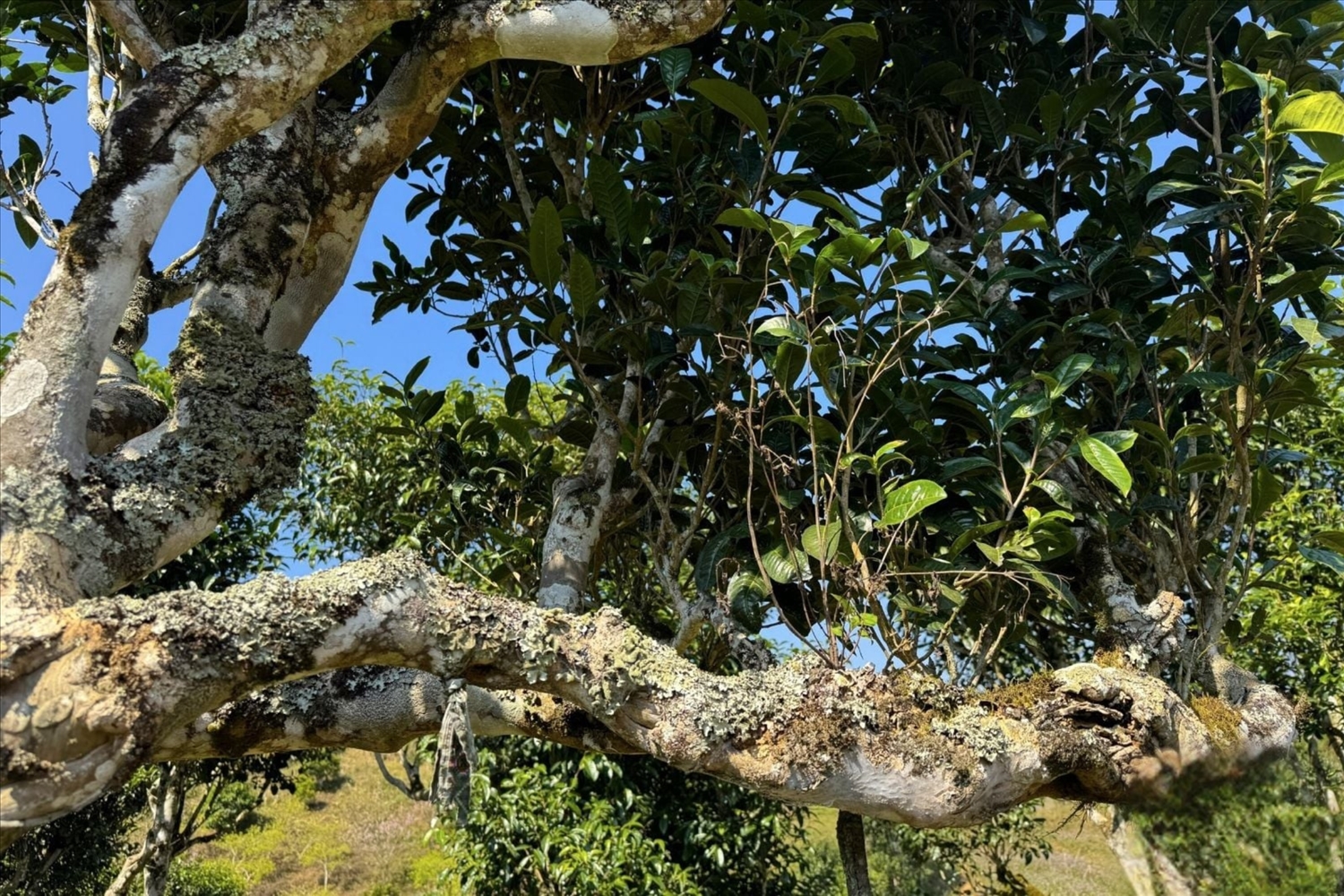
 The ancient On Oc Shan Tuyet tea trees are hundreds of years old
 According to local elders, ancient Shan Tuyet tea trees were already growing on the slopes of Pha Det Mountain when they were born. Remarkably, these trees were not planted by human hands but are regarded as a “gift from heaven”. For generations, the local Mong people have harvested the leaves to brew their daily tea.
However, there was a time when those ancient tea trees faced the risk of disappearing. Because their economic value was not fully recognized, the trees were neglected; many suffered from pests and diseases or were even cut down to make way for other crops. Since 2019, when the residents of On Oc village resolved to preserve their remaining tea trees and the Northwest (Tay Bac) Cooperative stepped in to support the effort, nearly 200 ancient tea trees have been designated for protection and cared for using organic methods, free from chemical fertilizers or pesticides. Provisions for protecting these designated tea-growing areas have been incorporated into local village conventions and community regulations.
Going beyond mere conservation, the Northwest (Tay Bac) Cooperative partners with landowners possessing ancient tea trees to sustainably harness their economic value. The cooperative has leased nearly 200 of these ancient trees for a ten-year period, assuming responsibility for their management, care and harvesting under a unified process. Farmers retain ownership of the trees but receive technical guidance on pruning, canopy reduction, organic fertilization, harvesting the “one bud, two leaves” standard, and improving the tea-firing process. This approach both protects the trees and enhances product quality.
The economic benefits of tea cultivation are becoming increasingly evident. On average, the cooperative harvests approximately one ton of fresh tea buds annually, processing them into about 200 kg of high-quality dried tea. Workers involved in tending and harvesting the crop are paid 20,000 VND per kilogram of fresh buds, providing them with a stable source of income alongside their maize and cassava fields. For many households, this is a significant source of income that helps cover living expenses and fund production investments.
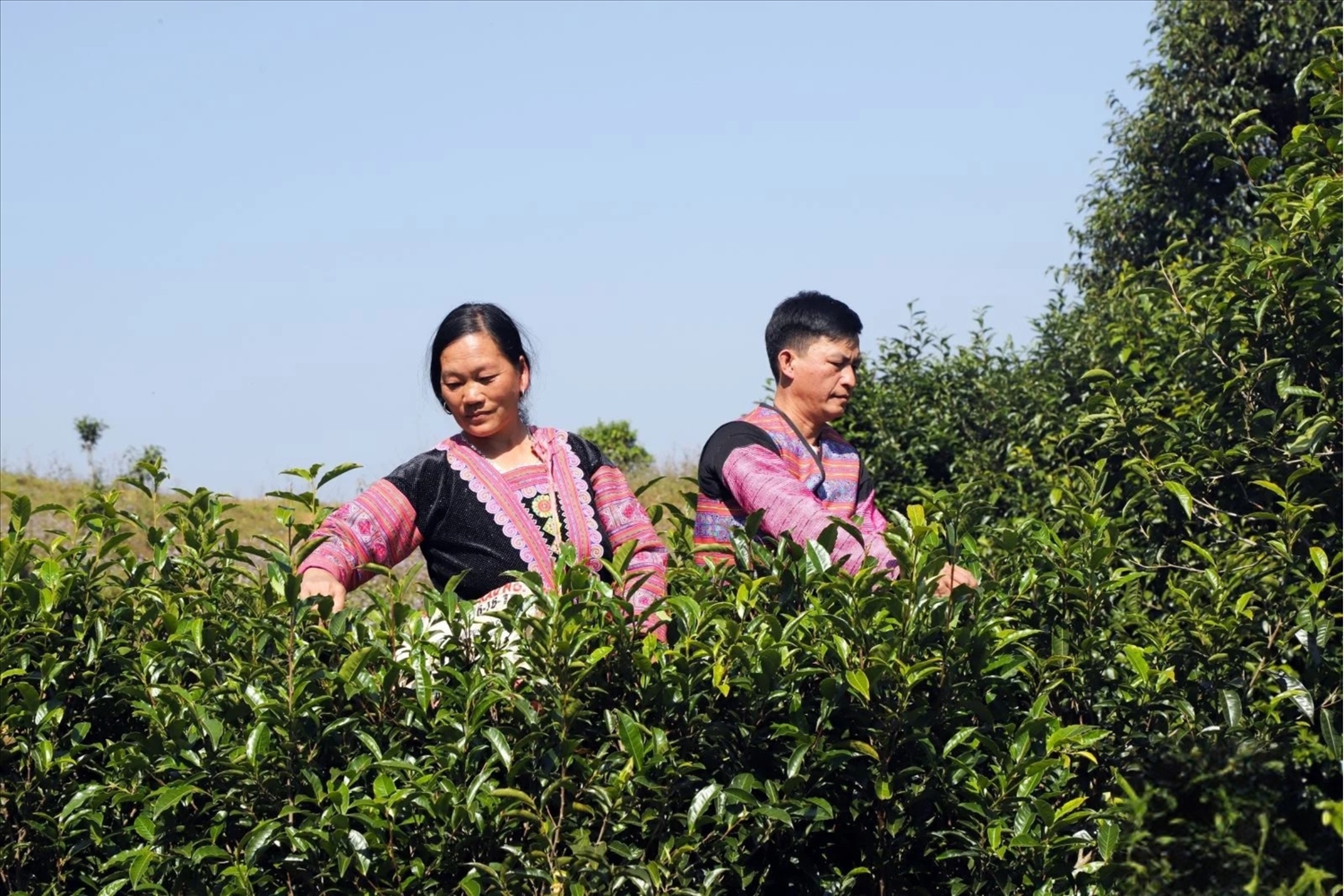 Tea plants have long been an integral part of the lives of the people in the On Oc highlands
 Talking about the value of ancient tea trees to the people here, Mr. Vang Lao Tong, a member of Northwest (Tay Bac) Cooperative said that in the past, people mainly exploited natural tea, did not pay attention to technology, so productivity and value were low. Since the cooperative provided specific guidance on proper care, canopy pruning, and standardized harvesting techniques, the tea plants have thrived, yielding uniform buds and consistent quality. Thanks to this technical guidance, we have increased our income and our lives have become less of a struggle.
Mr. Vu A Tong, who owns a significant number of ancient tea trees, shares that his family currently collaborates with ten other households to tend, harvest, and process the tea for supply to the cooperative. Thanks to the application of new techniques, tea yields have increased year by year and with stable market outlets, incomes have also improved.
A significant milestone in the journey to elevate the value of the tea was reached in June 2025, when On Oc Shan Tuyet tea was recognized as a provincial-level 4-star OCOP product. The OCOP designation facilitates easier market access for products, builds consumer trust and expands sales outlets through trade promotion, distribution channels and e-commerce platforms.
Ancient Shan Tuyet tea not only generates economic value through processing but also helps promote the image of the tea-growing region. As the area gains widespread recognition, it becomes an attractive tourist destination, creating additional income for local residents through dining services and the sale of local specialties.
Mr. Lai Huu Hung, Vice Chairman of the People’s Committee of Chieng Hac Commune, stated that the locality regards the ancient Shan Tuyet tea of On Oc village not only as a traditional crop but also as a key avenue for economic development in the near future. The commune aims to develop its Shan Tuyet tea area sustainably by linking the conservation of genetic resources with the enhancement of commercial value, ensuring the tea becomes a genuine, stable, and long-term source of income for local villagers, particularly the Mong community. In addition to the nearly 200 existing ancient trees, the locality has planted approximately 1,000 new Shan Tuyet tea trees to establish a successor generation and secure long-term livelihoods.
Once forgotten, the ancient Shan Tuyet tea of On Oc is now helping to create jobs, boost incomes and transform the production methods of the local Mong people. When the value of this heritage is preserved and harnessed in the right direction, the aroma of the tea will spread far and wide, carrying with it the century-old story of the mountains and forests of Son La province as the region advances in economic and tourism development./.
