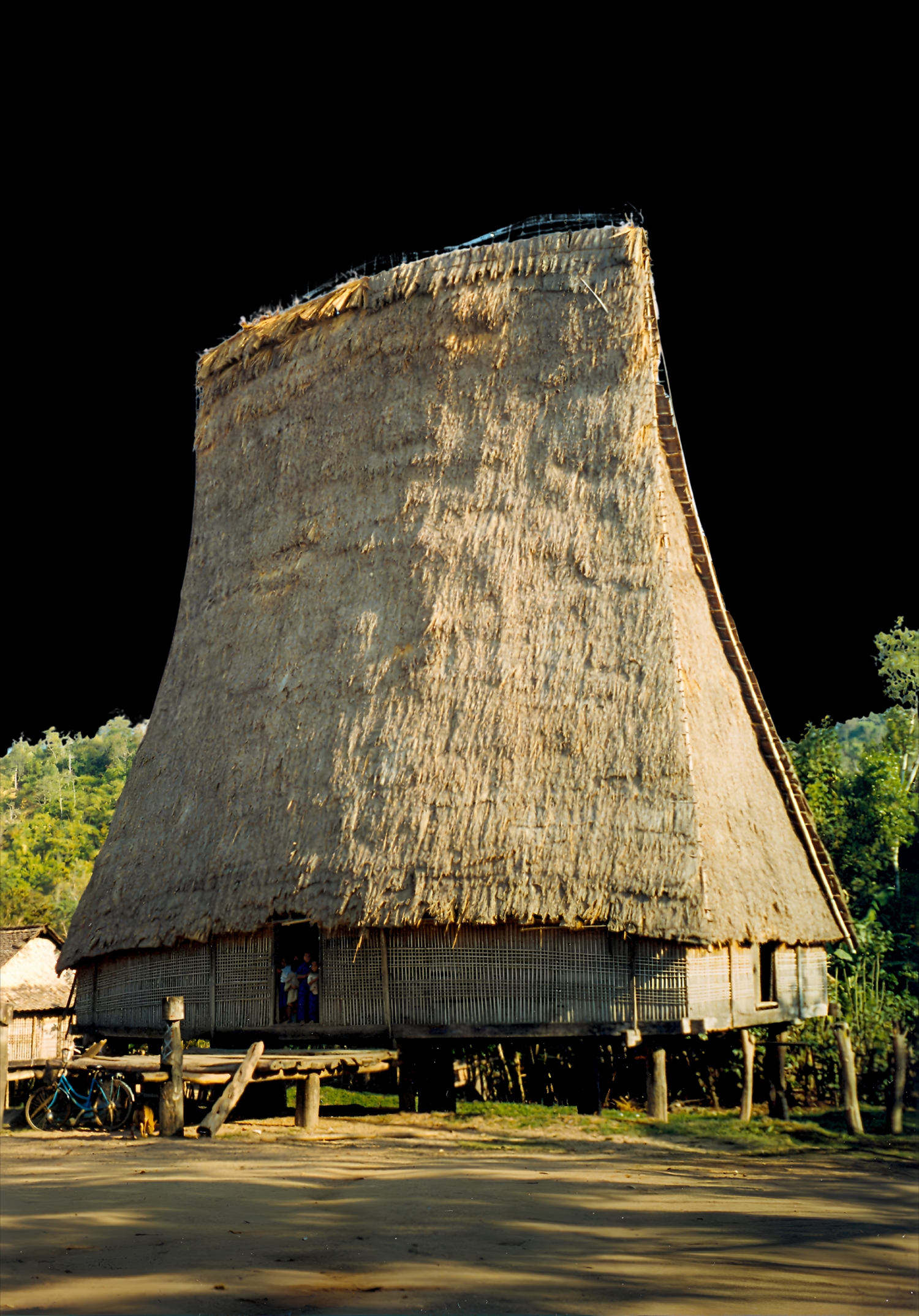
 The communal house has served as a distinctive symbol for many ethnic minority communities in the Central Highlands
For a long time, the communal house has served as a distinctive symbol for many ethnic minority communities in the Central Highlands. For ethnic groups such as the Ba Na, Xo Dang, Gia-rai, Gie-Trieng, Brau and Ro-mam, the communal house is typically situated at the heart of the village, serving as the venue for significant community activities. In Quang Ngai province, there are currently seven indigenous ethnic minority communities, six of which possess a communal house.
However, the value of a communal house does not lie in its soaring roof, massive pillars, or unique decorative patterns. Its true essence resides in what unfolds beneath that roof: the resonant sound of gongs during festivals, epic tales recounted by the fireside, village meetings, the passing down of agricultural knowledge, the education of the younger generation and the communal customs and norms transmitted through successive generations. Thus, the communal house serves as both a cultural space and a distinct social institution for the village.
In this process, village elders, artisans and respected community figures serve as the keepers of the community’s collective memory. They possess the knowledge to construct traditional houses, understand the significance of every decorative pattern and architectural element and are well-versed in the rituals performed within the communal house. They also hold the keys to the language of gongs, customary laws and oral traditions, knowledge that books can hardly replace.
A communal house can be reconstructed using wood, bamboo, rattan and thatch; yet, restoring the cultural life within it requires people. Therefore, the preservation of the communal house must firstly entail the preservation of the cultural subjects themselves. This issue was also raised by researchers and artisans during the discussion titled “The communal house and the challenge of preservation in a contemporary context” held at the Vietnam Museum of Ethnology in 2025, which brought together researchers and 20 Ba Na craftsmen experienced in the construction and restoration of communal house.
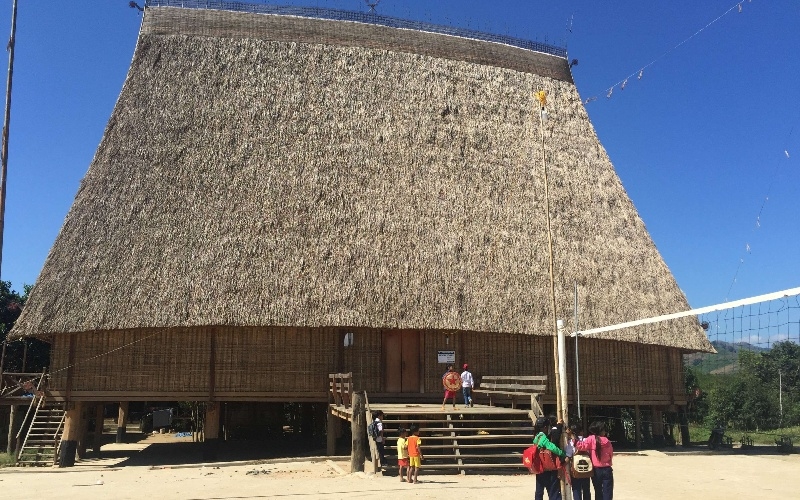 The materials used to construct communal houses in the Central Highlands are almost entirely sourced directly from the forest
Nguyen Hoang Giang, Director of the Department of Ethnic and Religious Affairs of Dak Lak province argues that the most important aspect of preserving communal house is ensuring they do not become mere museum exhibits, detached from the life of the community. A communal house is only truly alive when people still use it, organize activities, teach culture and still feel that it is their own common home. This viewpoint is also consistent with the reality of Quang Ngai province, where the restoration of the communal house is based on the foundation for the community to directly participate in building and using the project.
This is a particularly noteworthy issue, given that many traditional communal houses are at risk of deterioration, while some newly constructed ones incorporate modern materials, thereby altering both their architecture and their intended function. In Quang Ngai province, it has been observed that when the communal house loses its traditional functions, the local people’s sense of attachment to this space may also diminish. Consequently, local authorities are working with the community to gradually restore and preserve communal house structures that possess significant, distinctive cultural value.
Fortunately, many communities are still taking the initiative to preserve their heritage. In the village of Dak Wak, the Gie-Trieng community came together to discuss and mobilize resources for the repair of their communal house when it fell into disrepair. For the local people, it serves as a communal home, a place for village meetings, social activities and addressing important community matters.
This story illustrates that preserving the communal house is not merely about safeguarding a specific architectural style; it is about preserving a way of organizing community life. In order to keep the spirit of the communal house alive, it is essential to create opportunities for artisans to pass on their craft to the younger generation, integrate cultural values into community education and encourage local residents to take an active role in constructing, maintaining and managing these structures, all while balancing preservation with the development of responsible, community-based tourism.
A communal house may soar high amidst the vast wilderness, yet the true source of its vitality begins with the simple, ordinary people who dwell beneath its roof. As long as village elders continue to tell stories, artisans pass on their crafts, the sound of gongs still resonates and the younger generation keeps returning to the communal house, the soul of the village remains alive. Preserving these individuals means keeping the flame of Central Highlands culture burning for today and for the future./.
