In the Cham language, “Ginrong” means “claw” and “Laya” means “ginger”, as the cake resembles both a crab claw and a ginger root. The Cham people believe that ginger symbolizes vitality, warmth and faith. The pungent heat of ginger symbolizes enduring bonds and steadfastness in both love and faith. Thus, the Ginrong Laya cake is more than just a culinary treat; it serves as a message from ancestors about living with sincerity and faithfulness, qualities that, like the aroma of ginger, grow more intense with the passage of time.
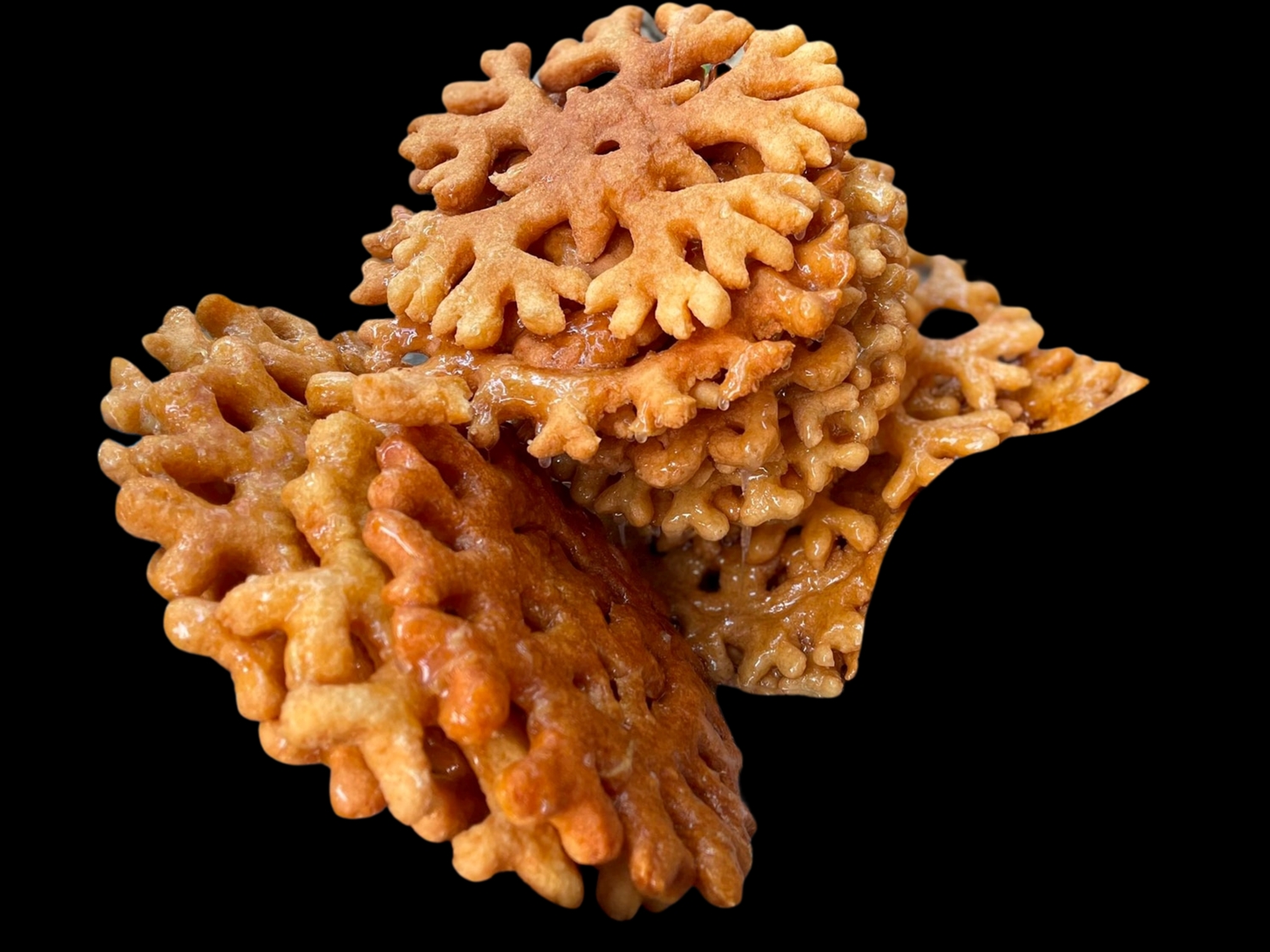 Ginrong Laya cake
The ginger cake is associated with the legend of a devoted wife awaiting her husband’s return. The story goes that the husband had gone off to war and failed to return, leaving his wife to wait for him in weary longing. Every day, she would make Ginrong Laya cakes and take them to the seashore, entrusting them to the fish and shrimp to deliver to her husband, along with a message hoping for his swift return and their reunion. Her husband never returned, leaving the devoted wife to turn into stone by the seashore, while the cakes transformed into coral growing in dense clusters on the seabed. Another version of the tale tells of a wife waiting for her husband’s return from a distant journey; she prepared ginger cakes to send with a caravan of merchants, hoping that the spicy warmth of the ginger would let him know her love remained steadfast. Regardless of the variation, these stories imbue the cake with profound human significance, transforming cuisine into a language of emotion, love and patient longing.
It is no coincidence that ginger-shaped cakes hold a place of honor on altars and offering trays during Kate - the most important festival of the Cham people as well as at weddings. During Katê, the Cham arrange Ginrong Laya cakes around a cylindrical bamboo pillar, placing them alongside cylindrical glutinous rice cake (banh tet) and sticky rice cakes (banh nep); this arrangement symbolizes the connection between heaven and earth and between humanity and the divine. The pungent aroma of ginger wafting through the incense smoke acts as a bridge between the earthly and the sacred, expressing the Cham people's gratitude toward their ancestors. During the wedding ceremony, the cakes are prepared in pairs and placed on the ceremonial offering tray, symbolizing a steadfast and enduring marital bond.
As a cake imbued with faith, the Cham people do not consume Ginrong Laya merely as a casual snack, but rather partake in it with a spirit of reverence. In Cham villages, making these cakes is a communal endeavor: elders instruct others on mixing the batter and seasoning it with ginger, the youth assist with frying and the youngest tend the fire. The warmth of the ginger blends with the warmth of neighborly bonds and human connection, transforming Ginrong Laya into a thread that unites generations and binds the community together.
From a culinary perspective, the ginger cake embodies the Cham philosophy of “simplicity meeting sophistication”. The ingredients - glutinous rice, eggs, sugar, rice yeast and ginger are all readily available around the home. Yet, crafting a cake that is crispy, aromatic, and delicately sweet without being cloying requires skill, intuition, and patience. Cham women are remarkably skillful; they knead the glutinous rice flour, chicken eggs, fresh ginger, sugar and rice yeast with boiling water. Next, the dough is pounded until smooth in a mortar, then taken out in small handfuls to be shaped into cakes. Once shaped, the cakes are deep-fried in oil until golden and crispy. Finally, they are dipped in sugar syrup to create a smooth, glossy white coating that looks truly eye-catching. It may seem simple, but creating beautiful, delicious ginger cakes requires meticulous care and attention at every stage of preparation. The artisan must be deeply focused to shape the cakes with perfect balance and delicate, fluid details reminiscent of coral fronds. Such meticulous craftsmanship embodies the essence of artisanal culture, where value lies not in material worth but in the heart poured into the work. The Cham people do not separate cuisine from spiritual belief; they view food not merely as sustenance but as a form of spiritual expression and a philosophy of life: “Eat with gratitude; working to uphold moral principles”.
Crispy and aromatic, Ginrong Laya ginger cakes leave a lasting impression on travelers exploring Cham culture. From the humble ginger root, the Cham people have crafted a cultural symbol - a harmonious blend of cuisine, spirituality, art and the human spirit. Ginrong Laya offers a profound lesson on living in harmony with nature, with one another, and with one’s roots. More than just the “soul of the countryside”, the ginger cake has the potential to become a signature feature of Cham festivals - an experience where visitors can touch the heritage and connect with the Cham people through the warm spiciness of ginger, the fragrant chewiness of sticky rice and the delicate sweetness of sugar, all skillfully blended by the hands of Cham women./.
