Keywords: Khmer people; Cultural preservation; Policy.
1. Overview of the Khmer community and culture
Among the 53 ethnic minority groups in Vietnam, the Khmer people constitute a significant population of over 1.3 million, residing primarily in the Mekong Delta. They have a long-standing history in the region, living in communities interspersed with the Kinh, Hoa and various other ethnic groups. The majority of the Khmer people inhabit remote, mountainous, or border areas, where they are mainly engaged in agriculture, while a smaller portion earns a living through services and trade. Theravada Buddhism is the primary religion of the Khmer people. Buddhist culture exerts a profound influence on spiritual life, shaping the thoughts and sentiments of the local community. Currently, the entire region is home to over 450 Theravada Buddhist temples of the Khmer tradition. Specifically, there are more than 140 such temples in Vinh Long province, over 90 in Can Tho city and Soc Trang province combined, and more than 70 in An Giang province. The system of Khmer temples plays a vital role in community life; a temple serves as the heart of each Khmer village or hamlet and every such settlement is expected to have one. Contributing to the construction of a temple is regarded, according to Buddhist belief, as an investment in one’s eternal existence and future lifetimes. The life of the Khmer people is inextricably linked to the temple. Khmer youth spend time at the temple to study moral principles and cultivate their character, a practice also viewed as a way to honor their parents and repay the debt of gratitude for their upbringing. Throughout their adult lives, they continue to turn to the temple as a sanctuary for their spiritual well-being and in their later years, they often wish to be laid to rest within the temple grounds, so that their souls may find peace. Therefore, Khmer pagodas serve not only as centers for religious and spiritual life but also as places for preserving and teaching the Khmer language and script, safeguarding ancient texts and folk arts, providing moral education and upholding traditional cultural values for generations of the Khmer people. Today, these Khmer pagodas function as “living museums” of Khmer culture.
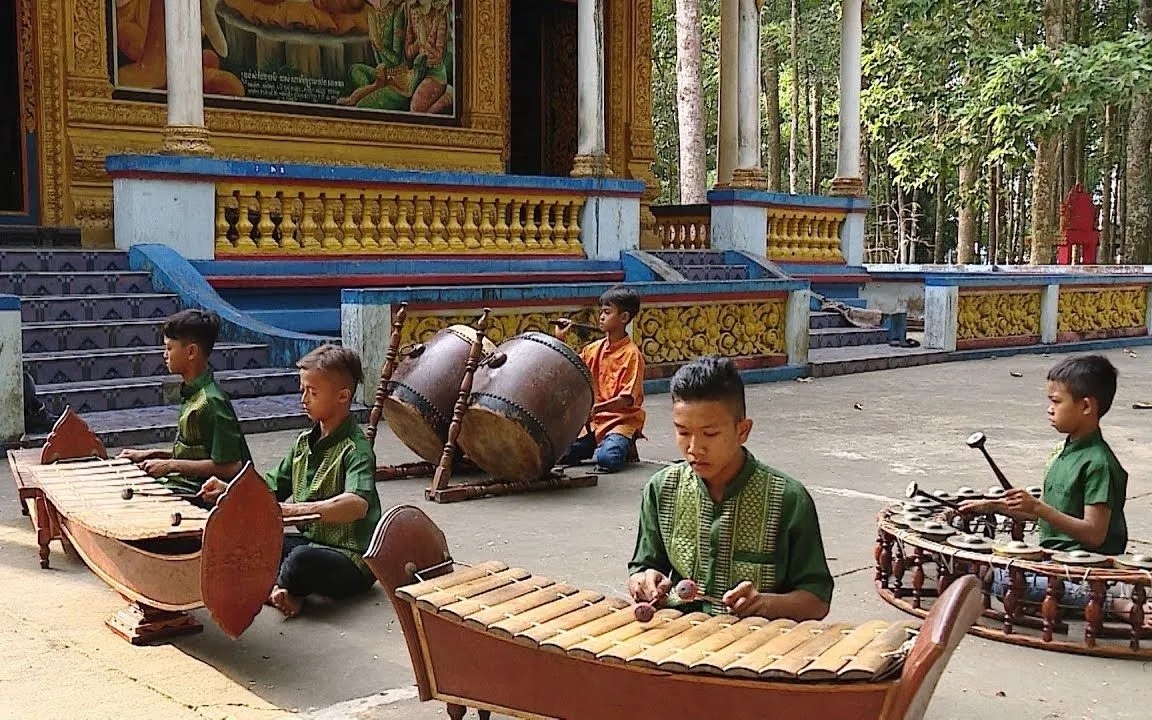 The younger generation of the Khmer people is being entrusted with the practice and preservation of their ethnic cultural heritage
For the Khmer people in the Southwestern region, the cultural landscape is rooted in an organic relationship between the hamlet, village, the family unit, and the Theravada Buddhist temple. Over generations, the community has cultivated a diverse and rich cultural heritage, an intricate blend of ethnic identity and religious faith encompassing traditional festivals, language and script, folk performing arts, indigenous knowledge, traditional crafts and unique community cultural institutions. Together, these elements contribute to the diversity and unity of Vietnamese culture as a whole.
In addition, traditional festivals such as Chol Chnam Thmay, Sene Dolta, Ooc Om Boc, the Moon-worshipping ceremony, Ngo boat racing and Dua Tpeng (draining a pond to catch fish) continue to be widely observed in localities with significant Khmer ethnic populations. These are not merely religious or community cultural activities; they also serve as a setting for the practice and transmission of various traditional art forms, such as Du ke, Ro bam, the five-tone ensemble music, Aday singing, the Chan (demon) dance, Rom vong and Lam thon dances… Many types of cultural heritage of the Khmer people have been included in the National Intangible Cultural Heritage List such as: Du ke art, Ro hash art, Ooc Om Boc festival, five-syllable folk music performance art, flat green rice making craft, folk dance art. This is an important basis for implementing activities to preserve, restore and promote traditional cultural values in the current period.
1. Some results of preserving and promoting Khmer ethnic cultural values
For ethnic minorities in general and the Khmer people in particular, culture serves as an ethnic identifier, a factor that sustains community cohesion, ensures historical continuity, and contributes to enriching the nation’s cultural identity. Resolution No. 80-NQ/TW, issued by the Politburo on January 7, 2026, regarding the development of Vietnamese culture, further emphasizes that culture acts as an “important endogenous resource, a powerful driving force, a pillar and a regulatory system for the rapid and sustainable development of the country”.
Over the years, the Party and the State have issued numerous guidelines and policies aimed at preserving and promoting the cultural values of ethnic minority groups. Conclusion No. 65-KL/TW, dated October 30th, 2019, issued by the Politburo regarding the continued implementation of Resolution No. 24-NQ/TW on ethnic affairs in the new context, emphasizes the necessity of preserving the languages, scripts, festivals, traditional knowledge and traditional arts of ethnic minority communities, as well as increasing investment in the culture of ethnic minority areas. On January 10th, 2018, the Secretariat issued Directive No. 19-CT/TW regarding the strengthening of work among the Khmer ethnic community in the new context. This is the most significant thematic document concerning the Khmer people in Southern Vietnam. The directive calls for the preservation and promotion of the cultural identity of the Khmer ethnic group; investment in the development of grassroots cultural institutions; the maintenance and advancement of traditional cultural festivals; the protection of cultural heritage, including pagodas, alongside the construction of community cultural centers in areas inhabited by the Khmer people; the development of mechanisms and policies to support the repair and restoration of pagodas for the Khmer community; and the establishment of unified curricula and regulations regarding teaching content and admissions for Pali and Khmer language supplementary schools at various educational levels, as well as for the Khmer Theravada Buddhist Academy…
Directive No. 19-CT/TW of the Secretariat has been implemented comprehensively in localities with large Khmer ethnic populations, integrated with tasks related to socio-economic development, sustainable poverty reduction, the construction of new rural areas and the strengthening of the great national unity bloc. Initiatives for the preservation of Khmer culture continue to be integrated into the National Target Program for Socio-Economic Development in Ethnic Minority and Mountainous Areas for the period of 2021-2030, most notably through Project 6, titled “Preserving and Promoting the Fine Traditional Cultural Values of Ethnic Minorities in Association with Tourism Development” and have yielded significant results.
Firstly, regarding the restoration, preservation and enhancement of the architectural systems of Theravada Buddhist pagodas and Khmer cultural institutions: these pagodas have undergone restoration efforts that remain faithful to their original traditional architectural designs, preserving the intricate carvings and decorative motifs characteristic of the Khmer culture in Southern Vietnam. Many historic pagodas such as the Bat Pagoda (Chua Doi), Khleang Pagoda (Can Tho city), Ang Pagoda (Vinh Long province), Siem Can Pagoda (Ca Mau province) and Xvayton Pagoda (An Giang province) possess significant architectural and artistic value and have been officially designated as national or provincial-level heritage sites.
Cultural institutions in regions inhabited by the Khmer ethnic community have received attention from local authorities, who have invested in their upgrading and the construction of new facilities. During the period of 2021-2025 as part of “Project 6” (focused on preserving and promoting the positive traditional cultural values of ethnic minorities in connection with tourism development) under the National Target Program for socio-economic development in ethnic minority and mountainous areas, localities have prioritized the preservation of cultural heritage alongside economic and tourism development. Khmer cultural institutions have received investment for restoration, upgrades and new construction to meet the needs of the people. Certain heritage sites now feature Khmer cultural exhibition halls, bilingual Vietnamese-Khmer signage, and schools for the study of the Pali and Khmer languages, all of which have helped promote the traditional cultural values of the Khmer community to the rest of the nation and to international visitors.
Secondly, local authorities have prioritized the preservation and promotion of intangible cultural values, as well as the inventorying, collection, research and scientific documentation of the cultural heritage of the Khmer ethnic group. Numerous traditional art forms, folk festivals, forms of traditional knowledge and traditional crafts have been restored, preserved and incorporated into the National List of Intangible Cultural Heritage. Localities with significant Khmer populations continue to maintain grassroots performing arts troupes, traditional five-tone ensemble music clubs and classes dedicated to teaching folk dance, Du ke and Ro bam theater, as well as the Khmer language and script. Some areas have effectively implemented models for cultural transmission within the community, integrated with the system of Theravada Buddhist pagodas. For instance, the Can Tho city is home to hundreds of grassroots performing arts groups that regularly organize community cultural exchanges and support the preservation of traditional Khmer festivals. In various parts of the city, there are folk art clubs that offer instruction in traditional Khmer five-tone ensemble music and Khmer folk dance. The Ooc Om Boc Festival featuring Ngo boat racing is organized by the city and has evolved into a national-scale cultural and tourism event, attracting large numbers of local residents and visitors alike.
Vĩnh Long province hosts numerous initiatives for teaching the Khmer language and preserving traditional Khmer folk arts. Significant attention has been directed toward research and the development of human resources in the field of Khmer culture, primarily through the University of Khmer Language, Culture and Arts of Southern Vietnam and the School of Humanities at Tra Vinh University - key institutions currently dedicated to the study and preservation of traditional Khmer culture. These institutions offer Khmer language training, conduct research on Khmer culture, collect ancient manuscripts, develop educational curricula and support the preservation of various traditional Khmer art forms.
Ho Chi Minh City has implemented various initiatives to preserve Khmer culture, including supporting the organization of the Chol Chnam Thmay and Sene Dolta festivals, hosting Khmer cultural exchange events, conducting inventories of intangible cultural heritage, showcasing Khmer folk arts and providing support for the preservation of traditional Khmer musical instruments, attire and other cultural values within a multicultural urban environment.
Many cultural and artistic training institutions in the Southern region have actively included Khmer cultural content in their training programs; organize research, performance and teaching of Khmer folk arts; Gradually forming a team of young Khmer intellectuals with professional qualifications, making an important contribution to the preservation of traditional national culture.
Efforts to inventory, collect, and document heritage have been carried out extensively. Many distinctive cultural forms of the Khmer people such as Du Ke and Ro Bam theater, the Ooc Om Boc festival, the performance of five-tone music, the craft of making flattened young green rice and traditional Khmer folk dance have been inscribed on the National List of Intangible Cultural Heritage. In particular, the Ooc Om Boc festival was recognized by the Ministry of Culture, Sports and Tourism as a national-level intangible cultural heritage in 2014; it attracts hundreds of thousands of visitors annually and has become a distinctive “cultural brand” of the Southern region.
Two museums dedicated to Khmer ethnic culture located in what were formerly Soc Trang province (now part of Can Tho city) and Tra Vinh province (now part of Vinh Long province) have collected, cataloged and put on display a wide array of items. These include everyday household objects, distinctive production tools, ritual and religious artifacts linked to traditional customs and festivals, as well as architectural models that recreate the traditional homes of the Khmer people. Each year, these museums attract tens of thousands of visitors, serving as distinctive cultural and tourism destinations that help both local residents and travelers gain a deeper understanding of the spiritual life, customs and cultural values of the Khmer people.
The Ministry of Culture, Sports and Tourism, in collaboration with localities in the Southwestern region, organizes the “Festival of Culture, Sports and Tourism of the Khmer Ethnic People in the Southwest” once every three years. The event is held on a rotating basis across provinces and cities with Khmer ethnic communities. Up to now, the festival has been organized eight times. These festivals have mobilized thousands of Khmer artisans, performers, and amateur athletes to take part in a wide range of activities, including performances of Du Ke and Ro Bam theater and five-tone music, showcases of traditional attire, reenactments of folk festivals, competitions in traditional sports, and the presentation of traditional cuisine and handicrafts.
Furthermore, the annual festivals of culture, sports, and tourism for the Khmer ethnic group organized in provinces such as Kien Giang, An Giang and the former Vinh Long province as well as the amateur arts festivals and traditional Khmer costume showcases held in the former Soc Trang and the former Tra Vinh, have played a significant role in reviving and preserving various forms of traditional culture, fostering cultural exchange, and promoting the image of Khmer culture to a wider public.
Traditional crafts such as mat weaving, basketry, the making of lion dance heads, and wood carving are being preserved and promoted by local authorities, with a focus on integrating them into the development of community-based tourism. Many traditional mat-weaving villages have also become destinations for tourists to visit and gain hands-on experience, which helps promote their products to a wider market. In Can Tho city, groups of traditional lion-head makers have been supported to participate in the Ooc Om Boc festival and Ngo boat races; this not only enhances the vibrant festive atmosphere but also spreads the cultural values of the local ethnic communities. Similarly, in An Giang province, some artisans specializing in wood carving and basketry have received support to form performance groups for cultural and tourism events throughout the region.
The cuisine of the Khmer people - a distinctive form of intangible cultural heritage is actively preserved and promoted by local authorities in the region. Many traditional dishes, such as Khmer-style noodle soup, mung bean and durian pastry (banh pia), flattened green rice (com dep) and fermented fish hotpot (lau mam) are widely showcased at culinary festivals, serving as cultural tourism products in Can Tho city, Vinh Long and An Giang provinces. Notably, at the Southern Traditional Cake Festival - an event organized by the city of Can Tho for the past 13 years - delicacies from the Khmer community, including flattened green rice, rice cakes (num-bon), ginger-shaped cakes (banh gung) and steamed pandan-flavored tube cakes (banh ong la dua) are presented, with their preparation methods demonstrated as a cherished cultural heritage.
The teaching and learning of the Khmer language receive significant attention and support, both within the public education system and at Buddhist pagodas. Provinces regularly organize training workshops to enhance teachers' pedagogical skills and methods for Khmer language instruction. Some provinces have also implemented specific policies such as providing subsidies for textbooks and offering financial support to those who teach the Khmer language and script during the summer which have motivated teachers and monks to dedicate themselves to preserving the language and script of the Khmer community.
The palm-leaf manuscript system is a form of ancient Khmer script that is currently being actively preserved. Khmer Theravada Buddhist temples serve as the repositories where these “treasures” are kept and safeguarded. In 2017, the “knowledge and techniques of writing on palm leaves among the Khmer people” were inscribed by the Ministry of Culture, Sports and Tourism on the national list of intangible cultural heritage. Between 2028 and 2030, An Giang province will prepare an application to have the “Knowledge and techniques of writing on palm leaves by the Khmer people of An Giang province” recognized under UNESCO’s Memory of the World Programme for the Asia-Pacific region, a clear demonstration of the province’s efforts to elevate the cultural values of this ethnic community to an international level.
2. Conclusion
The culture of the Khmer people in Southern Vietnam constitutes a distinctive and highly valuable component of the broader Vietnamese culture, a culture that is both progressive and deeply rooted in national identity. In the current context of globalization, urbanization, and digital transformation, the preservation and promotion of traditional Khmer cultural values represent more than just a cultural endeavor; they are a strategic necessity. Such efforts are essential for safeguarding ethnic identity, strengthening the great national unity, and harnessing the intrinsic power of culture to drive the nation’s development in this new time.
With the attention of the Party and the State; the active involvement of central-level agencies, ministries, and sectors, as well as local authorities; and the pivotal role played by the Khmer people themselves including their intellectuals, artisans, and religious dignitaries, the fine traditional cultural values of the Khmer people in Southern Vietnam will continue to be preserved, passed down and widely disseminated throughout social life. This will contribute to the development of an advanced Vietnamese culture, deeply imbued with national identity, in a period of growth and international integration.
References
1. Ministry of Culture, Sports and Tourism (2026), Proceedings of the Conference on the preservation and promotion of the traditional cultural values of the Khmer ethnic people.
2. Communist Party of Vietnam (2018), Directive No. 19-CT/TW dated January 10th, 2018, on strengthening work in areas inhabited by the Khmer ethnic group in the new situation.
3. Communist Party of Vietnam (2026), Resolution No. 80-NQ/TW dated January 7th, 2026, of the Politburo on the development of Vietnamese culture.
4. Vu Thi Cuc (2025), Preserving and promoting the cultural values of the Khmer People in the Mekong Delta today, Proceedings of the scientific Conference on “Implementing ethnic and religious policies in the Mekong Delta today”.
