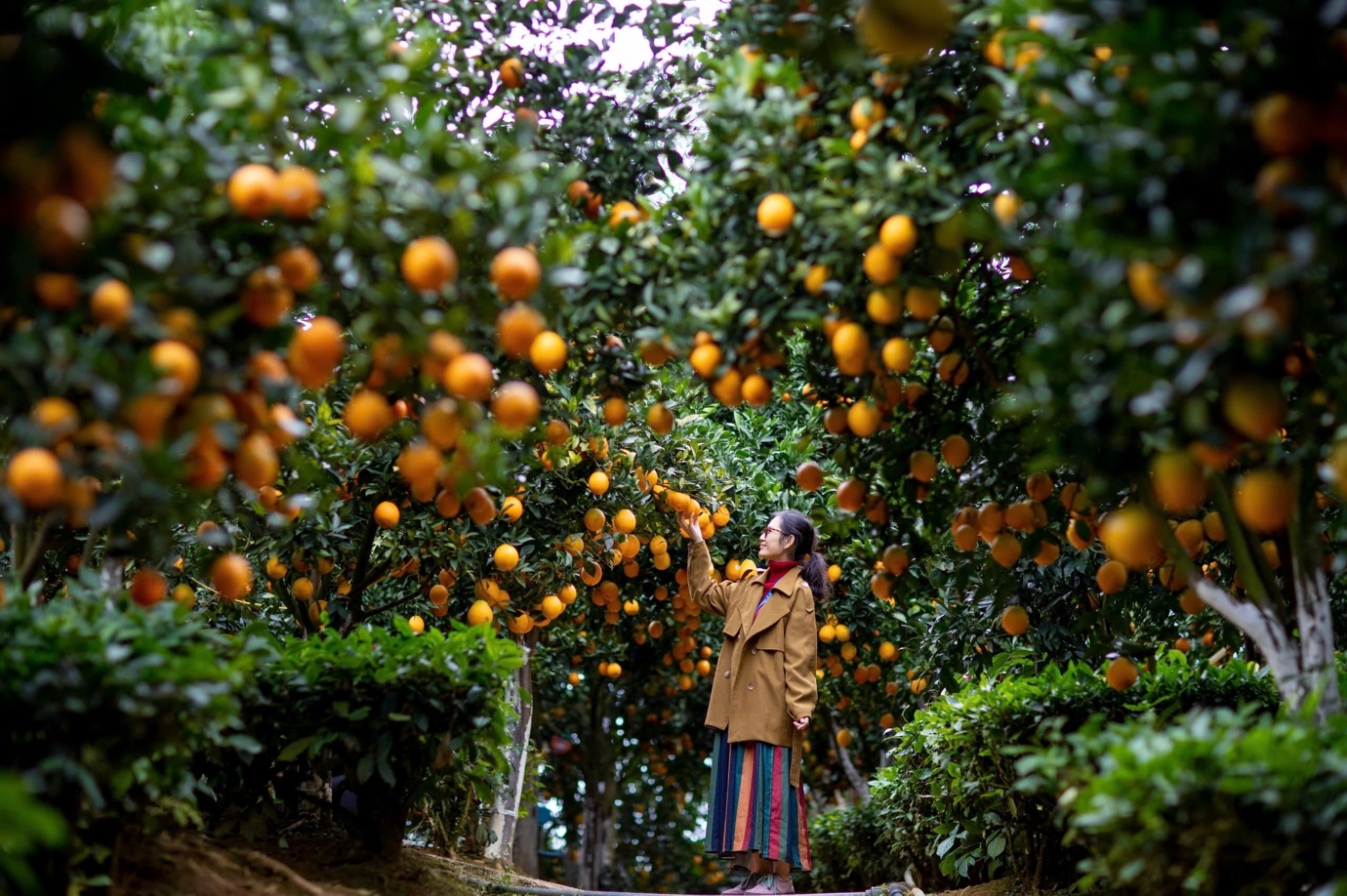
 Orange orchard in Moc Chau (Son La Province)
In recent years, ethnic minority farmers in Son La province have adopted the practice of bagging mangoes one to two months prior to harvest. As a result, the proportion of mangoes meeting Grade I standards has reached 70%. The bagging method varies depending on the specific requirements of each market. For instance, since the Chinese market prefers mangoes with a dark green appearance, growers use white bags for bagging; meanwhile, as the US market favors yellow fruit, they use double-layered paper bags. Growers have used over 50 million fruit-bagging bags across an area exceeding 4,000 hectares. The cost of the paper bags is low-ranging from just 700 to 1,000 VND and they can be reused twice. According to Ms. Quang Thi La, Director of the Lang Nga Agricultural Cooperative, while bagging the fruit increases production costs and requires more labor, it enhances the quality and value of the mangoes, thereby generating higher income.
In Son La province, mangoes have been identified as a key crop within the fruit-growing structure on sloping lands. In practice, mango cultivation yields economic returns many times higher than those of maize or cassava. At times, a single hectare of mangoes generates an income of up to 120 million VND. Many other fruit crops also yield high economic returns, such as purple passion fruit and grafted avocado (600 million VND/ha), grafted mango (500 million VND/ha), grafted longan (360 million VND/ha) and grafted “Queen” custard apple (1 billion VND/ha).
Son La province has emerged as the largest fruit-growing region in the North and the second-largest in the country surpassed only by the Mekong Delta, with a combined fruit and “Son Tra” (Mong people’s apple) cultivation area exceeding 85,000 hectares; compared to 2016, the area has increased by 219% and output by 332%. Given the high production volume, processing represents a fundamental long-term solution to alleviate seasonal pressure while simultaneously enhancing the value of agricultural products.
In the immediate term, leveraging opportunities from digital transformation offers an effective solution for farmers to address the challenge of finding market outlets for their produce right at the source during peak harvest seasons. By using videos on social media platforms and e-commerce marketplaces, farmers can easily promote and showcase their products to consumers, thereby boosting sales.
Mr. Lo Van Sao, a member of the Me Lech Cooperative, owns a “Queen” custard apple orchard. During the harvest season, his daily routine involves livestreaming on social media, allowing consumers to see the produce directly from the growing area. This practice has made selling his products much easier than before. The custard apples are harvested and packed right in the orchard before being shipped to customers to ensure freshness. Mr. Sao considers himself very fortunate; thanks to social media, product sales have been highly successful, yielding returns five to ten times greater than selling at the market or using the traditional sales methods employed by his grandparents and parents.
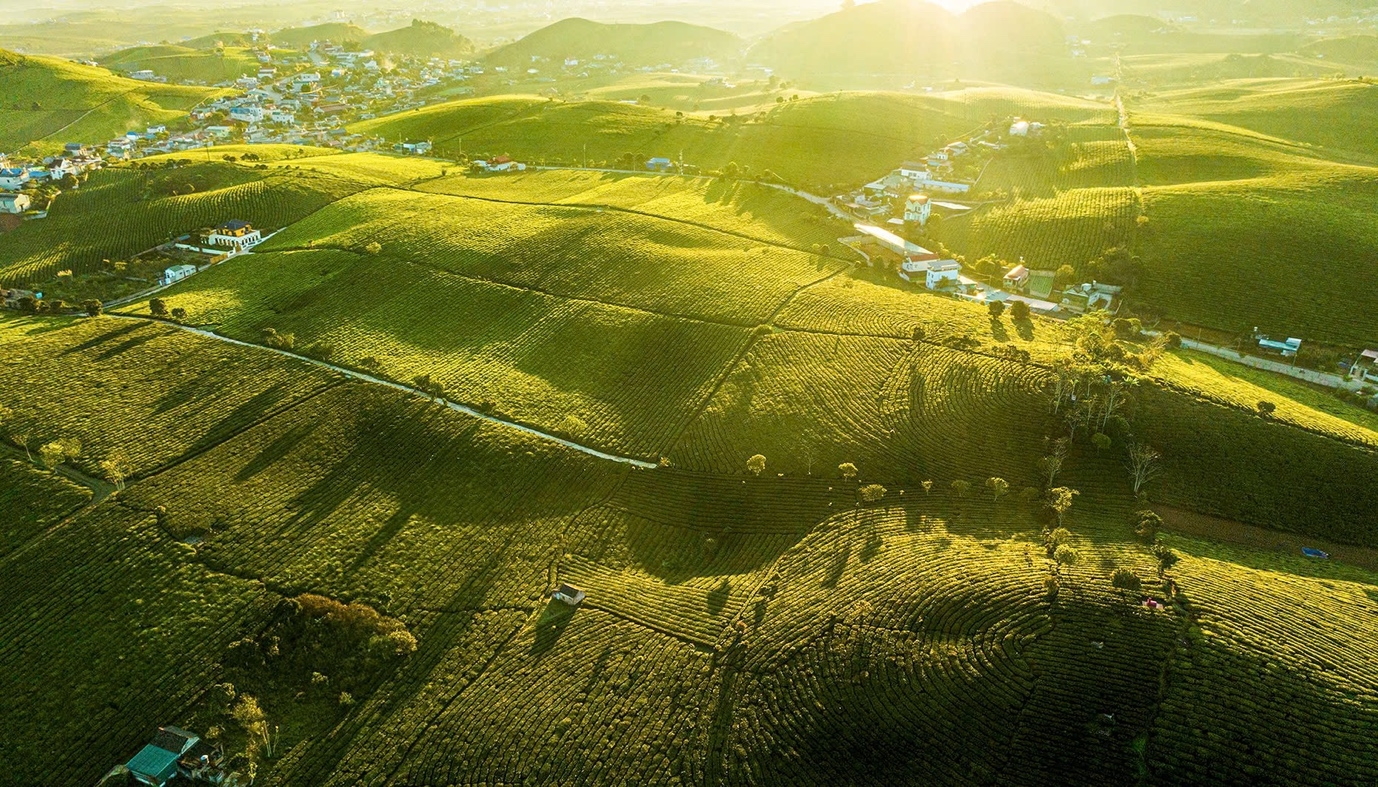 Tea hills in Son La province
The Resolution of the Congress of the Son La Provincial Party Organization for the term of 2025-2030 sets the goal of developing the province into a relatively developed province and a socio-economic hub for the Northwest sub-region, as well as an agricultural product processing center for the Northern Midlands and Mountains region.
The province has issued numerous guidelines, mechanisms and policies to achieve this goal, particularly those supporting the development of high-tech agriculture and the cultivation of fruit trees on sloping land to replace low-yield, short-term food crops. These measures aim to effectively leverage local potential and advantages, establishing concentrated fruit-growing areas and agricultural raw material zones linked to processing industries as well as domestic and export markets.
New crop varieties and scientific-technical advancements are being applied to production. The province has supported orchard renovation through grafting for nearly 26,000 households, covering an area of 13,100 hectares. Farmers in Son La province have also adopted staggered-harvesting techniques, enabling longan and mango crops to be harvested in time for the Lunar New Year fetching prices six times higher than those of the main harvest season…
Furthermore, policies such as encouraging the adoption of good production practices, the development of brands, geographical indications and product trademarks have boosted product sales and economic efficiency, generating a powerful ripple effect and driving breakthroughs in agricultural production. That is the right path to transform Son La province into a national hub for agricultural produce, enabling farmers from the province’s various ethnic groups to reap the sweet rewards of their own hard work and dedication./.
