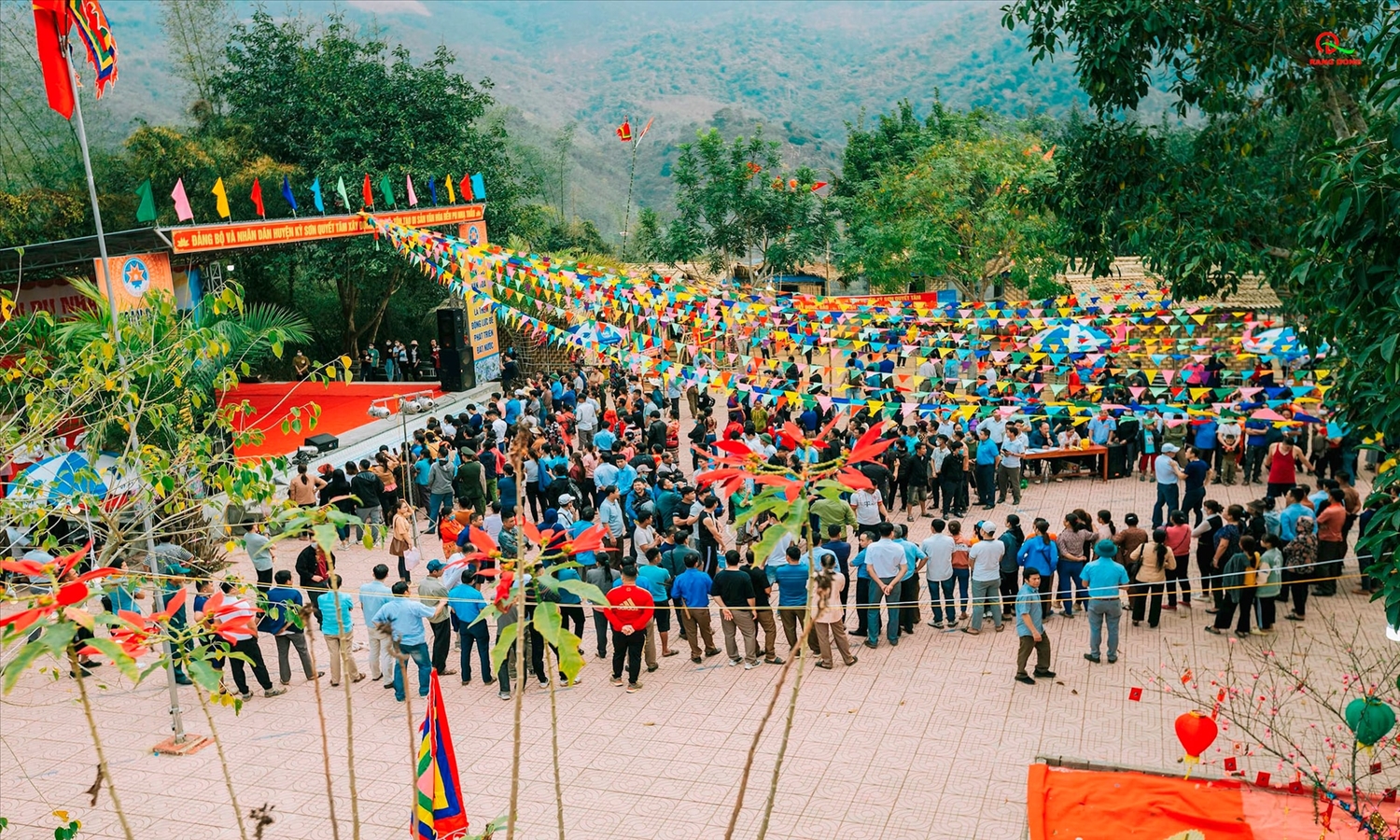
 The Pu Nha Thau temple festival is a gathering place for people of various ethnic groups in western Nghe An province at the beginning of the new year (Photo: Cong Ly Newspaper)
Legend has it that, in ancient times, Princess La Binh, daughter of Son Tinh and Mi Nuong, loved to travel throughout the mountains, forests and caves to guide and help the people and villages live peaceful and prosperous lives. When the princess passed away, she was revered by the people of the nine villages and ten districts as the Mother Goddess of the Mountains and a temple was erected in her honor.
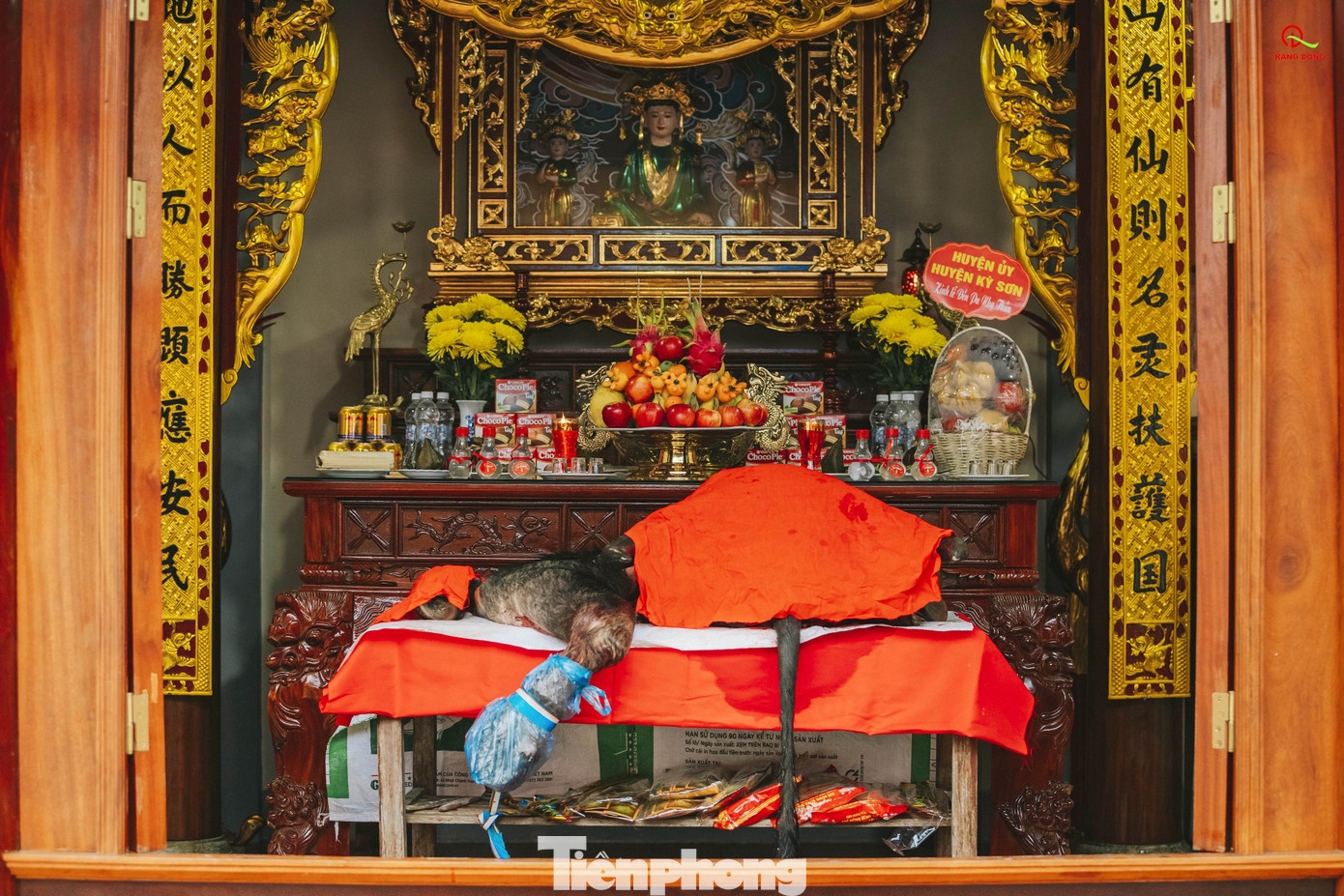 Pu Nha Thau temple is dedicated to the famous general Doan Nhu Hai and his foster mother (Photo by Rang Dong/Tien Phong)
In the 13th century, the Laotian invaders encroached upon this land. Emperor Emeritus Tran Minh Tong repeatedly led expeditions to suppress the invaders and appointed General Doan Nhu Hai to command the defense, aiming to maintain peace on the southwestern border of the country. Upon arriving in the Nam Nhung territory of Moc Chau (formerly Ky Son and Tuong Duong districts), the Tran dynasty general chose a high mountain in Na Luong village, Huu Kiem commune, as the center of his camp to both observe the enemy and train his troops.
The local people wholeheartedly supported the cause, contributing their efforts and providing food for the soldiers, encouraging their children to join the army. Among them was an elderly woman who encouraged her husband and son to participate in the fight against the enemy. He himself took on the task of donating rice to feed the army. Every day, he put all the rice he collected into a 9-handle cauldron, cooked it into rice and divided it equally among all the soldiers. He did it persistently and patiently, regardless of day or night, rain or shine. Knowing that our troops were conducting drills in the mountains, the enemy planned a surprise attack. General Doan Nhu Hai promptly discovered the plan and ordered his troops to circle around the mountainside to the river junction to intercept them, but unfortunately, they fell into an enemy ambush at the Tiet La River. The General and his soldiers were killed at this river junction.
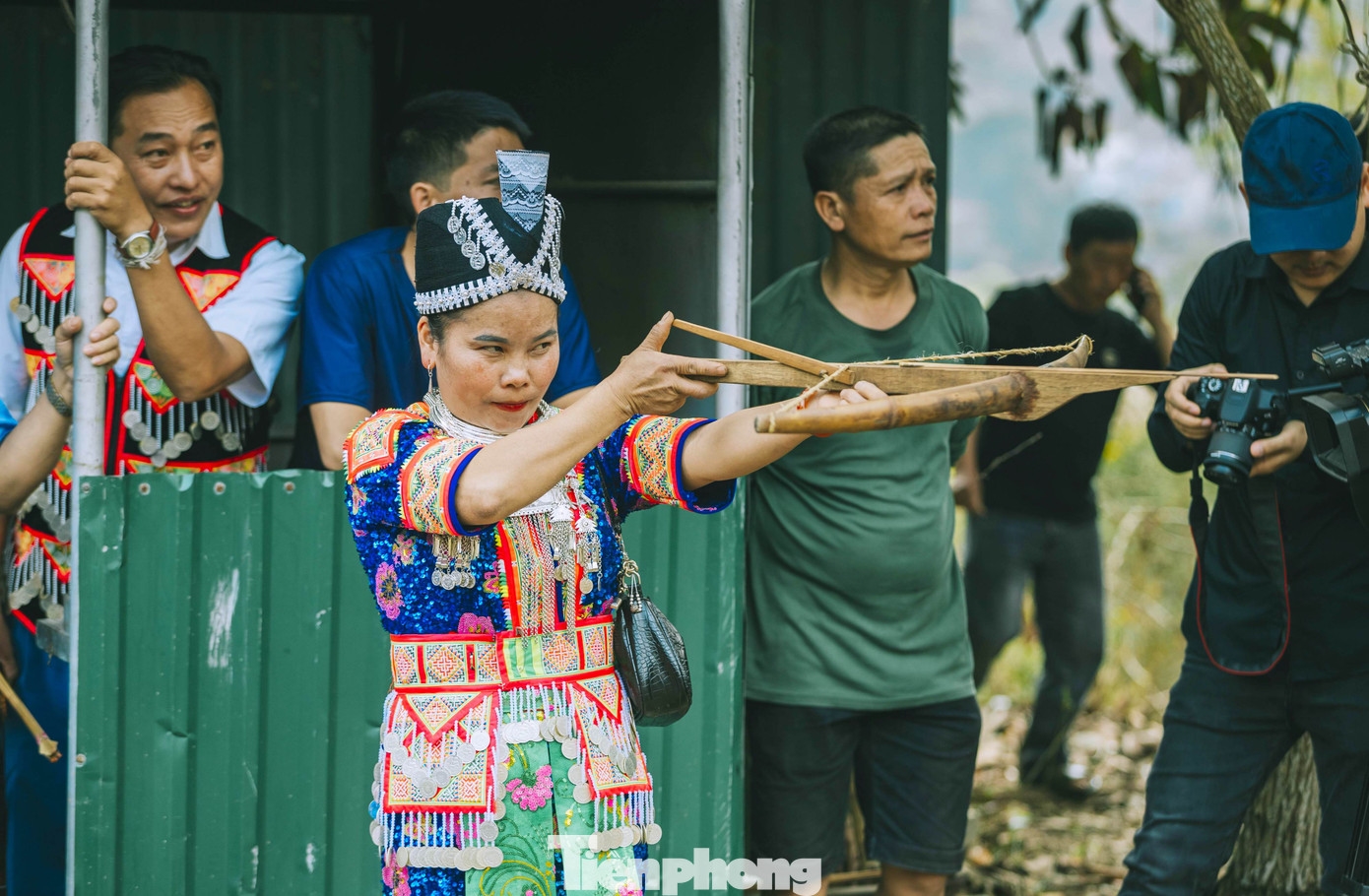 Highland women showcase their talents in the competition. (Photo: Rang Dong/Tien Phong)
Later, when the border was freed from invaders and the country returned to peace, the people of Na Luong built a temple on the mountain where the army trained to commemorate the merits of the Tran Dynasty general and the temple became known as Tran temple. Some time later, the elderly mother who had been supporting the troops also passed away. Her memorial tablet was brought by the villagers to be worshipped at the Tran temple. The mountain where the troops trained was then called Pu Nha Thau Mountain by the locals. In Thai, Pu means mountain, Nha means grandmother and Thau means old, so it translates to “Grandmother Mountain” in Vietnamese, hence the temple is also known as Pu Nha Thau temple.
Pu Nha Thau temple has been recognized as a provincial-level historical and cultural relic. The temple is cared for with incense offerings year-round and the Pu Nha Thau temple festival, held on the 24th and 25th of January each year, always attracts a large number of visitors from all over to worship. The journey to the summit of Pu Nha Thau is a journey of faith and remembrance. Despite the passage of time, the rituals and ceremonies here retain their solemnity and traditional structure. From the opening ceremony, the announcement ceremony, the procession to the grand sacrifice and the thanksgiving ceremony, all reflect the people’s deep belief in the relationship between humans and the spiritual world. On the day of the ceremony honoring the Mother Goddess of the Mountains and the generals and soldiers of the Tran Dynasty, in addition to the ancestral tablets and sacrificial objects, the procession also carries a nine-handled cauldron from Na Luong village to the temple grounds for the ceremony. The offerings are placed in a nine-compartment, nine-handled cauldron, also known as the nine-compartment, nine-handled pot. Each compartment holds the offerings from each village and the pot contains the offerings from all nine villages. The nine-compartment, nine-handled pot has become a sacred object, so at times the locals refer to it as the Chin O Chin Quai Temple (temple of Nine Compartments and Nine Handles). Perched atop the sacred Pu Nha Thau mountain, Tran Temple - a spiritual and historical landmark that has existed for 700 years serves as a spiritual anchor for the ethnic communities living in the western border region of Nghe An province, it teaches the younger generation the meaning of gratitude to their ancestors, the spirit of protecting the border and a life of close connection with the community.
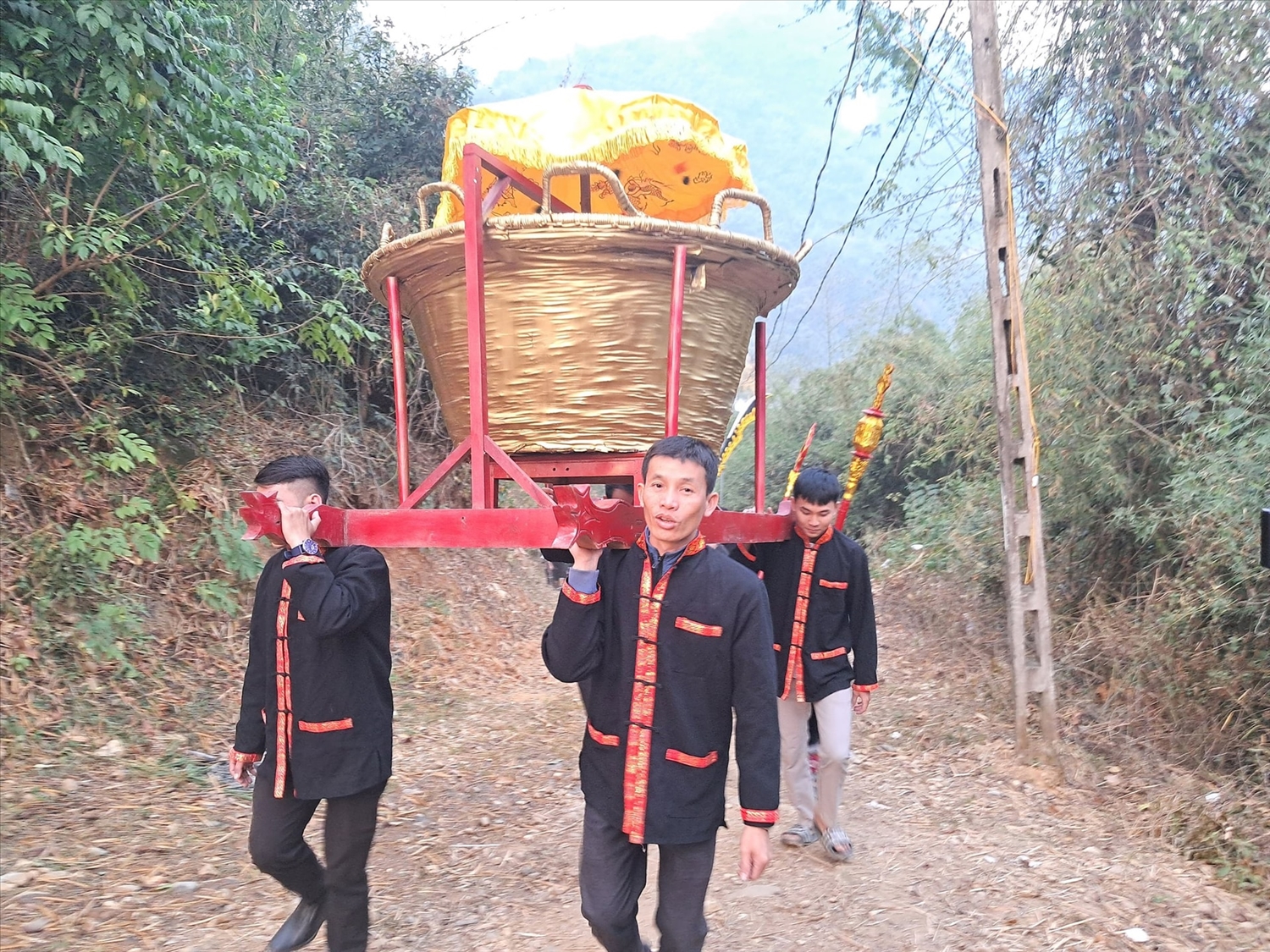 The procession of the nine-handled pot, traditionally believed to be the rice pot used by an elderly mother to cook rice to feed the royal army at that time (Photo: Cong Ly Newspaper)
Today, in addition to the solemn ceremony, the locality also organizes a lively festival with cultural and sporting activities and many folk games, such as tug-of-war, crossbow shooting, throwing the ball, stick pushing, traditional art performances, ethnic costume contests,... These activities are not only entertaining but also an effective means of transmitting the cultural values, language, costumes, and customs of many ethnic minority communities living here, helping tourists immerse themselves in the rich cultural atmosphere of the highlands./.
