From a coconut tree in the pagodar to a regional symbol
After a period of religious study in Cambodia, in 1924, Most Venerable Thach So brought back two wax coconut nuts and planted them on the grounds of Botumsakor Pagoda (located in Quarter 5, Cau Ke Town, Tra Vinh Province (now Cau Ke Commune, Vinh Long Province), where he served as the fourth abbot. However, only one of the planted nuts successfully sprouted into a tree. In 1930, the coconut tree began to bear fruit. The pagoda monks distributed this prized coconut variety to local residents. At the time, no one imagined that this very first wax coconut tree planted in Vietnam would launch a century-long journey, transforming the fruit into the renowned “white gold”.
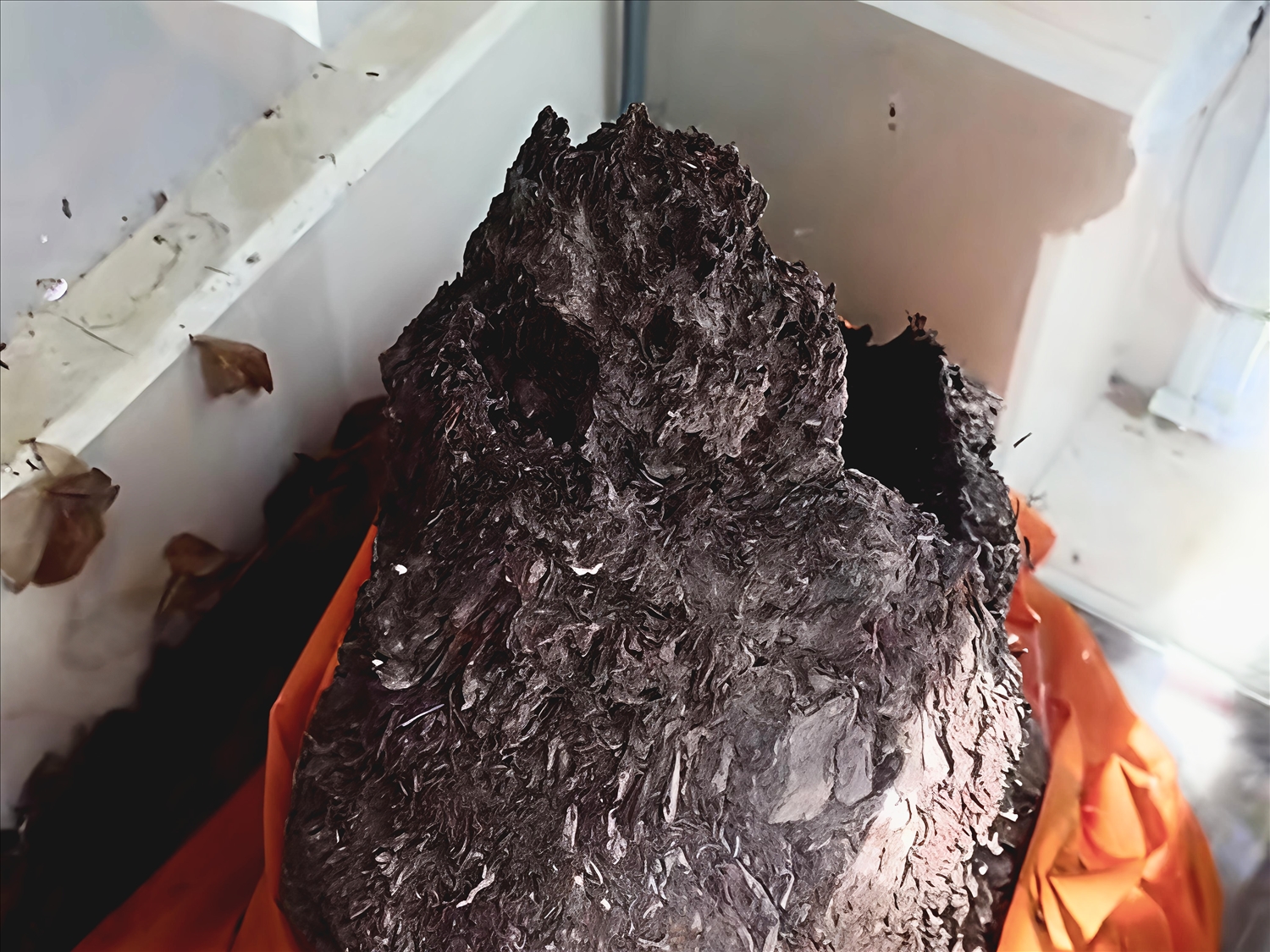 The original wax coconut tree brought to Vietnam was draped in a monk's robe, enclosed in a glass case and placed on an altar
Initially, the wax coconut tree existed quietly within the confines of the local pagoda, known only to a few Buddhists and nearby households. Later, thanks to its unique flavor and word-of-mouth recommendations, this prized variety was gradually propagated and spread throughout the Khmer, Kinh and Hoa communities. The original wax coconut tree bore abundant fruit year after year. By 1996, at the age of 72, the tree stood over 20 meters tall, towering well above the surrounding canopy and was snapped by a strong wind. The remains of the original wax coconut tree, the progenitor of all wax coconut trees in Vietnam were draped in a monk's robe by the monks of Cho pagoda, placed inside a glass cabinet and set upon a memorial altar alongside the portrait of the late Most Venerable Thach So.
Due to its exacting soil requirements, scarcity of yield and the difficulty of producing the wax characteristic in other regions, the Tra Vinh wax coconut has established a unique, unrivaled status among coconut varieties grown in Vietnam. In terms of outward appearance, the wax coconut resembles ordinary coconuts. However, inside, the thick, porridge-like flesh which is aromatic and rich, filling almost the entire fruit, accompanied by only a small amount of viscous coconut water.
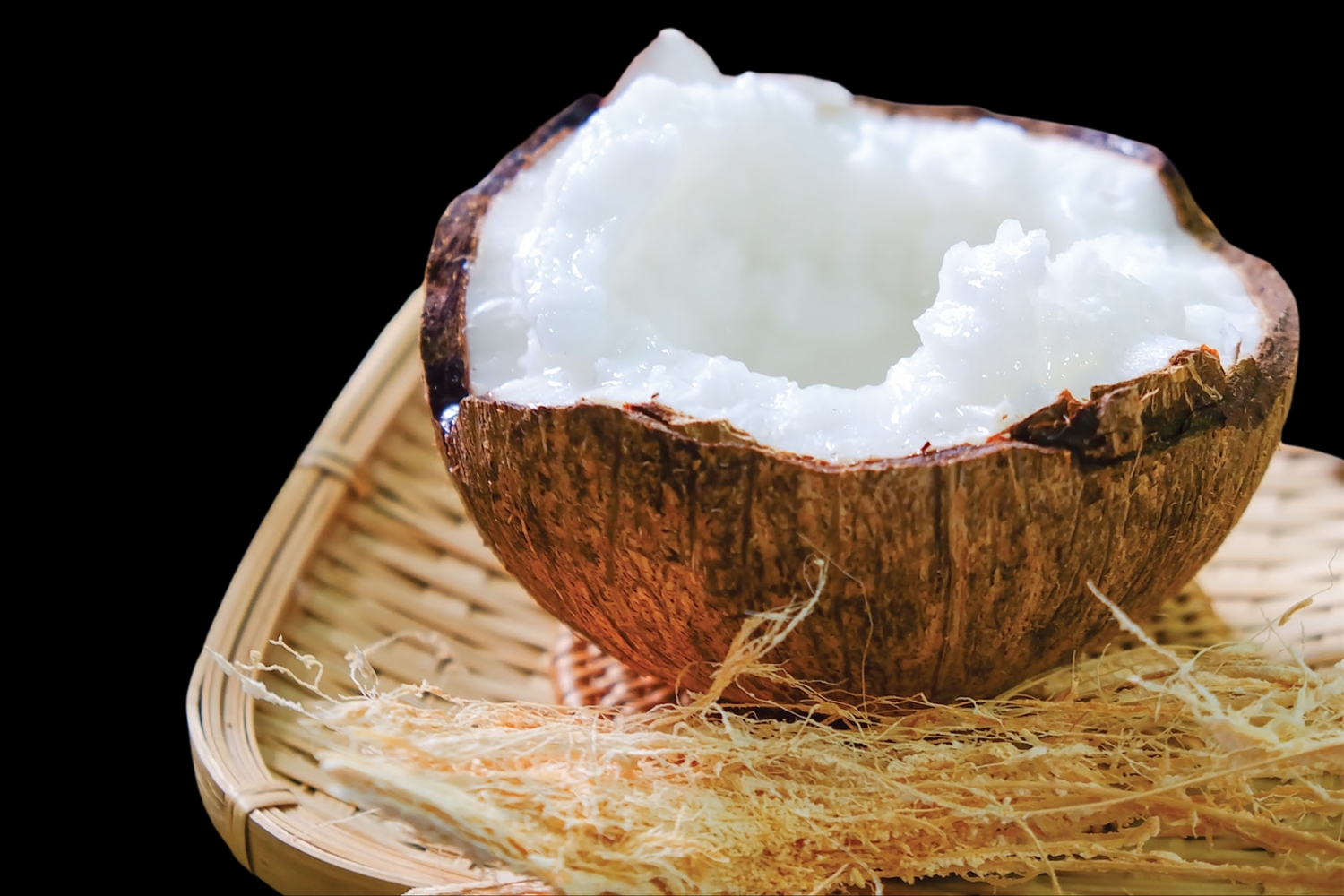 The wax coconut of Tra Vinh (now part of Vinh Long Province) has traversed a hundred-year journey to become the renowned “white gold” of the Southwestern region
In August 2012, the Cau Ke wax coconut (a variety with thick, creamy, wax-like flesh) was officially named one of Vietnam’s 50 famous specialty fruits. Notably, locals have created hundreds of delicious dishes and products from this fruit, ranging from smoothies, candies, shredded coconut and crispy dried coconut to cakes, yogurt with crispy dried coconut and wax coconut drinking yogurt… “Wax” coconut (macapuno) currently commands the highest price among coconut varieties in Vietnam, serving as a primary source of income for the residents of Cau Ke, particularly ethnic Khmer households, who own 70% of the cultivation area for this renowned local specialty. Average annual income for growers stands at approximately 320 million VND per hectare for standard “wax” coconuts and 770 million VND per hectare for embryo-cultured varieties, which yield a higher proportion of the prized “wax” flesh.
Grateful to those who sow the seeds of blessings
The late Most Venerable Thach So was the first to introduce the “wax” coconut variety for cultivation at the pagoda over a century ago, subsequently leading to its widespread propagation and thriving development among the local community. This approach embodies a profound Buddhist philosophy: sowing good seeds and allowing the wholesome fruit to spread naturally, thereby helping local people secure sustainable livelihoods, escape poverty and improve their quality of life. In recognition of these meritorious deeds, the late Most Venerable Thach So was honored by the Cau Ke Patriotic Monks’ Association with the title: “High Monk of Great Virtue - Sower of Seeds for a Blessed Land - Founding Father of the Cau Ke wax coconut”.
In 2023, to honor the contributions of the Most Venerable monk, Cau Ke Wax Coconut Processing Co., Ltd. invested over 20 billion VND to build the Tra Vinh Wax Coconut Museum. The museum houses the remains of the original wax coconut tree planted in Cau Ke, alongside a wax statue of the late Most Venerable Thach So; these serve to pay tribute to the pioneer who introduced this rare coconut variety, leaving behind a legacy that continues to flourish and sustain the livelihoods of generations of local people. This is also the first museum in Vietnam to feature a dedicated exhibition on wax coconut (macapuno), showcasing numerous artifacts, hand-drawn illustrations and valuable documents that reflect the fruit's origins and development, as well as the lives of the local Kinh, Khmer and Hoa communities.
Every year on December 13th (Solar calendar), the Museum solemnly holds a memorial ceremony for the late Most Venerable Thach So, thereby honoring the nation’s tradition of “drinking water, remembering its source”. Tourists from near and far were eager to attend, but for each person, it was not a trip but a pilgrimage to a place of memory; to be an opportunity to slow down, to see that behind the sweet taste on the tip of the tongue is the gratitude of a late Venerable who brought his great love to many sentient beings./.
