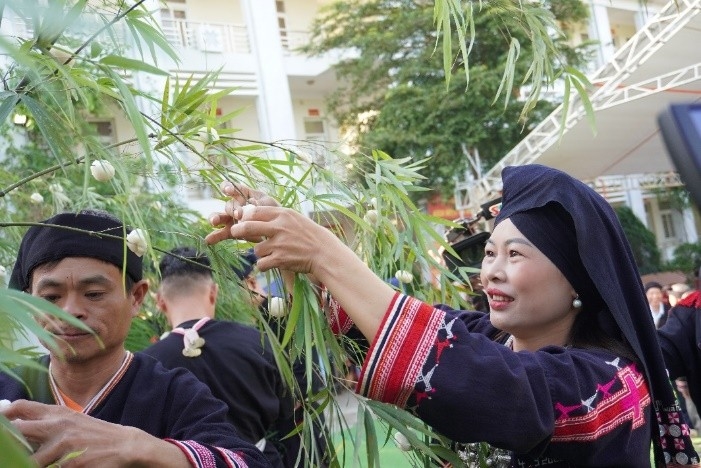
 Attaching cakes to a bamboo pole during the Pung Hieng festival
Pung Hieng is the most important festival of the Dao Tien people, held at the clan head’s house. Major clans such as the Tang, Ban, Dang, Ly and Trieu play a central role and serve as the primary practitioners of this heritage. In years selected for hosting the ceremony, the head of the lineage directs family members early on to raise a pig of a good breed. Families within the lineage take the initiative to grow ample glutinous rice for making chung cake and other glutinous rice cakes as offerings; they also assist the head of the lineage in stockpiling dry firewood for cooking and for keeping warm during the chilly days of late winter.
Towards the end of the twelfth lunar month, families would send representatives to help the clan head clean and tidy the house, arrange the furniture neatly, and clear space for the festivities. Outdoor cooking areas were set up, firewood was stacked tidily and water jars were filled to the brim...
Starting on the 29th day of the twelfth lunar month, people gather at the clan head's house to grind rice flour for making cakes and to cut bamboo and sugarcane for decorating the ancestral altar. On the morning of the 30th, the clan head and the ritual officiant solemnly perform the ceremony of hanging the devotional paintings of the Three Pure Ones (Yuqing, Shangqing and Taiqing). According to local belief, the Tam Thanh are three Taoist deities who govern the three realms: Heaven, the earthly world and the Underworld. Images of the Tam Thanh are displayed prominently beside the ancestral altar until the festival concludes.
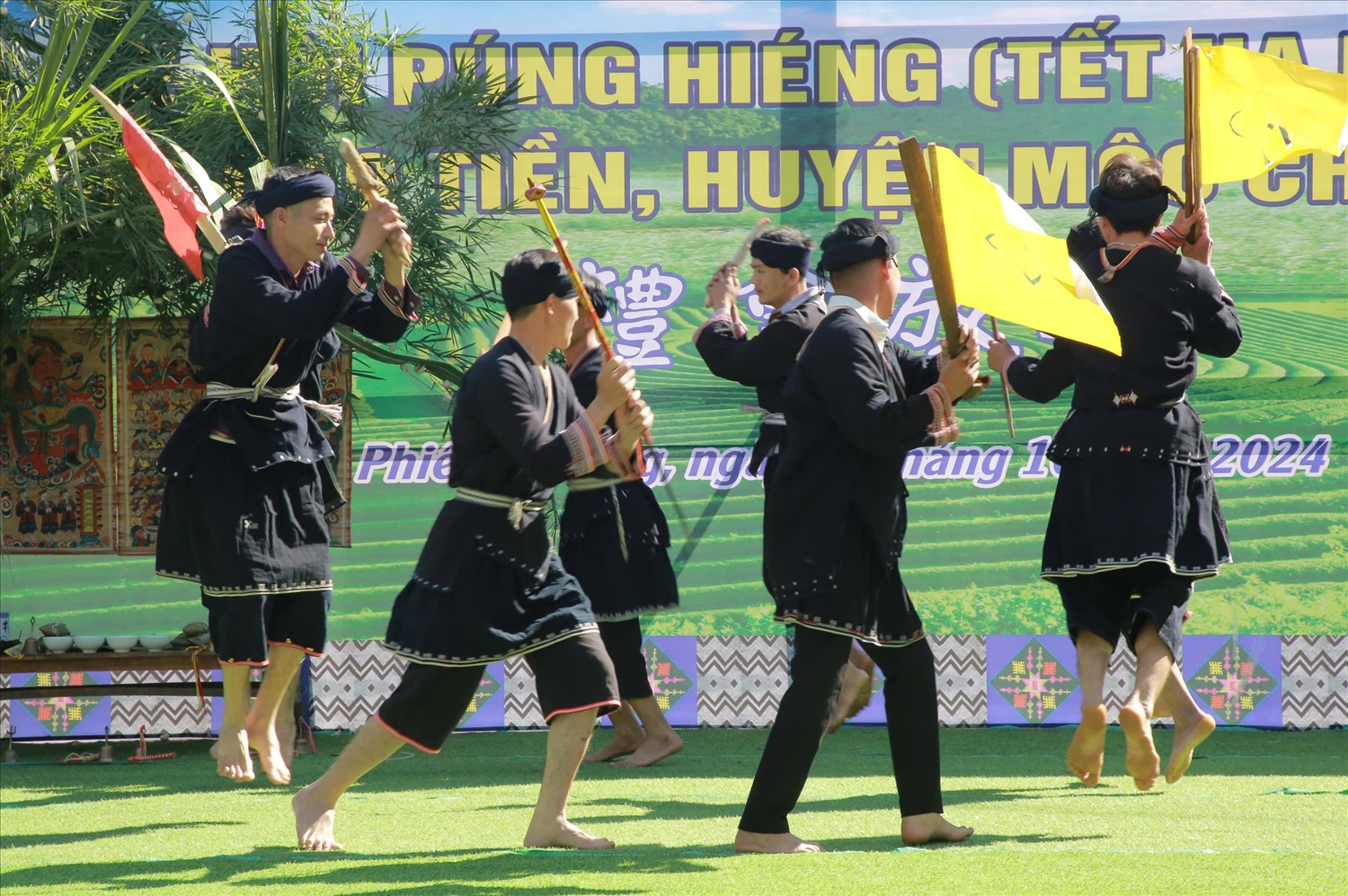 Eight dancers set out to drive away evil spirits and malevolent forces
At midday on the 30th day of the lunar year, the men slaughter pigs while the women knead dough and shape cakes. The dough is molded into round forms or shapes resembling monkeys and bears; once cooked, these are attached to bamboo branches or sugarcane stalks, symbolizing the fruits of prosperity and growth. Meanwhile, others craft spirit money and prepare musical instruments and dance props for the shaman and ritual dancers…
The event begins with the New Year opening ceremony, comprising three parts: a ritual offering conducted personally by the clan head; a bell dance to welcome the deities and ancestors to the celebration; and a communal feast, where the entire clan shares their first meal of unity during the festival.
Next comes the Troop-dispatching ceremony. Following the New Year's Eve transition, the head of the clan presides over a ritual to beseech the deities and ancestors for their blessings and protection, warding off the illnesses, diseases, natural disasters and misfortunes of the old year while welcoming a new year filled with good fortune, wisdom and talent.
Next is the ceremony of prayering for Wisdom, held to seek wisdom, good fortune, health, and talent for the descendants of the lineage.
The dance ceremony welcoming the spirits is a lively festive event where everyone joins in the bell dance to welcome the spirits and ancestors, who come to attend the celebration of bidding farewell to the old year and ushering in the new one.
The Troop Withdrawal Ceremony embodies a spirit of jubilation, welcoming good fortune into the home for the new year. Throughout the festivities, the resounding sounds of drums, gongs, cymbals, and buffalo-horn trumpets accompanied by bell dances and ritual chants in the Dao language create an atmosphere that is both sacred and spirited, reflecting reverence for ancestors while invoking peace and blessings for the community.
The Harvest Prayer Ceremony is led by the clan head. A procession carrying offerings, accompanied by gongs and drums, proceeds to the village’s Earth Deity shrine to perform rituals. The entire clan performs eighteen dances in front of the shrine before returning to the clan head’s house.
The proceedings conclude with the Year-End ceremony, presided over by the head of the lineage. He offers wine to the spirits and ancestors, burns spirit money for them and casts divination blocks to seek permission to lower the bamboo and sugarcane poles; this allows descendants to harvest the sticky rice flour attached to the poles, symbolizing the reception of blessings and good fortune, while simultaneously bidding farewell to the spirits and ancestors as they return to their abodes, thereby marking the end of the festival.
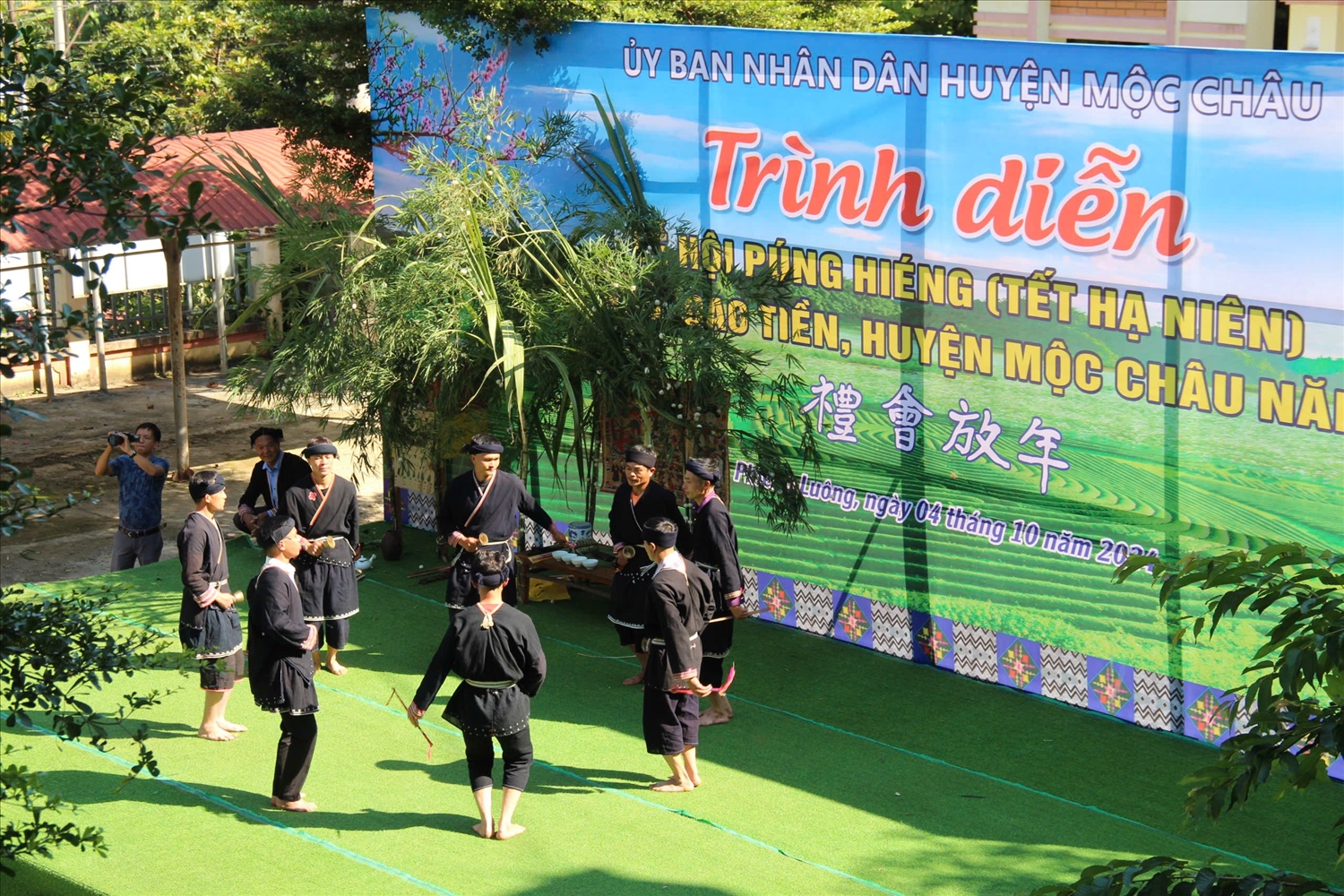 Eight soldiers return from the mission, bringing good fortune and auspiciousness
The Tet Ha Nien festival of the Dao Tien people is a religious practice centered on ancestor worship that incorporates Taoist elements and strongly reflects the group’s distinct ethnic identity. Through the festival, the tradition of “drinking water, remembering the source”, expressing gratitude for merit and praying for the blessings of supernatural forces is clearly shown. The festival also serves as an occasion for the clan and the village to strengthen their solidarity, while creating a setting for the performance, preservation and transmission of the Dao Tien people's rich heritage including ritual dances, traditional musical instruments, ceremonial chants and costumes within modern life.
In recognition of these values, the festival was inscribed on the National List of Intangible Cultural Heritage by the Ministry of Culture, Sports and Tourism on June 27th, 2025.
