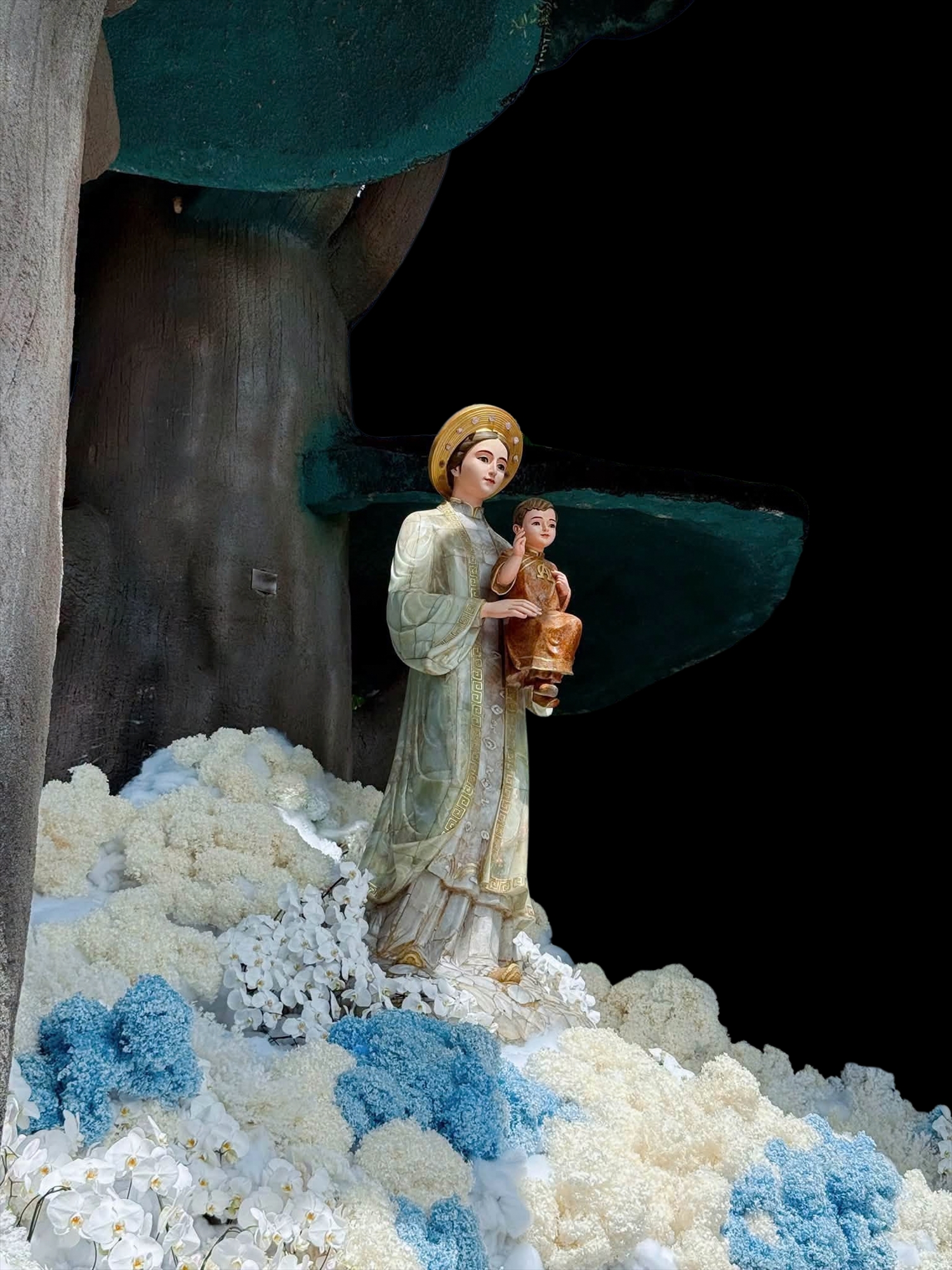
 The statue of Lady of La Vang is located at the La Vang Shrine in Quang Tri province
La Vang historical context and deciphering the place name “La Vang”
The history of the La Vang spiritual site dates back to the late 18th century (1798), during the reign of Emperor Canh Thinh, when Catholics in the Dinh Cat region (Quang Tri province) faced a crisis and sought refuge in the remote, mountainous area of La Vang. In the hardship, illness and deprivation, the community’s collective memory recalls an apparition of the Virgin Mary, who came to offer comfort and guide them in using forest leaves, brewed into a drink to heal their ailments.
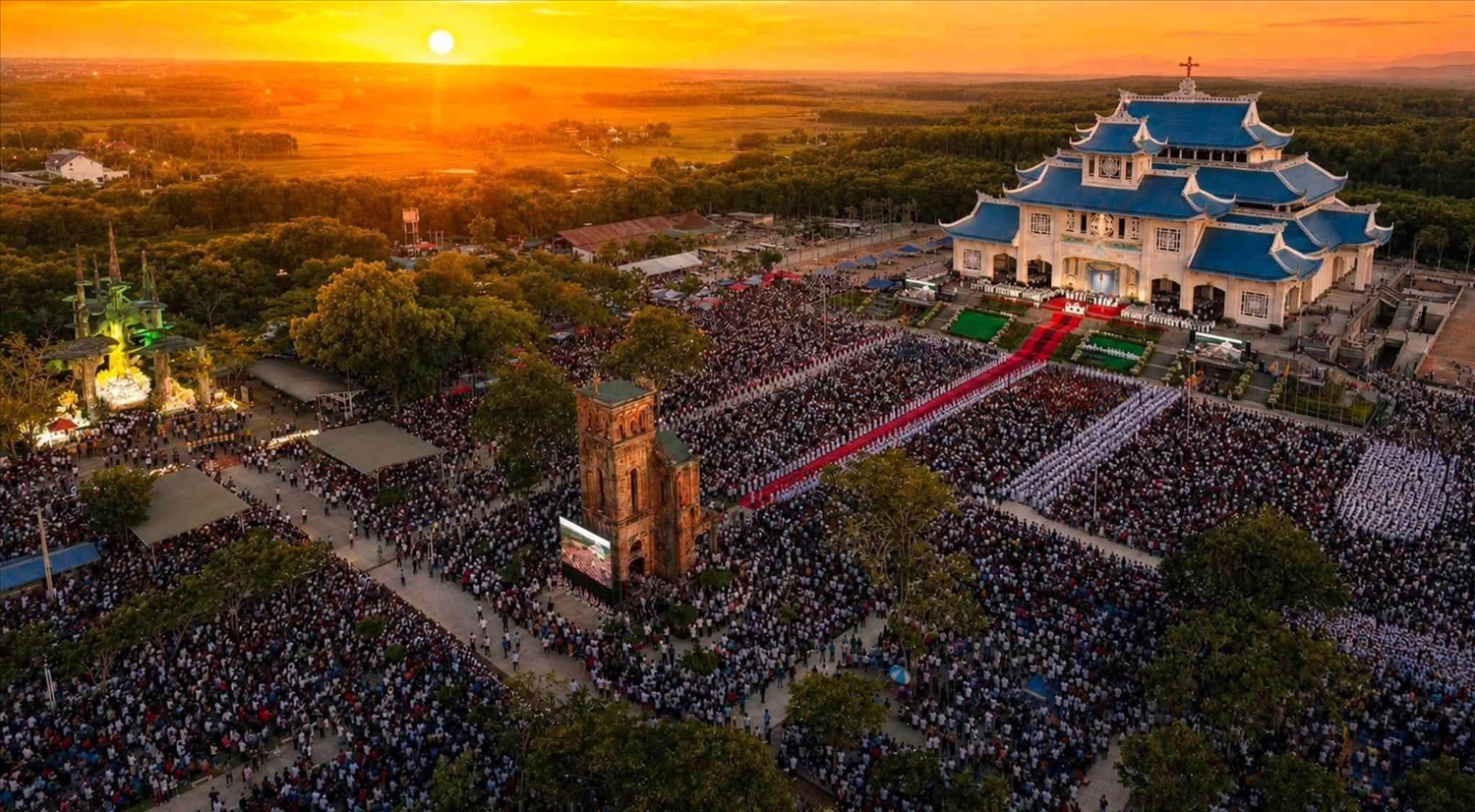 Over the three days of the event, hundreds of thousands of pilgrims gathered to attend the 2026 Lady of La Vang Pilgrimage
About the toponym “La Vang”, there are two prevailing explanations rooted in folklore and geography. The first suggests that when people sought refuge in the deep, quiet forest, they had to “La Vang” (call out loudly) to communicate with one another, ward off wild animals, and provide mutual assistance in times of trouble. The second explanation posits that the area was once abundant with “La Vang”, a type of medicinal plant traditionally used for healing. Through dialectal variation and phonetic shifts, the term “La Vang” eventually evolved into “La Vang”.
In 1901, the first Lady of La Vang Pilgrimage Congress was held to mark the inauguration of the La Vang church. In 1961, the Catholic Bishops’ Conference officially designated La Vang as a National Pilgrimage Center, establishing it as the preeminent spiritual hub for Catholicism in Vietnam.
Cultural integration through symbols and architecture
The distinctive feature that underpins the heritage value of the Lady of La Vang Pilgrimage Center is the seamless blending of universal Catholic faith with the indigenous cultural identity of Vietnam.
The statue of Lady of La Vang serves as an example of cultural adaptation: the Virgin Mary, holding the Infant Jesus, is depicted wearing a traditional Vietnamese “women’s long dress” a turban-style headpiece and wooden clogs. This stands as a quintessential illustration of cultural inculturation, a process that renders a Western spiritual archetype more relatable by aligning it with the image of a gentle, nurturing Vietnamese mother.
An architectural fusion of East and West: the ruins of an old church tower, a historical vestige left in the wake of war stand alongside the new basilica. The structure’s design bears a distinct East Asian character, featuring curved roofs and traditional intricate carvings, while still adhering to the established standards of a Catholic liturgical space.
The Three Banyan Trees Shrine: A site that recreates the historical setting associated with the legend of the Virgin Mary’s apparition, establishing a sacred space amidst nature that serves as a focal point for the prayers of the faithful.
Pilgrimage rituals and their value for social connection
The La Vang Pilgrimage Congress is held every three years in mid-August, centered around the Solemnity of the Assumption of the Blessed Virgin Mary on August 15th. The event spans several days and features a series of solemn observances, including a procession of the statue of Lady, a Pontifical High Mass, an evening of sacred music and artistic performances, a spiritual vigil, and the celebration of the Sacrament of Reconciliation.
Today, the reach of the Lady of La Vang Pilgrimage extends well beyond the purely religious sphere. The event brings together not only Catholics from 27 dioceses across the country and the Vietnamese diaspora, but also a large number of non-Catholic visitors who come in search of inner peace and to pray for national prosperity, peace and the well-being of the people. The fact that tens of thousands of people could gather and camp outdoors throughout the event while maintaining public order, security, and environmental cleanliness is a testament to the effective cooperation between the Church and local authorities. This clearly demonstrates the spirit of living a good life, both secularly and religiously and the commitment to living the Gospel within the heart of the nation.
The La Vang Pilgrimage is more than just a Catholic liturgical event; it has evolved into a distinctive cultural and spiritual phenomenon within the Quang Tri region. The existence and development of the La Vang pilgrimage site contribute meaningfully to cultural diversity, affirm the policy of freedom of belief and embody the spirit of national unity within contemporary Vietnamese society./.
