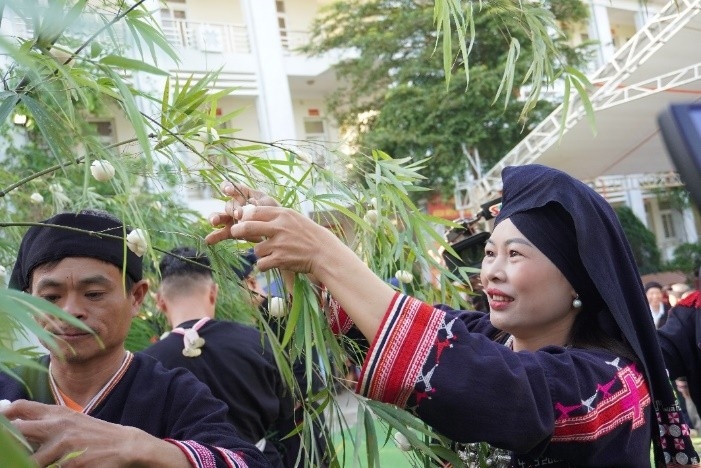
 Attaching cakes to bamboo poles during the Pung Hieng festival
Pung Hieng is the largest festival of the Dao Tien people, held at the head of the clan’s house. Large clans such as Tang, Ban, Dang, Ly and Trieu play a central role, being the main practitioners of this heritage. In the year chosen to hold the festival, the head of the clan directs his descendants to raise a good quality pig from the beginning of the year. Families within the clan proactively cultivate large quantities of glutinous rice to make banh chung (traditional Vietnamese rice cakes) and banh nep (another type of glutinous rice cake) as offerings; they also help the clan head store dry firewood for cooking or warming themselves during the cold late winter days.
At the end of the twelfth lunar month, families send people to help the clan leader clean and tidy the house, arrange furniture, and make space for the festival. Cooking stoves are set up outdoors, firewood is neatly stacked and water is stored in large containers…
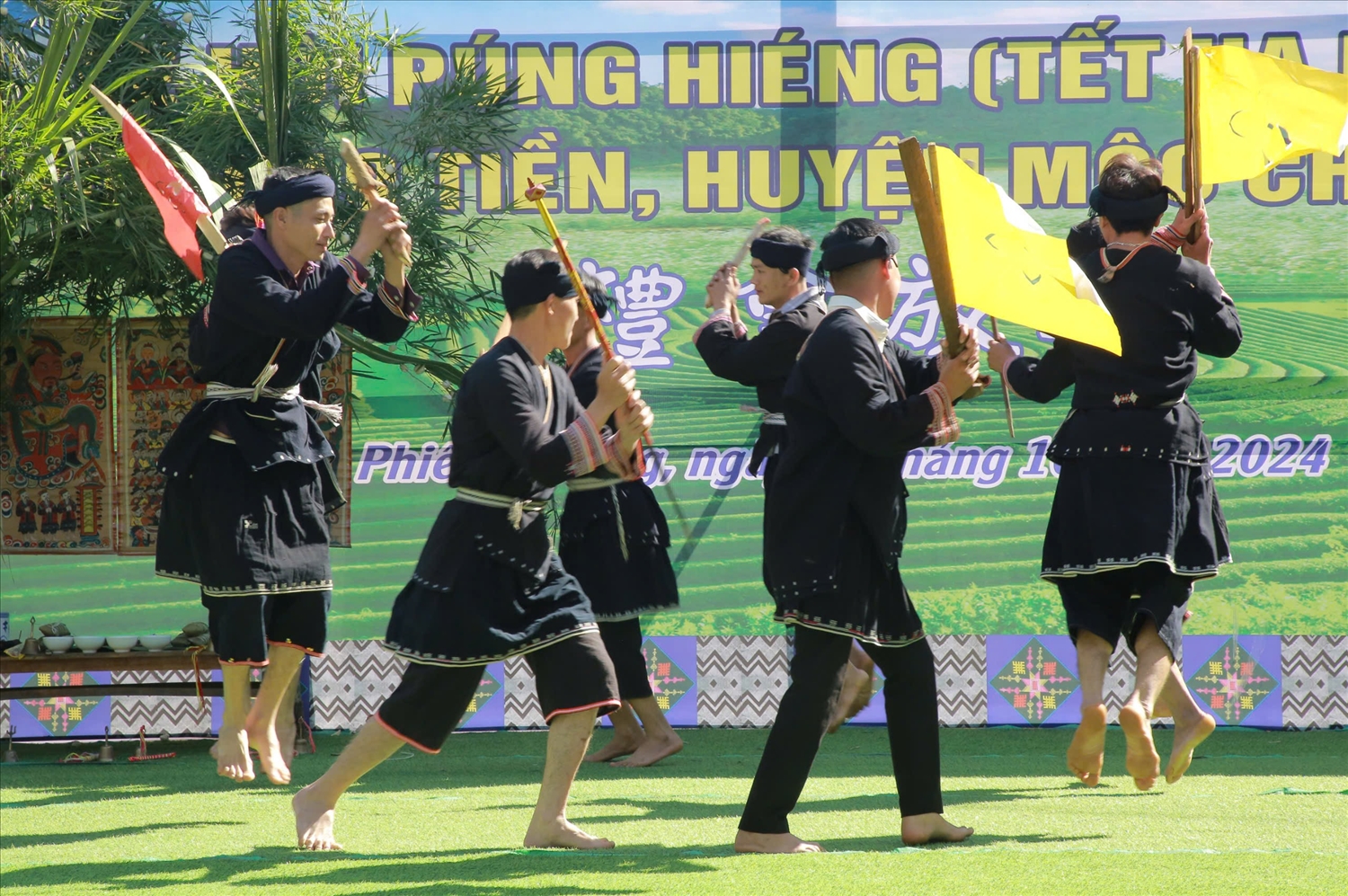 2. Eight people jump out to drive away evil spirits and bad luck
Since December 29th, everyone gathers at the family head's house to grind rice flour to prepare for making cakes, and chop bamboo and sugarcane to decorate the Ancestor altar. On the morning of December 30th, the family head and the priest carefully practice the ritual of hanging paintings to worship Tam Thanh (Ngoc Thanh, Thuong Thanh, Thai Thanh). According to local beliefs, Tam Thanh are three deities originating from Taoism who govern the three realms (heaven, earth and the underworld). Tam Thanh statues are respectfully displayed next to the ancestral altar until the end of the festival.
On the afternoon of the 30th day of the Lunar New Year, the men slaughter pigs, while the women knead dough and make cakes. The dough is molded into round balls, monkey shapes, bear shapes, etc., then cooked and attached to bamboo branches or sugarcane stalks, symbolizing prosperity and growth. Some people make paper money for the deceased, preparing musical instruments and props for the shaman and ritual dancers…
The festivities begin with the New Year’s Opening Ceremony, consisting of three parts: a ritual performed by the clan leader; a bell dance to welcome the deities and ancestors; and a feast where the entire clan shares their first communal meal of the festival.
Next is the “Departure Ceremony”. After midnight, the clan leader presides over the ceremony, praying to the gods and ancestors for blessings, to ward off illness, disease, epidemics, natural disasters and misfortunes… of the old year, welcome a new year filled with good fortune, intelligence and talent.
Next is the Ceremony of Praying for Wisdom, which signifies a prayer for intelligence, good fortune, health and talent for the descendants of the family.
The dance ceremony to welcome the Gods is a vibrant festival, everyone present dances the bell together to welcome the Gods and Ancestors to attend the ceremony to say goodbye to the old year and welcome the new year.
The Autumn Feast expresses joy and welcomes good fortune into the home in the new year. Throughout the festival, the sounds of drums, gongs, cymbals, and horns resound, combined with bell dances and ritual songs in the Dao language, creating a sacred and vibrant atmosphere, expressing reverence for ancestors while also conveying prayers for peace and blessings for the community.
The Harvest Prayer Ceremony is led by the clan leader. The procession, carrying offerings such as gongs and drums, proceeds to worship at the village’s Earth God shrine. The entire clan performs 18 dances in front of the shrine before moving to the clan leader’s house.
The ceremony concludes with the Autumn Festival, presided over by the clan leader. The clan leader offers rice wine to the deities and ancestors, burns paper money for the deities and ancestors and casts an oracle to ask for permission to cut down bamboo and sugarcane stalks so that descendants can harvest the glutinous rice flour attached to them, symbolizing receiving blessings and bestowing good fortune. Simultaneously, the ceremony bids farewell to the deities and ancestors, sending them back to their resting place, thus ending the festival.
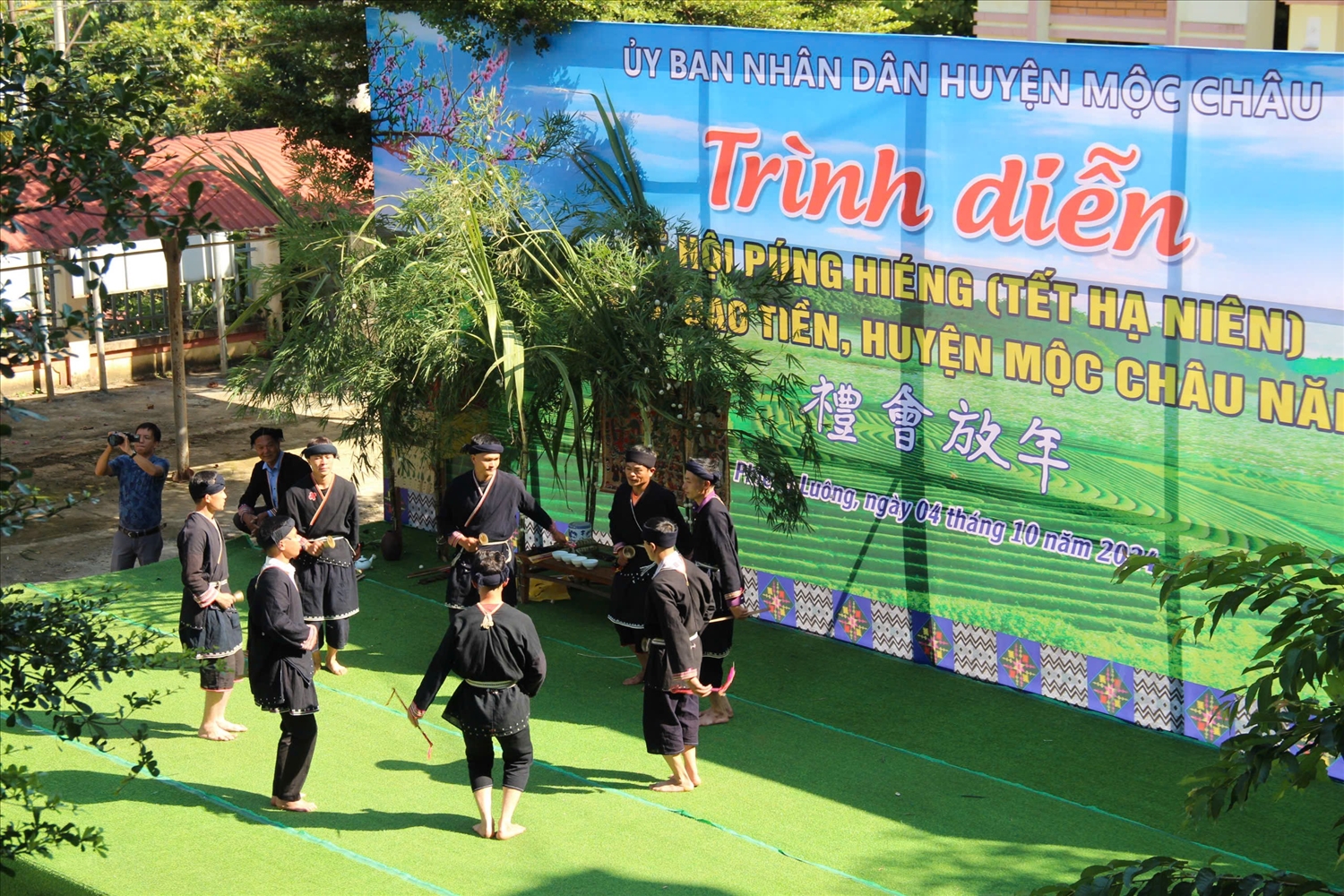 3. Eight soldiers jumping back to claim the army brings good fortune and blessings
The New Year’s Festival of the Dao Tien people is a religious activity of ancestor worship with Taoist influences, strongly reflecting the unique characteristics of the ethnic group. Through the festival, the tradition of “drinking water, remembering the source”, expressing gratitude for merits and praying for the blessings of supernatural forces is clearly demonstrated. The festival is also an opportunity for clans and villages to strengthen solidarity; to create an environment for performing, preserving and passing on the rich system of ritual dances, traditional musical instruments, chanted songs, costumes,… of the Dao Tien people in modern life.
With those values, on June 27th, 2025, the festival was inscribed by the Ministry of Culture, Sports and Tourism on the national list of intangible cultural heritage./.
