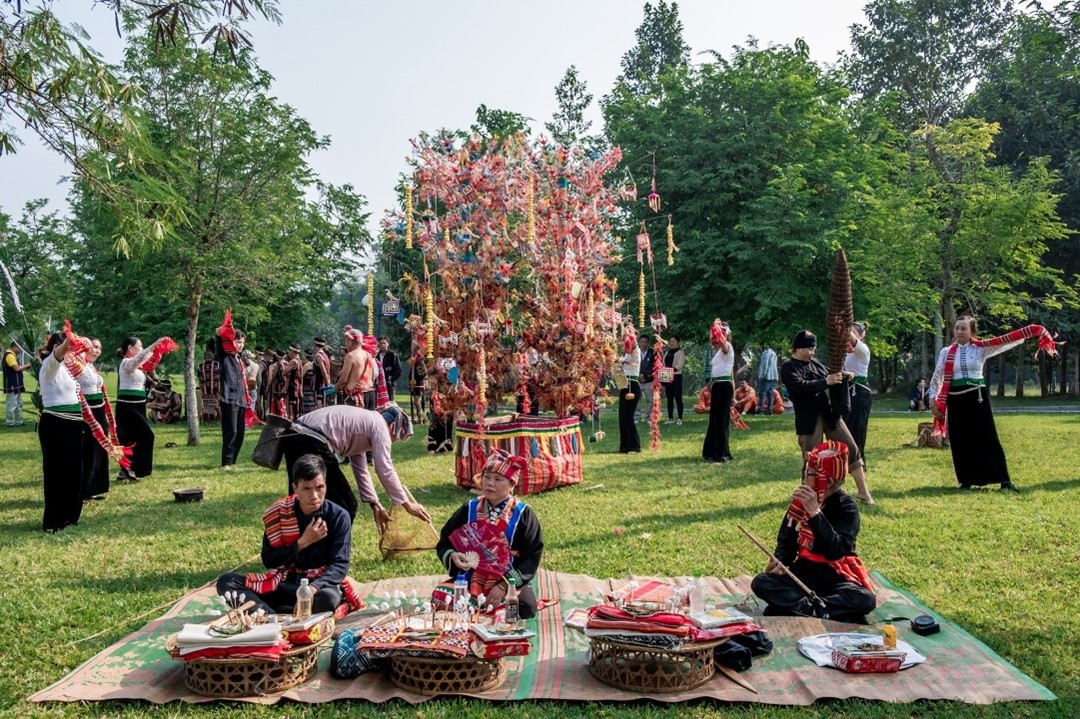
 The cultures of ethnic minorities are widely introduced through digital media
Keywords: Role; Digital media; Promoting culture; Ethnic minority people.
1. Introduction
In the current context of integration, culture is not only the spiritual foundation of society but also a crucial resource in sustainable development strategies and enhancing national standing. For Vietnam, the culture of ethnic minorities, with its diversity, uniqueness and rich humanistic values is an inseparable component of national cultural identity. However, due to the strong impacts of the market economy, cross-border cultural exchange and the rapid development of technology, many traditional cultural values of ethnic minority communities are facing the risk of disappearing. In this context, digital media has emerged as a new tool and space capable of expanding the reach of cultural promotion, overcoming geographical and temporal barriers. With its multimedia characteristics, high interactivity and global reach, digital media not only contributes to introducing the cultural values of ethnic minorities to the international public but also facilitates the direct participation of local communities in the creation, storytelling and recreation of their own culture. Through this, ethnic minority cultures are placed within the global cultural dialogue, rather than merely existing as “static heritage”.
However, the use of digital media in cultural promotion also raises many theoretical and practical issues, such as the risk of commercialization, identity distortion, inequality in access to technology and the community’s ability to master the digital space. Therefore, studying the role of digital media in promoting the culture of ethnic minorities in the context of international integration is of urgent scientific and practical significance, contributing to policy orientation and proposing solutions to effectively promote cultural values associated with sustainable development.
2. Research results
2.1. Theoretical basis
The theoretical framework for research on the role of digital media in promoting the culture of ethnic minority communities is built on the intersection of theories of communication, culture and international integration. Firstly, digital communication is understood as the totality of activities that transmit information, knowledge and values through digital technology platforms, the Internet, and online communication ecosystems. Unlike traditional communication, digital communication is characterized by its multimedia nature, two-way interaction, the ability to personalize content and its unlimited reach in terms of space and time. These characteristics create favorable conditions for cultural values, especially the cultures of communities such as ethnic minorities, to be more widely accessible in the global public space.
From a cultural studies perspective, the culture of ethnic minority communities is approached as a system of tangible and intangible values, including local knowledge, language, beliefs, festivals, performing arts and traditional lifestyles. Modern theories on cultural preservation and promotion emphasize that culture is not an immutable entity but is constantly evolving and adapting to new social and technological conditions. Therefore, promoting culture in the context of international integration should not be limited to “introducing” or “displaying”, but should aim for dialogue, exchange and co-creation of value between cultures. Digital media is the environment that strongly promotes this process.
In terms of international integration, theories of globalization and soft power show that culture is increasingly playing a central role in building a nation's image, reputation, and attractiveness. In this context, the culture of ethnic minority communities is not only a unique asset of the local community but also a cultural resource that contributes to enriching national identity in international exchanges. Digital media, with its ability to connect across borders, has become a crucial tool for proactively integrating these cultural values into the global cultural flow.
Based on the theoretical approaches mentioned above, the analytical framework of the research is built around three fundamental issues, such as: Firstly, media actors, including state management agencies, cultural and media organizations, and especially the ethnic minority communities themselves, are playing an increasingly prominent role in creating and disseminating digital cultural content. Secondly, the content and form of media focus on the digitalization process, cultural storytelling, the use of multimedia, and language appropriate for an international audience. Thirdly, the context and impact analyze the relationship between digital media, international integration and issues such as identity preservation, cultural commercialization and sustainable development.
This analytical framework allows for a comprehensive assessment of the role of digital media in promoting the culture of ethnic minority communities, at the same time clarifying the necessary conditions, limitations and directions for effectively leveraging digital communication in the context of current international integration.
2.2. The role of digital media in promoting the culture of ethnic minorities
In the context of international integration, digital media plays an increasingly important role in promoting the culture of ethnic minority communities, not only as a technical tool but also as a new socio-cultural space.
Firstly, digital media contributes to expanding the reach and audience of cultural activities. Thanks to cross-border digital platforms and social networks, cultural values that were once associated with local areas, mountainous regions and remote areas can reach the international community quickly, directly and in multiple ways. This fundamentally changes the method of cultural promotion, shifting from a passive to an active and interactive approach.
Secondly, digital media plays a crucial role in preserving, digitizing, and vividly recreating traditional cultural values. Through digital technology, the tangible and intangible cultural heritage of ethnic minority communities, such as: festivals, folklore, language and performing arts are documented, stored and transmitted through images, sounds and digital data. This process not only contributes to preserving heritage from the risk of disappearance but also creates conditions for cultural values to be “reborn” in new forms, suitable to the tastes and reception habits of the global public.
Thirdly, digital media promotes the participation and active role of ethnic minority communities in cultural promotion. Instead of merely being recipients of information, these communities are increasingly becoming storytellers, content creators and administrators of their own cultural image in the digital space. This helps reduce the risk of misinterpretation from outside, at the same time enhancing the authenticity and cultural depth of media products.
Fourthly, digital media plays a crucial role in building the national image and promoting cultural diplomacy. The culture of ethnic minorities, when effectively promoted in the digital space, contributes to enriching Vietnam’s cultural identity in the eyes of the international community, thereby increasing the nation's attractiveness and “soft power” in the context of globalization.
Fifthly, digital media also connects cultural promotion with sustainable cultural economic development and tourism, opening up opportunities for community-based tourism models, innovative cultural products and livelihoods based on identity. However, to fully realize this role, digital media needs to be properly guided and managed, ensuring a balance between promotion, preservation of identity and sustainable development in the context of international integration.
2.3. The current state of digital media in promoting the culture of ethnic minorities
In recent years, the application of digital technology to the field of culture and heritage promotion in Vietnam has made significant progress: many projects to digitize artifacts and documents and hold online exhibitions have been implemented by museums, specialized agencies and international organizations, helping to improve access to and preservation of traditional cultural values. These efforts lay the groundwork for bringing the culture of ethnic minority communities to multimedia platforms, from video and audio materials to digital performance spaces.
Digital media spaces, especially social networks, video sharing platforms, and travel portals, have become important channels for promoting regional identity, attracting tourists and connecting content creators with the market. Content produced by locals or “influencers” is increasingly influential in positioning community-based tourism products and unique cultural products. This is reflected in the trend of consuming digital content and the habit of booking tourism services based on online recommendations.
However, the current state of digital media in promoting the culture of ethnic minorities still reveals some limitations, such as: Firstly, the digital divide between urban centers and remote areas, where ethnic minority populations are concentrated, remains significant; Une uneven distribution of infrastructure, home internet access, and digital skills undermines the ability of local communities to fully participate in the production and governance of digital content. Secondly, from a governance and legal perspective, the digital space environment is being impacted by content control policies and data storage requirements; This creates the necessary regulatory mechanisms but also poses risks to creative freedom, openness, and access to the international public. At the same time, issues of copyright, local intellectual property rights and the risk of commercializing cultural values when uploaded to digital platforms remain unresolved. Thirdly, organizational capacity, ranging from inter-sectoral policies and financial resources to cooperation models between the State, businesses and the community is not synchronized, leading to fragmented and unsustainable promotional models. Therefore, although digital media has opened up many opportunities for promoting the culture of ethnic minorities in the context of integration, the current situation shows the need for a comprehensive strategy to narrow the digital divide, protecting local cultural rights and building a sustainable digital media ecosystem with the active participation of ethnic minority communities.
2.4. Challenges facing digital media in promoting the culture of ethnic minorities
Although digital media opens up many new opportunities for promoting the culture of ethnic minorities in the context of international integration, the actual implementation process is raising many issues that need to be identified and addressed thoroughly.
Firstly, there is the issue of preserving cultural identity and authenticity. In a digital environment and with intense competition for global public attention, much cultural content risks being simplified, edited or “retold” in a commercialized way, leading to a distortion of its original values and a decline in the depth of traditional culture.
Secondly, the risk of commercialization and appropriation of local cultural knowledge is becoming increasingly evident. When ethnic minority cultural elements are brought onto digital platforms, they easily become targets for economic exploitation without mechanisms to protect intellectual property rights, community interests and ensuring fair sharing of benefits. This can lead to local communities being “excluded” from benefiting from their own cultural values.
Thirdly, the digital divide and technological literacy remain major barriers. Many ethnic minority communities are limited in terms of technological infrastructure, digital communication skills, and foreign language proficiency, making it difficult for them to actively participate in the creation, management and direction of cultural content in cyberspace. As a result, the voices of these communities may be overshadowed by intermediaries.
Fourthly, the issue of managing the digital media space and guiding content poses new demands for regulatory agencies. The rapid spread of digital information facilitates cultural promotion but also carries risks of misinformation, cultural biases and value conflicts in a multicultural context.
The issues mentioned above demonstrate that digital communication in promoting the culture of ethnic minority communities needs to be approached as a complex socio-cultural process, requiring a harmonious combination of technological innovation, preservation of identity, protection of the rights of ethnic minority communities and sustainable development orientation in the context of international integration.
2.5. Orientation and solutions to enhance the role of digital communication
In order to effectively promote the role of digital media in showcasing the culture of ethnic minority communities in the context of international integration, the following basic orientations and solutions need to be implemented in a coordinated manner:
Firstly, perfecting the policy and institutional framework is a fundamental requirement, which needs to integrate the goal of promoting ethnic minority cultures into the national digital transformation strategy and the cultural development strategy. Policies must ensure the principles of respecting identity, protecting local cultural knowledge and safeguarding the legitimate rights of communities.
Secondly, enhancing the digital communication capacity of ethnic minority communities through training in technology skills, digital storytelling and foreign language use, in order to strengthen the role of the community as the main actors in creating and managing cultural content.
Thirdly, building a sustainable digital cultural media ecosystem, promoting linkages between the State, research institutions, technology companies and local communities in the production, dissemination and protection of cultural values.
Fourthly, it is necessary to orient the content and standards of communication, harmoniously combining promotion and preservation, integration and safeguarding cultural identity. The application of digital technology should be placed within a sustainable development vision, viewing digital communication not only as a tool for promotion but also as a method of protecting, enriching and spreading the cultural values of ethnic minority communities in the global cultural space.
3. Discussion
The issues mentioned above show that digital media plays an increasingly central role in promoting the culture of ethnic minorities, but its practical effectiveness depends closely on the approach and management. Digital media is not simply a technical tool to support the dissemination of cultural images, but a new social space where the relationships between local culture, community stakeholders and the global public are being restructured. Therefore, without proper scientific guidance and protection mechanisms, the digitization process could lead to the risk of commercialization and distortion of traditional cultural values.
Therefore, it is necessary to shift from a “one-way promotion” approach to “cultural dialogue and co-creation” in the context of international integration. Placing ethnic minority communities at the center of digital media not only contributes to ensuring cultural authenticity but also creates a foundation for the sustainable development of cultural values in the digital space.
4. Conclusion
In the context of international integration, digital media has been asserting its important role in promoting the culture of ethnic minority communities, contributing to expanding the reach and enhancing the value of Vietnamese cultural identity on the international stage. However, the effectiveness of digital communication is only guaranteed when the application of technology is closely linked to preserving cultural identity, protecting community rights and guiding sustainable development. Therefore, promoting the role of digital communication requires a comprehensive, humane and strategic approach in the context of current integration.
* National Defence Academy, Ministry of National Defence
** Journal of Ethnic and Religious research
References
1. Prime Minister (2020), Decision No. 749/QD-TTg dated June 3rd, 2020 approving the National Digital Transformation Program until 2025, orientation to 2030, Hanoi.
2. Dr. Nguyen Van Huan, MA. Nguyen Duy Dung (2025), Communication with sustainable development in ethnic minority and mountainous areas today, Journal of Ethnic and Religious Research, No. 4 - December.
3. Dr. Bui Thi Nhu Ngoc (2019), The impact of culture on communication activities in ethnic minority regions in Vietnam today, https://tapchicongsan.org.vn/van_hoa_xa_hoi/-/2018/54390/tac-dong-cua-van-hoa-den-hoat-dong-truyen-thong-o-vung-dan-toc-thieu-so-nuoc-ta-hien-nay.aspx#
