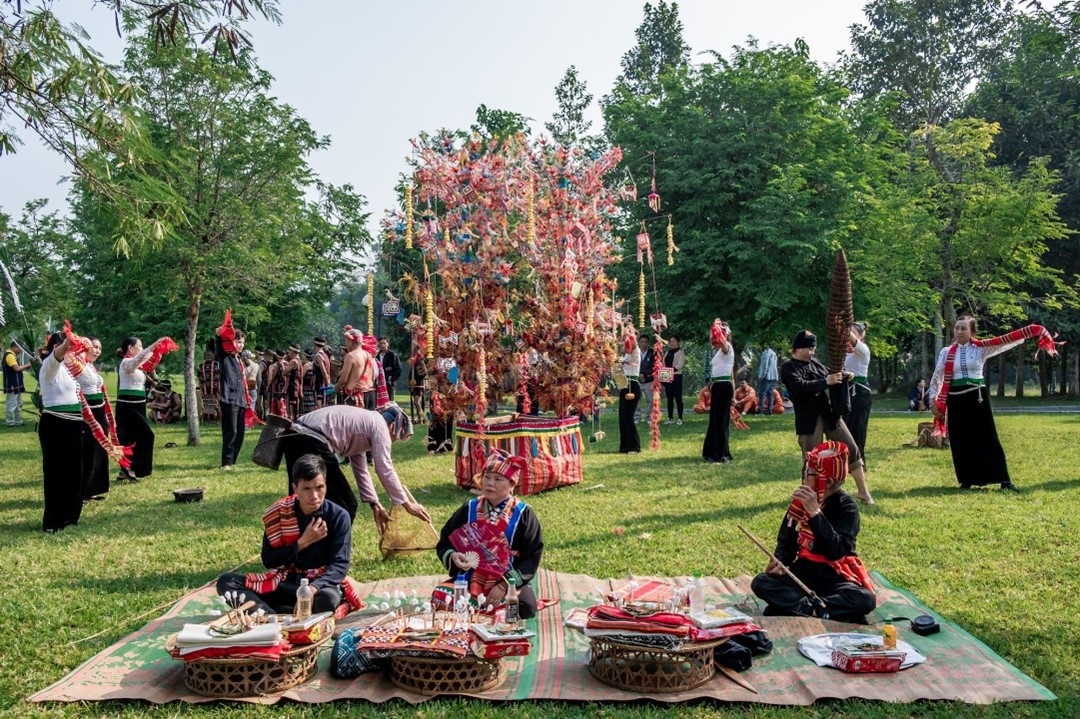
 The cultures of ethnic minorities are widely showcased through digital media
Keywords: Role; Digital media; Promoting culture; Ethnic minority people.
1. Introduction
In the current context of integration, culture serves not only as the spiritual foundation of society but also as a vital resource for sustainable development strategies and the enhancement of national standing. For Vietnam, the cultures of ethnic minority groups characterized by their diversity, uniqueness and rich humanistic values constitute an integral part of the national cultural identity. However, faced with the powerful impact of the market economy, cross-border cultural exchange and rapid technological advancement, many traditional cultural values of ethnic minority communities are at risk of fading away.
Against this backdrop, digital media has emerged as a new tool and space capable of expanding the reach of cultural promotion, transcending geographical and temporal barriers. Characterized by multimedia elements, high interactivity, and global reach, digital media not only helps introduce the cultural values of ethnic minorities to an international audience but also enables local communities to participate directly in the processes of creation, storytelling, and cultural representation. In doing so, ethnic minority cultures are integrated into the flow of global cultural dialogue, rather than merely existing as “static heritage”.
Characterized by multimedia capabilities, high interactivity and global reach, digital media not only helps introduce the cultural values of ethnic minorities to an international audience but also enables local communities to participate directly in the processes of creating, narrating, and representing their own cultures. In doing so, ethnic minority cultures are integrated into the flow of global cultural dialogue, rather than merely existing as “static heritage”.
However, the use of digital media to promote culture also raises numerous theoretical and practical issues, such as the risk of commercialization, the distortion of identity, inequalities in technology access, and the community’s capacity to navigate the digital space. Therefore, researching the role of digital media in promoting the cultures of ethnic minority groups within the context of international integration holds urgent scientific and practical significance, contributing to policy guidance and the proposal of solutions to effectively leverage cultural values in conjunction with sustainable development.
2. Research results
2.1. Theoretical basis
The theoretical framework for the study on the role of digital media in promoting the cultures of ethnic minority communities is built upon the intersection of theories regarding media, culture, and international integration. Firstly, digital media is understood as the totality of activities involving the transmission of information, knowledge and values via digital technology platforms, the Internet, and online media ecosystems. Unlike traditional media, digital media is characterized by multimedia capabilities, two-way interactivity, content personalization, and a reach that transcends spatial and temporal boundaries. These features create favorable conditions for cultural values, particularly those of communities such as ethnic minorities to gain wider access within the global public sphere.
From a cultural studies perspective, the culture of ethnic minority communities is approached as a system of tangible and intangible values, encompassing local knowledge, language, beliefs, festivals, performing arts and traditional lifestyles. Modern theories on cultural preservation and promotion emphasize that culture is not a static entity but is constantly evolving and adapting to new social and technological conditions. Therefore, cultural promotion in the context of international integration goes beyond mere “introduction” or “exhibition”, aiming instead for a process of dialogue, exchange, and the co-creation of value among cultures; digital media serves as a powerful catalyst for this process.
In terms of international integration, theories regarding globalization and soft power indicate that culture plays an increasingly central role in shaping a nation’s image, reputation and appeal. In that context, ethnic minority culture is not only the private property of the local community but also a cultural resource that contributes to enriching national identity in international exchanges. Digital media, with its ability to connect across borders, becomes an important tool to proactively bring these cultural values into the global cultural flow.
Based on the aforementioned theoretical approaches, the study’s analytical framework is structured around three fundamental issues: Firstly, communication actors comprising state management agencies, cultural and media organizations, notably ethnic minority communities themselves, who are playing an increasingly prominent role in creating and disseminating digital cultural content. Secondly, regarding communication content and formats, the focus is on digitization, cultural storytelling, the use of multimedia, and language tailored to international audiences. Thirdly, concerning context and impact, the analysis examines the relationship between digital communication, international integration and associated issues such as the preservation of cultural identity, the commercialization of culture and sustainable development.
This analytical framework enables a comprehensive assessment of the role of digital media in promoting the cultures of ethnic minority communities, at the same time clarifying the necessary conditions, limitations and strategic directions for maximizing the effectiveness of digital media in the current context of international integration.
2.2. The role of digital media in promoting ethnic minority culture
In the context of international integration, digital media plays an increasingly important role in promoting the cultures of ethnic minority communities, serving not merely as a technical tool but also as a new socio-cultural space.
Firstly, digital media helps expand the scope and audience for cultural engagement. Thanks to digital platforms and cross-border social networks, cultural values, traditionally rooted in local, mountainous, or remote areas can reach the international community rapidly, directly and through multifaceted channels. This fundamentally transforms the approach to cultural promotion, shifting it from passive exposure to active, interactive engagement.
Secondly, digital media plays a crucial role in preserving, digitizing and vividly showcasing traditional cultural values. Through digital technology, the tangible and intangible cultural heritage of ethnic minority communities such as festivals, folk knowledge, languages and performing arts is recorded, archived and transmitted via images, audio and digital data. This process not only helps preserve heritage at risk of fading away but also enables cultural values to be “reborn” in new forms that align with the tastes and consumption habits of the global public.
Thirdly, digital media fosters the engagement and active agency of ethnic minority communities in promoting their cultures. Rather than merely being the subjects of portrayal, these communities are increasingly becoming storytellers, content creators and curators of their own cultural image in the digital space. This helps mitigate the risk of distorted external interpretations while enhancing the authenticity and cultural depth of media products.
Fourthly, digital media plays an important role in building national image and promoting cultural diplomacy. Ethnic minority culture, when effectively promoted in digital space, contributes to enriching Vietnam's cultural identity in the eyes of international friends, thereby increasing the country's attractiveness and “soft power” in the context of globalization.
Fifthly, digital media links cultural promotion with the development of the cultural economy and sustainable tourism, creating opportunities for community-based tourism models, creative cultural products, and identity-based livelihoods. However, to fully realize this role, digital media requires appropriate direction and governance to ensure a balance between promotion, identity preservation and sustainable development within the context of international integration.
2.3. The current situation of digital media in promoting the culture of ethnic minority communities
In recent years, the application of digital technology to the cultural sector and heritage promotion in Vietnam has made significant strides; numerous projects involving the digitization of artifacts and documents, as well as online exhibitions, have been implemented by museums, specialized agencies, and international organizations, thereby enhancing access to and the preservation of traditional cultural values. These efforts pave the way for bringing the cultures of ethnic minority communities to multimedia platforms, ranging from videos and audio recordings to digital performance spaces.
The digital media landscape, particularly social media, video-sharing platforms and travel portals has become a vital channel for promoting regional identities, attracting visitors and connecting the content creation community with the market. Content created by locals or “influencers” is increasingly influential in positioning community-based tourism products and unique cultural offerings. This is reflected in digital content consumption trends and the habit of booking travel services based on online recommendations.
However, the current state of digital media in promoting the cultures of ethnic minority communities still reveals certain limitations. Firstly, there remains a significant digital divide between urban centers and remote or isolated areas where ethnic minority populations are concentrated; Disparities in infrastructure, home internet access and digital skills hinder the local community’s ability to fully participate in the production and management of digital content. Secondly, from a governance and legal perspective, the digital landscape is being shaped by content control policies and data storage requirements; while these establish necessary regulatory mechanisms, they also pose risks to creative freedom, openness and the ability to reach international audiences. At the same time, issues regarding copyright, local intellectual property rights, and the risk of commercializing cultural values when they are brought onto digital platforms have not yet been adequately addressed. Thirdly, organizational capacity spanning inter-sectoral policies and financial resources to cooperation models involving the State, businesses and the community lacks alignment, resulting in fragmented and unsustainable promotional models. Therefore, although digital media has opened up numerous opportunities to promote the cultures of ethnic minority groups amidst integration, the current situation highlights the need for a comprehensive strategy to bridge the digital divide, safeguard local cultural rights and build a sustainable digital media ecosystem with the active participation of ethnic minority communities.
2.4. Issues facing digital media in the promotion of ethnic minority cultures
Although digital media opens up new opportunities to promote the cultures of ethnic minority communities in the context of international integration, the actual implementation process presents numerous issues that require thorough identification and resolution.
Firstly, the issue of preserving cultural identity and authenticity. In a digital environment characterized by competition for global public attention, much cultural content risks being oversimplified, fragmented, or “retold” through a market-driven lens; this leads to a distortion of original values and an erosion of the depth of traditional culture.
Secondly, the risk of the commercialization and misappropriation of local cultural knowledge is becoming increasingly evident. When ethnic minority cultural elements are brought onto digital platforms, they are easily exploited for economic gain in the absence of mechanisms to protect intellectual property rights, community interests and fair benefit-sharing. This situation risks leaving local communities on the sidelines, excluded from reaping the benefits of their own cultural assets.
Thirdly, the digital divide and limited capacity to master technology remain significant barriers. Many ethnic minority communities lack adequate technological infrastructure, digital communication skills and foreign language proficiency, hindering their ability to actively participate in the creation, management, and direction of cultural content in the online space. Consequently, the voices of these communities risk being overshadowed by intermediary entities.
Fourthly, the governance of the digital media landscape and the shaping of content present new demands for regulatory bodies. The rapid dissemination of digital information facilitates cultural promotion but also carries risks regarding misinformation, cultural biases and value conflicts within a multicultural context.
The aforementioned issues indicate that the use of digital media to promote the cultures of ethnic minority groups must be approached as a complex socio-cultural process, requiring a harmonious blend of technological innovation, identity preservation, the protection of ethnic minority rights and a commitment to sustainable development within the context of international integration.
2.5. Orientations and solutions for leveraging the role of digital media
In order to effectively leverage the role of digital media in promoting the cultures of ethnic minority communities amidst international integration, it is necessary to implement a comprehensive set of fundamental guidelines and solutions, as follows:
Firstly, refining the policy and institutional framework is a fundamental requirement; this entails integrating the objective of promoting ethnic minority cultures into the national digital transformation and cultural development strategies. Policies must uphold the principles of respecting cultural identity and protecting local cultural knowledge as well as the legitimate rights of the communities.
Secondly, enhancing the digital communication capabilities of ethnic minority communities through training in technology skills, digital storytelling and foreign language use, thereby strengthening the community’s role as the primary agent in the creation and management of cultural content.
Thirdly, build a sustainable digital cultural media ecosystem, fostering collaboration among the State, research institutions, technology enterprises and local communities in the production, dissemination, and preservation of cultural values.
Fourthly, it is essential to provide direction regarding content and communication standards, striking a harmonious balance between promotion and preservation, and between integration and the safeguarding of cultural identity. The application of digital technology must be grounded in a vision of sustainable development, viewing digital communication not merely as a promotional tool, but as a means to protect, enrich, and disseminate the cultural values of ethnic minority communities within the global cultural landscape.
3. Discussion
The issues outlined above demonstrate that digital media plays an increasingly central role in promoting the cultures of ethnic minority communities; however, its practical effectiveness hinges closely on approaches to engagement and management. Digital media is not merely a technical tool for disseminating cultural imagery but constitutes a new social space where relationships among local cultures, community stakeholders and the global public are being restructured. Therefore, without scientific guidance and appropriate protective mechanisms, the digitization process could lead to the risk of commercialization and the distortion of traditional cultural values. Therefore, in the context of international integration, it is necessary to shift from a model of “one-way promotion” to one of “dialogue and cultural co-creation”. Placing ethnic minority communities at the heart of digital communication not only helps ensure cultural authenticity but also lays the foundation for the sustainable development of cultural values within the digital space.
4. Conclusion
In the context of international integration, digital media is asserting its vital role in promoting the cultures of ethnic minority communities, thereby helping to expand their reach and elevate the value of Vietnamese cultural identity on the global stage. However, the effectiveness of digital media is ensured only when the process of technology adoption is closely linked to the preservation of cultural identity, the protection of community interests, and a commitment to sustainable development. Therefore, leveraging the role of digital media requires a comprehensive, human-centric and strategic approach within the current context of integration.
* National Defence Academy, Ministry of National Defence
* Journal of Ethnic and Religious Research
References
1. Prime Minister (2020), Decision No. 749/QĐ-TTg dated June 3rd, 2020, approving the National Digital Transformation Program to 2025, with a vision to 2030, Hanoi.
2. Nguyen Van Huan & M.A. Nguyen Duy Dung (2025), Communication and sustainable development in ethnic minority and mountainous areas Today, Journal of Ethnic and Religious Research Issue 4 - December.
3. Bui Thi Nhu Ngoc (2019), The impact of culture on communication activities in ethnic minority areas of Vietnam today, https://tapchicongsan.org.vn/van_hoa_xa_hoi/-/2018/54390/tac-dong-cua-van-hoa-den-hoat-dong-truyen-thong-o-vung-dan-toc-thieu-so-nuoc-ta-hien-nay.aspx#
