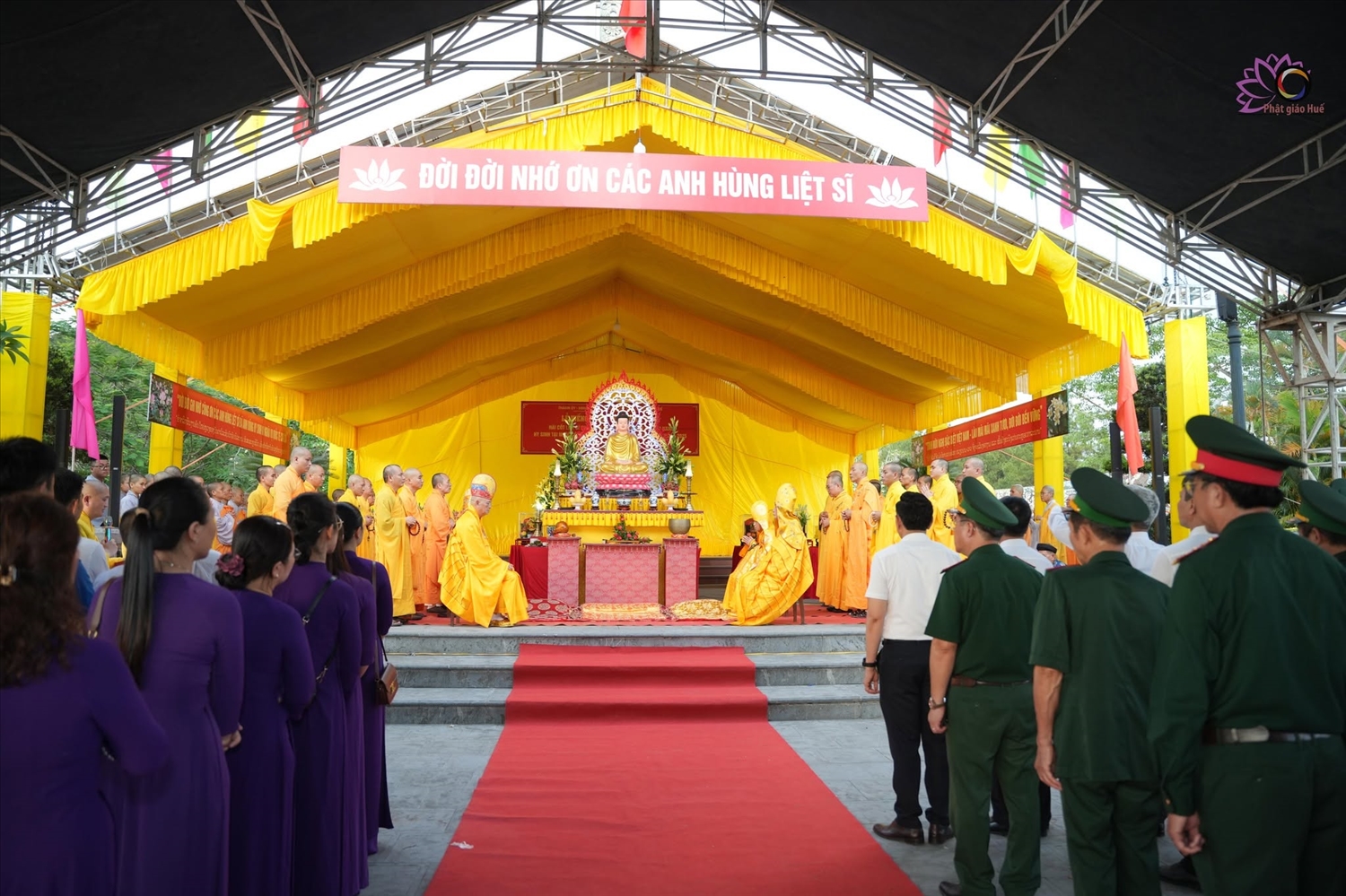
 Grand requiem ceremony at the Hue city Martyrs’ Cemetery
In order to truly grasp the essence of this concept, one must interpret the term through the lens of Buddhist teachings. “Cau” signifies prayer, the directing of one’s mind, and the offering of wholesome energy; “Sieu” denotes transcendence, rising above and moving from realms of suffering and darkness (such as those of hell, hungry ghosts or animals) toward a realm of peace, wisdom and liberation.
Buddhism holds that death is not an absolute end but rather a transition of the stream of consciousness, governed by the laws of cause and effect and karma. Upon leaving the physical body, an individual who remains heavily burdened by attachments, grievances, cravings or fear at the moment of passing is highly susceptible to becoming trapped in realms of darkness.
The requiem ceremony emerged as a form of spiritual support, harnessing the pure energy of monastics and the sincere devotion of the family to awaken the deceased, helping them recognize the nature of their attachments and voluntarily let go in order to attain liberation.
Many people think that just by holding a grand requiem ceremony, the deceased will go to Heaven or Ultimate Bliss. Buddhism affirms: No one can bear anyone’s karma or change their karma. The karma of each individual is created by themselves through body - speech - mind.
So, why are requiem ceremonies necessary? The key lies in the mechanism of energy resonance. In the “Sutra on the Profound Gratitude Owed to Parents”, the Buddha teaches that the energy of prayers and mantras chanted by pure-hearted monastics combined with the sincere, virtuous intentions of relatives acts like a beam of warm light shining into the darkness of night. This stream of light does not directly erase the bad karma of the deceased but acts as a catalyst for awakening. When receiving peaceful energy, the deceased lets go of resentment, attachment and attachment, which is the key to escape.
Buddhism views the requiem ritual not only as being for the deceased but also as directly benefiting the living. In the “Ksitigarbha Sutra”, the Buddha clearly states that when merit is generated through requiem rituals, the deceased receives one part of the merit, while the remaining six parts belong to the living person performing the ceremony.
Through the energy of sutra chanting, words of spiritual guidance and the dedication of merit, the deceased can dispel their delusions, recognize the impermanent nature of existence and depart with a peaceful, unburdened mind.
For the living, requiem ceremonies help soothe the pain of loss, foster the practice of filial piety and cultivate an understanding of the impermanence of human life. By preparing for the ceremony with a sincere heart, observing a vegetarian diet, chanting the Buddha’s name and performing good deeds, the living purify their minds and dedicate the resulting merit to the departed.
In Buddhism, requiem rituals are not limited to members of one's own family. Ceremonies such as the Water and Land Ritual, as well as grand requiems for the unborn, fallen heroes and martyrs and wandering souls, exemplify a spirit of boundless compassion. Throughout countless lifetimes, all beings have at some point been one another's parents or siblings; offering prayers for the repose of the souls of strangers, encompassing the vast spectrum of sentient beings reflects a noble, humane spirit that transcends all boundaries of distinction.
Currently, due to the influence of certain folk customs, many people still perform requiem rituals, slaughter animals for meat-based offerings and burn vast quantities of votive paper... In Buddhism, the act of killing animals for sacrificial offerings increases the karmic burden of killing for both the living and the deceased; furthermore, the burning of joss paper results in waste and environmental pollution without offering any genuine spiritual benefit to the departed.
A proper requiem ceremony that yields the greatest spiritual benefit is grounded in three key principles: firstly, sincerity and mindfulness loved ones must chant sutras and recite the Buddha’s name with a heart full of love and reverence, rather than leaving the task entirely to the officiant; secondly, the cultivation of tangible merit. Using the money saved by foregoing the burning of votive paper and the offering of meat-based dishes to perform charitable deeds such as helping the less fortunate, building pagodas, casting bells or sponsoring the printing and distribution of scriptures and then dedicate the resulting pure merit to the deceased; thirdly, observing a pure vegetarian practice, prioritizing the use of clean vegetarian offerings to maintain an atmosphere of serenity and transcendence during the rituals.
In Buddhism, the requiem service serves as a spiritual bridge imbued with wisdom, a meeting point of love, filial piety and awakening lessons regarding human existence. Correctly understanding the significance of requiem ceremonies helps fulfill one’s filial duty toward the deceased and inspires a life lived more fully, responsibly and lovingly in every moment of the present./.
