The stone chronicle
Deeply carved into the stele, the Han characters remain sharp and remarkably legible despite the ravages of the elements. The inscription chronicles the illustrious achievements of Le Hoan from his service to the Dinh dynasty, the quelling of rebellions and his ascension to the throne, to his defeat of the invading Song forces, the securing of the realm’s borders and the expansion of the nation. The stele also lauds policies that prioritized agriculture and encouraged production, as well as the organization of the administrative apparatus and diplomatic relations with neighboring states. It can be said that the stone stele in Xuan Lap commune serves as a “history book in stone” concise yet precise, reflecting the achievements and stature of a formidable monarch.
Notably, the stele inscription not only extols Le Hoan’s statecraft but also portrays a monarch who was close to the people, attentive to agricultural production, and skilled at uniting the strength of the populace. This distinguishes it from many contemporary inscriptions, which tended to focus primarily on praising the achievements of the imperial court.
The art and technique of craftsmanship
The stone stele at the Le Hoan temple exhibits the characteristic style of stelae from the Le Dynasty. It features an upright rectangular body resting on the back of a stone turtle, with a top carved with motifs of the Four Sacred Animals and stylized clouds and flames. The artisan harmoniously combined bold lines with intricate details, showcasing the masterful sculptural skills of the 17th century. A distinctive feature is the image of the turtle bearing the stele, a symbol of the enduring and eternal nature of knowledge and moral principles. In folk belief, the turtle is associated with perseverance and patience, embodying the strength to uphold the past and pass it on to future generations.
Thus, the stone stele in the Le Hoan temple does more than merely record history; it embodies a profound philosophy of life: the meritorious deeds of an enlightened ruler must be handed down for all eternity.
Firstly, the stone stele serves as a historical testament confirming the existence of the Early Le Dynasty and the pivotal role played by Le Hoan in the founding and defense of the nation. For researchers, it constitutes a valuable primary source that complements official historical records, particularly given the scarcity of historical documentation regarding this period.
Secondly, stone stelae hold cultural and educational value. Through the centuries, these monuments continue to tell the story of the nation’s heroic spirit and the moral principle of “gratitude to the source” (remembering one’s roots). For the younger generation, the stone stele serves as a “living lesson”, reminding them of their responsibility to carry on traditions and uphold a spirit of independence and self-reliance.
Thirdly, the stone stele affirms the aesthetic and architectural value of Vietnamese carving art in the 17th century. The sophisticated motifs, balanced layout and rich symbolic decorative language show the level of artisans and aesthetic concepts of the time.
A symbol of the indomitable spirit of the Thanh region
Beyond their material value, the stone stelae at the Le Hoan temple serve as a symbol of the stature of the Thanh region, a land that gave rise to multiple dynasties and produced national heroes. The erection of the stele honoring Lê Hoàn further affirms this land's pioneering role in the nation's history. Every year, during the festival commemorating King Le Dai Hanh, thousands of people flock here to pay their respects at the stone stele and offer incense in his memory. Not only to pay tribute to the past, it is also an action to affirm the culture and pride of Thanh region (Thanh Hoa province) before friends everywhere.
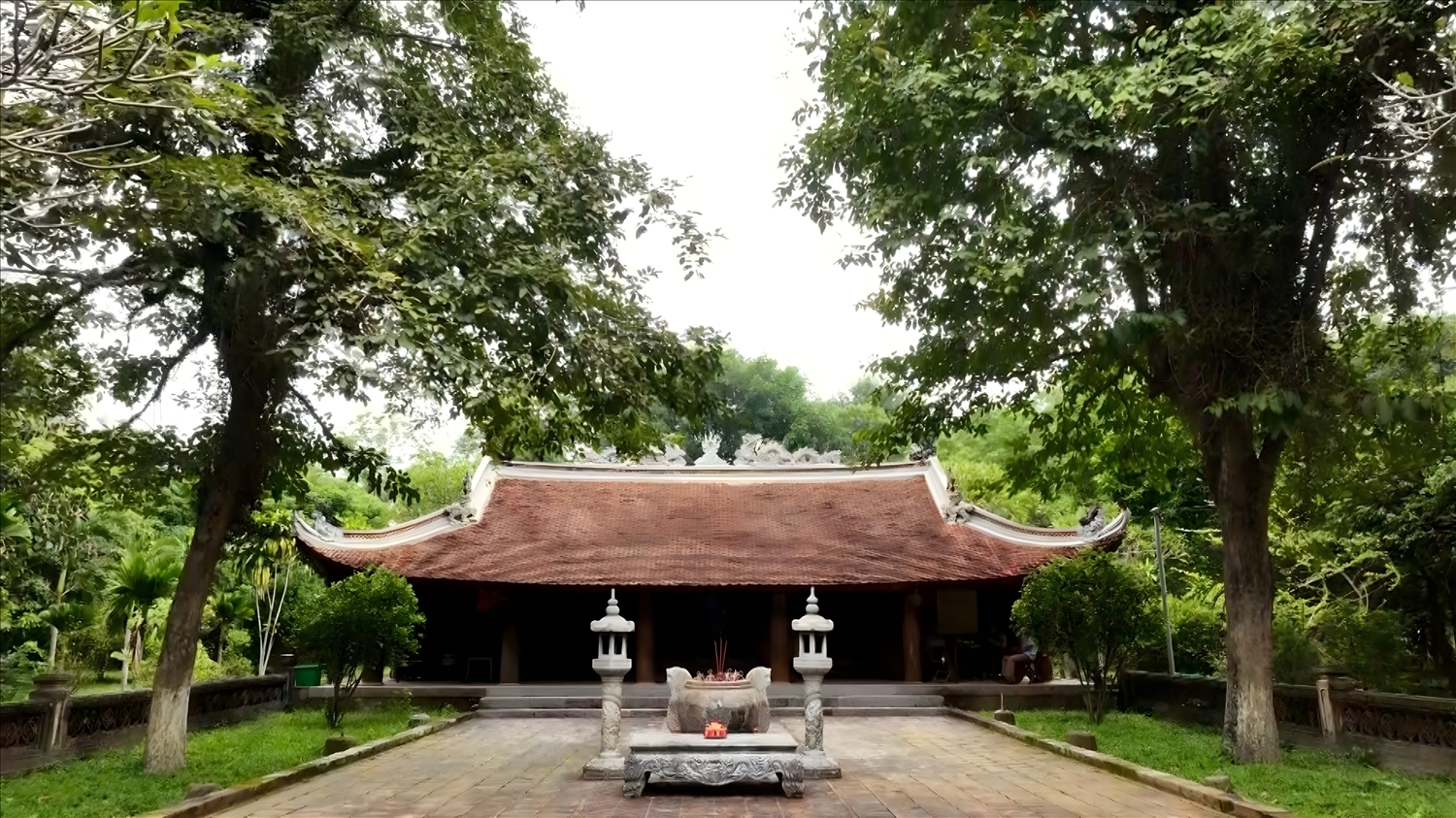 The Le Hoan temple is a special national historical relic
Exposed to the elements, the stone stele now shows signs of weathering, with its inscriptions gradually fading. Conservation efforts present significant challenges: the original value must be preserved, while modern preservation techniques must be applied to prevent further deterioration.
Authorities and the cultural sector in Thanh Hoa province have placed the stone stelae under special management, carrying out cleaning, protective shielding, and the digitization of records. However, ensuring the enduring legacy of this heritage requires the community’s cooperation, specifically by respecting the site’s sanctity and fostering a sense of stewardship, at the same time integrating the value of the stelae into educational, research and tourism programs.
Between the pace of modern life, that stele quietly reminds future generations of the heroic spirit of the Early Le Dynasty and the responsibility to preserve and promote our heritage. Preserving and sharing the value of the stone stele affirms the stature of the Thanh region within the flow of history and underscores the enduring vitality of Vietnamese culture./.
