Keywords: Tue Tinh clinic; Buddhist medicine; Zen Master Tue Tinh; Public Healthcare; Social security; Traditional medicine.
1. Introduction
Throughout its millennia-long journey alongside the nation, Vietnamese Buddhism has not only served as a spiritual anchor but has also deeply engaged with various facets of social life. One of the most vivid expressions and one holding enduring practical value, of the spirit of “Dharma and Nation” is the provision of healthcare and humanitarian aid to save lives and benefit society through the “Tue Tinh clinic” (charitable traditional medicine clinic) system.
Driven by the compassionate desire to alleviate suffering, a core tenet of Buddhist teachings, monastics and lay Buddhists have long sought, applied and developed methods to heal the sick and save lives. Notably, under the pioneering guidance of the renowned physician and Zen master Tue Tinh in the 14th century, Vietnam’s indigenous herbal medicine was elevated into a comprehensive system of theory and practice, anchored by the timeless motto: “Southern medicines for Southern people”.
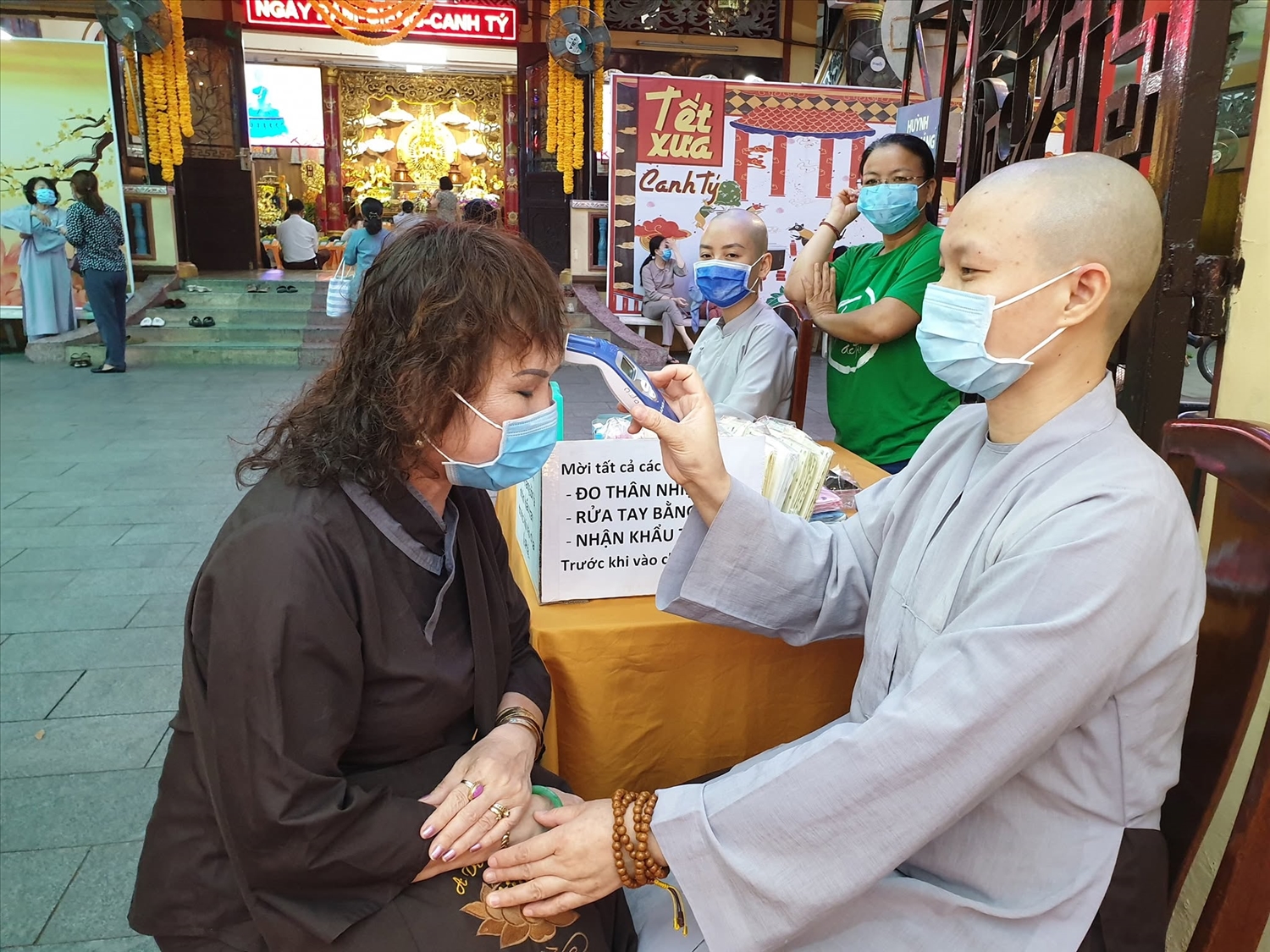 Tue Tinh clinic is not only a place providing free medical care to the poor using traditional medicine but also a unique cultural and spiritual space
As we enter the modern era, faced with immense pressure from overburdened public healthcare systems, the rise of lifestyle-related diseases and the wealth gap in healthcare access, the Tue Tinh clinic model once again affirms its irreplaceable status and value. These are not merely private traditional medicine clinics; rather, they represent a distinctive social-charitable model deeply imbued with Buddhist identity. A systematic research and analysis of this model’s operational structure, core values and contributions to public healthcare hold significance not only in the realm of religious scholarship but also offer important insights for the current socialization of healthcare in Vietnam.
2. Theoretical foundations and historical origins of Buddhist medicine in Vietnam
About the theoretical basis
In order to understand the essence of the Tue Tinh clinic model, one must first consider the Buddhist perspective on the human being and the nature of illness. In Buddhist scriptures, particularly those belonging to both Theravada and Mahayana traditions, the human body is viewed as a composite of the four great elements: earth, water, wind and fire. When these four elements are balanced and harmonized, the body remains healthy. Conversely, disharmony among these constituent elements is the root cause of illness (physical disease).
However, Buddhism does not view illness purely from a mechanical or biological perspective. A person’s health is the integration of body and mind. Physical ailments often have deep roots in mental afflictions, specifically, negative transformations of the mind driven by the three poisons: greed, hatred, and delusion. This concept aligns closely with the World Health Organization’s (WHO) modern medical definition of health as a state of complete physical, mental, and social well-being, rather than merely the absence of disease or infirmity.
For this reason, Buddhist medicine consistently advocates a holistic approach. Healing involves not merely administering medication to alleviate pain but also transforming the mind and soothing emotional wounds through the teachings of karma, the practice of letting go, and the cultivation of compassion.
On the historical origins of Buddhist medicine in Vietnam
As early as the first centuries of the Common Era, when Buddhism was introduced to Giao Chau by Indian and Chinese merchants and monks, pagodas rapidly became cultural and healthcare centers for village communities. Zen masters of the Ly and Tran dynasties such as Van Hanh, Tu Dao Hanh and Nguyen Minh Khong were not only knowledgeable in Buddhism but were also famous physicians, using medical techniques to treat illnesses for kings and commoners, stabilize the hearts of the people and protect the country and people.
By the 14th century, the movement of Buddhist medicine reached the pinnacle of scientific and practical achievement with the emergence of the Zen master Tuệ Tĩnh (Nguyen Ba Tinh). Revered as the “Saint of Southern Medicine”, this renowned physician and Zen master systematized the entire body of folk medical knowledge and discovered and demonstrated the therapeutic properties of hundreds of local medicinal herbs. He transformed pagodas into sites for cultivating medicinal plants, processing herbal remedies and providing relief to the impoverished. His vision extended beyond merely treating illnesses; it aimed higher to establish a self-reliant and resilient medical system rooted in the country’s abundant natural resources.
The Tue Tinh clinic model was subsequently established to honor, carry on, and promote this great legacy of his. It represents a perfect blend of Buddhist ethics and traditional medical knowledge.
3. Characteristics and operational mechanism of the Tue Tinh clinic model
The modern Tue Tinh clinic model operates as a charitable healthcare facility under the direct management or sponsorship of the Vietnam Buddhist Sangha, in conjunction with local government oversight; these clinics serve not only as providers of free traditional medical care for the impoverished but also as unique cultural and spiritual spaces within the local healthcare landscape. Unlike public or commercial private medical facilities, Tue Tinh clinics possess highly distinctive operational characteristics.
About personnel
The staff at Tue Tinh clinics are truly unique, representing a combination of monastics and professional physicians. They include: Buddhist monks and nuns who have graduated from intermediate or university-level medical and pharmaceutical institutions and hold valid practicing certificates; traditional medicine practitioners and Western medicine doctors whether retired or currently employed at major hospitals who have pledged to dedicate their spare time to voluntary service; and a team of Buddhist volunteers responsible for harvesting, processing, drying and packaging medicinal herbs.
The relationship between physician and patient here is not governed by commercial financial transactions. Whether clad in a simple brown robe or a white medical coat, the healer operates with the mindset of a practitioner embodying the Bodhisattva ideal, regarding the patient's suffering as their own.
About financial and medicinal resources
Operating funds are derived from donations by benefactors, the temple's charitable fund and voluntary contributions from patients upon their recovery. Those with the financial means voluntarily contribute to help cover the costs for the needy.
Tue Tinh clinics often secure a portion of their medicinal supplies independently by cultivating gardens of traditional Vietnamese medicinal herbs, either within the temple grounds or on forest land managed by the temple. Additionally, volunteer teams specialize in foraging for medicinal plants in high mountain areas to bring back and donate.
About treatment methods
The primary treatment approach at Tue Tinh Duong is Traditional Medicine, utilizing herbal remedies (both Vietnamese and Northern/Chinese varieties), acupuncture, acupressure, steam therapy and physical therapy. These methods offer the advantages of being gentle, having few side effects, and being low-cost, while proving highly effective for chronic conditions affecting the elderly and low-income workers such as joint disorders, sciatica, digestive issues and physical debility.
Notably, medical treatment is always accompanied by spiritual care. Patients here find solace in the serene sound of temple bells and receive encouragement from monks and nuns through simple teachings on impermanence and letting go of worries; they are also guided in relaxation meditation and macrobiotic dietary practices. This holistic approach yields significant psychological and physical therapeutic benefits, aspects often overlooked by busy modern hospitals.
4. Contributions of Buddhist medicine to public healthcare
The practical operations of Tue Tinh clinics across the country such as the Tue Tinh clinics at Hai Duc pagoda (Hue city) and Phap Hoa pagoda (Ho Chi Minh city), as well as facilities in Dong Nai city and Vinh Long province,… have demonstrated the immense contributions of Buddhist medicine in various respects.
Firstly, reducing the load on the public health system and support social security
Every year, the network of Tue Tinh clinics across the country receives a large number of patients for examination and treatment. The primary beneficiaries are the poor, ethnic minorities, the elderly living alone, and patients with chronic conditions who despite seeking care elsewhere, lacking the financial means to pursue expensive Western medical treatment regimens.
By effectively admitting and treating this group of patients, Buddhist medicine has shared a significant portion of the immense burden borne by frontline hospitals, helping to alleviate severe overcrowding in public healthcare facilities. It serves as a vital extension of the social welfare system, ensuring that no one is left behind regarding access to basic healthcare services.
Secondly, preserving and promoting the value of traditional national medicine
In the context of modern medicine (Western medicine) developing explosively, traditional medicine sometimes faces the risk of being lost or over-commercialized. Tue Tinh clinic is the place to store, practice and clinically verify valuable ancient remedies and unique folk healing experiences.
Encouraging the cultivation and use of traditional Vietnamese medicinal herbs at Tue Tinh clinics not only helps conserve the biodiversity of precious medicinal plant species but also preserves a long-standing intangible cultural heritage bequeathed by our ancestors. It fosters a spirit of self-reliance and resilience, as well as pride in the nation’s local medicine, in keeping with the philosophy of Zen Master Tue Tinh.
Thirdly, building an exemplary environment of medical ethics and foster character development
At Tue Tinh clinic, patients experience an environment of respect, sharing and unconditional love. The attentive and courteous demeanor of the Buddhist medical staff not only soothes patients’ minds and aids their recovery but also carries a profound educational impact. Many patients, after being cured here, have voluntarily become supporters and active volunteers in social charity activities, thereby multiplying humanitarian values within the community.
5. Challenges facing the development of the Tue Tinh clinic model
Despite its undeniable contributions, the Tue Tinh clinic model currently faces significant difficulties and challenges that require objective assessment in order to find solutions.
Firstly, the legal framework and management mechanisms lack consistency
Currently, the operations of Tue Tinh clinics (charitable traditional medicine clinics) are governed by both the Law on Medical Examination and Treatment and the Law on Belief and Religion. However, specific legal regulations tailored to the model of charitable medical care provided by religious organizations remain ambiguous, and the procedures for establishing these clinics and issuing practicing certificates to monks and nuns involve complex administrative requirements. Quality control of medicinal materials and drug preparation processes at some small-scale facilities still relies primarily on self-regulation and experience, lacking the scientific quantitative standards established by the health sector.
Secondly, the shortage of highly specialized human resources
The succession of practitioners at Tue Tinh clinics faces a looming generational gap. Many highly skilled and experienced traditional healers are now frail due to advanced age, while the younger generation of monks and nuns tends to prioritize the study of Buddhist scriptures over in-depth, systematic medical training. The shortage of doctors and pharmacists with university and postgraduate qualifications who possess deep expertise in both Eastern and Western medicine is a major bottleneck limiting the capacity to treat complex cases here.
Thirdly, facilities and financial resources lack sustainability
As they operate entirely on charitable funding, the revenue of Tue Tinh clinics tends to be unstable, heavily dependent on the economic fluctuations affecting their benefactors. Many facilities lack the funds to invest in modern equipment such as advanced acupuncture devices, meridian diagnostic tools and sterile, automated herbal decoction and packaging systems or to upgrade their premises to meet sanitary and epidemiological standards. Sourcing clean medicinal herbs independently has also become increasingly difficult, as urbanization has reduced the land available for growing medicinal plants at pagodas.
6. Proposed solutions
In order to ensure the sustainable development of the Tue Tinh clinic model and enable it to contribute even more significantly to public healthcare, the following strategic and comprehensive solutions are required:
Firstly, refining policies and create a favorable legal framework
The State and the Ministry of Health need to consider issuing specific guidelines and establishing special mechanisms for charitable medical facilities run by religious organizations in general and Tue Tinh clinics in particular. Closely integrate this model with the grassroots healthcare network. Administrative procedures for operational licensing need to be simplified, at the same time strengthening the professional oversight role of commune and ward health stations and centers; this ensures absolute patient safety without compromising the proactive, flexible nature and charitable spirit characteristic of the pagoda.
Secondly, strengthening training partnerships and standardize human resources
The Vietnam Buddhist Sangha needs a proactive strategy to collaborate with major medical and pharmaceutical universities across the country to organize training courses and standardize professional qualifications for monks and nuns. It is necessary to encourage and create conditions for young monks and nuns to study traditional medicine formally. At the same time, there is a policy to attract and give reasonable mental remuneration so that more and more good doctors and Western medicine scientists will contribute intellectually and combine Eastern and Western medicine in diagnosis and treatment at Tue Tinh clinic.
Thirdly, modernize the production and management processes for medicinal materials.
It is necessary to apply scientific and technical advancements to the preliminary processing, preservation and production of medicines at major Tue Tinh clinics in order to enhance the medicinal properties and extend the shelf life of traditional Vietnamese medicines, while minimizing issues such as mold and contamination with toxic preservatives. Tue Tinh clinics need to collaborate to establish a supply chain for clean medicinal materials meeting GACP-WHO (Good Agricultural and Collection Practices) standards and exchange valuable medicinal plant genetic resources across regions; this aims to achieve self-sufficiency in high-quality raw materials and reduce reliance on imported Northern medicinal herbs of uncertain origin circulating in the market.
7. Conclusion
The Tue Tinh clinic model is an invaluable socio-medical architectural heritage of Vietnamese Buddhism, serving as a vivid embodiment of the philosophy of engaged Buddhism, compassionate relief of suffering and the spirit of national self-reliance. Having weathered the ups and downs of history, this model has demonstrated remarkable resilience and immense practical value in providing healthcare to millions of people, particularly the most vulnerable segments of society.
In the modern trends where people increasingly seek natural, gentle therapeutic methods and prioritize mental well-being, Buddhist medicine delivered through Tue Tinh clinics is increasingly demonstrating its distinct advantages. By clearly recognizing its contributions while proactively addressing limitations regarding legal frameworks, personnel and technology, the Tue Tinh clinic model will undoubtedly continue to play a vital role alongside the national healthcare sector, contributing to the development of a comprehensive, humane healthcare system deeply rooted in national identity.
References
1. Vietnam Buddhist Sangha, Vietnamese Buddhism and the cause of public health care, Religious Publishing House, Hanoi, 2017.
2. Nguyen Ba Tinh (Zen Master Tue Tinh), Miraculous Southern Medicines (Translated by the Vietnam Institute of Traditional Medicine), Medical Publishing House, Hanoi, 2003.
3. Le Tran Duc, The life and medical career of Tue Tinh, Medical Publishing House, Hanoi, 1997.
4. Thich Hai An & Hoang Phong (2012), The Hai Duc Tue Tinh clinic model: An Effective Approach to Buddhist charitable healthcare, Journal of Buddhist Research, No. 4/2012.
5. Tran Thi Hong (2021), The role of religious organizations in the socialization of healthcare Activities in Vietnam today, Journal of Sociology, No. 2/2021.
6. National Assembly of the Socialist Republic of Vietnam, Law on medical examination and treatment (Law No. 15/2023/QH15), Hanoi, 2023.
7. National Assembly of the Socialist Republic of Vietnam, Law on Belief and Religion (Law No. 02/2016/QH14), Hanoi, 2016.
