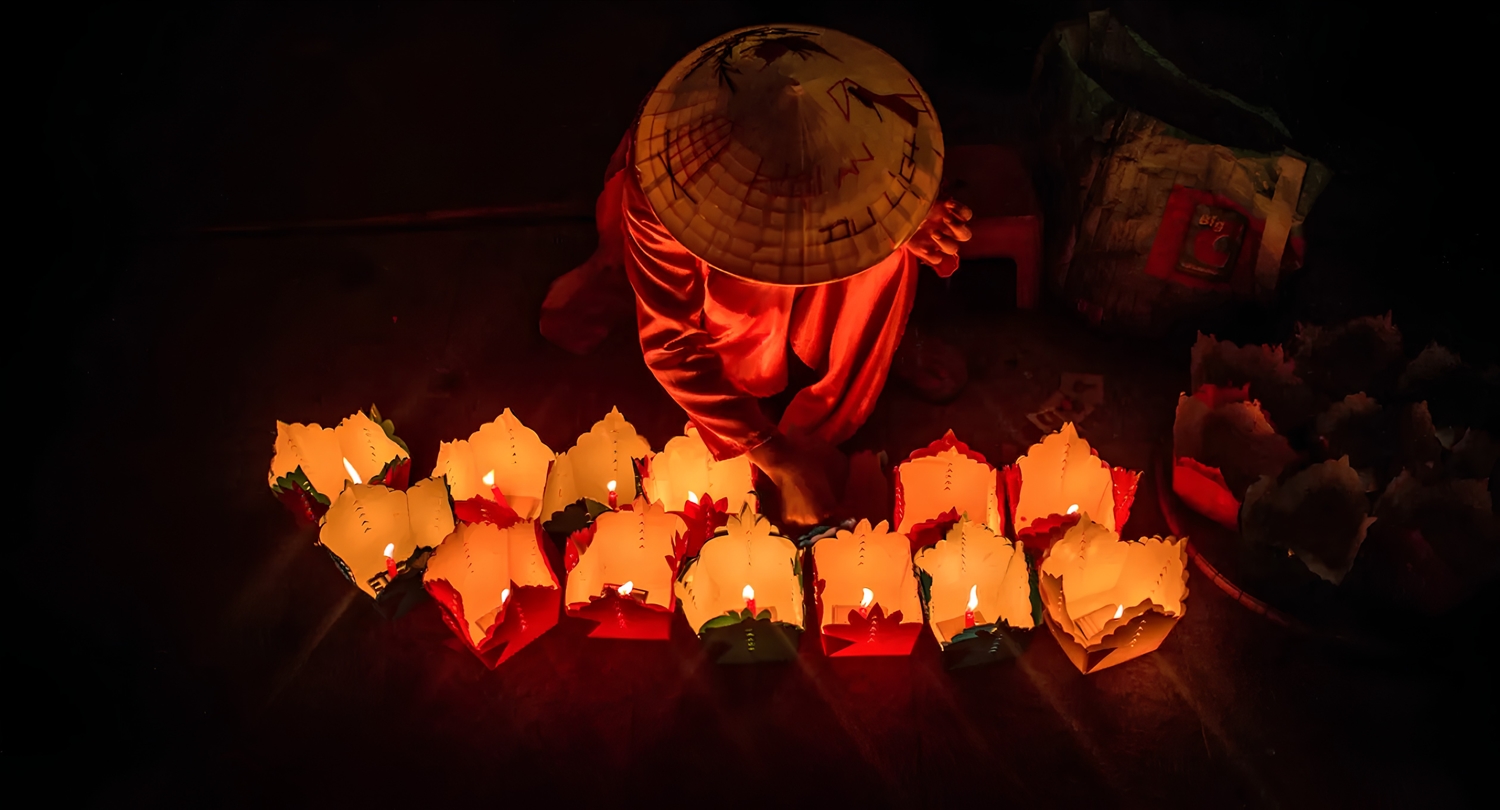
 Vu Lan - the festival of filial piety is not merely an annual ritual; it is a bond connecting us to our roots and a means of preserving the moral foundations of both family and society
Integration and the convergence of humanistic values
From the perspective of religious studies, Dr. Le Thi Lien - Vice Dean of the Faculty of Anthropology and Head of the Department of Religious Research at the Hanoi University of Social Sciences and Humanities observes that upon its introduction to Vietnam, Buddhism underwent a profound process of cultural acculturation, rapidly finding common ground with traditional Vietnamese culture, including the practice of ancestor worship. The Buddhist philosophy of filial piety is not adversarial; rather, it complements and reinforces the nation’s cherished principle of “drinking water while remembering its source” (gratitude toward one's roots). The spirit of the Vu Lan festival transcends the confines of monastic rituals for the deceased, evolving into a comprehensive occasion for expressing gratitude honoring parents, ancestors, and those who have rendered service to the community and the nation. This cultural framework allows the sentiment of filial piety to extend beyond the religious sphere and permeate all aspects of social life.
From personal filial piety to social responsibility
Concurring with this view, Most Venerable Thich Bao Nghiem, Vice Chairman of the Executive Council of the Vietnam Buddhist Sangha, further emphasized the philosophical depth of the festival. In Vietnamese society, the Vu Lan festival extends beyond its primary focus to encompass the “Four Great Debts of Gratitude” to parents, teachers, the nation and society and all sentient beings, thereby serving as an opportunity for individuals to cultivate and expand their compassion. The practice of filial piety extends beyond the family, rising to the level of civic responsibility. This spirit is embodied in activities such as repaying indebtedness, honoring fallen heroes, engaging in charity and caring for vulnerable groups. Consequently, modern expressions of filial piety are translated into positive values that contribute to the community’s sustainable development.
Adaptation among the youth and challenges of cultural transformation
Reflecting on the changing behavioral patterns of today's younger generation, Hoang Thi Thu, M.A., a lecturer in the Faculty of Communication at Van Lang University (Ho Chi Minh city), observes that under the pressures of modern life, the way young people observe the Vu Lan festival is undergoing a shift in its mode of expression.
Rituals such as pinning a rose, expressing gratitude to parents, and washing parents' feet, along with the heartfelt wishes and meaningful gestures shared during this time demonstrate the enduring, profound need to express filial piety. Young people today proactively view the Vu Lan festival as an opportunity to find mental balance and renew family bonds that are easily neglected amidst the whirlwind of work. However, current challenges include the tendency toward ostentatious displays, the commercialization of spirituality and the distortion of these expressions in the online space.
Towards civilized and sustainable practices
From the perspective of state management of religious affairs, Ms. Tran Thi Minh Nga, Deputy Head of the Government Committee for Religious Affairs discussed preserving the true essence of the Vu Lan festival as a living intangible cultural heritage. In order to ensure this beautiful tradition fully realizes its value, it is essential to continue raising public awareness and encouraging people to observe the rituals in a civilized manner. Burning excessive amounts of votive paper and engaging in superstitious rituals not only fails to demonstrate true filial piety but also leads to waste and environmental pollution, while distorting the Buddhist spirit of compassion and wisdom. The most profound expression of filial piety lies in honoring and caring for one's parents while they are alive and in leading a virtuous, meaningful life that brings them peace of mind./.
