When visiting the Lang region in spring, missing the Ky Cung - Ta Phu Festival means failing to touch the cultural “heart” of this northern gateway land. The festival takes place annually from the 22nd to the 27th day of the first lunar month and is associated with Ky Cung Temple and Ta Phu Temple, sites dedicated to the worship of Quan Lon Tuan Tranh and Grand Admiral Han Quan Cong Than Cong Tai, figures revered by the people for their immense contributions to defending the border during the late 17th and early 18th centuries.
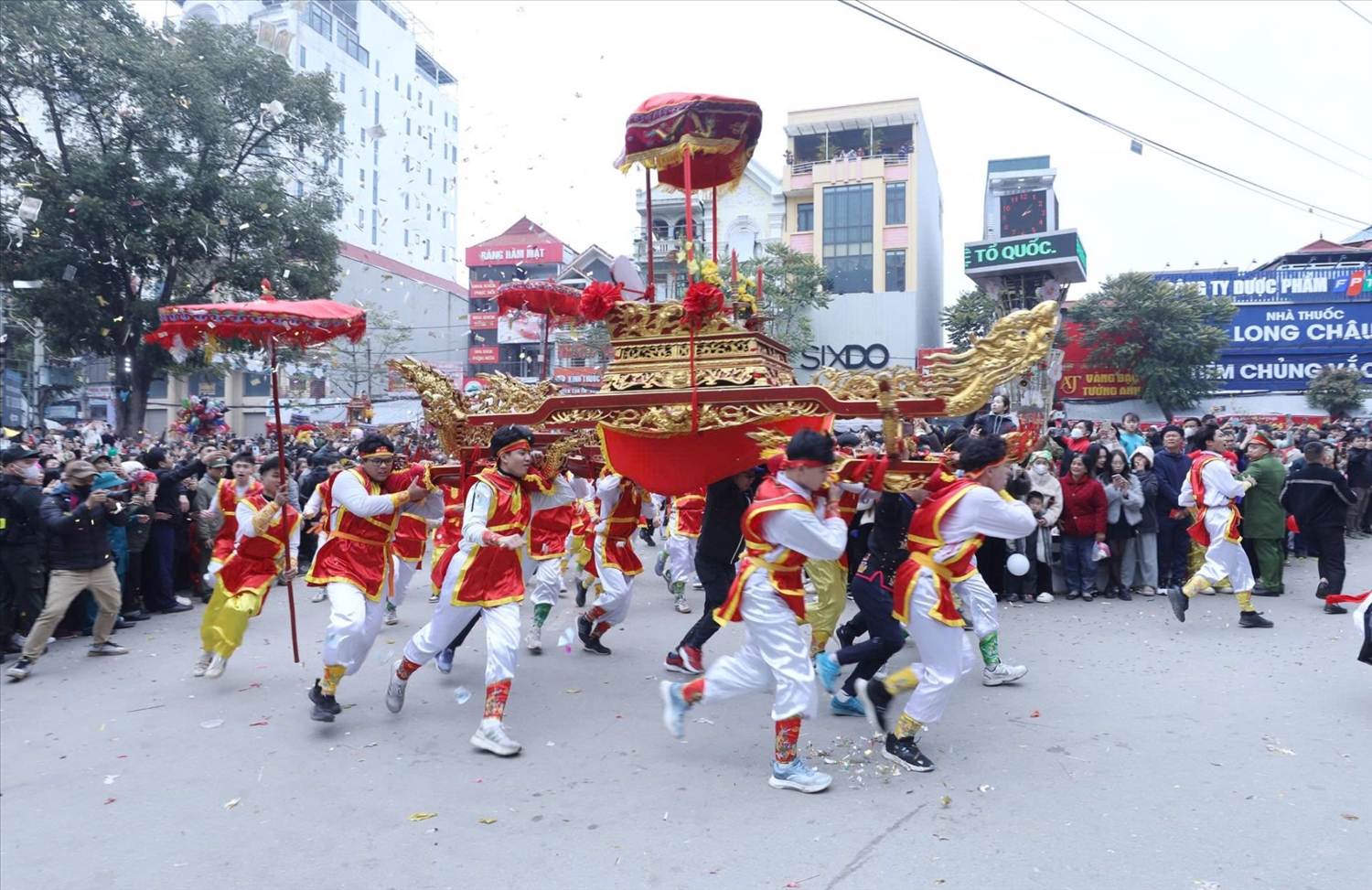 The incredibly unique and spectacular palanquin-spinning (or “flying palanquin”) performance drew large crowds of locals and tourists at the Ky Cung - Ta Phu festival
According to legend and historical records, Lord Tuan Tranh was a general of the Tran Dynasty who served as a regional commander in Ninh Giang District, Hai Duong Province, and was later appointed to Lang Son province to pacify the local population and repel invaders from the north. While commanding troops against the enemy in Lang Son province, Official Tuan Tranh suffered a defeat that resulted in heavy casualties; subsequently, he was unjustly accused of wrongdoing and took his own life by leaping into the Ky Cung River. Later, when Than Cong Tai holding the titles of Left Grand Admiral and Duke of Han assumed command in Lang Son province, he investigated the matter thoroughly and succeeded in clearing Tuan Tranh’s name.
Both men were instrumental in quelling invaders, safeguarding the people's peace, and developing the Ky Lua market town; they also contributed to improving the lives of the ethnic communities in the Lang region and are thus venerated by the people, who hold solemn festivals to honor their memory. Among them, the legacy of Grand Admiral and Duke of Han, Than Cong Tai, stands out most prominently; he took the initiative to open up trade, creating conditions for merchants from both Vietnam and China to settle in Lang Son province and exchange goods. Thanks to this open-door policy, cross-border trade between residents on both sides flourished. Lang Son province gradually rose to become a bustling commercial hub, serving as a vital gateway for trade in the Northeast region. The people of Lang Son and various other localities built Ta Phu Temple to worship Han Quan Cong Than Cong Tai, regarding him as a benevolent deity who brought peace and prosperity to the people of the borderlands. Quan Lon Tuan Tranh is worshipped at Ky Cung temple.
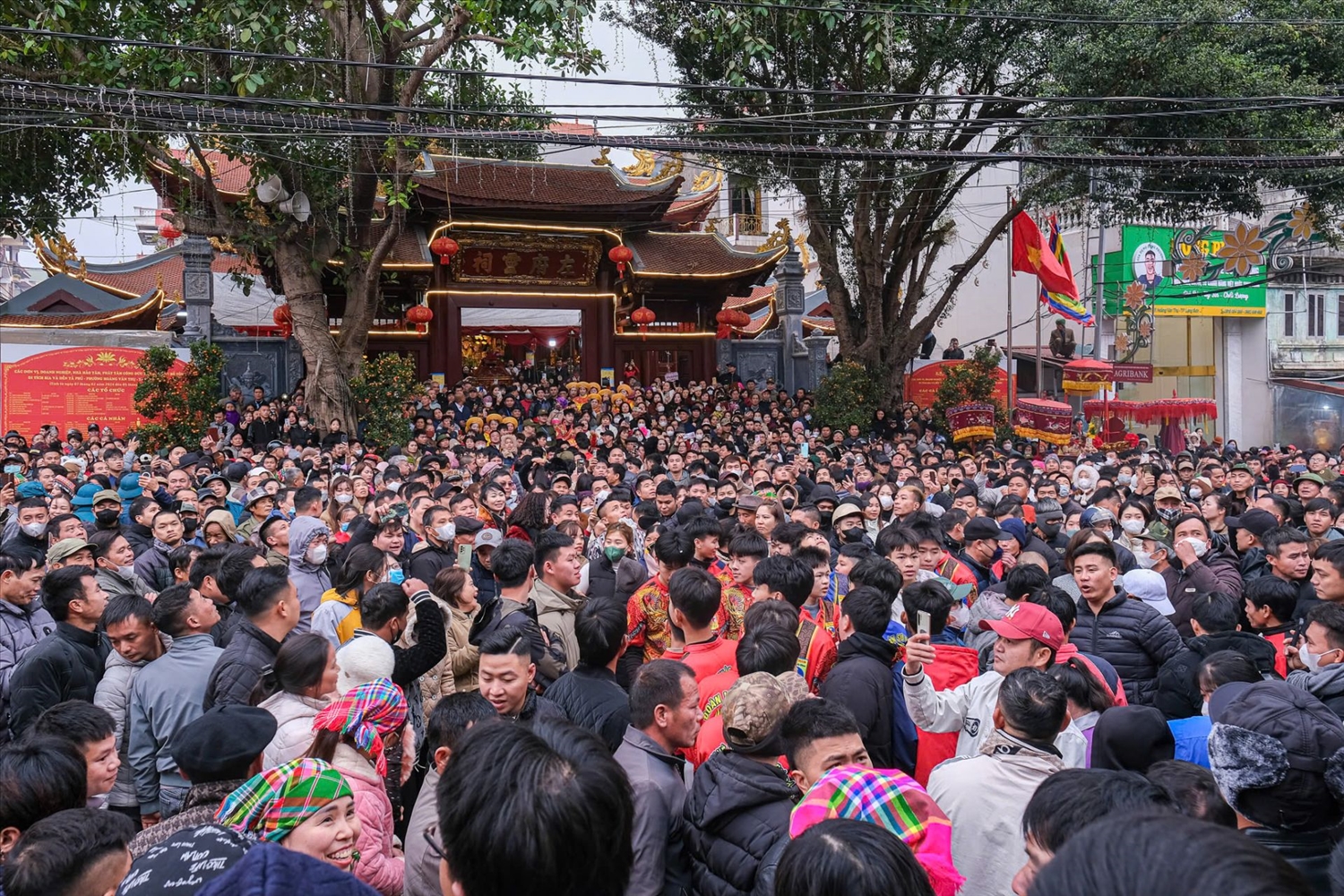 Hundreds of thousands of people attend the Ky Cung - Ta Phu festival in Lang Son Province
The highlight of the festival is the sacred palanquin procession from Ky Cung Temple to Ta Phu Temple, held to honor Than Cong Tai for clearing Tuan Tranh’s name and for his immense contributions to the local people. The sacred palanquin is carried amidst the resounding beat of drums and gongs, beneath a sky filled with fluttering five-colored flags. A long stream of people followed the procession; the traditional traditional sheer silk long tunic (ao the) and turbans mingled with the ethnic attire of the Tay, Nung and Kinh peoples, creating a scene that was at once solemn and vibrant. Visitors from near and far come here not only to offer incense in gratitude to their forebears but also to watch lion, unicorn, and dragon dances; listen to Then, Sli and Luon singing; participate in folk games; and savor renowned Lang Son province’s specialties such as roasted duck, braised pork belly (khau nhuc), mugwort cakes (ngai cake) and leaf-fermented wine.
In the past, festivals were typically small-scale events confined to the local village setting. Due to difficult travel conditions, most attendees were locals from the surrounding area; while rituals preserved their traditional character, the lack of resources often hindered organized execution. Today, however, improved transport infrastructure, specifically the Hanoi - Lang Son Expressway, which has cut travel time to just a few hours has led to a surge in visitor numbers, sometimes reaching tens of thousands in a single year. In oredre to attract visitors, the festival is organized with greater professionalism, featuring organized traffic flow, enhanced security and sanitation and neatly arranged service areas to minimize overcrowding and unregulated street vending. Crucially, local authorities prioritize preserving the event's authentic essence; the ceremonial rites are conducted with solemnity and strict adherence to tradition, while the festive activities have been expanded to include cultural and sports events, tourism promotion and showcases of OCOP products and local specialties. In short, the festival serves not only to honor the contributions of forebears but also to drive economic and tourism growth and promote the image of the Lang region.
For Spring 2026, if you are looking for a destination that combines historical significance with a festive atmosphere and is close enough for a short getaway - Lang Son province is well worth considering. A simple yet memorable itinerary might look like this: offer incense at Ky Cung temple in the morning; enjoying local delicacies at Dong Kinh market for lunch; joining the festivities at Ta Phu temple in the afternoon; spending the evening strolling through Ky Lua street while sipping a hot cup of tea amidst the chill of the borderlands.
The beating of the drums at the Ky Cung - Ta Phu festival rings out like an invitation to set forth and join the throngs of spring revelers, discovering just how poetic and rich in tradition the Lang region truly is.../.
