 Cassava leaves in the Central Highlands
For the Gia-rai, Ba-na, E-de, Mnong and other ethnic groups, the cassava plant serves as a symbol of resilience in the face of a harsh natural environment. Even during periods of drought or when upland rice crops fail, the cassava plant persists. These communities have long relied on its tubers and leaves to sustain themselves during times of food scarcity. Cassava leaves have been a constant presence in their lives throughout the years and up to now, continuing to hold a special place in the daily diet of the highland people.
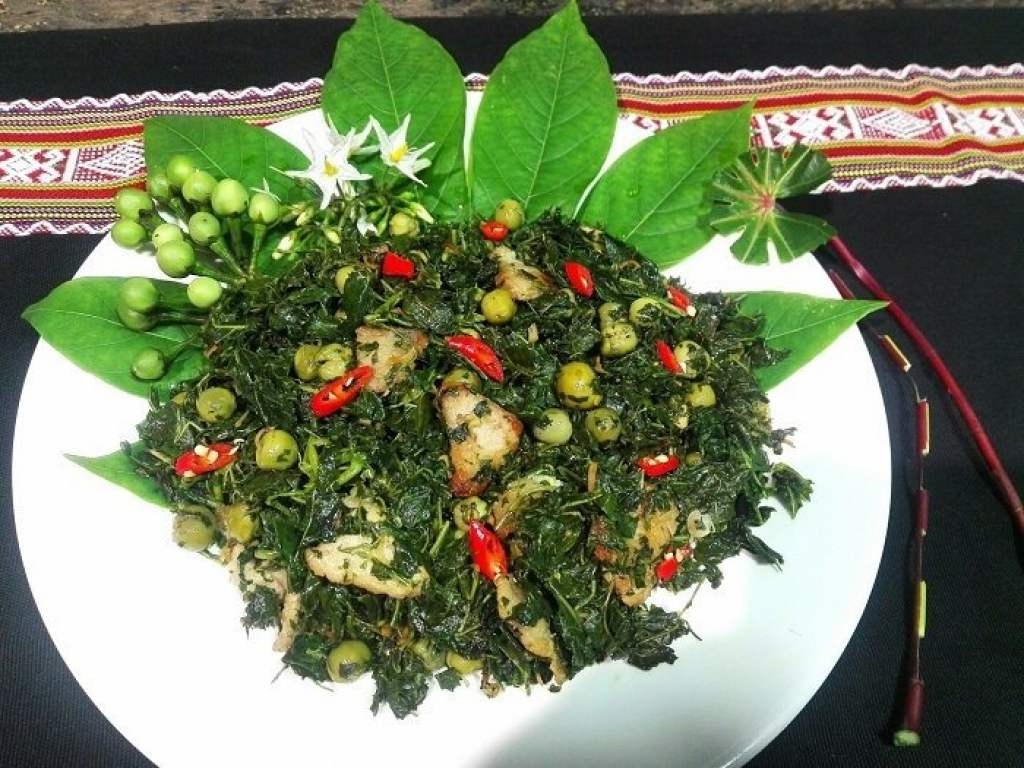 Cassava leaves - a special ingredient for unique dishes
Not all cassava leaves are edible; the people of the Central Highlands specifically select the "mi gon" variety, as its leaves are tender, contain fewer toxins and are rich in nutrients. Young or medium-aged leaves are harvested early in the morning, washed thoroughly and then undergo a meticulous preparation process to remove their natural sap and astringency, after which they are transformed into a variety of nutritious dishes.
The preparation of cassava leaves varies by region. In Gia Lai and Dak Lak provinves, the leaves are typically pounded into a mash and then stir-fried with dried stream fish, meat, or wild chili peppers. In Lam Dong province, by contrast, the leaves are briefly boiled, squeezed dry, and stir-fried whole. The most popular dish is stir-fried cassava leaves with bitter eggplant, a combination that blends the nutty flavor of the leaves, the bitterness of the wild eggplant and the sharp heat of the chili, creating an explosive taste that stimulates the palate. Upon the first taste, visitors might be taken aback by the bitterness, yet it is precisely this bitterness that makes the dish so addictive. At gatherings, it is not uncommon for plates of meat or fish to remain untouched while the dish of stir-fried cassava leaves is completely devoured, a testament to the irresistible appeal of this simple fare.
In their tourism development strategies, localities across the Central Highlands have identified a common direction: creating tourism products rooted in ethnic culture and community life, thereby transforming cultural identity into a sustainable competitive advantage. In this context, cassava leaves serve as a medium for cultural communication. Visitors do not merely eat; they gain insight into the local way of life. The preparation process and the way cassava leaves are combined with other ingredients reflects long-standing accumulated wisdom and a philosophy of living in harmony with nature, characteristic of the people of the Central Highlands.
Interestingly, many of the well-known specialties of the Central Highlands today originated from the local inhabitants’ traditional practice of utilizing forest plants. Tourism experts note that this nature-based culinary tradition lends a unique appeal to community-based tourism villages, where authentic, real-life experiences are the primary focus. Consequently, dishes such as stir-fried cassava leaves with bitter eggplant, cassava leaf soup with stream fish, and pickled cassava leaves have found their way onto the menus of many restaurants across the Central Highlands. Numerous homestays even consider these essential offerings when hosting guests. Once associated with memories of a time of scarcity, these dishes have now become the very things that pique the curiosity of visitors, who are eager to taste them.
Research on community-based tourism development indicates that local culinary experiences can extend visitors' length of stay and increase their spending. When a dish is linked to a cultural narrative, its value transcends mere nutrition. A meal featuring cassava leaves, for instance, often comes with stories about the farming season, the wisdom passed down from elders on how to identify edible leaves and memories of overcoming challenging times. It is precisely these stories that imbue a destination with cultural depth.
As sustainable tourism gains momentum, dishes crafted from locally available ingredients such as cassava leaves offer a significant advantage. From the fields to the kitchen, these ingredients are cultivated, harvested, and prepared by the local people themselves, eliminating any reliance on distant supply chains. Consequently, a greater share of the value generated by these dishes remains within the local community.
For travelers, sometimes all it takes is a simple meal, a bowl of steamed white rice paired with a hot, stir-fried dish of cassava leaves, enjoyed amidst the windswept expanse of the great forests to truly grasp how the local people adapt to nature, transforming humble, natural produce into dishes that bear the unique signature of this land.
From those seemingly small things, tourism is creating more livelihoods for people through farming, processing and serving tourists, opening up opportunities for culinary culture to become a part of the fascinating story about people and the highland region. And perhaps, that is also the most sustainable way for a rustic dish to continue to live in today’s life./.
