According to Hue Discovery, legend has it that in 1306, when Princess Huyen Tran was married to King Jaya Simhavarman III (King Che Man) of Champa, the King offered the two prefectures of O and Ly (or Ri) to Dai Viet as a wedding gift. In modern geographical terms, this territory spanned from the southern part of the former Quang Binh province to the northern part of Quang Ngai province. To the people of Dai Viet at that time, this region was entirely unfamiliar. Unfamiliar with the local soil, climate and terrain, the settlers arrived with a deep respect for the local inhabitants and the resident deities. Consequently, they established the custom of offering sacrifices to the land, seeking the blessing and approval of the spirits for the Dai Viet people to settle, working and building their lives there.
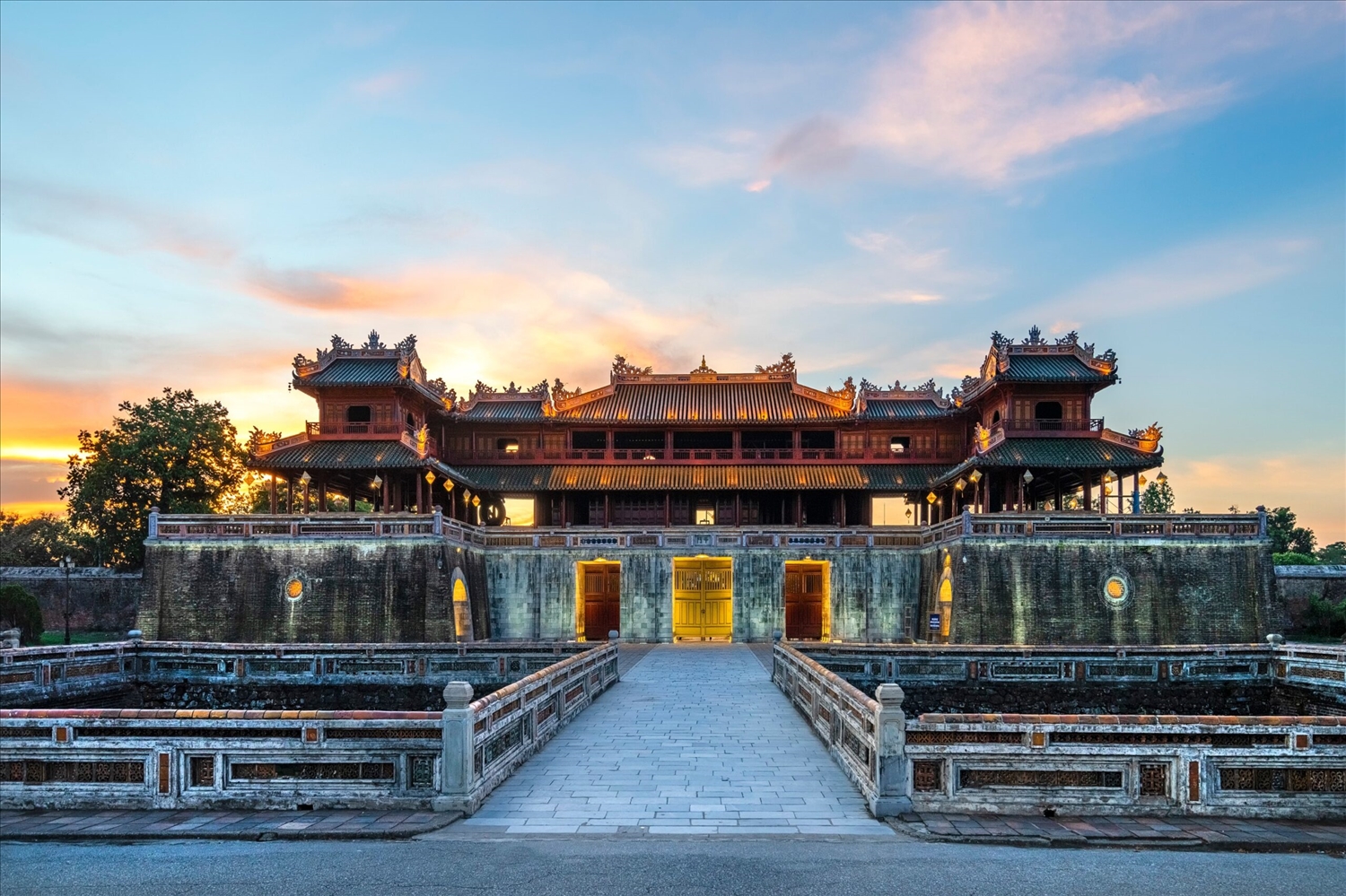 Hue Imperial Citadel
Thus, the land-worshiping ceremony is observed not only in Hue but also across the region stretching from the former Quang Binh province to Quang Ngai province. Nowadays, for various reasons, people in those areas no longer consistently maintain this custom; however, in the ancient capital, the people of Hue continue to observe the traditional land-worshiping ritual with the utmost reverence.
For the people of Hue city, the land-worshipping ceremony takes place twice a year, typically on an auspicious day during the second and eighth lunar months. The homeowner prepares an offering tray arranged in three tiers - upper, middle, and lower featuring sticky rice, sweet soup, chicken, boiled meat, rice, salt and symbolic items such as ceremonial robes and paper effigies for the “Earth Deity”, alongside humble offerings like a string of shrimp, dried fish or boiled vegetables. The ritual practices include prayers, incense offering, and bowing, as well as the custom of “reading the feet”, examining the chicken's legs after the ceremony to interpret omens of good or bad fortune. It is believed that the Earth Spirit reveals the homeowner’s fate, whether auspicious or inauspicious through these signs. As the ceremony draws to a close, the homeowner places a variety of food offerings onto a banana sheath and hangs it on a tree at the edge of the garden for passing spirits. After the land offering ceremony, neighbors are invited to share in the ritual offerings reflecting the proverb “sell distant kin to buy close neighbors” making the event a social gathering that strengthens community bonds.
Although it is an ancient custom, the significance of the land-worship ritual extends far beyond its outward form. First and foremost, through the act of performing the ceremony together, residents strengthen social bonds, establish mutual responsibilities and align on shared standards of living. On a deeper level, this is an ethical act expressing gratitude toward Heaven and Earth, deities, ancestors and the spirits of those who previously inhabited the land; it acknowledges that the land possesses a history and invisible entities deserving of respect. In agrarian societies, where livelihoods are directly tied to the land, the land-offering ritual also serves as a means of transforming risk into a communal observance, thereby mitigating internal conflict.
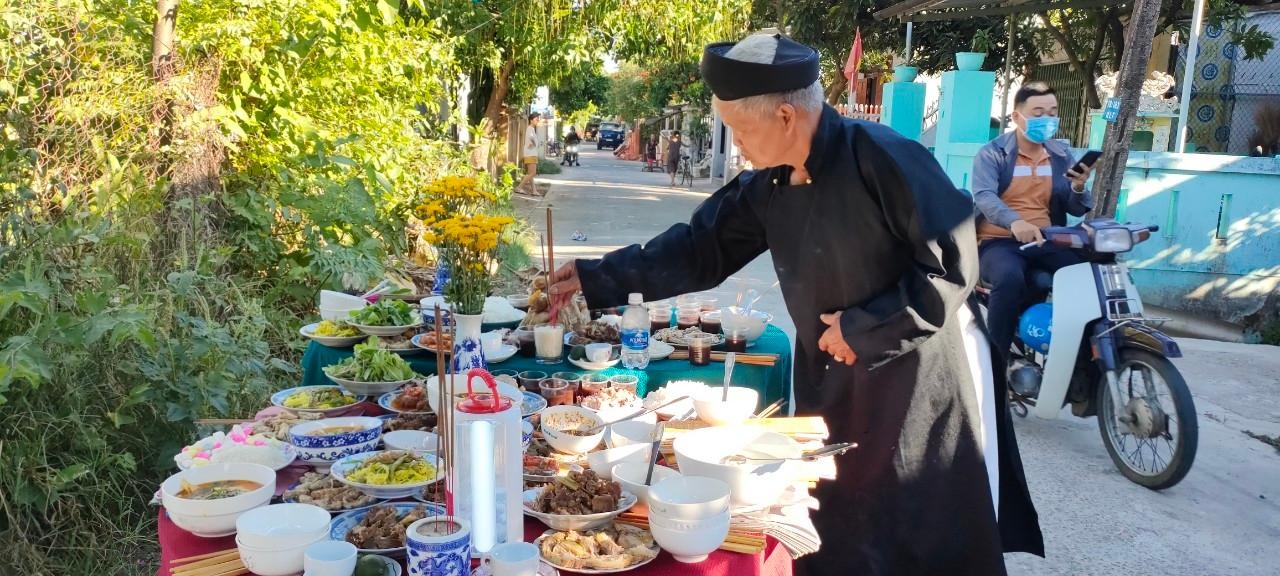 Land offering tray in Hue city
Although society is currently undergoing a significant shift from agricultural production toward industry and services, there remain at least three reasons why this ritual continues to hold importance for the people of Hue. Firstly, as Hue is a heritage city, the custom of performing land-worship rituals ensures that spiritual life is not eroded by the processes of urbanization and the shifting labor structure. Secondly, the practice of rituals serves as a means for the people of Hue city to pass down knowledge across generations, thereby preserving and promoting their cultural identity. Thirdly, these rituals remind individuals to adjust their relationship with the environment and to act more responsibly regarding land and water resources. These messages and actions are essential and align perfectly with contemporary principles of sustainable development./.
